Chiang Mai's social-enterprise massage schools: how the women's training programs work
What is Chiang Mai's women's training massage program?
It's a set of social-enterprise massage businesses, the best known being Lila Thai Massage, that train and employ women who have been released from the Chiang Mai Women's Correctional Institution as professional massage therapists. The training is rigorous and certified through the prison's own vocational centre, and the resulting massage quality is consistently rated among the best in the city - the program's ethical mission is a genuine bonus on top of good technique, not a substitute for it.
Among the hundreds of massage shops competing for visitor attention in Chiang Mai, a small handful stand apart for reasons that go beyond technique or setting - they’re staffed by women who trained as professional massage therapists while incarcerated at the Chiang Mai Women’s Correctional Institution, and who now run a fully legitimate commercial business rather than a subsidised charity project. Lila Thai Massage is the best known of these social-enterprise operations, and understanding how the program actually works helps visitors book it for the right reasons: genuinely excellent massage, with a meaningful social mission attached rather than the other way around.
Quick answer: It’s a set of social-enterprise massage businesses, the best known being Lila Thai Massage, that train and employ women who have been released from the Chiang Mai Women’s Correctional Institution as professional massage therapists. The training is rigorous and certified through the prison’s own vocational centre, and the resulting massage quality is consistently rated among the best in the city - the program’s ethical mission is a genuine bonus on top of good technique, not a substitute for it.
Where the idea started
Thailand’s prison system, like many others, faces a persistent problem: releasing people back into a society that’s often reluctant to employ someone with a criminal record, particularly women, who face compounding social stigma on top of the practical barrier. The Chiang Mai Women’s Correctional Institution addressed this directly by establishing a vocational training centre offering courses in trades with real employment prospects, and traditional Thai massage - a skill in constant local demand given the sheer scale of Chiang Mai’s tourism-driven massage economy - became one of the centre’s flagship programs.
Graduates who complete the program leave prison with a certified, marketable skill and, in many cases, a direct route into paid work at Lila Thai Massage or a similar operation, several of which were founded specifically to employ these graduates and give the training program a genuine, sustainable path to income rather than a credential with nowhere to be used.
How the training program works
The massage training offered through the correctional institution’s vocational centre follows a structured curriculum covering traditional Thai massage technique, anatomy basics, and professional practice standards, taught over a period of months rather than an informal or shortened course. Graduates receive a certification recognised within Thailand’s massage industry, putting them on comparable professional footing to therapists trained at civilian schools such as the city’s International Training Massage school or programs historically linked to the Old Medicine Hospital.
This matters because it directly answers a question visitors sometimes have going in: whether the massage quality might be secondary to the social mission. It isn’t. The training standard is genuinely rigorous, and therapists who’ve been practising for several years post-release, as many at established branches have, bring the same accumulated skill and client feedback loop that any experienced therapist develops over time.
Lila Thai Massage: branches and what to expect
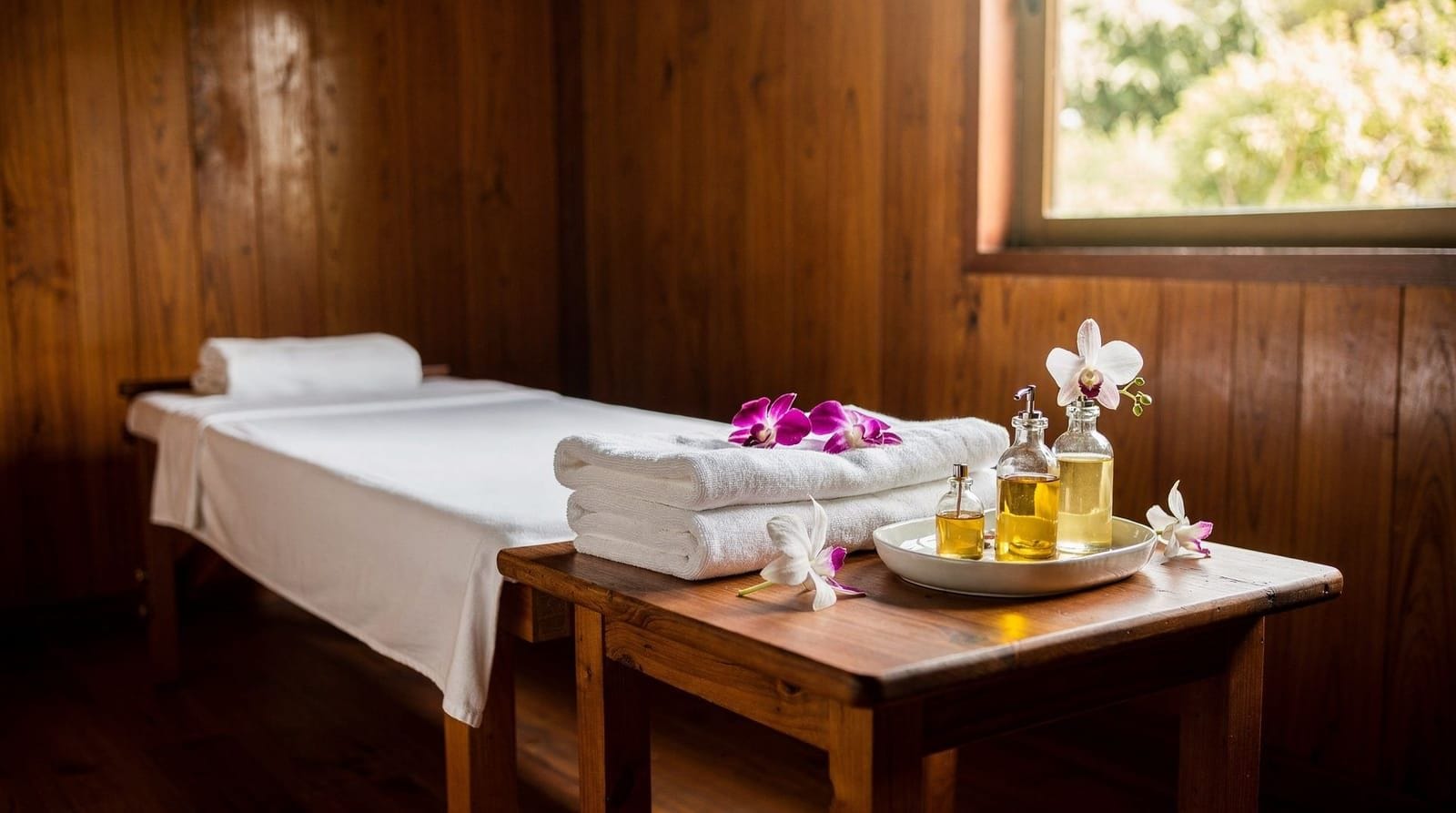
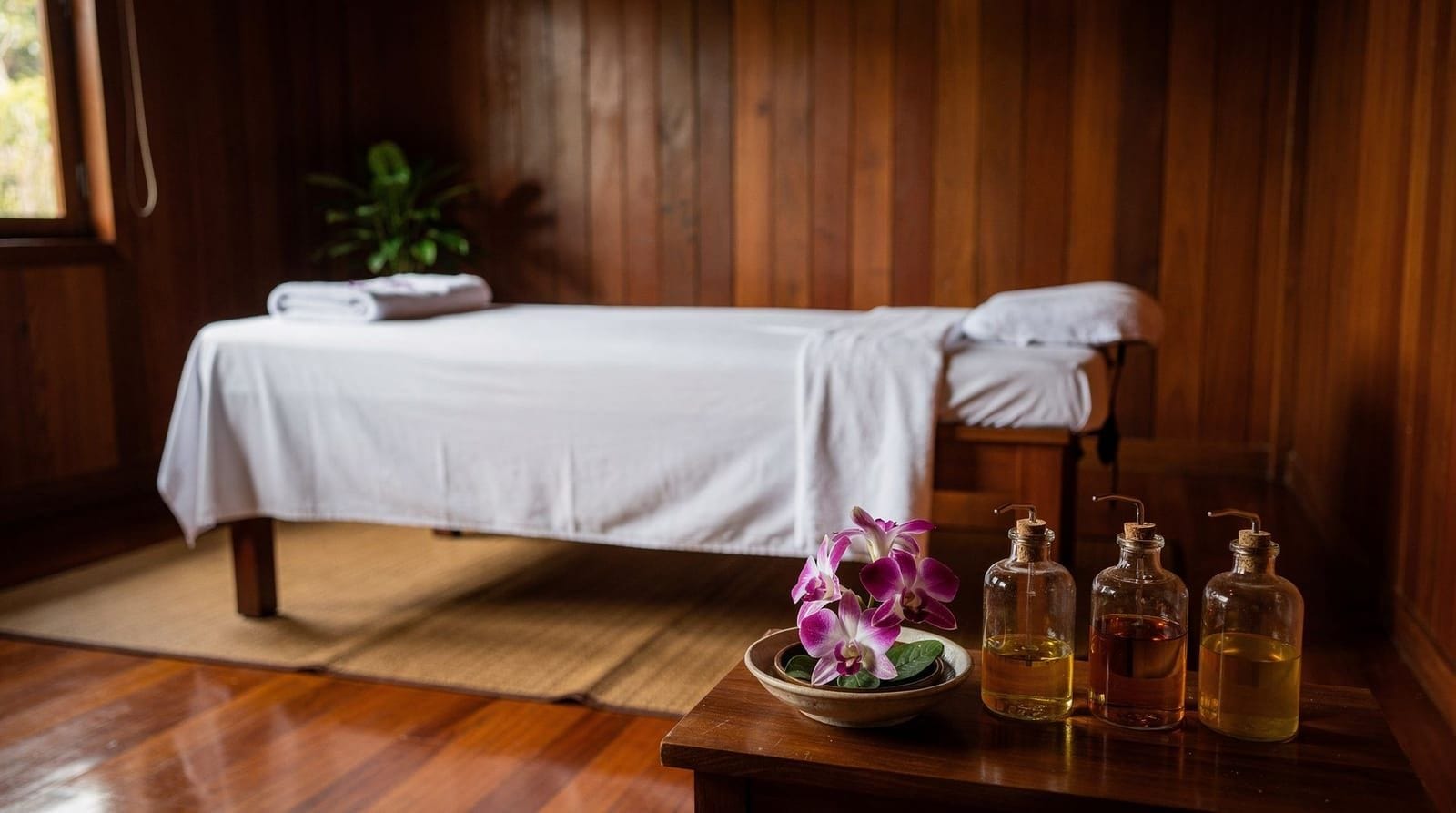
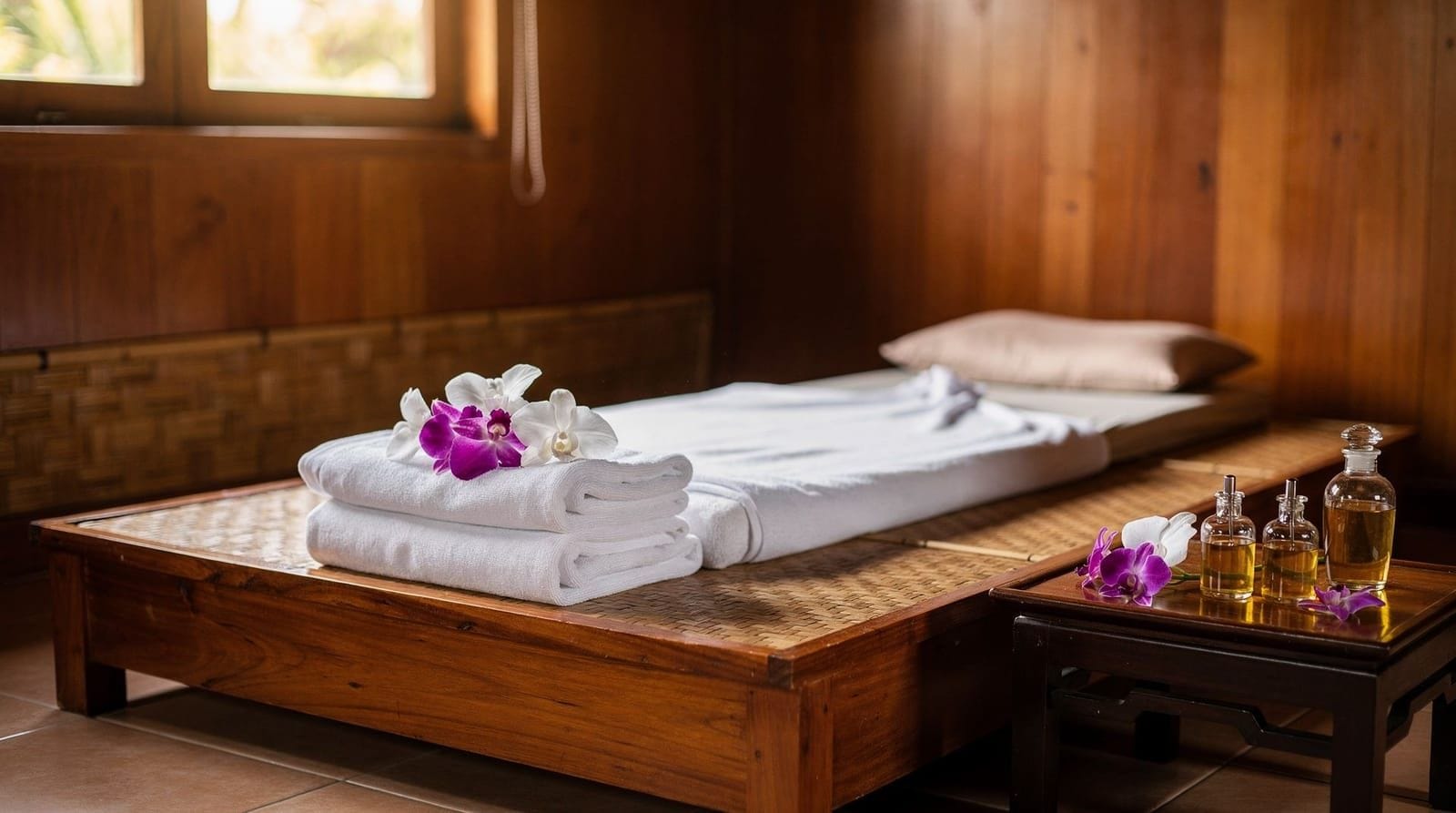
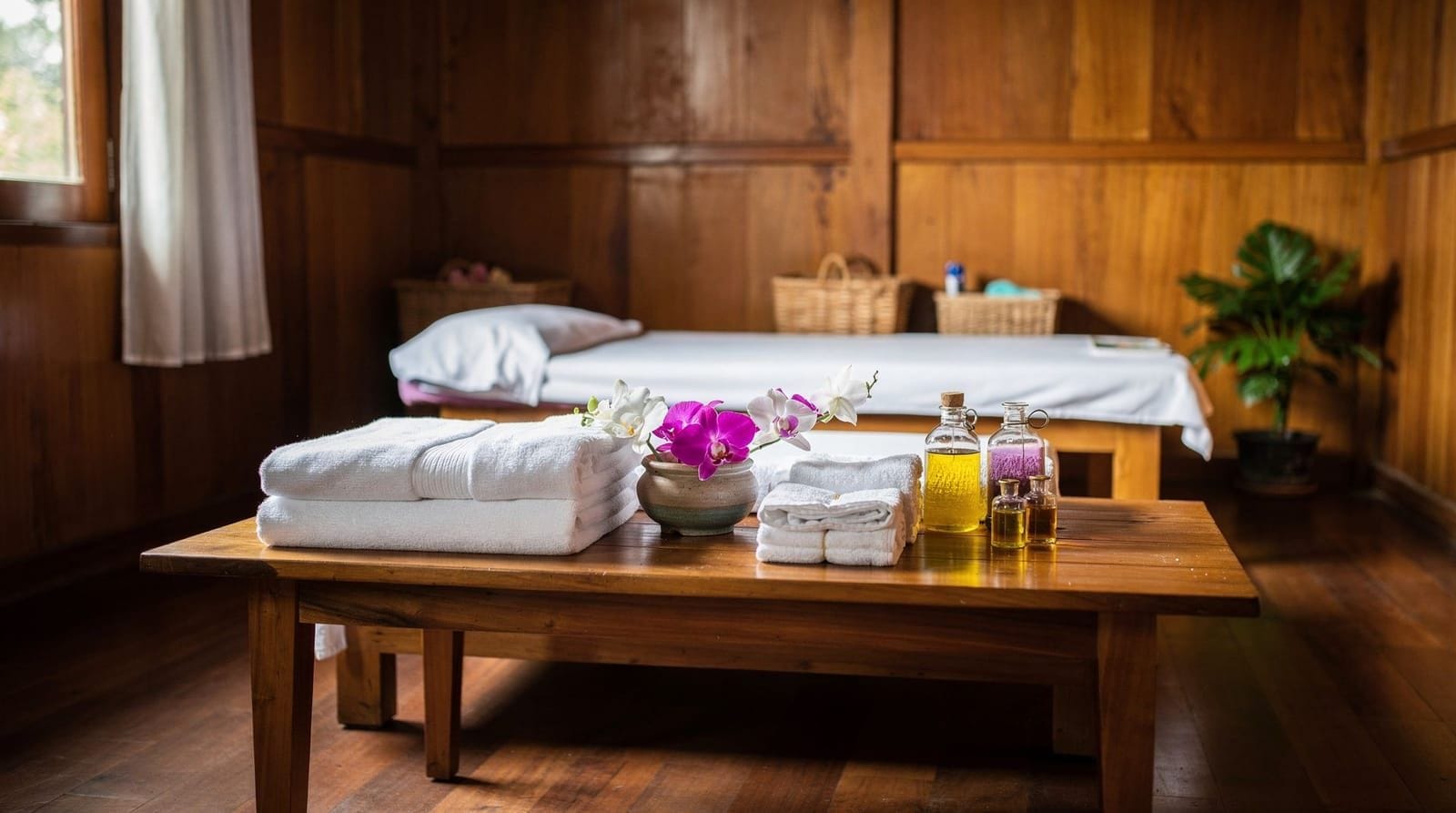
Lila operates multiple branches around Chiang Mai, generally in straightforward, clean, unpretentious settings rather than a polished resort-spa aesthetic - the emphasis is squarely on the massage itself rather than an elaborate ambiance. Sessions cover the same core menu found at most Chiang Mai shops: traditional Thai massage, foot massage, and oil massage, typically in 60-90-120 minute increments. Pricing sits at roughly 250-500 THB per hour, comparable to or only modestly above an ordinary walk-in shop, reflecting the program’s goal of running a genuinely competitive commercial business rather than relying on a charity premium.
Staff turnover at Lila’s branches is naturally higher than at some commercial spas, simply because successful graduates sometimes move on to other opportunities, open their own shops, or return to family elsewhere in Thailand after building savings and confidence - which is, from the program’s own perspective, a marker of the model working as intended rather than a shortcoming to flag.
Treating it as a massage first, a cause second
The most respectful way to approach a visit is to expect and evaluate a genuinely good massage, not a charitable donation with a treatment attached. Reviews of Lila and similar operations consistently rate the actual massage quality highly and independently of the backstory, which is worth knowing before booking - visitors sometimes worry, understandably, that a socially motivated recommendation might be papering over mediocre service, and that isn’t the case here. Tipping at the same normal rate as anywhere else in the city (roughly 50-100 THB per hour session) is the appropriate approach, rather than over-tipping out of a sense of charitable obligation, which can inadvertently undercut the program’s own point: that these are skilled professionals running a legitimate business, not a cause requiring extra generosity to be viable.
What a session actually feels like
Walking into a Lila branch for the first time, most visitors notice how ordinary the experience feels once the session starts - which is, in a sense, the point. The reception is straightforward, prices are posted, you’re shown to a change of clothes, and the massage itself proceeds exactly as it would at any well-run Chiang Mai shop: a check-in about pressure preference, a systematic progression from feet up through the body, and the same rhythm of compression, stretching, and pressure-point work found throughout the traditional Thai massage tradition. Nothing about the format signals “social enterprise” beyond perhaps a small sign or plaque explaining the program’s mission near the entrance - the therapists don’t perform a narrative of their circumstances, and the session is not staged as an emotional experience distinct from an ordinary massage.
This ordinariness is worth naming explicitly because a few visitors arrive expecting something closer to a guided cultural encounter - meeting graduates, hearing personal stories, an interpretive framing around the visit - and are mildly thrown when the actual experience is simply a very good, professionally delivered massage in a clean, modest setting. Recalibrating that expectation beforehand makes for a better visit: come for the massage, and treat any additional context about the program as a welcome bonus rather than the main event.
The broader landscape of prison-linked vocational training in Thailand
Massage training is not the only vocational program run through Thai correctional institutions, but it’s one of the more visible and internationally recognised examples, partly because Chiang Mai’s tourism economy creates such consistent demand for the resulting skill. Similar rehabilitation-through-vocational-training models exist elsewhere in Thailand across other trades - baking, tailoring, agriculture - but the massage-training-to-employment pipeline centred in Chiang Mai stands out for how directly it connects a certified skill to immediate, sustainable, dignified employment in a sector visitors actively seek out anyway. That direct connection between training and real market demand is part of why this particular program has proven more durable and better known internationally than some comparable initiatives.
Common misconceptions worth addressing
A few misunderstandings come up often enough to address directly. First, visiting Lila or a similar branch is not a prison visit or a supervised encounter within a correctional facility - branches operate as ordinary commercial storefronts staffed by women who have already completed their sentences and been released, not a program conducted inside the prison itself. Second, the massage is not discounted or subsidised as an act of charity; pricing reflects a genuinely competitive commercial rate, meaning visitors aren’t receiving a lesser or bargain-basement service, nor are they required to pay above market rate to make the model work. Third, therapists are not obligated to discuss their personal history, and assuming every therapist wants to talk about their past misreads the professional, ordinary nature of the interaction the program is specifically designed to normalise.
How to find and choose a branch
Lila’s branches are generally easy to find through a simple search or a platform booking, and locations shift occasionally as leases change, so checking current addresses shortly before a visit rather than relying on an old guidebook listing is worth doing. Beyond Lila specifically, guesthouse staff, particularly at smaller, locally run accommodations, are often a good source of current, first-hand recommendations for this category of massage shop, since many keep informal track of which social-enterprise branches are operating well at any given time.
How this fits into the wider Chiang Mai massage landscape
For the fuller category context - pricing across all tiers, how to spot a disreputable shop, and the difference between Thai and oil massage styles - see the Thai massage in Chiang Mai guide, which covers the category broadly rather than this specific program. And for a ranked comparison against other well-regarded, non-social-enterprise spas in the city such as Oasis Spa and Let’s Relax Spa, the best spas in Chiang Mai shortlist places Lila alongside its commercial peers on equal footing rather than treating it as a separate charitable category.
Visitors who are also interested in the traditional-versus-oil-massage distinction, since Lila and similar branches typically offer both, will find that comparison covered in full in the Thai massage versus oil massage guide.
Other similar operations
While Lila is the most established and visible social-enterprise massage brand in Chiang Mai, it isn’t strictly the only one - a small number of comparable, smaller-scale operations exist around the city, some connected to the same correctional institution’s vocational program and others run independently with a similar rehabilitation-focused mission. These tend to be less prominently marketed to visitors, simply owing to their smaller scale, and are generally found through word of mouth, guesthouse recommendations, or direct local research rather than prominent online listings. Lila remains the most reliable starting point for visitors specifically seeking this category of massage experience out.
Booking practicalities
Because Lila’s branches run with smaller staff counts than large commercial spa chains, booking a few hours to a day ahead is a sensible precaution, particularly during the cool season (November-February) when Chiang Mai’s overall visitor numbers peak and these popular, well-reviewed branches fill up faster relative to their capacity. Walk-ins are generally still accommodated outside peak hours, though with a somewhat higher chance of a short wait than at a larger spa with more staff on shift.
Seasonal timing and demand
Like most of Chiang Mai’s wellness sector, demand at social-enterprise branches peaks during the cool season from November through February, when the city’s overall visitor numbers are highest and word-of-mouth recommendations circulate most actively among travellers comparing notes. During the quieter hot season (March-May) and the rainy season (June-October), waits are shorter and same-day booking is more reliably available, though pricing itself doesn’t meaningfully shift with season the way accommodation rates sometimes do.
Etiquette and expectations
Beyond the standard massage etiquette that applies everywhere in the city - communicating pressure preferences clearly, dressing modestly, and tipping appropriately - there’s little that differs at a social-enterprise branch specifically. Some visitors feel an instinct to ask therapists directly about their personal history or the program itself; this is generally fine if raised respectfully and the therapist seems open to the conversation, but it’s worth reading the individual’s comfort level rather than assuming every therapist wants to discuss their background with every client. Many are happy to talk about the program in general terms; fewer want to discuss their personal case specifics, and that boundary deserves the same respect as any other personal topic.
What visitors say after a visit
Reviews of Lila and comparable branches, read across multiple platforms and over several years, consistently emphasise two things independent of each other: that the massage itself was skilled and comparable to or better than other Chiang Mai options at a similar price point, and that the setting felt calm, professional, and unremarkable in the best sense - no hard sell, no rushed pacing, no sense of being processed through a tourist-charity assembly line. That consistency across a large volume of reviews, gathered over years rather than a short promotional spike, is itself a meaningful signal that the program delivers on both fronts it claims to: solid vocational outcomes for graduates, and a genuinely good massage for visitors.
A practical comparison to keep in mind
It can help to think of Lila and similar branches less as a distinct “ethical tourism” category requiring special consideration, and more as simply one more strong entry in Chiang Mai’s already-crowded field of good massage options - one that happens to carry a meaningful backstory. Visitors choosing between Lila, a well-regarded street-side shop, and a mid-range resort spa are making a decision along the same axes that apply everywhere in this category: price, setting, and specific treatment menu, with the social mission functioning as a genuine tie-breaker rather than the primary justification for the choice. This framing keeps the recommendation honest rather than overselling the cause angle at the expense of an honest assessment of the massage itself.
Why this matters beyond the massage itself
For visitors who care about where their tourism spending actually goes, Chiang Mai’s social-enterprise massage programs offer a rare, concrete example of tourist spending translating directly into a structural second chance for people who would otherwise face steep barriers to reintegration after incarceration - a meaningfully different outcome than the more abstract “supporting the local economy” framing that applies to most tourist spending generally. Combined with the fact that the massage itself is genuinely excellent on its own technical merits, it’s one of the more straightforward “good choice on every axis” recommendations in this entire wellness category.
A final honesty check
This guide has been careful to frame the recommendation around massage quality first and social mission second, and it’s worth restating why that ordering matters: recommending a business purely on the strength of its charitable framing, without an honest look at whether the core service holds up, would be exactly the kind of inflated, feel-good travel advice this site tries to avoid. The reason Lila and similar branches earn a place in this guide isn’t that visiting one feels good in the abstract - it’s that the massage genuinely competes with, and in many reviewers’ accounts exceeds, the average quality found elsewhere in the city, at a comparable or lower price. The social mission is real, well-documented, and worth knowing about, but it’s the second reason to book, not the first.
Combining a visit with the rest of a Chiang Mai day
Lila’s branches are distributed around several parts of the city, making it easy to fold a session into a broader day of sightseeing rather than planning a special trip - a stop after a morning in the Old City, an afternoon in Nimmanhaemin, or before an evening at the Night Bazaar all work naturally with the branch network’s spread. For the full wellness and spa category, including meditation retreats and herbal treatments that pair well with a socially conscious wellness day, the wellness and spa hub rounds up every format side by side.
Travellers building a longer wellness-focused day around the Old City’s temples or a slower morning at One Nimman will find a social-enterprise massage session slots in naturally as a mid-afternoon stop, offering a genuine change of pace from sightseeing without requiring a special detour across town.