Thai massage vs oil massage in Chiang Mai: what's actually different
Chiang Mai: Massage at Award-Winning Authentic Thai Eco Spa
What's the main difference between Thai massage and oil massage?
Traditional Thai massage is performed fully clothed on a firm floor mat, using rhythmic pressure and assisted stretching along the body's energy lines, with no oil involved. Oil massage is performed with the client partly undressed (usually keeping underwear on) on a raised table, using oil and long gliding strokes closer to a Western Swedish-style massage, focused more on relaxation and muscle relief than stretching. Neither is objectively better - they're different treatments suited to different goals and comfort levels.
Ask a first-time visitor to Chiang Mai what kind of massage they want and most default to “a Thai massage,” without realising that half the shops and spas in the city are actually asking them to choose between two genuinely different treatments with different clothing requirements, different physical sensations, and different practical goals. Getting this distinction straight before booking avoids the mildly awkward surprise of expecting a relaxing oil rubdown and instead being stretched into a pretzel on a floor mat, or vice versa.
Quick answer: Traditional Thai massage is performed fully clothed on a firm floor mat, using rhythmic pressure and assisted stretching along the body’s energy lines, with no oil involved. Oil massage is performed with the client partly undressed (usually keeping underwear on) on a raised table, using oil and long gliding strokes closer to a Western Swedish-style massage, focused more on relaxation and muscle relief than stretching. Neither is objectively better - they’re different treatments suited to different goals and comfort levels.
Traditional Thai massage: the basics
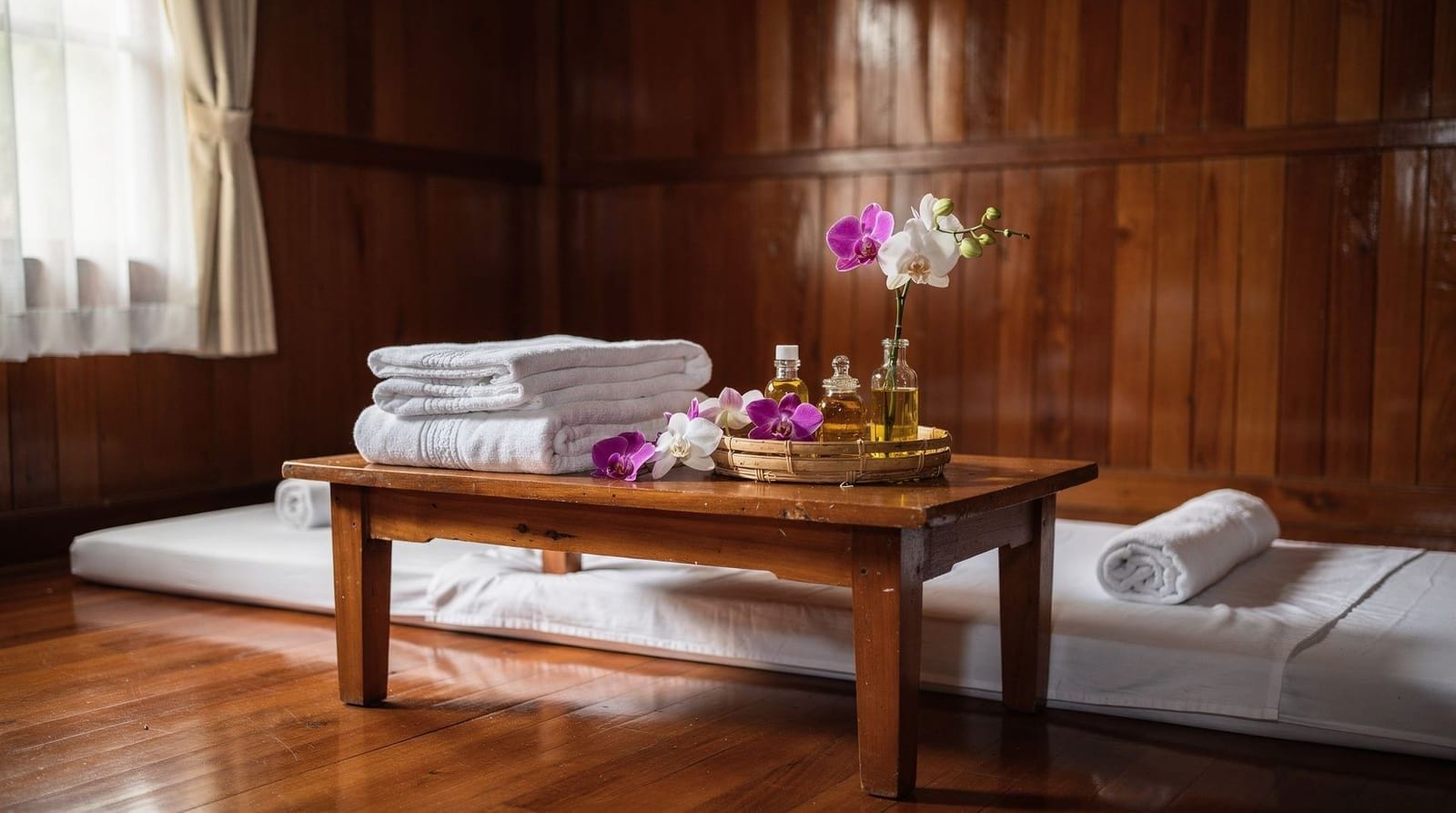
Traditional Thai massage - Nuad Thai - is performed fully clothed, almost always on a firm mat or thin mattress laid on the floor rather than a raised table. There’s no oil involved at all. Instead, the therapist uses hands, thumbs, forearms, elbows, knees, and occasionally feet to apply rhythmic pressure along the body’s sen (energy lines), moving systematically from the feet upward through the legs, hips, back, arms, and shoulders. Woven through the pressure work is a series of assisted stretches - the therapist actively moves your limbs and torso into positions resembling yoga poses, using their own body weight for leverage.
This is the format most closely tied to the UNESCO-recognised Intangible Cultural Heritage listing, and the one taught at Chiang Mai’s dedicated massage schools, including programs connected to the women’s training massage initiative covered elsewhere on this site.
Oil massage: the basics
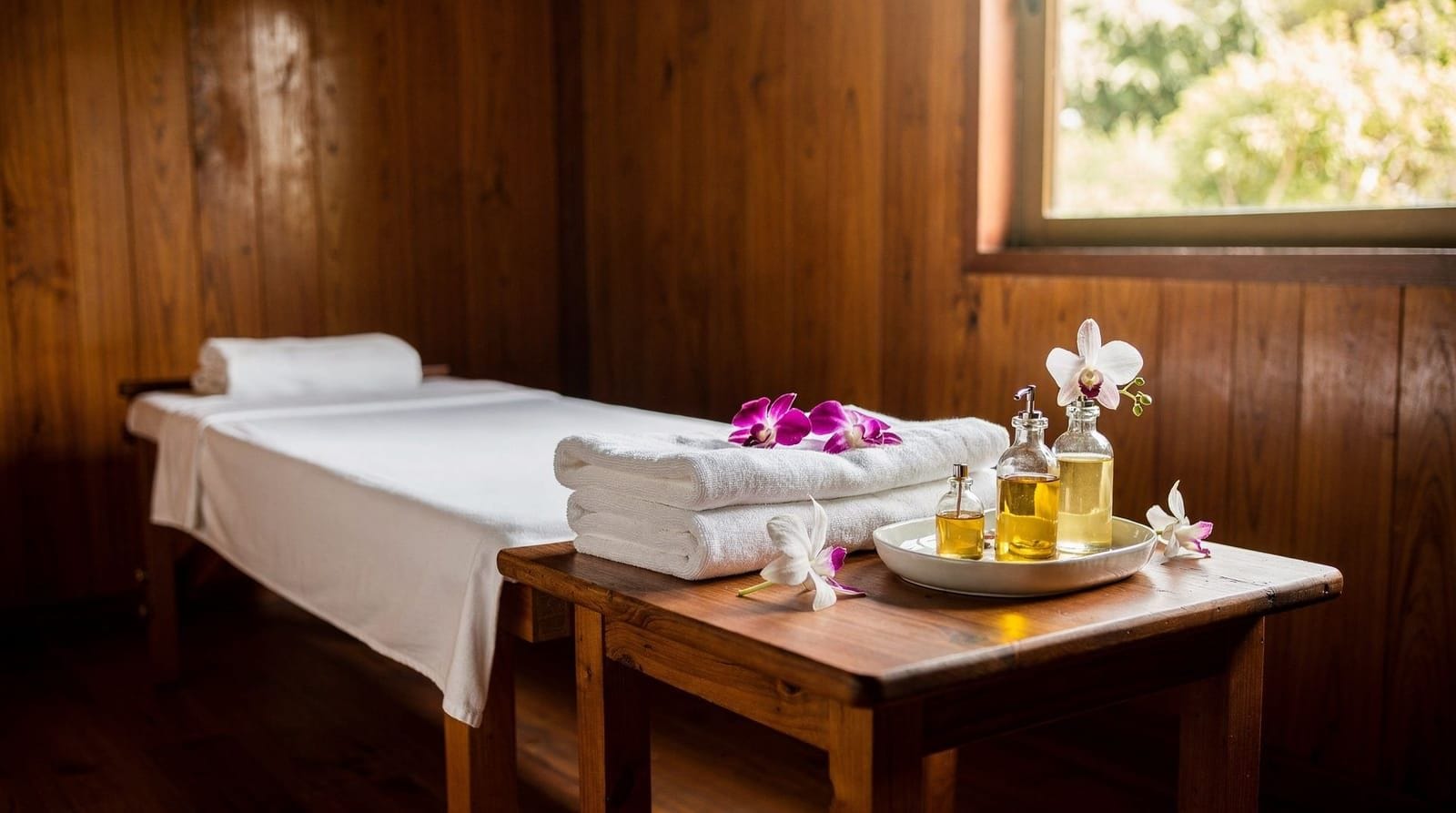
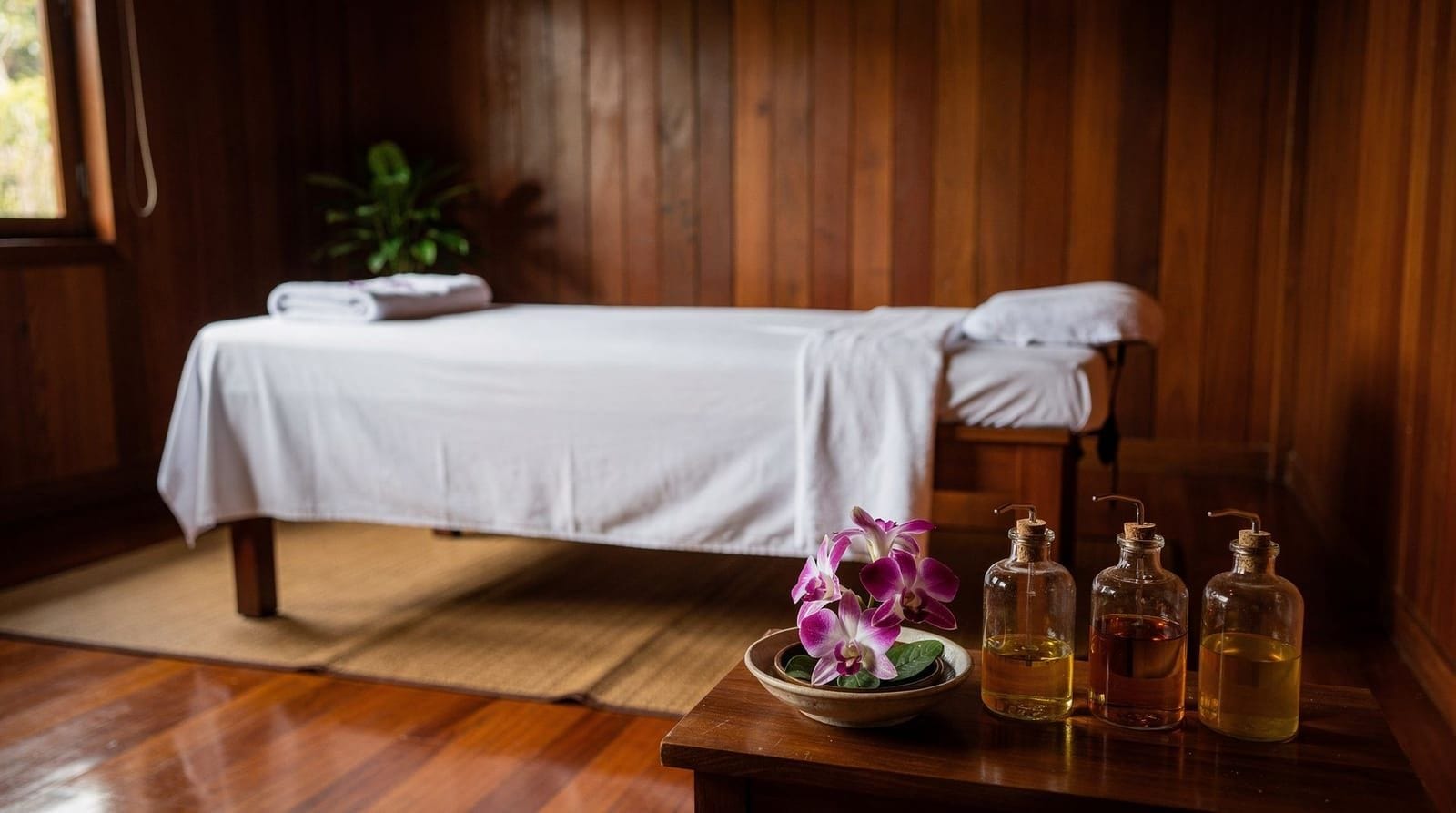
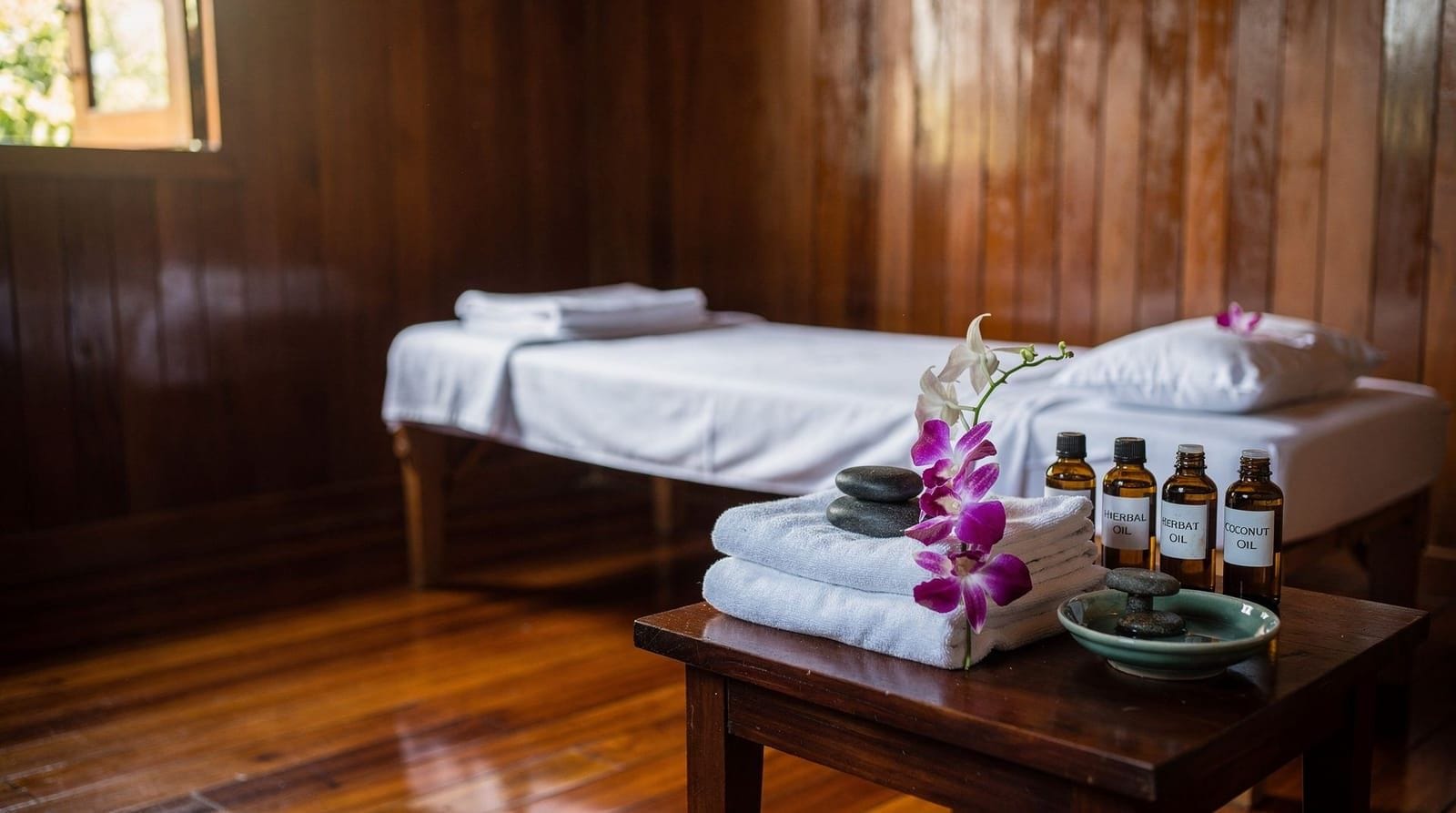
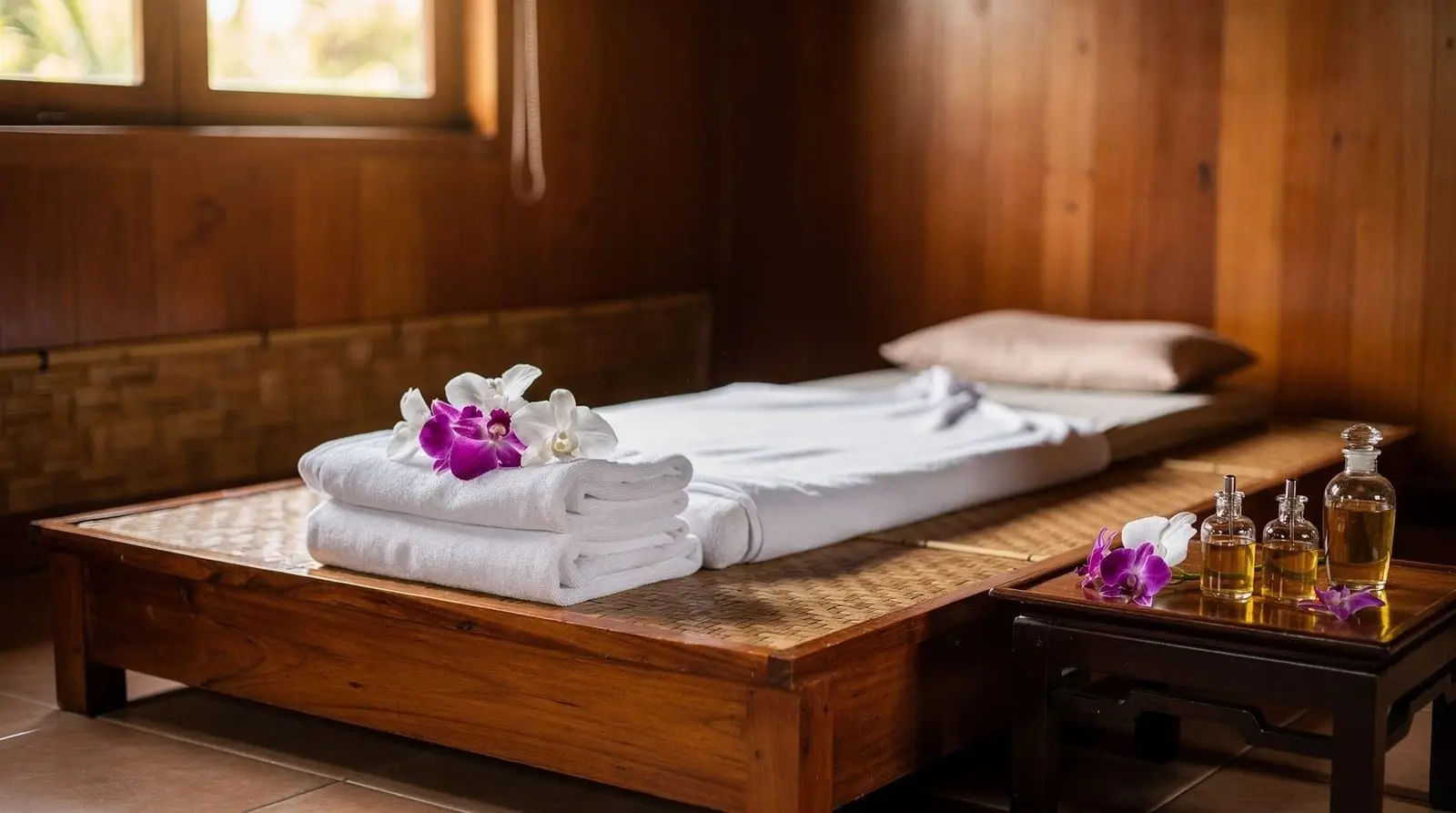
Oil massage in Chiang Mai typically takes place on a raised massage table, closer in setup to a Western spa massage. Clients undress to their underwear (a towel or sheet keeps you covered throughout, and modesty is maintained the same way it would be at a Western spa) and the therapist applies warmed oil, using long, gliding strokes combined with kneading and some pressure-point work borrowed from the broader Thai massage tradition. There’s little to no stretching component - the treatment is oriented around smooth, continuous strokes rather than active limb movement.
A 90-minute oil massage at an award-winning eco spa is a solid, reviewed way to experience this style specifically, particularly for visitors who know from past spa experience that they prefer a table-based, oil-assisted format over floor-mat stretching.
Clothing and physical setup, side by side
This is the most immediately practical difference, and the one that trips up first-timers most often. Thai massage requires no undressing at all - loose cotton clothing is provided, and you keep it on throughout. Oil massage requires undressing to underwear, with modesty maintained via towel or sheet coverage, similar to how a Western spa massage is typically conducted. Neither format requires you to bring anything specific, but visitors who prefer to stay fully clothed throughout a treatment should specifically request Thai massage rather than assuming all Chiang Mai massage defaults to the clothed format.
The physical sensation: active versus passive
Thai massage is a genuinely active experience - your body gets moved, stretched, and repositioned throughout, and a fair amount of the therapeutic value comes from that assisted stretching rather than pressure alone. It can feel intense, occasionally slightly uncomfortable at tight spots, and requires a small amount of physical cooperation (relaxing into a stretch rather than resisting it) that oil massage doesn’t ask of you. Oil massage is a more passive experience - you lie still while the therapist works with oil and gliding pressure, closer to what most Western visitors already associate with the word “massage” from spa experiences back home.
A Thai massage focused on muscle relief and flexibility is a good entry point for visitors curious about the traditional, active-stretching style specifically, in a reviewed, professionally run setting.
Which one addresses muscle soreness better
For genuine muscle tightness - the kind that builds up after a day of trekking, a long walking tour of temples, or an overnight bus journey - Thai massage generally does more meaningful work, since the deep compression and stretching directly address tight muscle groups and connective tissue restriction in a way that lighter oil-based gliding strokes don’t replicate as thoroughly. Oil massage is better suited to pure relaxation and general stress relief rather than targeted muscle work, though a skilled oil massage therapist can still apply meaningful pressure to specific problem areas on request.
Where each tradition actually comes from
Thai massage’s roots trace back centuries to a healing tradition intertwined with traditional Thai medicine, Ayurvedic influence from India, and Buddhist monastic practice - historically, massage was as much a medical intervention performed by monks and traditional healers as a relaxation treatment, which is part of why the stretching and pressure-point work follows a structured theoretical system (the sen energy lines) rather than an intuitive rubdown. Oil massage, by contrast, is a more recent addition to Thailand’s commercial spa scene, blending imported Western massage technique - itself derived from Swedish massage traditions - with local touches like herbal-infused oils, aromatherapy blends, and occasional pressure-point elements borrowed back from the Thai tradition. Neither history makes one style more “legitimate” than the other; they simply reflect different origins and different goals.
Aromatherapy and oil choices
Most spas offering oil massage let you choose (or default to) a specific oil blend - commonly lemongrass, jasmine, coconut, or a house aromatherapy mix - and the scent and thickness of the oil used can meaningfully change the sensory experience even though the massage technique itself stays broadly similar. Visitors with sensitive skin or specific allergies should ask about the oil ingredients before starting, since natural and synthetic fragrance blends both circulate in the market and reactions, while uncommon, aren’t unheard of. Unscented or hypoallergenic oil options are usually available on request even if not listed on the standard menu.
Duration options for each style
Thai massage is commonly offered in 60, 90, and 120-minute increments, with 60 minutes covering a reasonably full-body sequence and 90-120 minutes allowing more thorough work on problem areas plus a slower overall pace. Oil massage follows similar increments, though 60 minutes is the most commonly booked duration for a purely relaxation-focused visit, with 90 minutes typically added when combining oil massage with a scrub or wrap rather than extending the massage itself. Neither style meaningfully changes technique based on duration - a longer session simply means more thorough coverage and a less rushed pace rather than a fundamentally different treatment.
Foot massage as a related but separate option
It’s worth noting that foot massage (nuad tao) sits somewhat outside this Thai-versus-oil comparison entirely - it’s typically offered as its own short, focused treatment (30-60 minutes) covering feet, calves, and sometimes hands, using techniques and a wooden or plastic pressure tool distinct from either full-body style. Many visitors combine a foot massage with either a Thai or oil massage in the same visit, and most shops price this as a simple add-on rather than requiring a separate booking.
What to wear and bring for each
For Thai massage, arriving in whatever you’re already wearing is fine, since you’ll change into loose clothing provided by the shop - no need to plan an outfit around it. For oil massage, the same applies in practice, since you’ll undress to underwear and be covered by a towel or sheet regardless of what you arrive in, though bringing a hair tie if you have long hair is a small practical courtesy so hair doesn’t end up in the oil. Neither style requires bringing your own towel, robe, or swimwear at a standard massage shop or spa (as opposed to a resort’s wet-treatment area, which may specify otherwise).
A glossary for booking either style
A handful of Thai terms help when booking on the ground: “nuad thai” or “nuad boran” for traditional Thai massage, “nuad namman” for oil massage, “nuad thao” for foot massage, and “phaen ruam” for a combination package. Pointing at a price board listing these terms alongside duration options works reliably even without shared spoken language, and most shops serving visitors are well practised at confirming your choice through simple gestures and repetition if there’s any ambiguity.
Price differences
Oil massage is typically priced a little higher than an equivalent-length Thai massage at the same shop or spa - commonly 50-150 THB more per hour - reflecting the cost of oil and the fact that oil treatments are more often offered in a slightly more comfortable, air-conditioned setting than the simplest street-side Thai massage shops. The gap is rarely dramatic, and at many mid-range spas the two styles are priced identically or within a small margin of each other.
Combination sessions
Many spas offer a combined format, often labelled something like “Thai and oil combo,” that runs through a shortened Thai massage sequence first and finishes with an oil-based relaxation segment, typically over 90-120 minutes rather than the standard 60. This is a reasonable choice for visitors who can’t decide between the two, or who want the therapeutic benefit of Thai-style stretching alongside the purely relaxing finish oil massage provides. Pricing for combination sessions runs proportionally higher than either style alone, reflecting the longer duration rather than a premium format.
Which to choose for a first Chiang Mai massage
Visitors who’ve had a Western-style spa massage before and want something closer to that familiar experience should start with oil massage - it maps more directly onto expectations already in place. Visitors specifically curious about the traditional Thai practice, or those dealing with genuine muscle stiffness from an active trip, are better served starting with traditional Thai massage, ideally communicating pressure preference clearly at the start (“bao bao” for softer, “raeng raeng” for firmer) since the stretching component in particular benefits from an early, honest pressure calibration.
How this fits into the broader Chiang Mai massage picture
For the full landscape of pricing tiers, how to spot a disreputable shop, and where to find good massage across the city generally, see the Thai massage in Chiang Mai guide. For a ranked shortlist of specific, reviewed spas offering both styles, the best spas in Chiang Mai guide covers Oasis Spa, Let’s Relax Spa, Khum Varee Spa, and the social-enterprise Lila Thai Massage branches side by side. And for a related but distinct traditional treatment - herbal compress and steam rather than oil or dry stretching - the herbal steam and sauna guide rounds out the broader treatment landscape.
Health conditions and which style to avoid
Certain conditions call for choosing more carefully between the two styles rather than defaulting to whichever sounds more appealing. Thai massage’s active stretching component isn’t ideal for anyone with a recent joint injury, significant back problems, or limited flexibility, since it does ask the body to move through positions oil massage never requires. Oil massage’s lighter, more passive format is generally the gentler option for these situations, though a good therapist working in either style should ask about injuries and limitations before starting and adjust accordingly - if a shop skips this question entirely, it’s worth raising any relevant condition yourself before the session begins rather than assuming it will come up naturally.
Pregnancy calls for particular caution with both styles, and most reputable shops decline full massage in the first trimester and modify both technique and positioning significantly afterward - always disclose pregnancy clearly when booking either style, since some pressure points and stretches used in Thai massage specifically are avoided during pregnancy for safety reasons.
Which style pairs better with a spa day versus a sightseeing day
Oil massage’s more indulgent, relaxation-first format suits a dedicated spa day or a wind-down session at the end of a multi-day trip, when the goal is simply to unwind rather than address a specific physical need. Thai massage’s active, therapeutic format tends to fit more naturally into a sightseeing-heavy itinerary - a mid-afternoon session between temple visits, or an evening one after a long day of walking, where addressing genuine muscle tightness matters more than purely lying back and relaxing. Neither rule is absolute, but it’s a reasonable way to decide on a day-by-day basis if you’re staying in Chiang Mai long enough to try both styles across a trip.
A practical note on hygiene and comfort
Because oil massage involves direct oil contact with skin, most spas provide a shower facility or at least towels to wipe down afterward, and it’s worth checking this is available if you have plans immediately following the treatment - arriving at dinner smelling faintly of massage oil is a minor but real practical consideration some visitors overlook. Thai massage, being fully clothed and oil-free, has no equivalent concern and is generally the more convenient choice to slot in mid-sightseeing-day without needing to freshen up afterward.
A quick side-by-side summary
To recap the practical differences in one place: Thai massage is clothed, floor-mat based, dry (no oil), active with assisted stretching, and rooted in a centuries-old medical-adjacent tradition - best for genuine muscle tightness and cultural authenticity. Oil massage is table-based, requires undressing to underwear under a towel, uses warmed oil with long gliding strokes, is more passive, and is best for straightforward relaxation with a format closer to a familiar Western spa massage. Combination sessions blend both in a single longer booking, and foot massage exists as its own separate, shorter specialty regardless of which full-body style you choose. Keeping these distinctions in mind before booking - rather than assuming “Thai massage” covers everything on offer - is the single most useful thing to take away from this comparison.
The bottom line
Neither style is a “better” or “more authentic” choice in absolute terms - Thai massage is the older, UNESCO-recognised traditional practice with a genuinely different physical format, while oil massage offers a more familiar, purely relaxing experience closer to what many visitors already know. Picking based on your actual goal for the session - active muscle relief and cultural tradition versus straightforward relaxation - will get you a better result than defaulting to whichever is listed first on a shop’s price board. For the fuller wellness and spa category beyond this specific comparison, the wellness and spa hub rounds up every format side by side.
Many first-time visitors end up trying both over the course of a longer Chiang Mai stay simply because they’re priced and positioned so similarly at most shops, and there’s genuine value in experiencing the contrast directly rather than relying on a written comparison alone - a Thai massage one day and an oil massage the next gives a clearer sense of which style actually suits your body and travel rhythm than reading about the difference ever could.
Frequently asked questions about Thai massage vs oil massage in Chiang Mai: what's actually different
Which is more relaxing, Thai massage or oil massage?
Do I need to undress for Thai massage?
Is oil massage the same as a Swedish massage?
Can I combine both in one session?
Which is better for muscle soreness after trekking or a long walking day?
Is one style more expensive than the other?
Top experiences
Bookable activities with verified prices and instant confirmation on GetYourGuide.