Chiang Mai in two days
Chiang Mai: Doi Suthep Temple & Wat Pha Lat Hike
Two days is the minimum for a Chiang Mai visit that feels complete rather than rushed — enough time for the Old City’s temples and markets, plus a proper half-day up at Doi Suthep, without cutting either short. It’s also a realistic amount of time if Chiang Mai is one stop on a longer Thailand trip rather than the only destination.
Quick answer: Day one covers the Old City temples and evening markets on foot. Day two starts early at Doi Suthep before the tour-bus crowds arrive, continues to Nimmanhaemin for lunch and café-hopping in the afternoon, and can end back at the Night Bazaar if you have energy left. Expect to spend roughly 1,500-2,500 THB ($42-70) per person across both days on food, temple entry, and transport, not counting accommodation.
Day 1: Old City temples and evening markets
Morning: temple loop
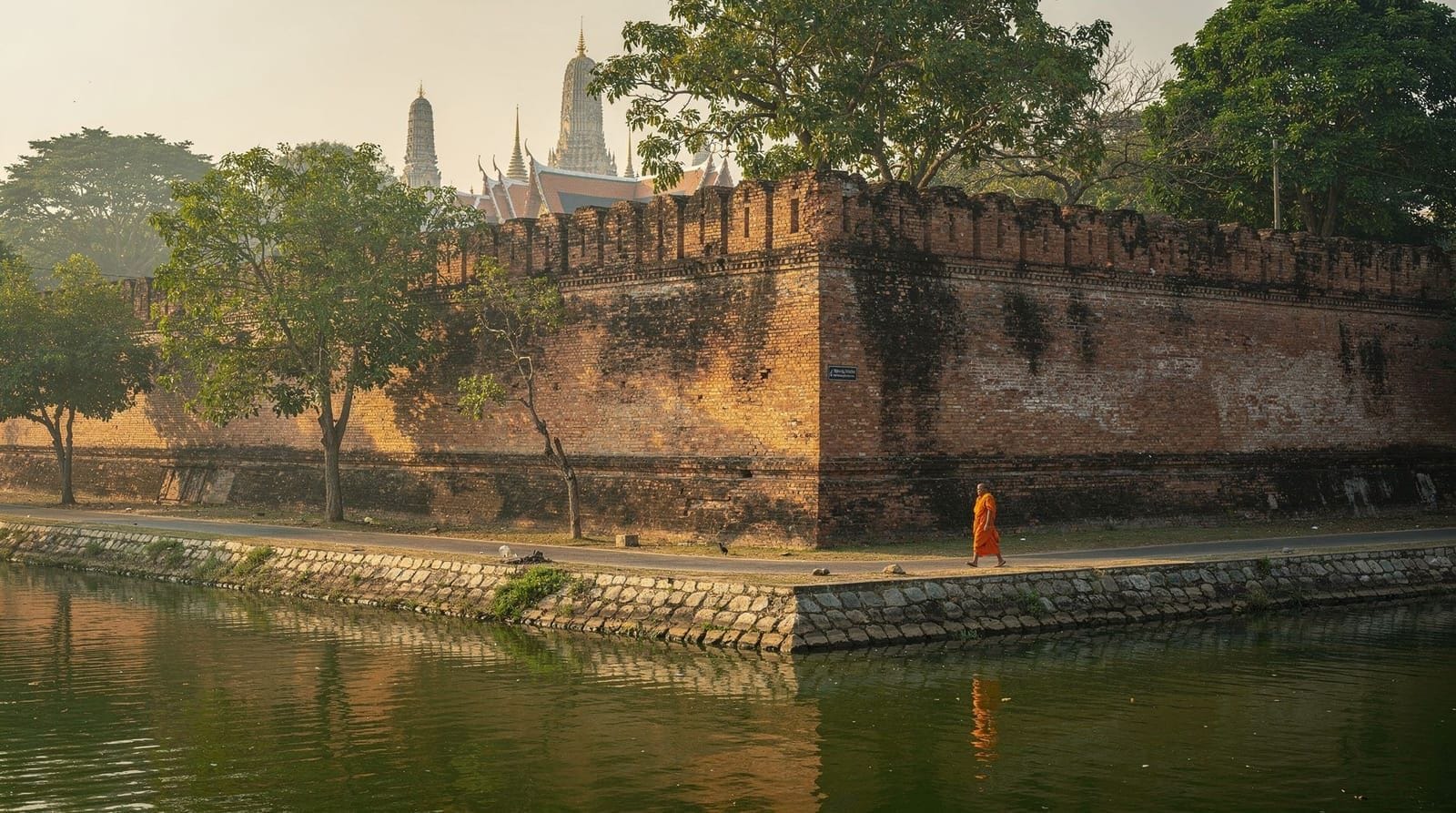
Begin at Wat Phra Singh before 9am, then walk east to Wat Chedi Luang — both are inside the moat and an easy 20-minute walk apart. A guided 3-hour Old City and temples walking tour covers both plus additional stops if you’d rather have context on the murals and history than read plaques yourself.
Afternoon: Tha Phae Gate and lunch
Walk to Tha Phae Gate for lunch — khao soi and other northern Thai dishes run 40-80 THB ($1.10-2.25) at local shops just off the main square. Spend the rest of the afternoon browsing Ratchadamnoen Road’s cafés and shops at an unhurried pace; there’s no need to rush since day two is the more scheduled day of the two.
Evening: Night Bazaar
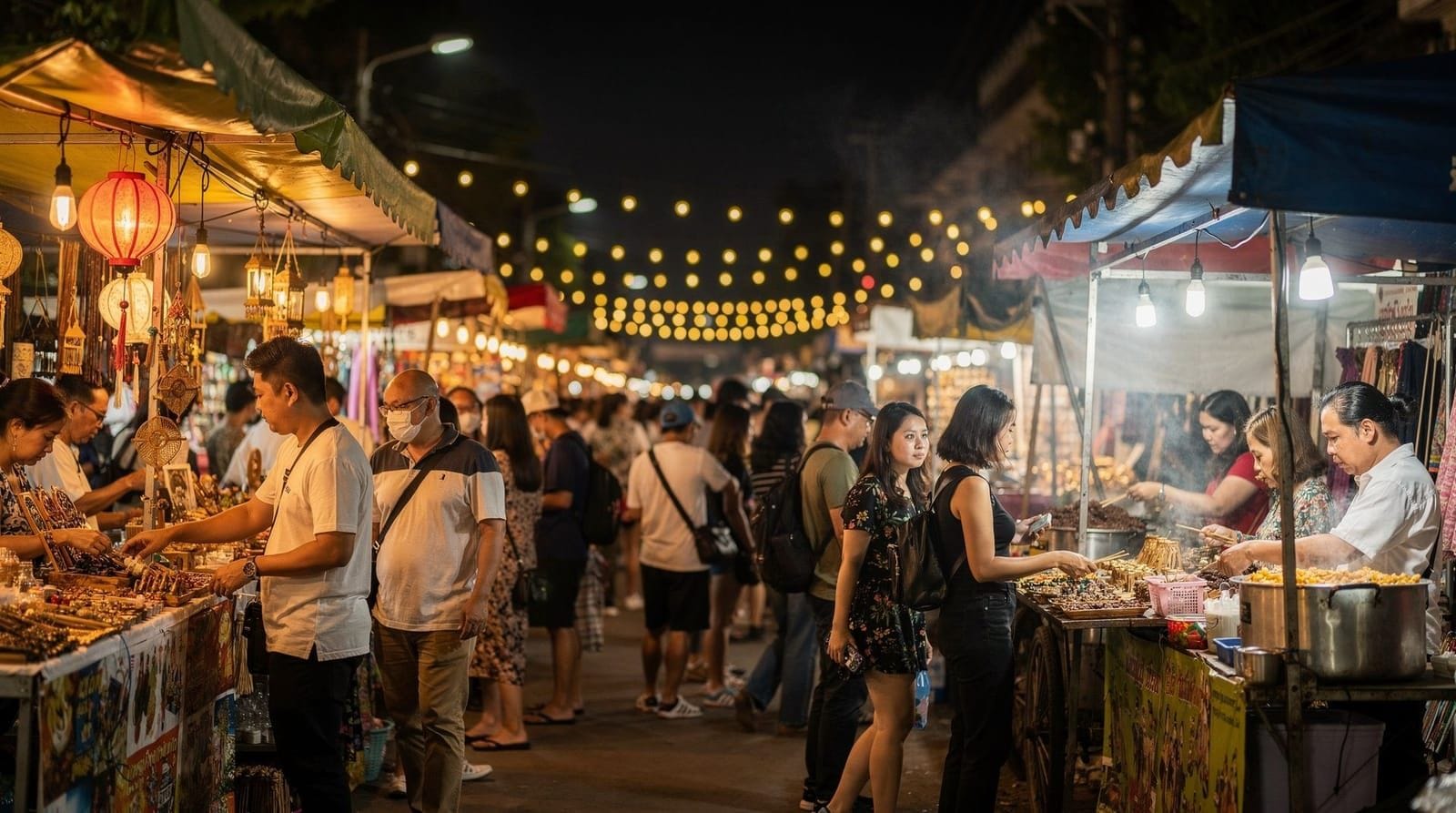
Close day one at the Night Bazaar on Chang Khlan Road, which runs nightly regardless of day of week — a reliable choice if your two days don’t happen to include a Sunday, when Sunday Walking Street would otherwise be the stronger option. Food courts here run cheaper than the sit-down restaurants closer to the river, and haggling is expected on souvenirs (though not on food).
Day 2: Doi Suthep, Nimman, and a slower afternoon
Morning: Doi Suthep before the crowds
Leave by 7-7:30am to reach Doi Suthep before the late-morning tour-bus peak between 11am and 2pm — this single timing decision does more for the quality of your visit than anything else on this itinerary. A shared songthaew from near Chiang Mai University runs 50-100 THB ($1.40-2.80) round trip, though a private car or private Doi Suthep and city temple tour is more direct if you’d rather not wait for a truck to fill.
Climb the 306-step Naga staircase (or take the funicular for a small fee) to reach the gold chedi of Wat Phra That Doi Suthep, circle it clockwise with other visitors, and take in the valley view from the terrace — clearest November through February, hazier during the February-April burning season. A combined Doi Suthep temple and Wat Pha Lat hike adds the smaller forest temple partway down the mountain for travellers who want a quieter, less crowded stop on the same trip.
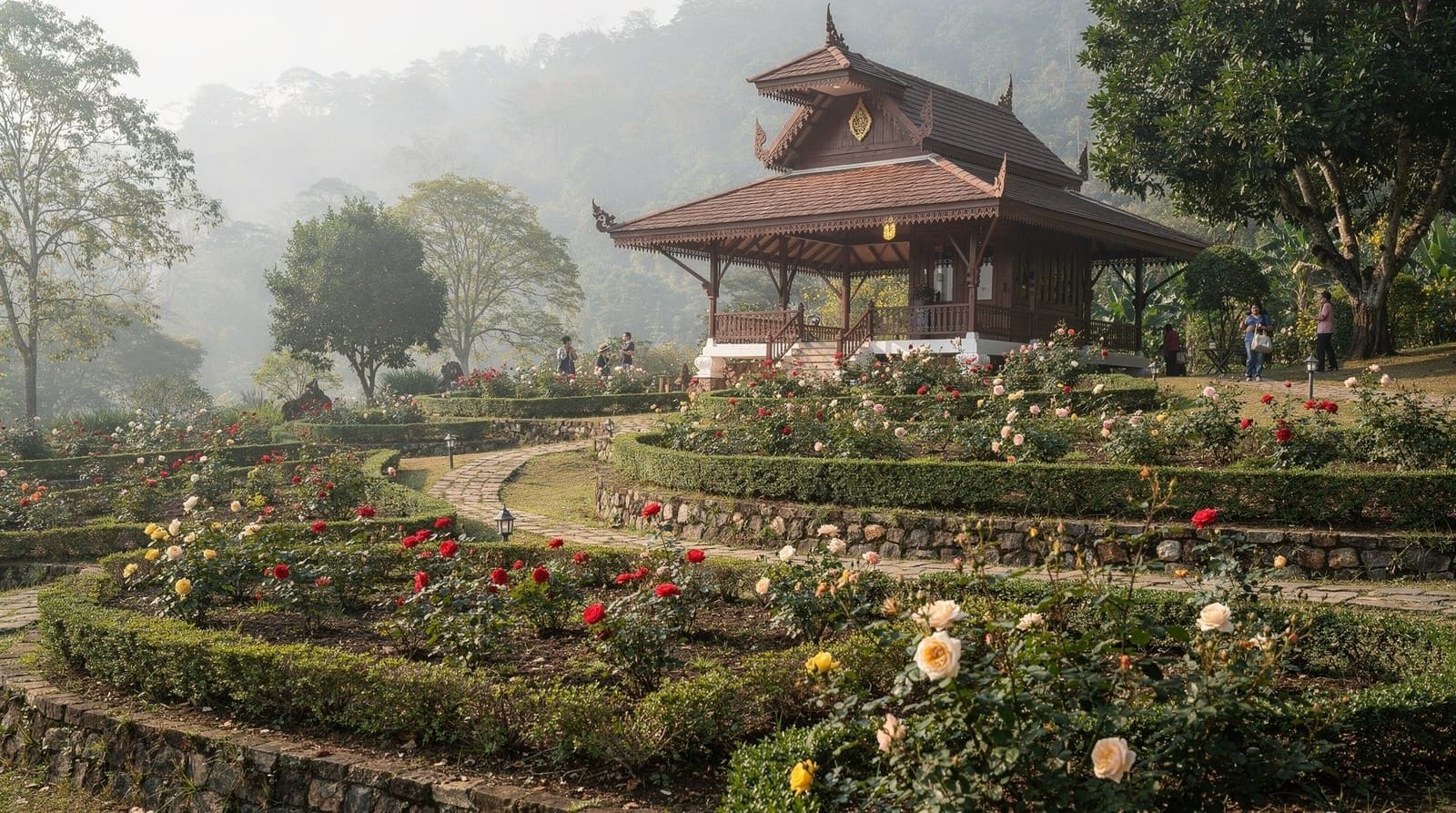
If you have an extra hour, Bhubing Palace, the royal winter residence a few kilometres further up the same road, is worth the detour for its gardens — check its opening days before adding it, since it periodically closes for royal use.
Midday: back down to Wat Umong or straight to Nimman
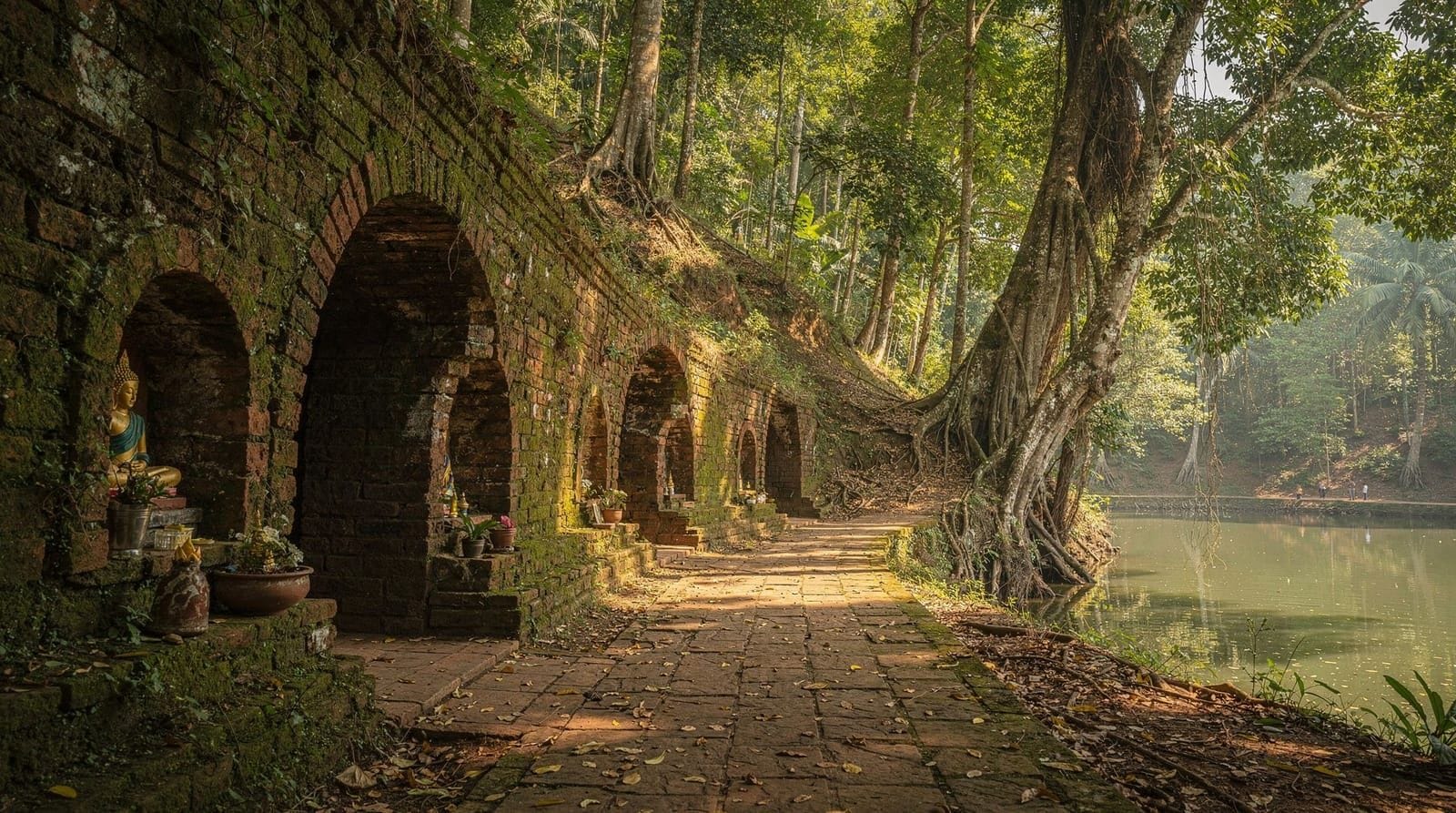
Two reasonable paths from here: if forest temples interest you, Wat Umong sits at the foot of the same mountain range and is known for its tunnel architecture, “talking trees” with Buddhist teachings hung from branches, and a genuinely peaceful lake area — a good contrast to the more crowded main temple above. If you’d rather move straight to lunch and air conditioning, skip ahead to Nimman.
Afternoon: Nimmanhaemin cafés and design shops
Nimmanhaemin — Nimman, to locals — is Chiang Mai’s café and design district, and the road down from Doi Suthep feeds directly into it, making this pairing efficient rather than a detour. Spend the afternoon here at whatever pace suits you: specialty coffee shops, small design boutiques, and the MAYA lifestyle mall all sit within a compact, walkable area. It’s also a noticeably cooler, quieter alternative to the Old City if you want a break from temple crowds and market noise.
Evening: optional return to the Old City
Consider how much of the day you’ve already spent walking and in the heat before deciding — Doi Suthep’s staircase, the temple platform, and a Nimman café-hopping afternoon add up to genuine physical activity by early evening, and there’s no obligation to fill every remaining hour.
If you have energy left, a Grab or songthaew back into the Old City for dinner closes the two days on familiar ground. Otherwise, Nimman itself has a strong dinner scene, and staying local avoids an unnecessary cross-town trip on your final evening.
Practical logistics for two days
Songthaews and Grab cover everything in this itinerary without needing a rental car or scooter — the only genuinely mountain-road segment is the trip up to Doi Suthep, which is better handled by shared songthaew, Grab, or a booked tour than by self-driving on a first visit, given the switchbacks and traffic mixing with buses. Keep small bills on hand for songthaew fares and temple donations; card payment is uncommon outside malls and larger restaurants.
Where to stay for this two-day itinerary
The Old City vs Nimman question is worth resolving before booking accommodation, since it shapes both days of this itinerary. Staying inside the moat puts you closer to day one’s temples and markets, with a slightly longer trip out to Doi Suthep on day two. Staying in Nimman flips this — a longer first day getting into the Old City, but a much shorter final stretch back from Doi Suthep on day two, since the mountain road feeds directly into Nimman. Neither choice is wrong for this itinerary; it comes down to whether you’d rather have shorter transfers on day one or day two.
Budget breakdown for two days
Expect roughly 700-1,000 THB ($20-28) per person for day one (temple donations, meals, and Night Bazaar spending), and 800-1,500 THB ($22-42) for day two once Doi Suthep’s small entry fee, songthaew or tour transport, and a Nimman café stop are factored in. Coffee and pastries in Nimman run noticeably higher than street food prices elsewhere in the city — a specialty coffee can cost 80-120 THB ($2.25-3.35), comparable to prices in many Western cities, which surprises some budget travellers expecting Chiang Mai-wide prices to be uniformly low.
Seasonal notes for a two-day visit
November through February is the most comfortable window for this itinerary, with cooler temperatures making the Old City walking and the Doi Suthep staircase climb noticeably easier than in the hot season (March-May, often exceeding 35°C by midday). If your two days fall during the February-April burning season, the Doi Suthep viewpoint may be hazy regardless of what time you arrive — a genuine limitation rather than a timing issue, and worth knowing in advance so the view isn’t the sole reason you build your morning around an early departure.
Honest planner notes
Two days is tight if you also want to add an elephant sanctuary or cooking class — both are genuinely half-to-full-day commitments, and squeezing one into this schedule usually means cutting Nimman or the Old City evening short. If either interests you, the 3-day itinerary is built specifically to add both without the same time pressure. It’s also worth reading about how many days you actually need before locking in a two-day visit, since Chiang Mai rewards a slower pace more than most Thai cities.
Making the most of a limited Doi Suthep window
Because day two is the only day in this itinerary built around a single fixed timing decision, it’s worth double-checking the weather forecast the night before rather than committing blindly to a 7am departure. If heavy rain or unusually thick haze is forecast for the morning, some travellers choose to swap the day order — spending the first day at Doi Suthep and Nimman, and the second day in the Old City, since the Old City temples and markets are far less weather- or crowd-dependent than the mountain visit. This flexibility is one advantage of a two-day itinerary over a tightly sequenced longer one: there’s enough slack to reorder the two days without losing anything.
Alternative for travellers who dislike early mornings
Not every traveller wants a 7am start on their second day of a trip, especially after a late first night at the markets. If an early Doi Suthep departure genuinely doesn’t suit your pace, a later morning visit (arriving by 10am rather than 8am) is still workable — you’ll share the site with more visitors and the light won’t be as soft for photography, but the temple itself remains fully open and worth seeing regardless of crowd levels. The trade-off is simply a busier, warmer visit rather than a ruined one.
Frequently asked questions about this itinerary
Is two days enough for Chiang Mai?
It’s enough for the Old City and Doi Suthep comfortably. It’s not enough to also add an elephant sanctuary, cooking class, or a day trip to Chiang Rai or Doi Inthanon without rushing.
What time should I leave for Doi Suthep?
By 7-7:30am to beat the 11am-2pm tour-bus peak. This single decision affects the quality of the visit more than any other planning choice.
Do I need a car for two days in Chiang Mai?
No. Songthaews, Grab, and walking cover this entire itinerary, including the trip up to Doi Suthep.
Should I visit Nimman or the Old City area for accommodation?
Either works for this itinerary, but Nimman is a shorter trip back down from Doi Suthep, while the Old City puts you closer to the temples and evening markets on day one.
Can I fit in a cooking class on day two instead of Nimman?
It’s possible but tight — most cooking classes run 4-5 hours including a market visit, which would mean skipping Doi Suthep or Nimman. Better to save it for a third day if you can add one.
What if it’s raining on my Doi Suthep morning?
The temple itself is largely covered, but the staircase and viewpoint terrace are outdoors. Check the forecast the night before and consider swapping days if heavy rain is expected during your window.
Is Bhubing Palace worth adding to day two?
Only if you have an extra hour and check its opening days in advance — it occasionally closes for royal family use, and skipping it doesn’t meaningfully change the rest of the day.
Top experiences
Bookable activities with verified prices and instant confirmation on GetYourGuide.