Thai massage in Chiang Mai: styles, prices, and how to pick a reputable spa
Chiang Mai: Thai Massage for Muscle Relief & Flexibility
What's the honest way to find a good Thai massage in Chiang Mai?
Look for shops with visible price boards, uniformed staff, and a steady mix of Thai and foreign regulars rather than touts calling from the doorway. Expect to pay roughly 200-400 THB (about $6-11) for a one-hour traditional Thai massage in an ordinary neighbourhood shop, and 600-1,500 THB (about $17-42) for a resort-style spa with air-conditioning, private rooms, and an oil or aromatherapy menu. Both can be genuinely good; the difference is comfort level and setting, not necessarily skill.
Chiang Mai has more massage shops per city block than almost anywhere else in Thailand, and that density creates a real planning problem: quality and honesty vary wildly between two storefronts standing side by side. Some of the best, most technically skilled therapists in the country work out of unremarkable open-fronted shops charging a few hundred baht, while some higher-priced, better-decorated spots deliver a rushed, distracted session aimed more at turnover than technique. Knowing what you’re actually paying for - and what to watch out for - matters more here than in most wellness destinations.
Quick answer: Look for shops with visible price boards, uniformed staff, and a steady mix of Thai and foreign regulars rather than touts calling from the doorway. Expect to pay roughly 200-400 THB (about $6-11) for a one-hour traditional Thai massage in an ordinary neighbourhood shop, and 600-1,500 THB (about $17-42) for a resort-style spa with air-conditioning, private rooms, and an oil or aromatherapy menu. Both can be genuinely good; the difference is comfort level and setting, not necessarily skill.
What Thai massage actually is
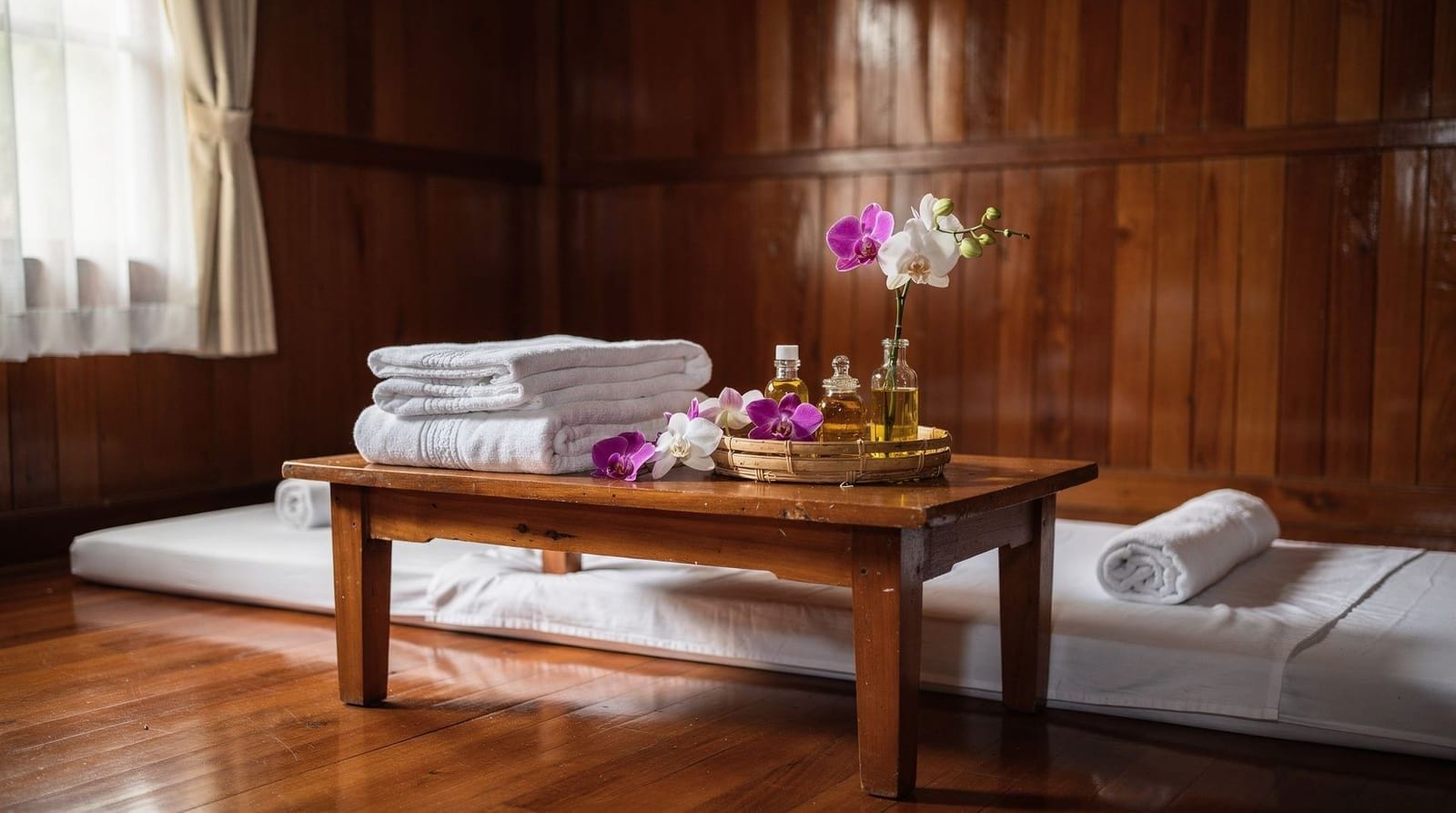
Traditional Thai massage - Nuad Thai in Thai, sometimes called “Nuad Boran” (ancient massage) - is fundamentally different from a Western spa massage. It’s performed fully clothed, typically on a firm mat or thin mattress on the floor rather than an elevated table, and combines rhythmic pressure along the body’s energy lines (sen, a concept borrowed from Ayurvedic and traditional Thai medical theory) with assisted yoga-like stretching. A therapist will use hands, thumbs, forearms, elbows, knees, and sometimes feet to apply pressure, and will move your limbs into stretches you wouldn’t easily reach alone - a good therapist reads your flexibility and adjusts rather than forcing a fixed sequence.
UNESCO added Nuad Thai to its Representative List of the Intangible Cultural Heritage of Humanity in 2019, an unusually formal recognition for what much of the outside world still thinks of as a beach-holiday spa treatment. The listing specifically credits its role as a living, teacher-to-student healing tradition rather than a modern wellness invention, which is part of why Chiang Mai - long considered a centre of traditional Thai medicine - matters so much to the practice’s history.
Northern (Lanna) style versus southern style
Most visitors never notice the regional distinction, but Chiang Mai sits within the northern Thai, or Lanna-influenced, massage tradition, which tends to use slower rhythms, more emphasis on gentle rocking and compression, and a generally less aggressively deep style than what’s often associated with southern schools closer to Bangkok and the Ayutthaya-linked lineage taught at Wat Pho. Neither is objectively better; the northern approach tends to suit visitors who find very deep-pressure massage uncomfortable, while those specifically seeking intense, therapeutic-strength pressure sometimes need to ask for it directly, since the local default leans gentler.
Individual therapist training varies enough that this regional generalisation only goes so far - a therapist trained at Chiang Mai’s International Training Massage school or the Old Medicine Hospital’s programs may work in either style depending on their teacher, so treating the north/south distinction as a loose signal rather than a hard rule is the more accurate way to think about it.
What a typical session involves
A full-body Thai massage session usually runs 60-120 minutes and moves systematically from feet and legs, up through hips and back, to arms, shoulders, neck, and sometimes a light head and face component at the end. You’ll be given loose cotton pyjama-style clothing to change into at most shops (a hygienic, practical touch, since Thai massage is done fully dressed). Expect the therapist to check in periodically about pressure, and expect a genuinely varied range of motion - deep compression along the legs, forearm rolling along the back, and stretches that push knees toward chest or twist the spine gently.
A Thai massage focused on muscle relief and flexibility is a useful starting point for visitors who want a traditional, therapeutic-leaning session in a vetted, reviewed setting rather than gambling on an unfamiliar street-side shop during a first visit.
Where to get it: street shops, spas, and everything between
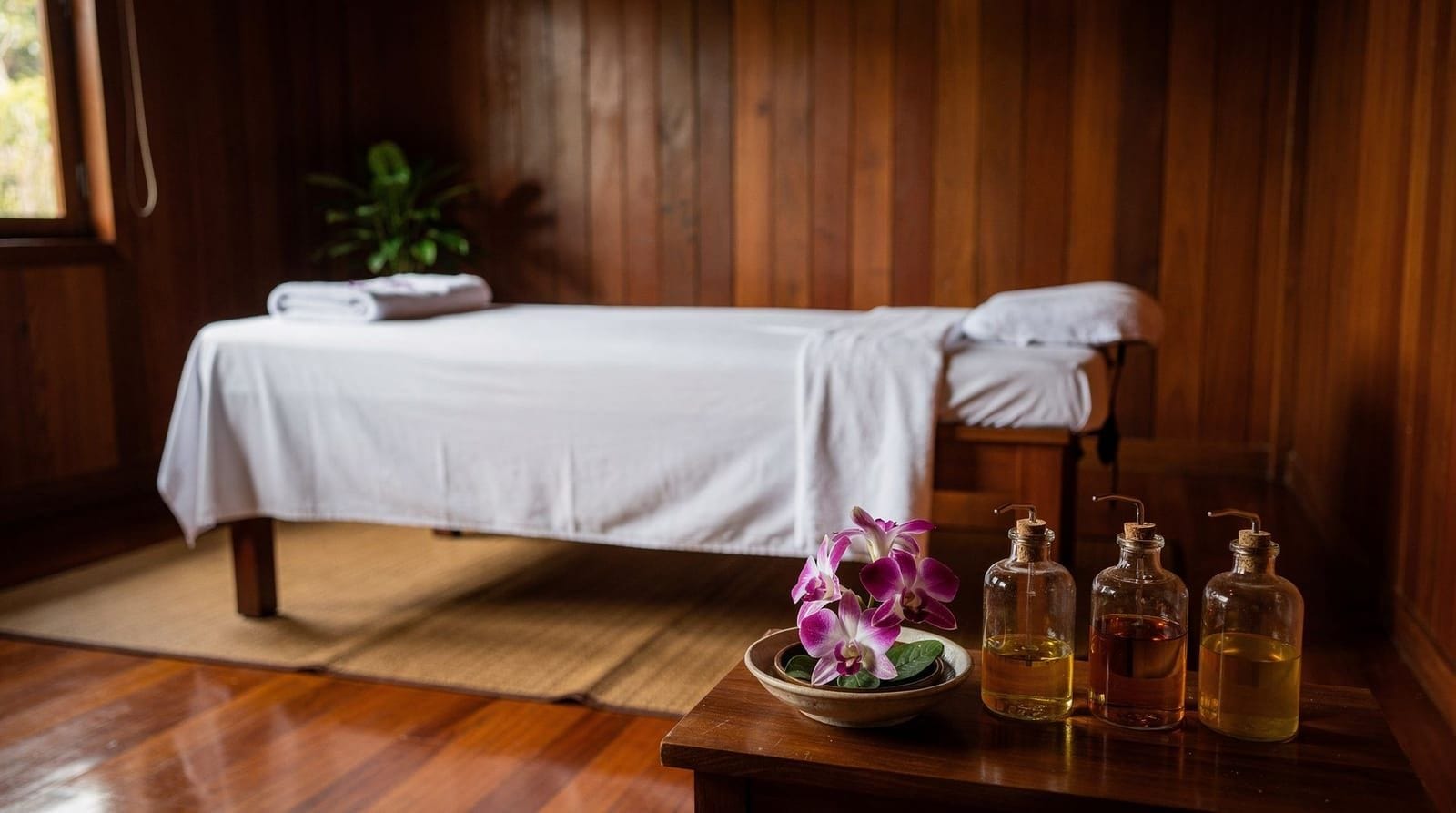
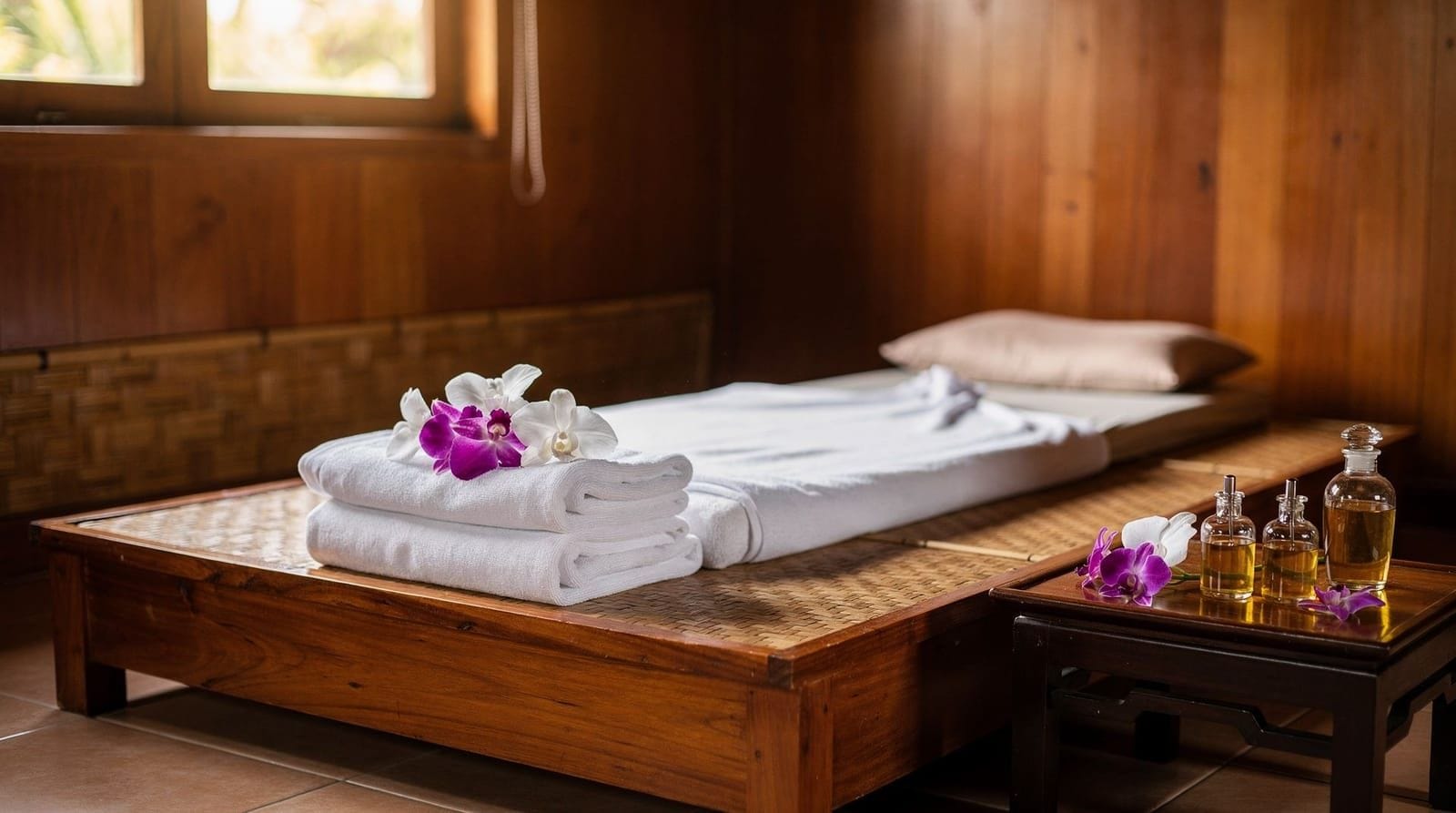
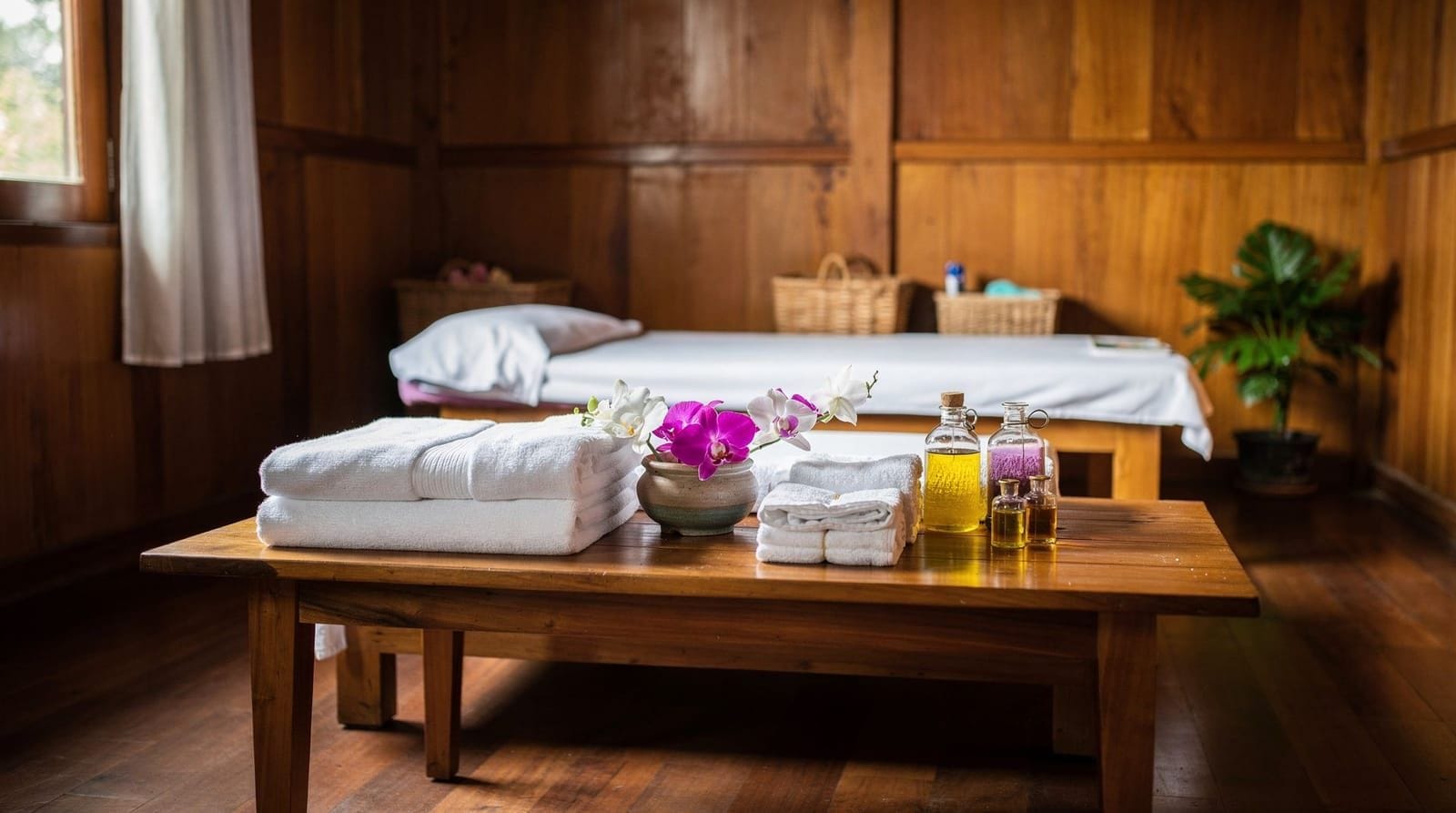
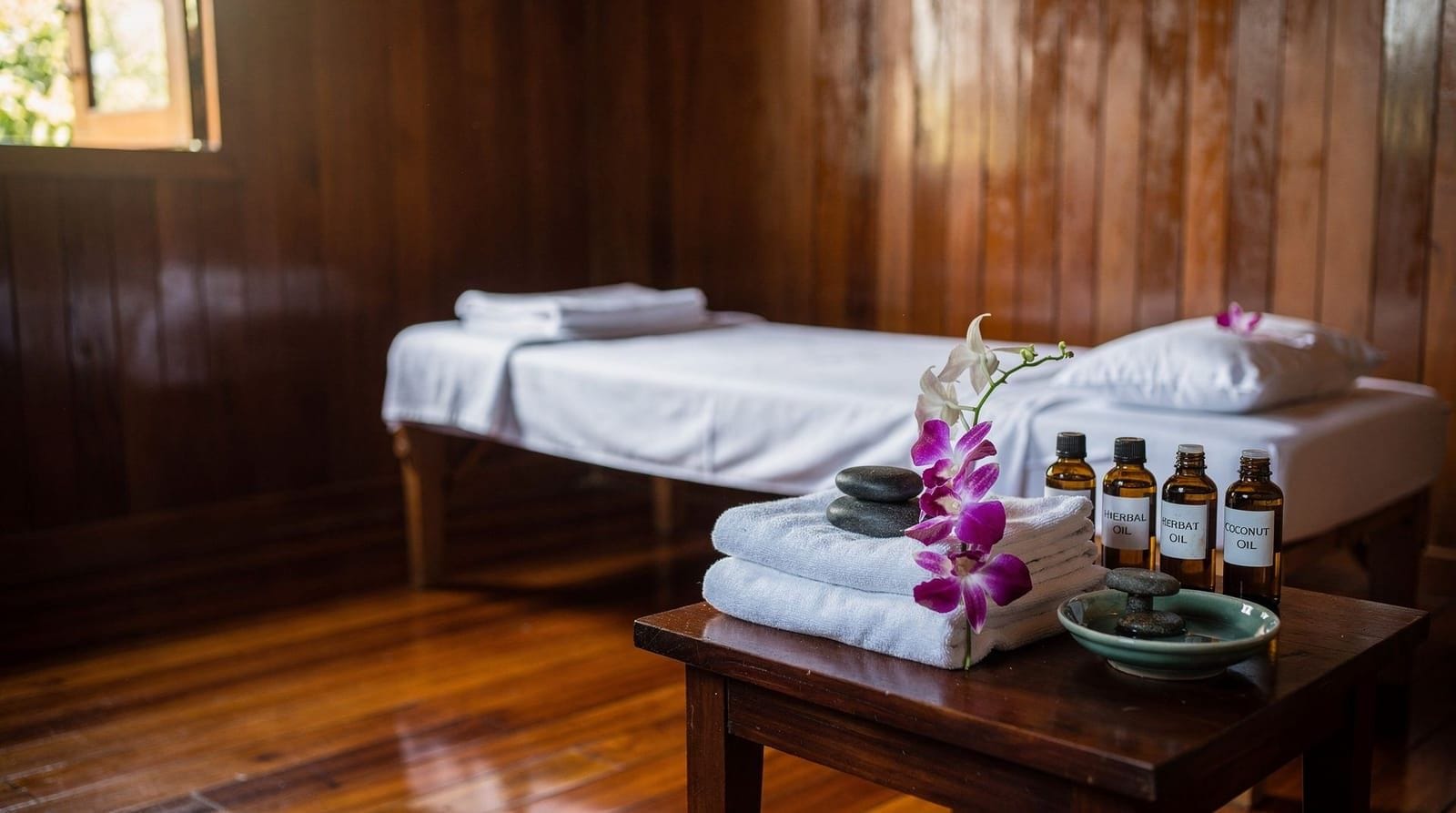
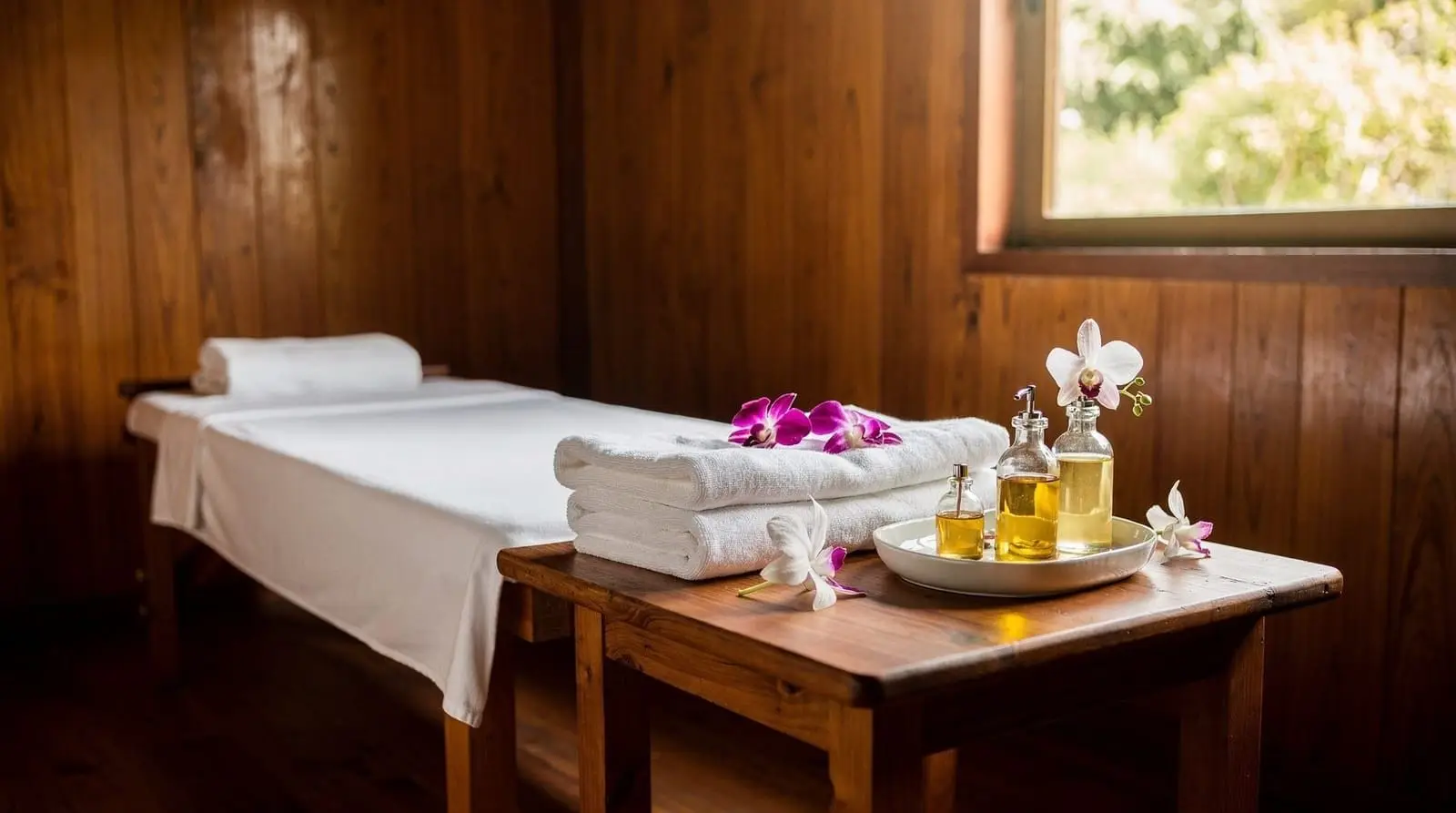
Chiang Mai’s massage landscape splits roughly into three tiers. Simple, open-fronted neighbourhood shops - common throughout the Old City, around Nimmanhaemin, and clustered near the Night Bazaar and Anusarn Market - offer mat-based Thai massage and foot massage at the lowest prices, usually 200-400 THB per hour, with minimal decor but frequently excellent technique. Mid-range spas add air-conditioning, semi-private rooms, tea service, and a wider menu including oil and aromatherapy options, typically 400-900 THB per hour. Higher-end resort spas and destination wellness centres push into the 1,000-2,500+ THB range for extended treatments, private suites, and a full menu of scrubs, wraps, and multi-therapist packages.
For visitors who want the reassurance of a reviewed, higher-comfort setting without researching individual shopfronts, a 90-minute oil massage at an award-winning eco spa or a spa session at Let’s Relax Spa in One Nimman both sit solidly in that mid-to-upper tier, with the latter benefiting from One Nimman’s central, easy-to-find location. For a more traditional healing-focused treatment menu, traditional Thai healing at Khum Varee Spa leans into herbal and heritage-style techniques rather than a generic international spa menu.
Reading a shop before you walk in
A handful of visible signals separate a straightforward, professionally run massage shop from one to avoid. A posted price list at the entrance - in Thai and English, itemising Thai massage, foot massage, oil massage, and duration options - is the single strongest positive signal, since it means pricing is standardised rather than negotiated on the spot. Staff in matching uniforms (often simple polo shirts or traditional-style tops) signal an organised operation rather than an ad hoc one. A steady flow of local Thai customers alongside visitors is a good sign too - locals don’t return to shops that don’t deliver a real massage.
Conversely, shops with staff aggressively calling out or gesturing from the doorway, vague “special massage” language on signage, unusually dim interiors relative to neighbouring shops, or price structures that seem to shift depending on who’s asking are all signals to walk past. These red flags cluster more heavily around certain stretches of the Night Bazaar and a handful of side sois than in the Old City or Nimman generally, though isolated exceptions exist everywhere.
The “happy ending” issue, addressed honestly
It would be dishonest to write a Chiang Mai massage guide without naming this directly: a small minority of establishments across Thailand’s tourist areas, including parts of Chiang Mai, use “massage” signage as a front for sexual services, and a slightly larger minority of otherwise legitimate-looking shops will offer an unsolicited upsell mid-session. Neither situation reflects the broader industry, which is overwhelmingly straightforward and professional, but visitors should know what to look for and how to respond.
Shops with unusually low advertised prices paired with aggressive street solicitation, blacked-out windows, and staff dressed in a way that doesn’t match a therapeutic setting are the main pattern to avoid. If an unwanted upsell happens mid-session at an otherwise ordinary-seeming shop, a firm, calm “no thank you, just massage” reliably ends it - therapists at legitimate shops generally respect a clear boundary immediately. Booking a vetted, reviewed spa through a platform in advance removes this ambiguity entirely for visitors who’d rather not navigate it on the ground, which is one practical reason travellers lean toward a known name for at least their first session in the city.
Social-enterprise and training-school options
Some of Chiang Mai’s most reputable massage providers are run as social enterprises or training programs rather than purely commercial spas - most notably schools connected to vocational training for formerly incarcerated women, which combine solid technique with a transparent, well-documented mission. These deserve their own dedicated look rather than a passing mention here; see the guide to Chiang Mai’s women’s training massage schools for specifics on programs, pricing, and how to book them.
Separately, Chiang Mai is also home to internationally respected massage teaching institutions, including the International Training Massage school and programs historically associated with the Old Medicine Hospital (Shivagakomarpaj school), both of which train therapists who go on to work throughout the city’s spas and shops - part of why the overall skill level here tends to run higher than in many other Thai destinations.
Foot massage as its own category
Foot massage (nuad tao) deserves separate mention because it’s often treated as an afterthought when it’s genuinely one of the best-value treatments in the city. A standard foot massage covers the feet, calves, and sometimes the lower legs and hands, using a combination of pressure-point work and a wooden or plastic stick tool to work specific reflex points. Sessions typically run 30-60 minutes and cost 150-350 THB, making a foot massage after a long day of walking between temples or markets one of the most efficient recovery options available - many visitors find a 45-minute foot massage does more for tired legs than an equivalent-length full body session. Shops specialising in foot massage are common in the Old City and along the main tourist streets, often with rows of reclining chairs facing the street so you can watch the city go by while being worked on.
Hygiene, health, and when to skip it
Reputable shops change or launder linens between clients, provide clean massage clothing, and expect you to shower beforehand if you’ve been sweating through a day of sightseeing - some shops offer a quick shower facility, though most simply expect reasonably clean skin on arrival. Feet in particular get washed at the start of most foot and full-body sessions as standard practice, not an upsell.
Certain conditions warrant caution or an outright skip: pregnancy (many shops decline full massage in the first trimester and modify pressure significantly afterward - always disclose pregnancy before booking), recent surgery, acute injuries, skin infections, fever, or deep vein thrombosis history. A responsible therapist will ask about existing conditions before starting and adjust or decline accordingly; if a shop doesn’t ask anything at all before diving in, that’s a minor but real quality signal worth noting.
Home and hotel massage services
Beyond fixed-location shops and spas, a number of operators run mobile or in-room massage services that bring a therapist directly to a hotel room or rented apartment, useful for visitors who’d rather not go out after a long travel day or who want a private, unhurried session without a shop’s schedule pressure. A home massage and spa e-voucher covers this format, typically priced close to mid-range spa rates once the convenience of in-room service is factored in. Most reputable hotels can also arrange an in-house or on-call therapist directly through the front desk, generally at a modest premium over a walk-in shop price.
Couples and small-group sessions
Many mid-range and higher-end spas offer twin treatment rooms specifically for couples or friends who want to be massaged alongside each other rather than separately, and this is worth requesting explicitly when booking rather than assuming it’s automatic - simple shops with open floor-mat layouts often accommodate this informally anyway, since several mats in one room is the default setup. Higher-end spas with private single rooms may need advance notice to allocate a twin room, particularly during busy cool-season evenings.
A short glossary that helps on the ground
A handful of Thai words and phrases smooth over most language gaps in a massage shop even with no shared English: “nuad thai” (Thai massage), “nuad tao” (foot massage), “nuad namman” (oil massage), “bao bao” (softer/gentler), “raeng raeng” (firmer/harder), and “jep” (it hurts, said clearly if pressure is genuinely too much rather than just intense). Pointing at a price board and holding up fingers for duration works perfectly well too - most shops that see regular visitor traffic are used to non-verbal communication and will check in through simple gestures throughout the session regardless of shared language.
Seasonal considerations
Chiang Mai’s cool season (November-February) is peak visitor season, and popular shops and spas - particularly well-reviewed social-enterprise schools with limited staff - can have short waits or benefit from booking a few hours ahead. The hot season (March-May) sees fewer visitors but higher demand for air-conditioned spa settings over open-fronted shops, simply for comfort. During the rainy season (roughly June-October), covered and air-conditioned venues have an obvious practical edge, though open-fronted shops remain fully operational under their awnings between downpours, and prices don’t meaningfully shift with season.
Thai massage versus oil massage: a quick distinction
Visitors new to Thailand sometimes assume “Thai massage” and “oil massage” are the same service at different price points, but they’re genuinely different treatments - one performed clothed on a mat with stretching, the other performed with oil on a table in a style closer to a Western massage. Since the choice materially affects what to expect and what to wear, it gets a full breakdown in the Thai massage versus oil massage guide rather than being compressed into a paragraph here.
Herbal compress and steam as add-ons
Many shops and spas offer a herbal compress massage (luk pra kob) as an add-on or standalone treatment - a cloth bundle of steamed herbs including lemongrass, turmeric, and prai pressed rhythmically against muscles alongside or after standard massage strokes. Some venues extend this into a full herbal steam sauna experience. Both are worth understanding on their own terms; see the herbal steam and sauna guide for how these traditional treatments work and where to find them.
Meditation and yoga as a complementary wellness track
Massage covers the physical side of Chiang Mai’s wellness scene, but a meaningful number of visitors combine it with meditation retreats or yoga sessions at the city’s temples and dedicated retreat centres. If that broader wellness angle interests you, the meditation retreat guide covers temple-based and structured retreat options separately from the massage-focused content here.
Booking logistics and timing
Walk-in service is the norm at the vast majority of Chiang Mai massage shops, and waiting more than 15 minutes for an available therapist is uncommon outside peak evening hours (roughly 6-9pm) in the busiest tourist streets. Higher-end spas, and particularly well-regarded social-enterprise schools with limited staff, do fill up during the cool season (November-February) when visitor numbers peak, so booking a slot a few hours ahead - or the day before for a specific therapist - is a reasonable precaution rather than a strict requirement.
Morning and early-afternoon slots tend to be quieter across the board, which suits visitors who’d rather not wait, while evenings after a day of sightseeing are understandably the most popular window and the one most worth booking ahead for.
Combining massage with a broader day out
Because massage shops are so densely distributed through the city, most visitors don’t plan a dedicated “massage day” so much as fold a session into a longer day of sightseeing - a foot massage after a morning at Wat Phra Singh or Wat Chedi Luang, or a full session after an afternoon exploring Nimmanhaemin’s cafés, ahead of an evening at the Night Bazaar. For a fuller shortlist of specific, ranked spas rather than the general category overview covered here, see the best spas in Chiang Mai, and for the full spread of things to do in the wellness category, the wellness and spa hub rounds up every format side by side.
A realistic bottom line
Thai massage in Chiang Mai ranges from genuinely excellent to actively worth avoiding, sometimes on the same street. The good news is that the signals distinguishing the two are fairly easy to read once you know what to look for - posted prices, uniformed staff, a mixed local-and-visitor clientele, and an absence of aggressive street solicitation. Visitors who’d rather remove the guesswork entirely, particularly for a first session in an unfamiliar city, can reasonably start with a reviewed, bookable spa experience and branch out to street-side shops once they’ve got a feel for the city’s massage culture first-hand.
Frequently asked questions about Thai massage in Chiang Mai: styles, prices, and how to pick a reputable spa
How much should Thai massage cost in Chiang Mai?
Is Thai massage supposed to hurt?
What's the difference between a street-side massage shop and a spa?
How do I avoid disreputable massage shops in Chiang Mai?
Should I tip after a Thai massage?
Do I need to book Thai massage in advance in Chiang Mai?
What is Nuad Thai and why is it UNESCO-listed?
Top experiences
Bookable activities with verified prices and instant confirmation on GetYourGuide.