San Kamphaeng day trip guide
Chiang Mai: Mae Kampong Village, Hot Springs & Bor Sang Tour
What's the best way to spend a day in San Kamphaeng?
Combine San Kamphaeng hot springs (steaming geothermal pools and an egg-boiling stream) with the nearby Bo Sang umbrella village (hand-painted sa-paper umbrella workshops) — both sit along the same eastern route, 30-60 minutes from Chiang Mai, and together make a comfortable half-day loop.
The San Kamphaeng and Mae On districts east of Chiang Mai hold a cluster of low-key, easy-to-combine stops — geothermal hot springs, a hand-painted umbrella village, a wider crafts road for silk and celadon shopping — that add up to one of the more relaxed half-day loops near the city, without the long drives or crowded temple circuits of the bigger-name day trips.
Quick answer: the classic San Kamphaeng day combines the hot springs with nearby Bo Sang umbrella village, both along the same eastern route roughly 30-60 minutes from Chiang Mai, making an easy half-day loop that leaves your afternoon free.
San Kamphaeng hot springs
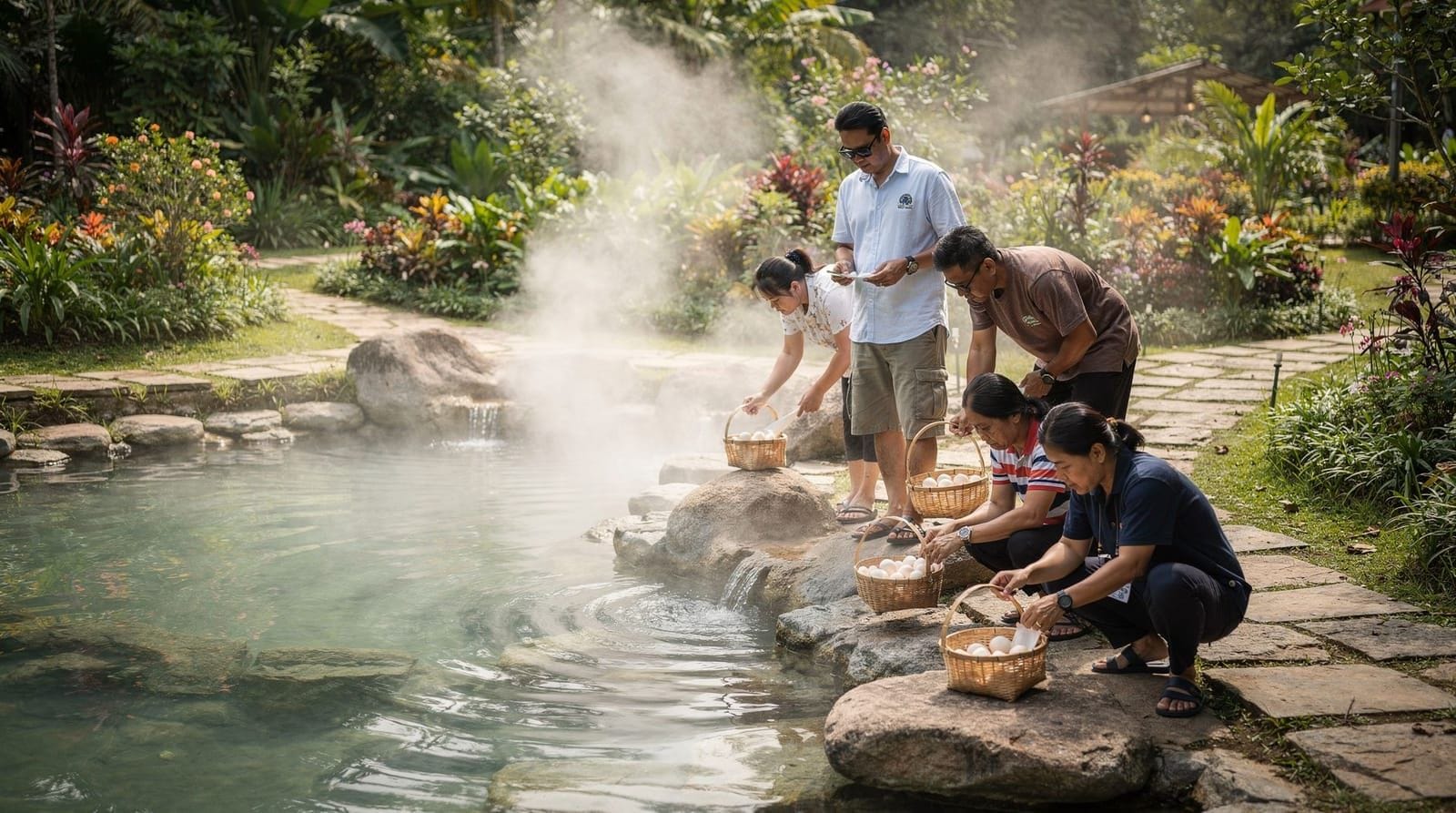
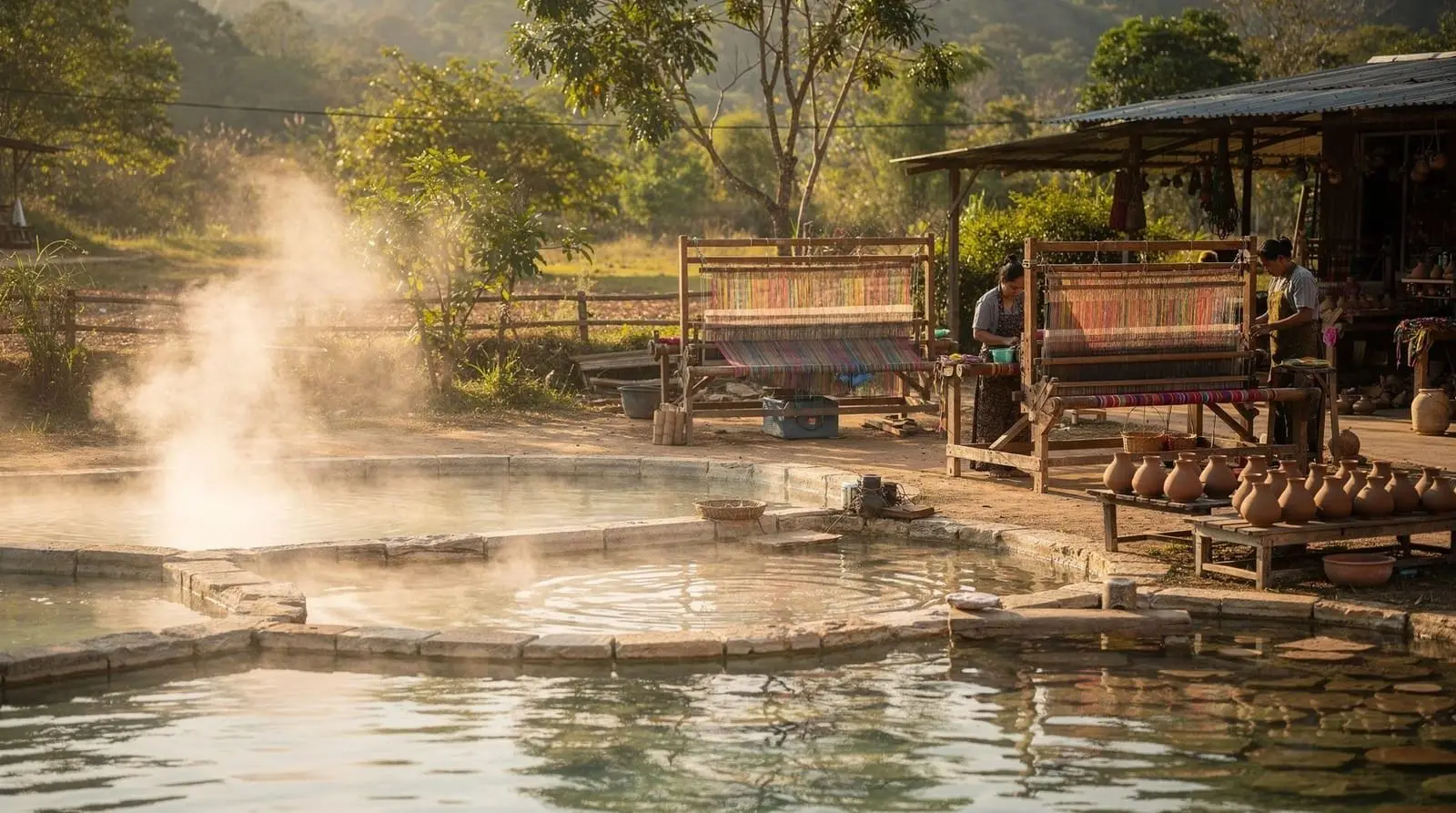
The springs themselves are a genuinely low-key stop: steaming geothermal pools set in landscaped grounds, an egg-boiling stream where you can cook a raw egg (sold on-site for about 20-30 THB) directly in the naturally hot water as a novelty activity, and private mineral bath houses for visitors wanting a soak rather than just a look. General entry runs around 100 THB (roughly $3), with private jacuzzi rooms adding another 150-300 THB. A Mae Kampong village, hot springs and Bo Sang tour bundles the springs with two other nearby stops into a single organized day if you’d rather not arrange transport between each yourself.
Most visitors spend 1-2 hours here — enough for the pools, the egg-boiling stream, and perhaps a private bath, without needing to treat it as a full-day destination on its own.
Bo Sang umbrella village
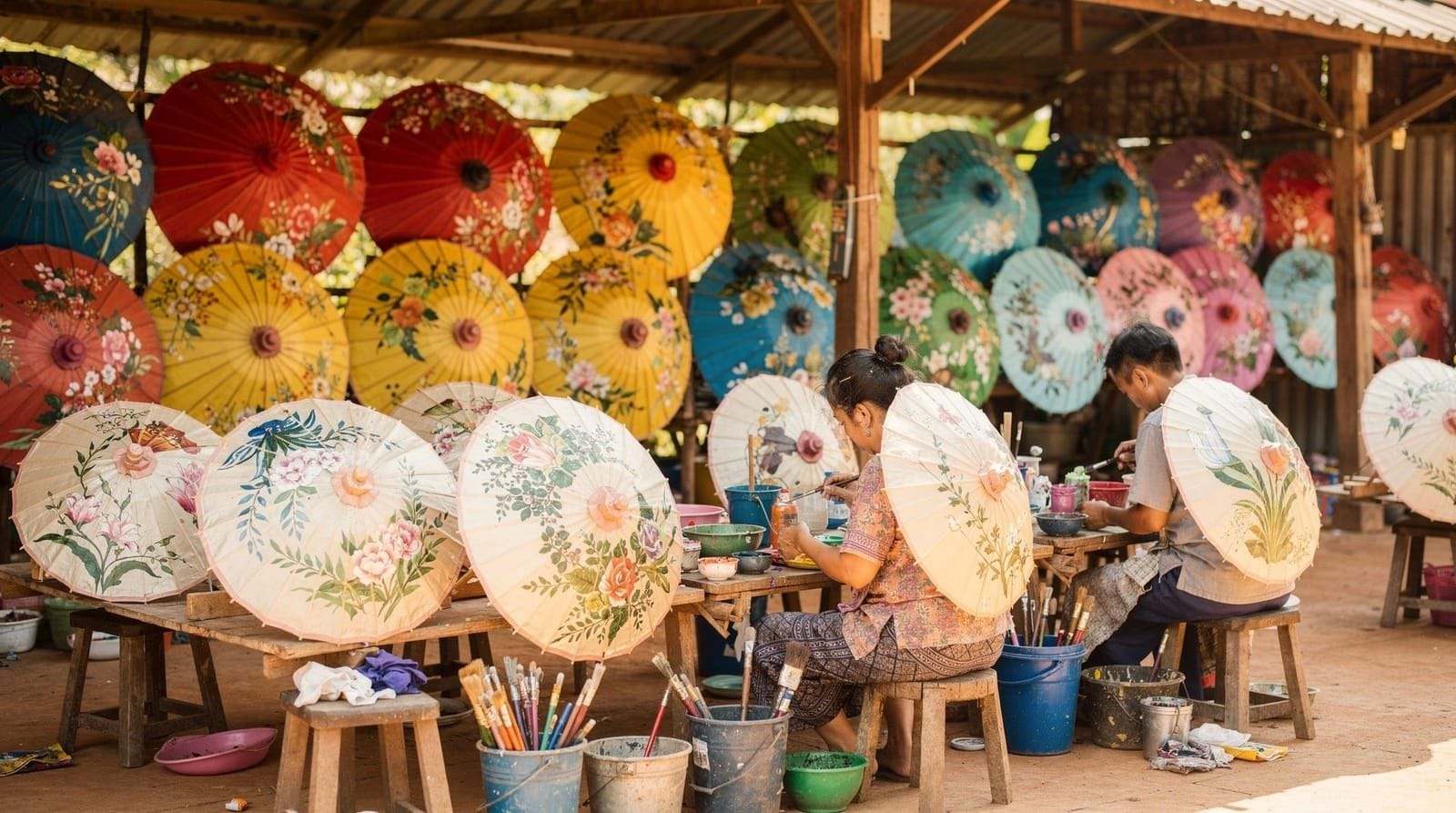
A short drive from the springs, Bo Sang is Chiang Mai’s hand-painted umbrella village, where sa-paper (mulberry bark paper) umbrellas and parasols are made and painted in open-air workshops visible to visitors. A paint-your-own umbrella workshop costs roughly 150-300 THB, while finished umbrellas range from about 50 THB for small, plain designs to several thousand THB for large, elaborately hand-painted pieces. A Bo Sang umbrella-making experience combined with a Sticky Waterfalls visit is a popular way to pair the craft village with a different kind of stop if hot springs aren’t your priority.
January brings the Bo Sang Umbrella Festival, with parades and illuminated umbrella displays — worth timing a visit around if your trip falls in that window, though the workshops themselves run year-round.
Extending into the wider crafts road
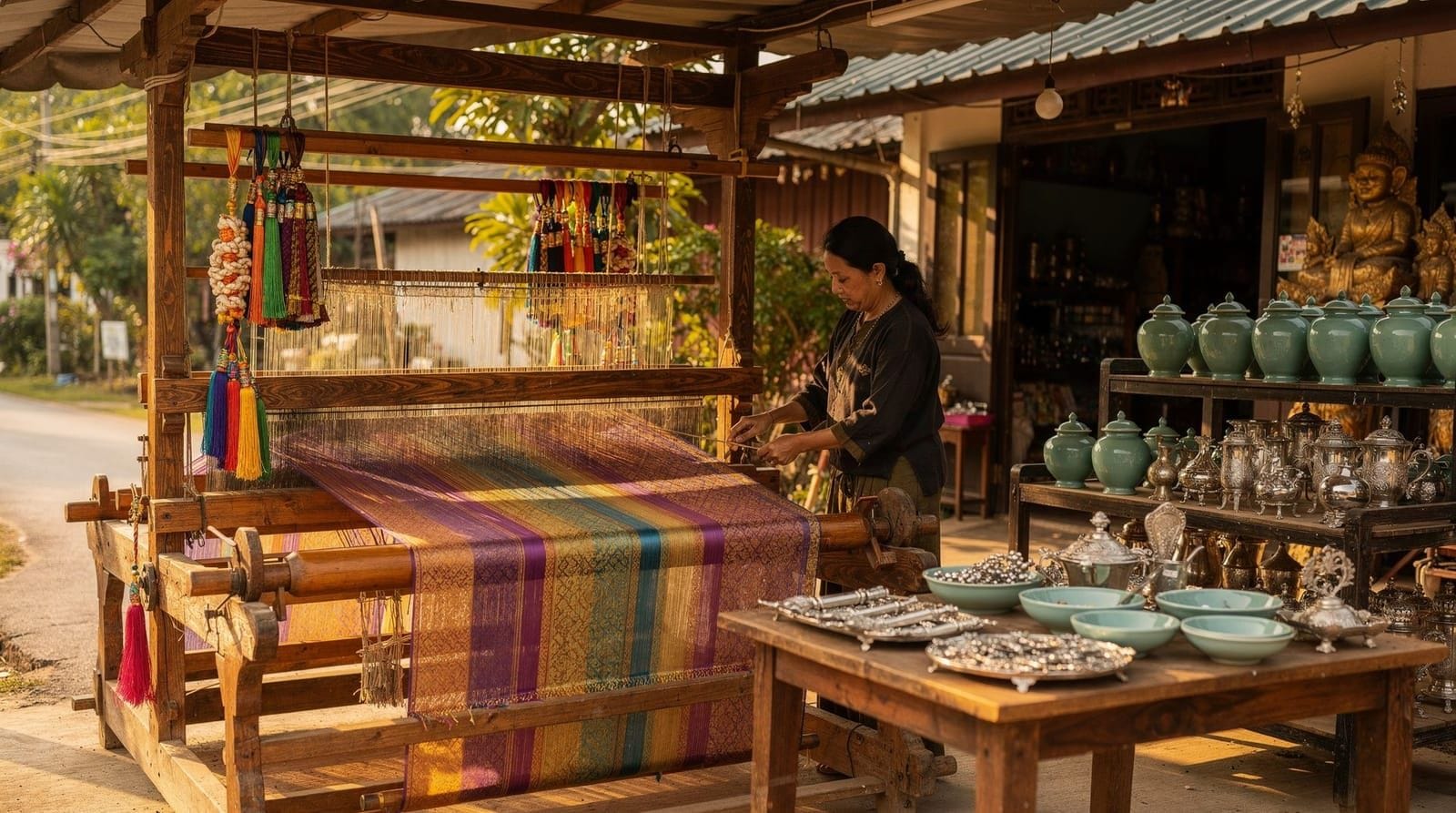
Beyond Bo Sang, the San Kamphaeng crafts road continues with workshops for silk weaving, celadon pottery and silverware — a genuine handicraft highway rather than a single village stop. If shopping for handicrafts is a priority for your trip, allowing extra time along this road (covered in the San Kamphaeng crafts road destination guide) turns the half-day loop into a fuller day, particularly if you’re comparison-shopping for silk or ceramics rather than just browsing.
Combining with Mae Kampong village
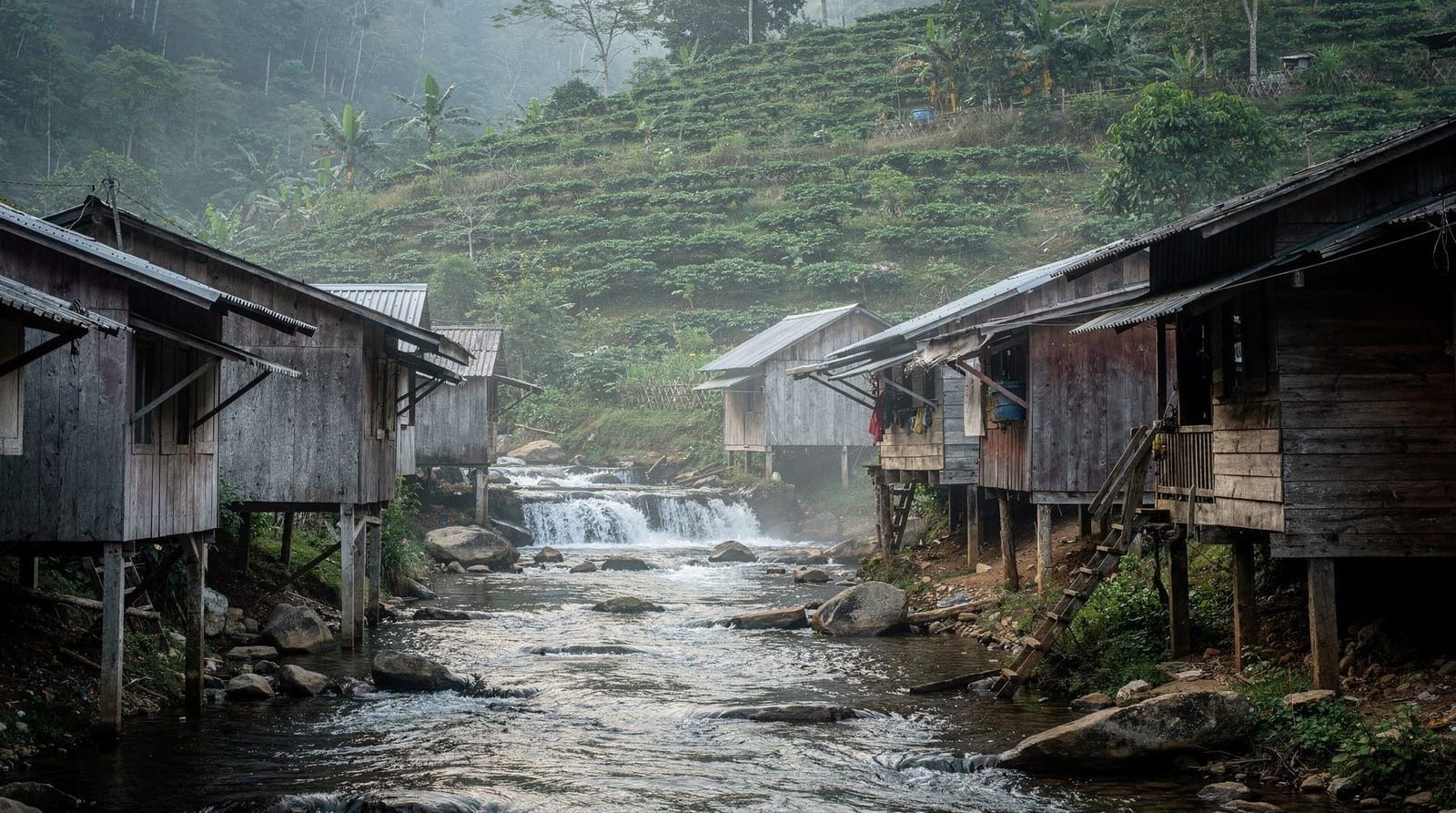
Travelers with a bit more time sometimes extend the loop further into the hills to Mae Kampong village, a misty mountain village known for fermented tea, coffee culture and a small waterfall running through the settlement. This adds roughly 30-45 minutes of additional driving beyond the hot springs, so it’s best treated as a genuine full-day extension rather than squeezed into the same half day as the springs and Bo Sang — a Doi Inthanon and Bo Sang umbrella village tour is one alternative pairing for travelers who’d rather combine the umbrella village with a different, farther destination instead.
A realistic half-day plan
Most visitors start with the hot springs in the cooler morning hours (the steam-versus-cool-air contrast is more dramatic earlier in the day, particularly in the cool season), then move to Bo Sang for the umbrella workshops around midday, wrapping up by early afternoon. This leaves the rest of the day open for a different activity entirely — a night market visit, a cooking class, or simply rest — rather than needing to fill an entire day with San Kamphaeng-area stops alone.
Getting there
A Grab or private driver from the old city to San Kamphaeng hot springs runs 45-60 minutes and roughly 600-900 THB ($17-26) one-way; Bo Sang, being closer to the city, is a shorter 30-40 minute, 500-700 THB ($14-20) ride. There’s no direct public transport covering both stops together, so a private driver for the loop, a rented scooter, or a packaged half-day tour are the practical options.
Best time to visit
Year-round is workable for both stops, though cool-season mornings (November-February) give the most dramatic contrast at the hot springs between steaming water and cool air. Bo Sang’s workshops run regardless of season, with the added draw of the January umbrella festival for those visiting in that specific window.
A history of San Kamphaeng’s craft traditions
San Kamphaeng district’s identity as a handicraft center developed over generations, with different villages along the same road historically specializing in different crafts — Bo Sang’s sa-paper umbrellas, other stretches known for silk weaving passed down through families, and celadon pottery workshops producing the distinctive pale-green glazed ceramics associated with northern Thailand. This specialization-by-village pattern is why the “crafts road” functions less like a single market and more like a series of distinct workshop districts, each worth a different amount of browsing time depending on your specific interest — silk shoppers might linger longer at the weaving workshops, while those drawn to Bo Sang’s umbrellas may want more time there than at the pottery stops further along.
Silk and celadon shopping in more depth
For visitors specifically interested in textiles, the silk workshops along the crafts road demonstrate the full production process, from silkworm cultivation through weaving, giving genuine insight into a craft that’s easy to buy without understanding. Prices for finished silk products vary enormously by quality and weave complexity, so comparing a few workshops before purchasing is worthwhile if you’re making a significant purchase rather than a small souvenir. Celadon pottery, recognizable by its pale green to blue-green crackled glaze, ranges from small affordable pieces to larger, more elaborate works — most workshops allow browsing without pressure to purchase, and shipping arrangements for larger or fragile pieces are commonly available for international visitors.
Food along the route
The San Kamphaeng area has a reasonable spread of local restaurants catering to both day-trippers and residents, with northern Thai specialties like khao soi and sai oua (northern Thai sausage) available at simple roadside restaurants along the main route. Given the relatively short half-day nature of this trip, most visitors either eat before departing Chiang Mai or stop briefly near Bo Sang or the hot springs rather than planning an extended dining stop, though the crafts road does have a few more substantial restaurants worth considering if you’re extending the day with additional shopping time.
Accessibility notes
Both the hot springs and Bo Sang village are relatively accessible stops, with paved or well-maintained paths and minimal walking required between the parking area and the main attractions. The crafts road workshops similarly involve mostly flat, indoor or covered spaces, making this loop one of the more accessible half-day options near Chiang Mai compared to trips involving hiking trails or uneven natural terrain. The main accessibility consideration is transport between stops rather than the stops themselves, since there’s no direct public transport linking the hot springs, Bo Sang and the wider crafts road — a private driver for the day removes this as a concern for visitors with mobility considerations.
Photography tips
The hot springs’ steam rising against cool morning air makes for genuinely striking photography, particularly in the cool season when the temperature contrast is most dramatic — worth timing your visit for morning hours if photography is a priority. Bo Sang’s umbrella displays, with rows of colorful hand-painted parasols hung to dry in the open workshops, offer some of the most photogenic and distinctly “Chiang Mai” images available on any day trip in the region, best captured in soft morning or late-afternoon light rather than the flatter midday sun. The January Umbrella Festival adds an entirely different photographic opportunity, with parades and illuminated displays after dark, for travelers whose trip happens to align with that specific window.
Why this loop suits a second or third visit to Chiang Mai
San Kamphaeng’s low-key, unhurried pace makes it a particularly good fit for repeat visitors to Chiang Mai who’ve already covered the bigger-name day trips like Doi Inthanon or Chiang Rai on a previous stay. Rather than another full day of driving and sightseeing, this loop offers a genuinely relaxed alternative — a soak in the hot springs, some casual umbrella-workshop browsing, perhaps a bit of silk or ceramics shopping — better suited to a slower-paced return trip than a first-time visitor trying to maximize sightseeing density in a limited number of days. If you’re planning a second Chiang Mai trip specifically, or simply want a lower-intensity day slotted between more demanding excursions, San Kamphaeng fills that role well without feeling like a compromise or a “lesser” day trip.
Getting back to Chiang Mai in the evening
Because this loop wraps up as a half day rather than a full one, most visitors return to Chiang Mai by mid-to-late afternoon, leaving time for an entirely separate evening activity — a night market visit, dinner in Nimmanhaemin, or simply rest before an early night. If you’ve arranged your own transport rather than a packaged tour, confirming your driver’s return time in advance (whether a private car, a rented scooter, or a pre-booked Grab) avoids any awkward scrambling to arrange a return ride from a relatively low-traffic area once your visit wraps up, since San Kamphaeng and Bo Sang don’t have the same density of passing traffic or ride-hailing availability as central Chiang Mai.
What to wear and bring
Given the private bath option at the hot springs, packing swimwear is worth considering even for a half-day visit, along with a towel if you’re planning on more than a quick look at the public pools. Comfortable, casual clothing suits both stops well, and since neither location involves significant physical exertion, there’s no particular need for specialized footwear beyond comfortable walking shoes. Cash in small denominations helps at both the springs (for the egg-boiling stream and any private bath booking) and at Bo Sang, where individual workshop purchases and the umbrella-painting activity are typically settled directly with vendors rather than through a centralized payment system.
Comparing this loop to other half-day options
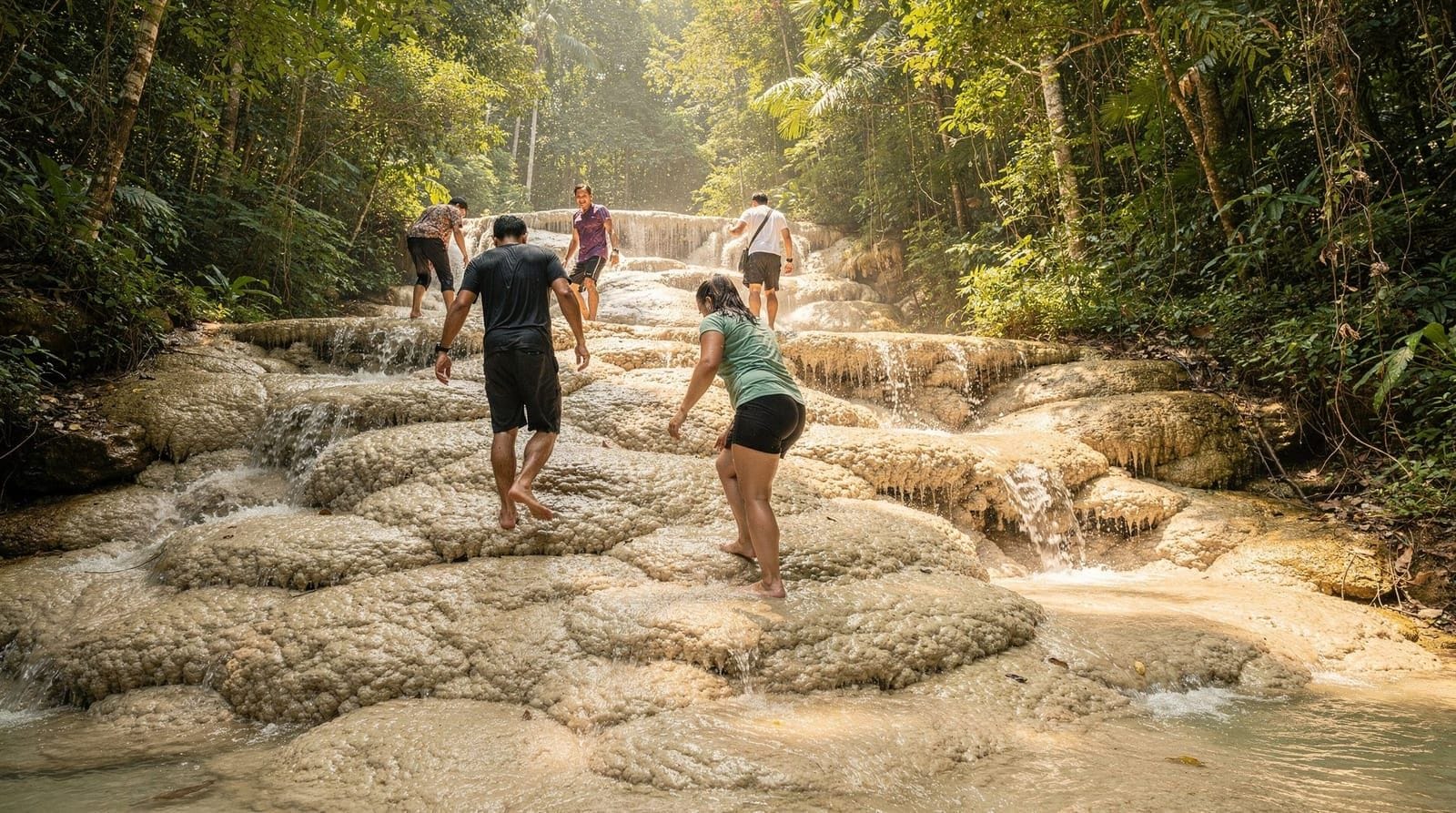
San Kamphaeng’s low-intensity, low-cost loop compares favorably to other half-day options near Chiang Mai for travelers specifically seeking a relaxed pace. Compared to Sticky Waterfalls, which involves genuine physical activity (climbing wet rock), San Kamphaeng is entirely passive and low-effort. Compared to the Doi Suthep half-day itinerary, which involves temple etiquette and a busier tourist crowd, San Kamphaeng offers a noticeably quieter, more locally-flavored experience. Neither comparison suggests one is objectively better — they simply suit different moods and different points in a longer Chiang Mai stay, and San Kamphaeng’s particular niche is the unhurried, craft-and-relaxation half day rather than an adrenaline or must-see-sight itinerary.
A note on seasonal crowds
Weekday visits generally see fewer domestic tourists at both the hot springs and Bo Sang village, since both destinations are popular weekend outings for Chiang Mai and nearby residents. If your schedule allows flexibility in choosing a weekday over a weekend, this loop is one of the more noticeably calmer options for it, given how much of its appeal rests on a relaxed, unhurried pace rather than a must-see sight that’s worth braving crowds for.
Bringing the day full circle
By early-to-mid afternoon, most visitors have completed both stops and are back on the road toward Chiang Mai, having spent the day at a genuinely unhurried pace rarely available on the region’s longer, more demanding day trips. This half-day loop won’t be the highlight anyone remembers most vividly from a Chiang Mai trip, but it fills a useful role precisely because of that — a low-key, low-cost, easy-to-plan day that complements the more intense excursions elsewhere on this list rather than competing with them for “best day trip” status.
Frequently asked questions about a San Kamphaeng day trip
How far is San Kamphaeng from Chiang Mai?
The hot springs are about 45-60 minutes east by Grab or private driver, while Bo Sang village along the same road is closer, roughly 30-40 minutes.
What’s there to do at San Kamphaeng hot springs?
Steaming geothermal pools, an egg-boiling stream where you can cook a raw egg in the hot water, and private mineral bath houses or spa treatments for those wanting more than a quick look.
How much does San Kamphaeng hot springs cost?
General entry runs around 100 THB (roughly $3); a raw egg for boiling costs about 20-30 THB ($0.60-0.85), and private jacuzzi rooms add roughly 150-300 THB ($4-8.50).
What is Bo Sang village known for?
Hand-painted sa-paper umbrellas and parasols, made and painted on-site in open workshops, plus a January umbrella festival with parades and illuminated displays.
Can I combine San Kamphaeng with other day trips?
Yes, it pairs well with Mae Kampong village and the wider San Kamphaeng crafts road for silk, celadon and silverware shopping, all roughly along the same eastern corridor from Chiang Mai.
Is San Kamphaeng suitable for families?
Yes, the hot springs and umbrella workshops are both low-key, family-friendly stops without significant physical demands, making the loop a good choice for a relaxed day with children.
What’s the best time to visit San Kamphaeng hot springs?
Cool-season mornings (November-February) give the most dramatic contrast between the steaming pools and cool air, though the springs operate year-round.
Do I need a full day for San Kamphaeng?
No, the hot springs alone take 1-2 hours and Bo Sang village about 1-1.5 hours, so the combined loop comfortably fits into a half day, leaving the afternoon free for another activity.
Top experiences
Bookable activities with verified prices and instant confirmation on GetYourGuide.