San Kamphaeng crafts road: a route guide to silk, celadon and silver
Chiang Mai: Silver Craftwork Temple Tour with Monk Meeting
How should I actually route a visit along the San Kamphaeng crafts road?
Start closest to the city at Bo Sang's umbrella workshops, continue east onto Route 1006 for silk weaving demonstrations, then celadon glazing, then silverware toward the far end of the corridor, finishing at the hot springs if you have a full day. Picking two or three workshops covering different crafts, rather than stopping at every shopfront along several kilometers of highway, makes for a far more satisfying visit than trying to see everything.
The San Kamphaeng crafts road runs for several kilometers along Route 1006, and the single biggest planning mistake first-time visitors make is trying to stop at every shopfront along the way rather than routing a sensible sequence through it. This guide is built around that practical problem: which stretch of the road covers which craft, in what order to visit them, and how to build either a half-day or full-day itinerary that doesn’t leave you exhausted by workshop number six.
Quick answer: Route the crafts road closest-to-farthest from the city - Bo Sang’s umbrella workshops first, since they sit nearest to Chiang Mai, then silk weaving and celadon pottery further along Route 1006, then silverware toward the far end, finishing at the hot springs if you have a full day. Two or three workshops covering different crafts is more satisfying than an exhausting attempt to see every shopfront along several kilometers of highway.
The route, stop by stop
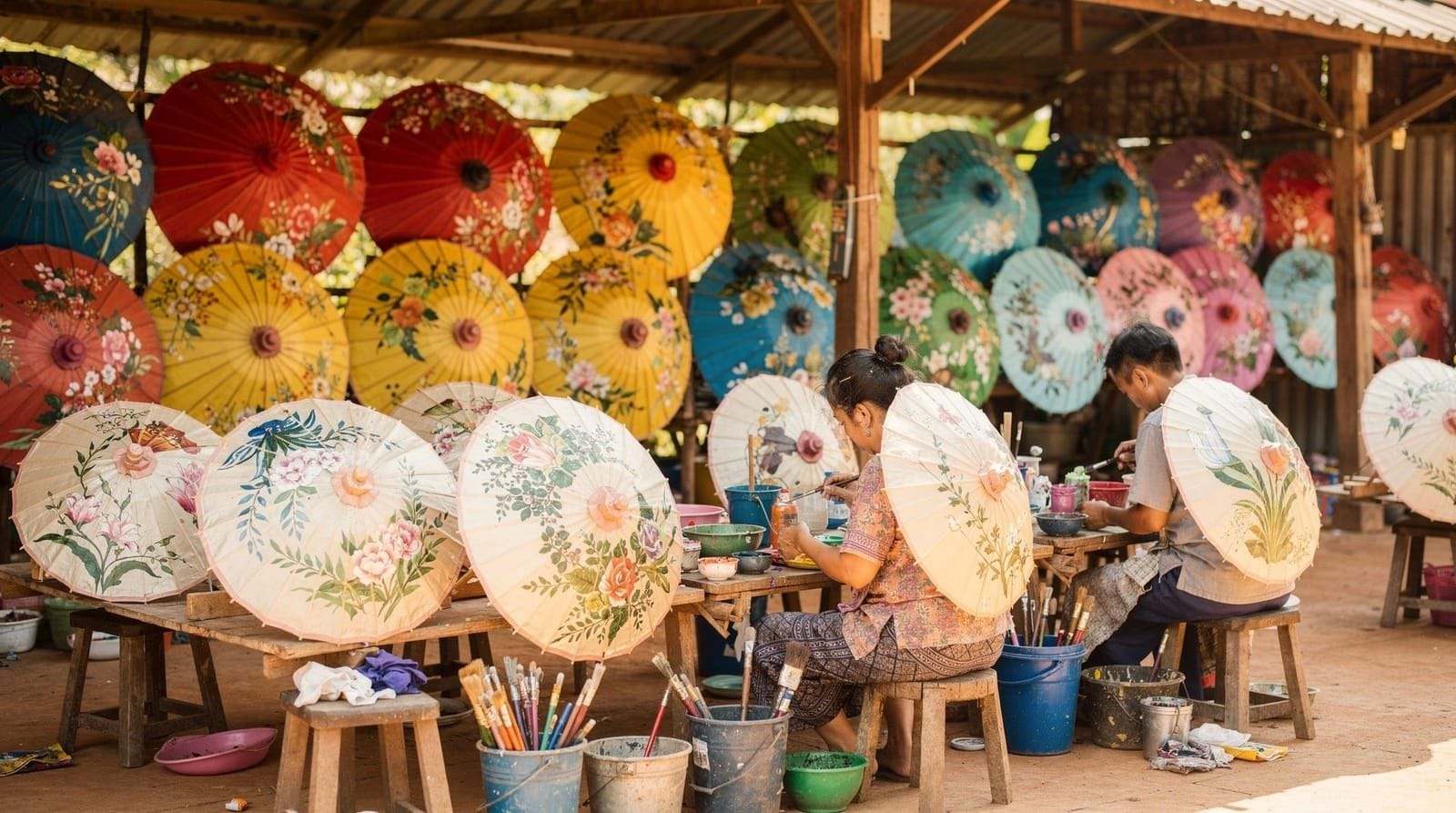
- Bo Sang (nearest the city, ~9 km out): the umbrella village, worth 1-1.5 hours if you’re stopping properly - see our dedicated Bo Sang guide for workshop-picking and buying tips specific to that stop.
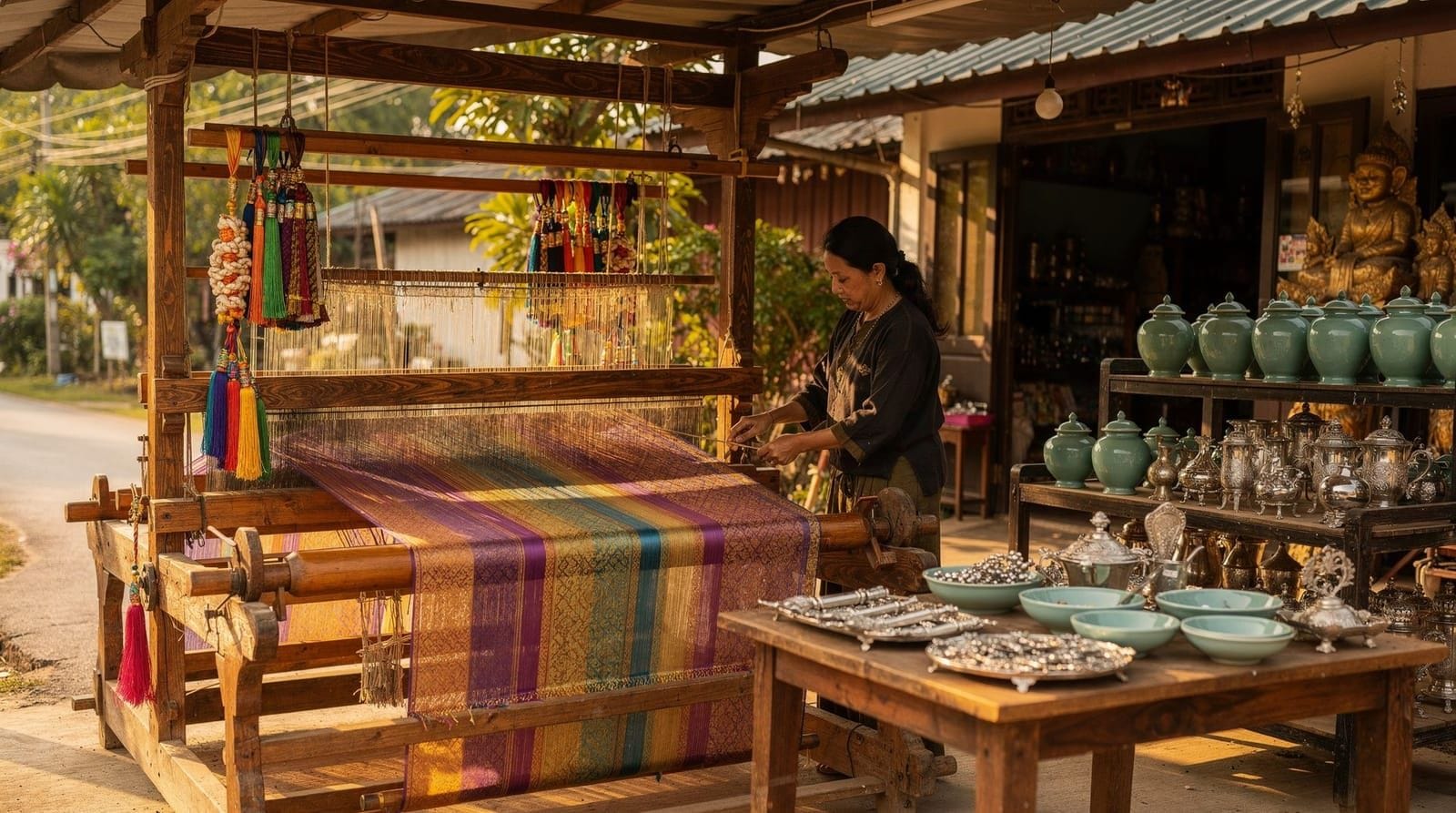
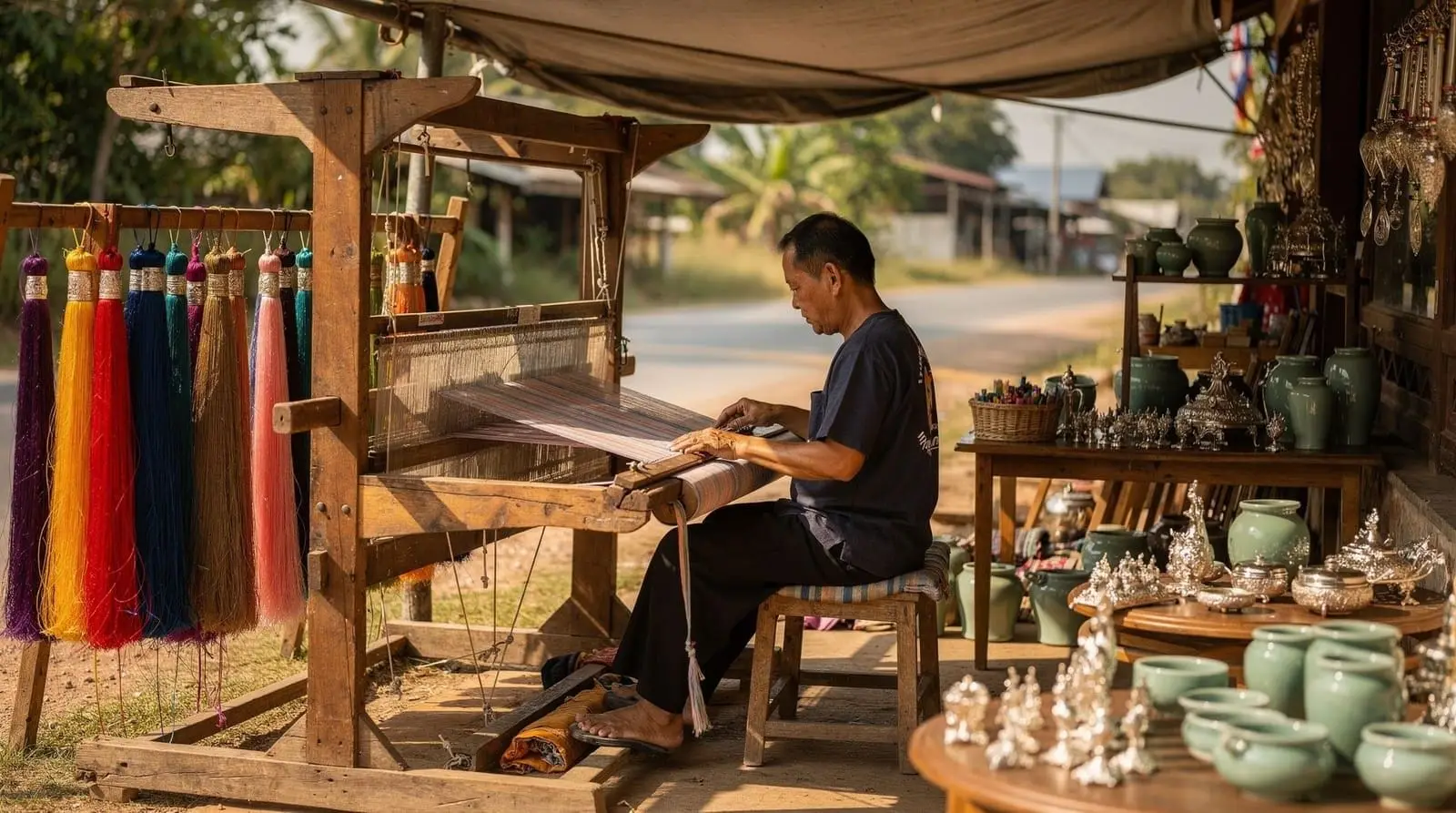
- Silk weaving workshops (further east along Route 1006): full-process demonstrations from cocoon through dyeing to loom weaving, with finished scarves and fabric sold on-site - covered in depth in our Thai silk weaving guide.
- Celadon pottery workshops (interspersed along the same stretch): glazing and firing demonstrations for the region’s distinctive pale green- to blue-glazed stoneware.
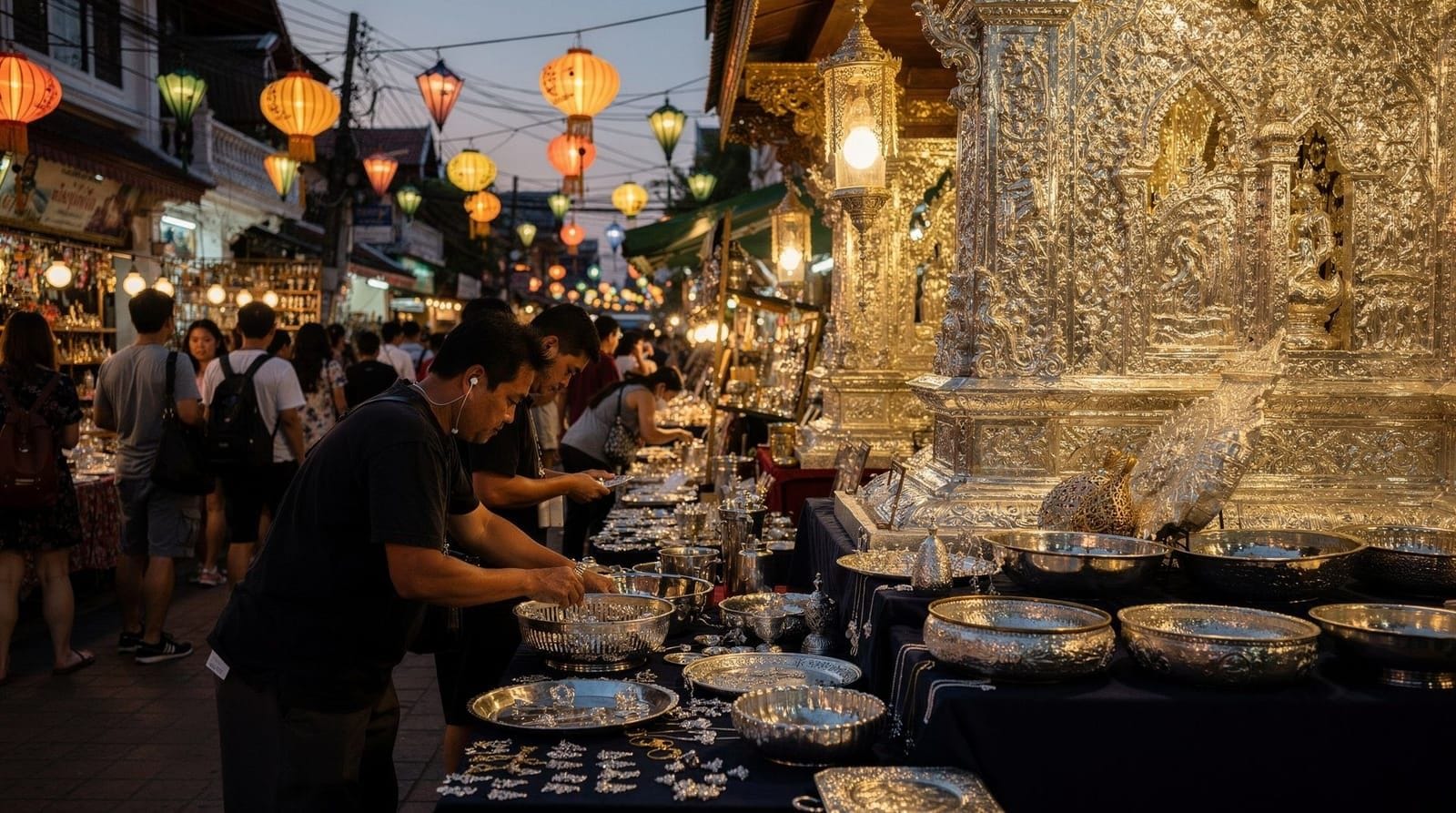
- Silverware workshops (toward the district’s silver-working concentration): hand-hammered and engraved silver jewelry and homeware, using the same repoussé techniques found in the Wualai quarter closer to the city.
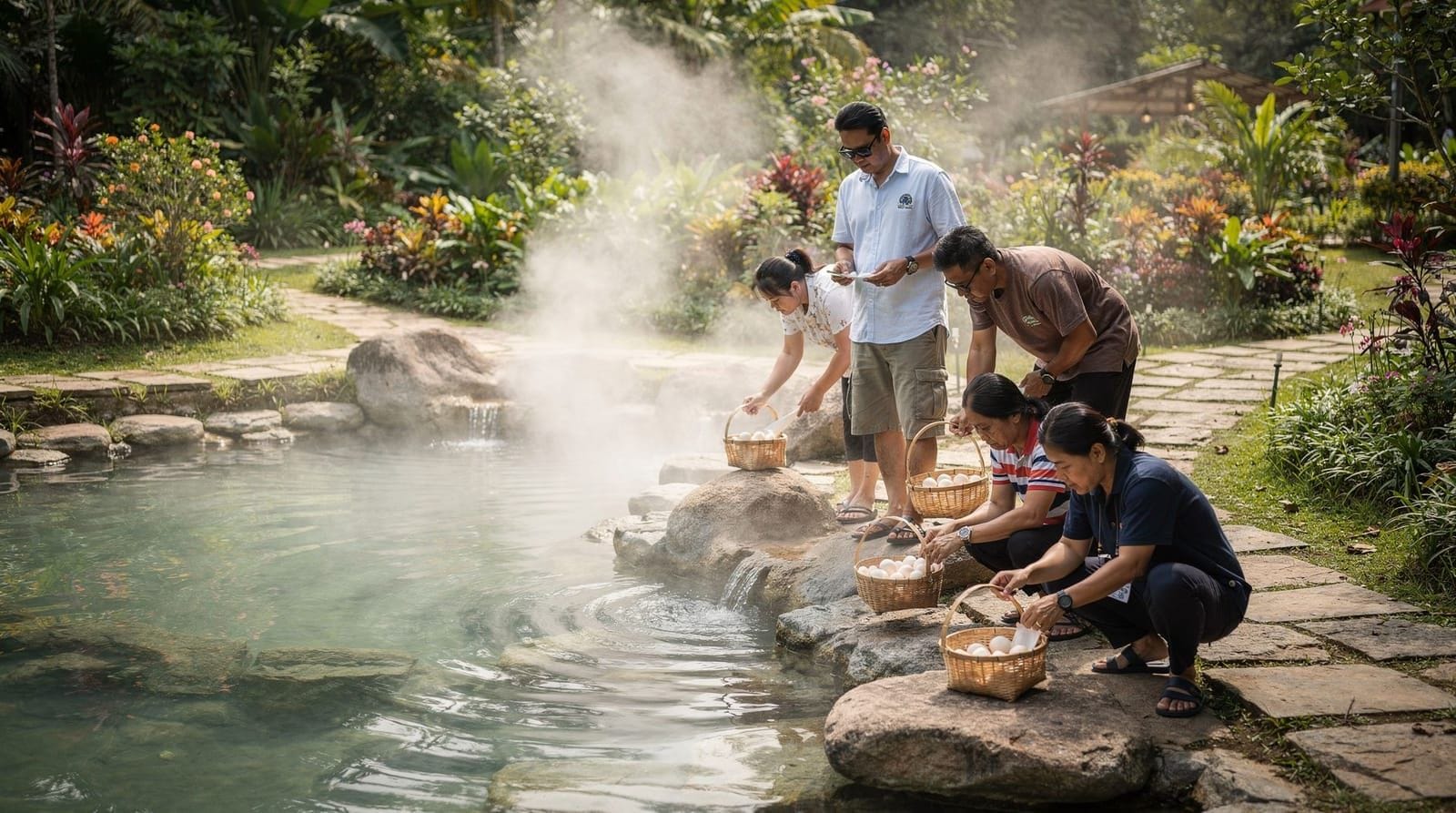
- San Kamphaeng hot springs (far end of the loop): a relaxing finish if you’re treating the whole stretch as a full-day route rather than a half-day sample.
Book the Bo Sang umbrella-making experience with a Sticky Waterfall visit if you want the first stop on this route guided, paired with the climbable Sticky Waterfalls at Bua Thong the same day.
Building a half-day route (2-4 hours)
If you only have a half day, pick one or two crafts rather than trying to sample all of them. A workable half-day sequence: Bo Sang’s umbrella workshops first (closest and quickest), then one silk or silverwork stop further along the road - whichever interests you more - and back to the city. This keeps driving time reasonable while still giving each stop the twenty to thirty unhurried minutes it deserves.
Book the silver craftwork temple tour with a monk meeting if silverwork is your priority stop - it pairs a silversmithing demonstration with a temple visit and the chance to speak with a monk on the same outing.
Building a full-day route
With a full day, the crafts road supports a genuinely complete loop: Bo Sang in the morning, silk and celadon workshops through the crafts road’s midsection around midday, silverware toward early afternoon, and the hot springs as a relaxing finish before the drive back into the city. This order works well because it fronts the more visually active stops (painting, weaving, hammering) earlier in the day when energy is higher, saving the passive relaxation of the hot springs for when you’re ready to wind down.
The reverse order - hot springs first, workshops later - also works if an early soak appeals more than an early shopping stop; there’s no single correct direction, just a logical one to default to if you’re not sure.
Which craft to prioritize if you can only pick one
- Silk weaving: the clearest full-cycle demonstration, from raw cocoon through dyeing to finished woven fabric, with visible manual technique at the loom that’s easy to follow even without narration.
- Silverwork: similarly visual and easy to follow - hammering and engraving read clearly as skilled manual work even to a first-time observer.
- Celadon pottery: rewards visitors interested in the full production cycle, though the firing stage specifically isn’t always visible during a short visit depending on the workshop’s kiln schedule.
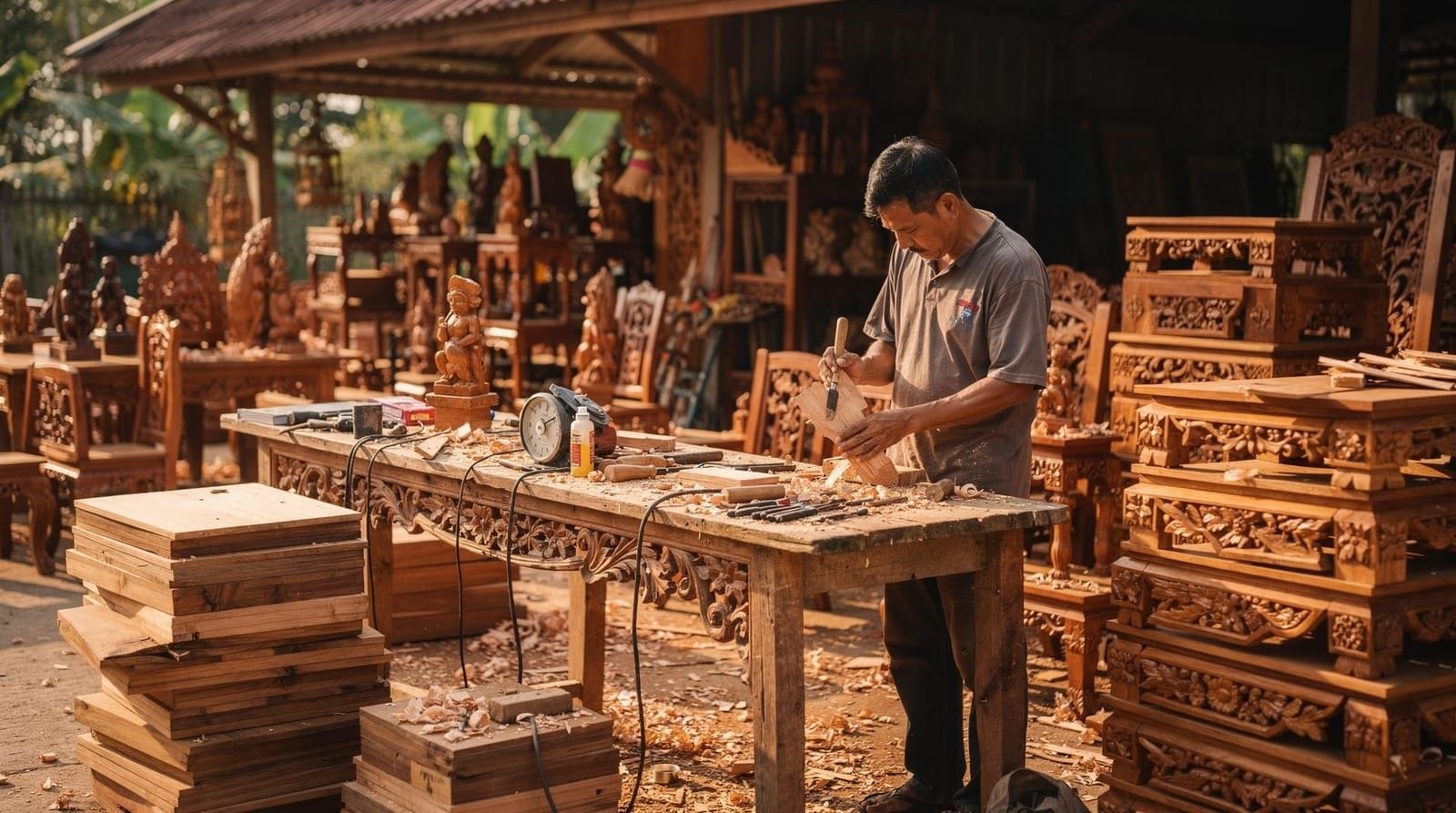
- Woodcarving stops along this road: present but generally less complete than the dedicated Baan Tawai woodcarving village on the opposite side of the city - if woodcarving is your main interest, that village is the better use of a full day.
Look at the woodcarving workshop, cooking and spa retreat experience for a more immersive, hands-on version of the craft-road theme if you want to actually learn a skill rather than only watch a demonstration.
Why this road became a “handicraft highway”
San Kamphaeng’s craft traditions predate its modern tourism identity by generations - silk weaving, celadon pottery, silverwork and woodcarving all developed as household and village-scale crafts across the wider Chiang Mai region long before Route 1006 became a dedicated shopping route. As Chiang Mai’s tourism industry grew over the latter half of the twentieth century, workshops along this stretch increasingly built dedicated showrooms and viewing areas alongside their working production floors, formalizing what had been scattered household craft production into the organized, visitor-oriented corridor that exists today.
That transition hasn’t eliminated the underlying craft skill - many techniques on display, from silk-loom weaving to hand-hammered silverwork, are the same multi-generational skills that existed before tourism became a factor, just now presented in a format that lets you watch and buy directly rather than through intermediary markets. Some workshops are genuinely family businesses passed down through several generations of the same craft; others are larger, more commercially oriented operations built specifically around the tourist trade - part of why quality and authenticity vary meaningfully between individual stops, and why routing your visit toward workshops with visible production matters more here than at a typical retail street.
What a typical workshop stop actually looks like
Arriving at most crafts-road workshops follows a fairly consistent pattern worth knowing if this is your first stop of this kind in Thailand. You’re usually free to walk into the open production area without a formal entrance charge, since most workshops don’t charge admission and treat foot traffic from the road as normal business. A staff member or the artisan themselves often briefly explains what’s being made, sometimes unprompted and sometimes only if asked, before the visit naturally continues into an attached showroom where finished pieces are displayed and priced. There’s no fixed time limit on watching the production floor, and no obligation to enter the showroom at all if watching the process was your only interest.
Larger workshops sometimes run a slightly more structured version of this for tour groups, with a short guided walk-through before free browsing time, while smaller family workshops tend to be more informal, with the artisan working at their own pace regardless of whether visitors are watching.
Shopping honestly along the route
Prices vary enormously by craft and workshop: silk scarves might run roughly 200-500 THB for simpler pieces, celadon items from about 100-300 THB for smaller pieces up to several thousand THB for large, elaborately glazed work, and silverware pricing following silver’s market weight plus the design’s skill level. It’s entirely fine to browse without buying at any given stop - legitimate workshops along this road are used to visitors watching a demonstration and moving on.
Check the long neck village, silver temple and Chiang Mai top sites tour for a version of this route combined with other regional cultural stops in a single guided day.
Shipping larger purchases from any stop on the route
Because several of the crafts sold along this road - large celadon pieces, substantial silk yardage, carved wooden furniture - don’t travel easily in a suitcase, most established workshops offer shipping directly from the showroom for an additional fee. This is worth asking about specifically at whichever stop you’re considering a larger piece from, since costs and delivery timeframes vary considerably by workshop and destination country. For smaller items - scarves, jewelry, smaller pottery pieces - packing them yourself in carry-on or checked luggage is usually straightforward.
Combining this route with a temple stop
If you’d like to fold a temple visit into the same day as the crafts road, several tours pair a silverwork demonstration with a stop at a temple and the chance to speak with a monk, giving the day both a craft and a cultural dimension rather than shopping alone. This works well toward the middle of the route, since silverwork stops tend to sit further along Route 1006 anyway, making a temple detour a natural break between the silk-and-celadon section and the day’s final stretch toward the hot springs.
Getting between stops on the road
The San Kamphaeng crafts road runs along Route 1006, starting a short distance past Bo Sang and continuing several kilometers further east, roughly 30-45 minutes from central Chiang Mai depending on which stretch you’re heading to and city traffic.
- Grab or a private driver: the most practical option, since workshops are spread over several kilometers rather than clustered in a walkable area, and a driver who waits between stops is far more efficient than hailing fresh rides at each one.
- A guided craft-district tour: several operators combine crafts-road stops with Bo Sang or the hot springs in a single half- or full-day itinerary, useful if you’d rather not plan which specific workshops to visit yourself.
- Rental scooter: workable on the well-paved highway, though moving efficiently between several workshops spread over kilometers of road takes more planning than a compact walkable district would.
What to bring for a crafts-road day
- Cash in small denominations, since smaller family workshops in particular rely more heavily on THB cash than card payment, even as larger showrooms increasingly accept cards.
- Comfortable, closed shoes, since a proper visit involves walking between production floors and showroom areas at each stop rather than sitting in a car the whole time.
- A rough sense of your budget for each craft, since silk, celadon and silverware price very differently, and knowing roughly what you’re willing to spend on each helps you shop confidently rather than guessing at fair value on the spot.
- A printed or saved list of the two or three stops you’ve decided to prioritize, since mobile signal along the highway is generally reliable but it still helps to have your plan set before you’re standing in a showroom being shown one appealing piece after another.
- Patience for the drive between stops. The corridor runs over several kilometers, so treat the transitions between workshops as part of the day rather than dead time to rush through.
Frequently asked questions about routing the San Kamphaeng crafts road
Should I book a tour or arrange my own route along the crafts road?
Either works - self-driving or a private driver gives more control over which specific workshops you stop at, while a guided tour is more convenient if you’d rather not research and plan the stops yourself.
How far apart are the workshops along the road?
They’re spread over several kilometers of Route 1006 rather than clustered together, which is why transport between stops - rather than walking - is the practical way to visit more than one or two workshops.
Is Bo Sang part of this crafts-road route, or separate?
Bo Sang sits at the near end of the same general route and is commonly treated as the first stop on a fuller crafts-road day, though it’s specifically an umbrella-making village rather than part of the silk, celadon and silver stretch further east.
What’s the best time of day to start this route?
A morning start works best, since most workshops have their production floors actively running earlier in the day, and starting early leaves more flexibility to add the hot springs or Bo Sang at the end of a full-day loop.
Can I do this route without a car?
Not practically - the workshops are spread over several kilometers of highway, so a car, driver, or organized tour is necessary to visit more than one or two stops in a reasonable amount of time.
Are prices fixed along the crafts road, or should I negotiate?
Fixed-price retail is common at larger showrooms, though smaller family-run workshops may have more flexibility, particularly on larger purchases. It varies enough by stop that there’s no single rule - asking is always a reasonable first step.
How does this route differ from just visiting Bo Sang alone?
Bo Sang is a single-craft stop focused entirely on umbrella-making, while the fuller crafts-road route adds silk, celadon and silverware workshops further along the same general direction, giving a broader sample of Lanna craft traditions in one day rather than one narrow specialty.
What happens if I run out of time partway through the route?
Prioritize whichever craft you haven’t seen anywhere else on your trip, and treat the rest as optional - the route is designed to be modular, so stopping after two workshops rather than four is a perfectly reasonable way to shorten the day without losing the core experience.
Is it worth returning to the crafts road on a second Chiang Mai trip?
If you only sampled one or two crafts on a first visit, yes - the road covers enough distinct trades that a return visit focused on whichever crafts you skipped, silverwork or celadon in particular, offers a genuinely different experience from your first pass through, especially once you already know how to route the day efficiently and which stops are worth the extra time.
Top experiences
Bookable activities with verified prices and instant confirmation on GetYourGuide.