Chiang Mai street food guide: where to eat, what to order, how much to pay
Taste of Chiang Mai: Michelin Guide & Street Food Tour
What is the single best way to eat street food in Chiang Mai?
Base yourself near the Old City or Nimman, eat at Warorot Market in the morning for day-market food, then pick one night market in the evening (Sunday Walking Street on Sundays, Chang Phueak Gate on other nights) rather than trying to cover all of them. Order by pointing at what locals are already eating, expect to pay 30-80 baht (US$0.85-2.30) per dish, and carry small notes since most stalls do not take cards.
Why Chiang Mai’s food scene rewards eating on the street
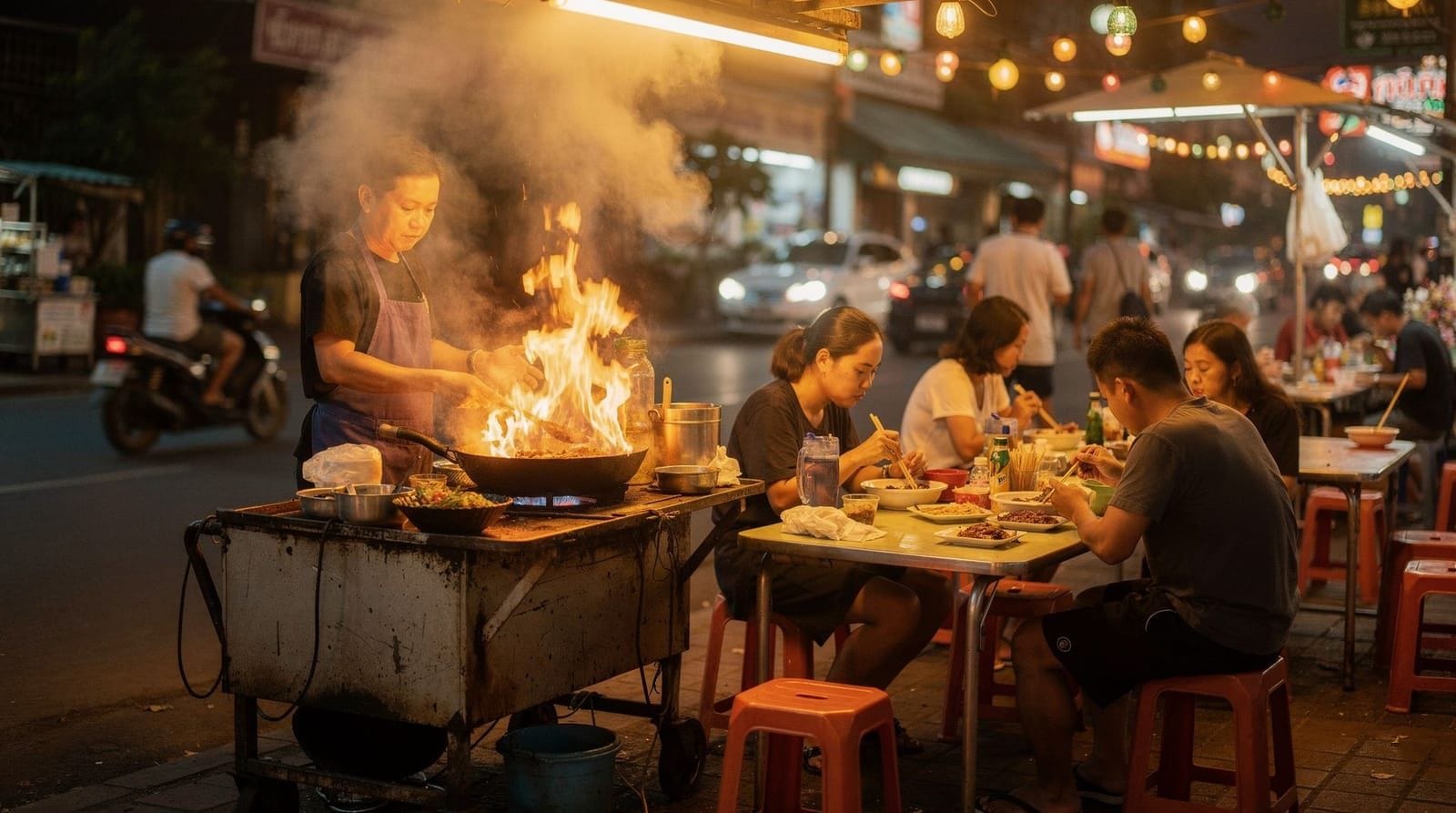
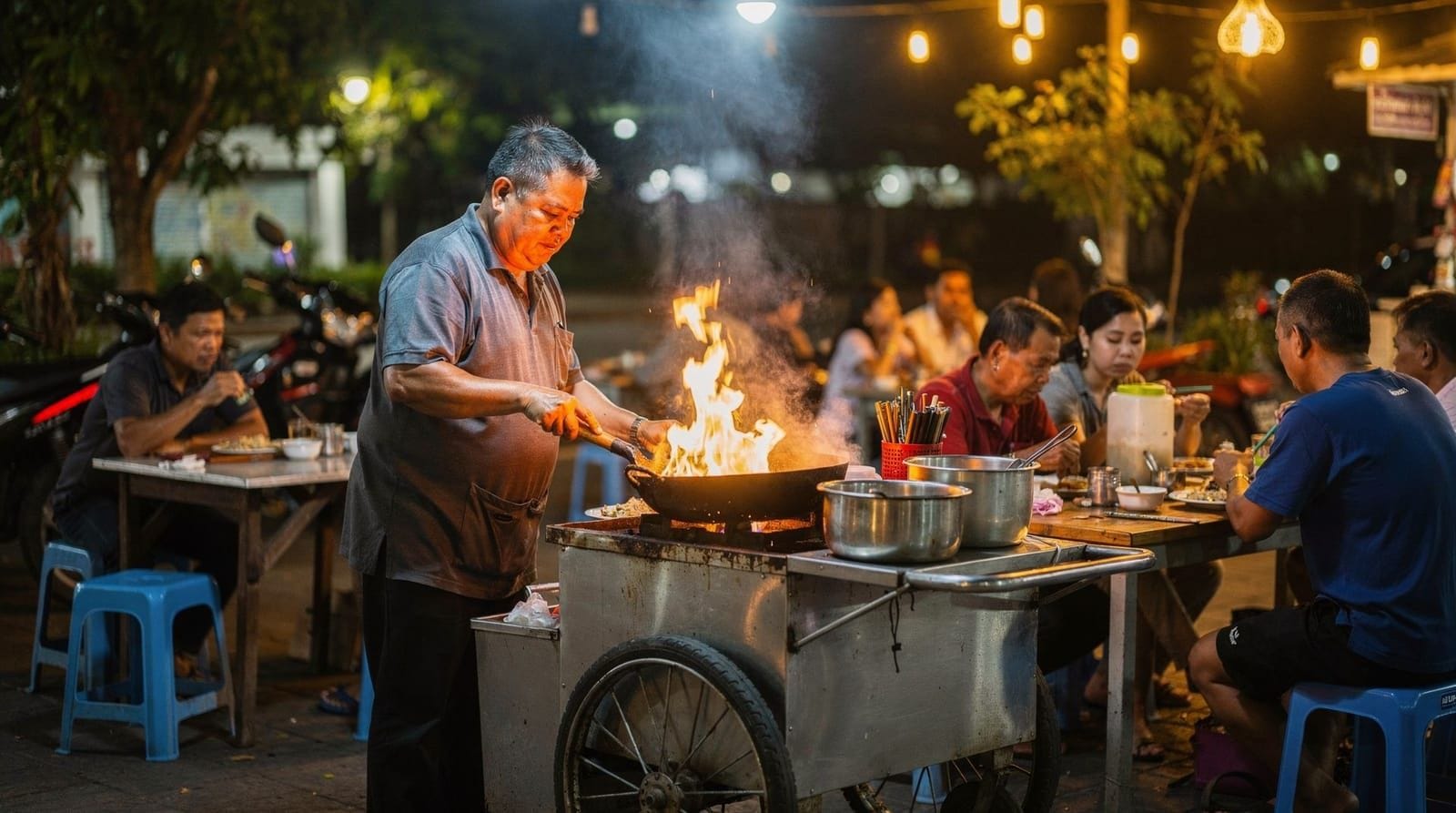
Chiang Mai’s best food rarely comes from a restaurant with a laminated menu. It comes from a woman with one wok and one dish she’s made for twenty years, a stainless steel cart parked outside a temple gate at 6pm, or a stall inside Warorot Market that’s been in the same family since the building went up. Northern Thai cooking — built around khao soi, sai oua, nam prik and sticky rice rather than the pad thai and green curry most visitors associate with Thailand generally — is genuinely regional, shaped by Lanna history and proximity to Myanmar and Laos, and it’s cooked at street level far more than it’s plated in dining rooms.
That makes Chiang Mai one of the easier Southeast Asian cities to eat extremely well on a tight budget, but it also means the useful information isn’t “which restaurant” so much as “which market, which time of day, and how to tell a good stall from a mediocre one aimed at passing tourists.” This guide covers the practical layer: where the food actually is, what a fair price looks like, and how to sequence a few days of eating without wasting meals on the wrong stalls.
The dishes that define Chiang Mai eating
A handful of dishes show up constantly and are worth knowing before you start pointing at menus or trays:
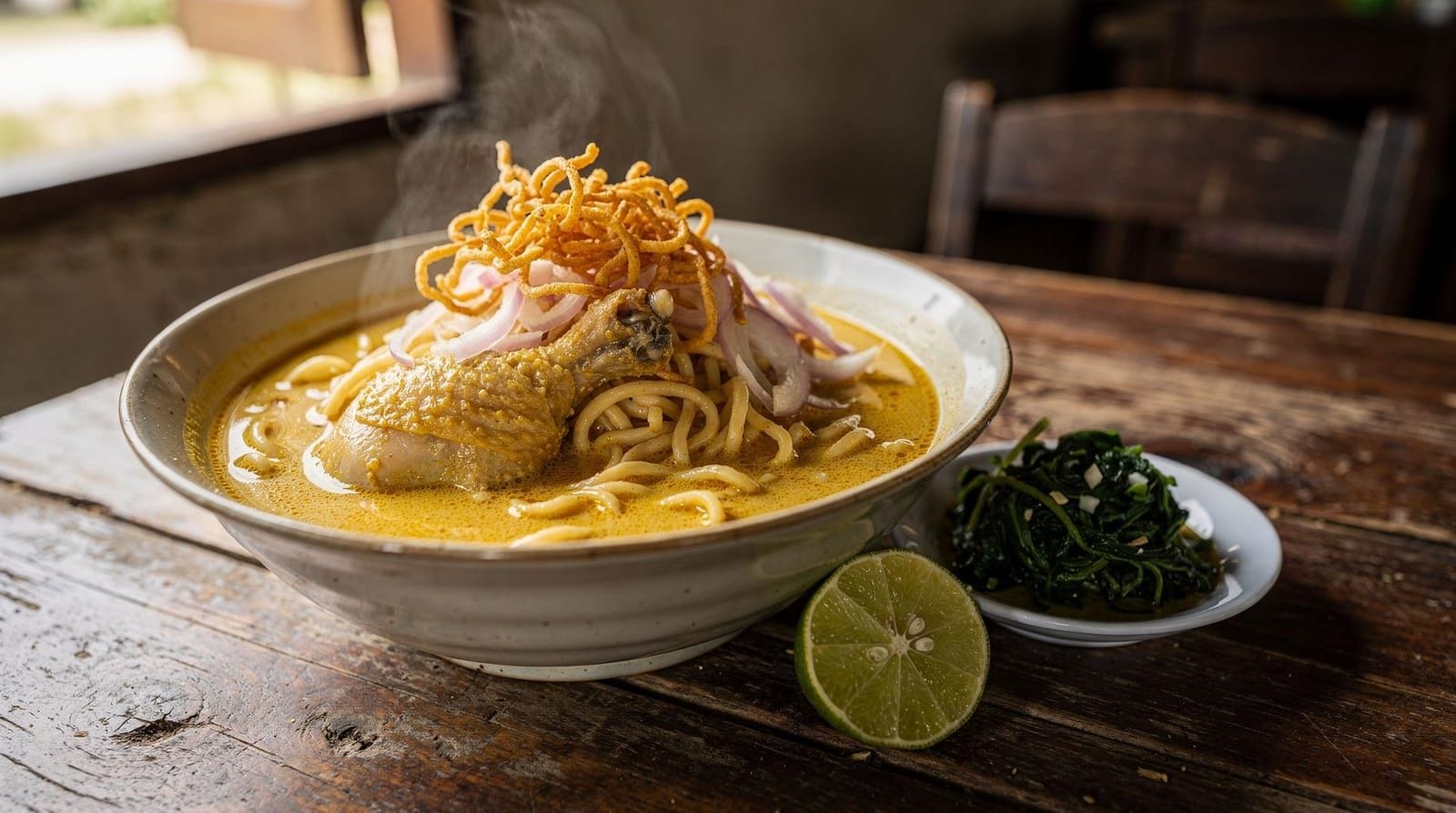
- Khao soi — egg noodles in a coconut curry broth, topped with crispy fried noodles, usually served with chicken or beef, plus pickled mustard greens, shallots, lime and chili paste stirred in to taste. It’s the closest thing the city has to a signature dish, and quality varies hugely between shops.
- Sai oua — a coiled, herb-packed northern sausage (lemongrass, galangal, kaffir lime leaf, chili) grilled over charcoal, sold by weight at markets.
- Nam prik ong and nam prik num — northern chili dips, one tomato-and-pork-based, the other made from roasted green chilies, both eaten with sticky rice, crispy pork rind and raw vegetables.
- Gaeng hang lay — a Burmese-influenced pork belly curry, rich with ginger, tamarind and a distinctive curry powder blend, slow-cooked rather than pounded fresh like central Thai curries.
- Khanom jeen — fresh rice noodles served with various curries or the northern nam ngiao broth (tomato and pork blood based).
- Sticky rice (khao niaw) — the default rice of the north, eaten with the hands from a woven bamboo basket, alongside grilled meats and dips rather than as a side to curry.
For a fuller rundown of these dishes with regional context, see the northern Thai food dishes guide. Khao soi gets its own dedicated shortlist of where to eat it — see the khao soi where-to-eat guide.
Warorot Market: the honest daytime baseline
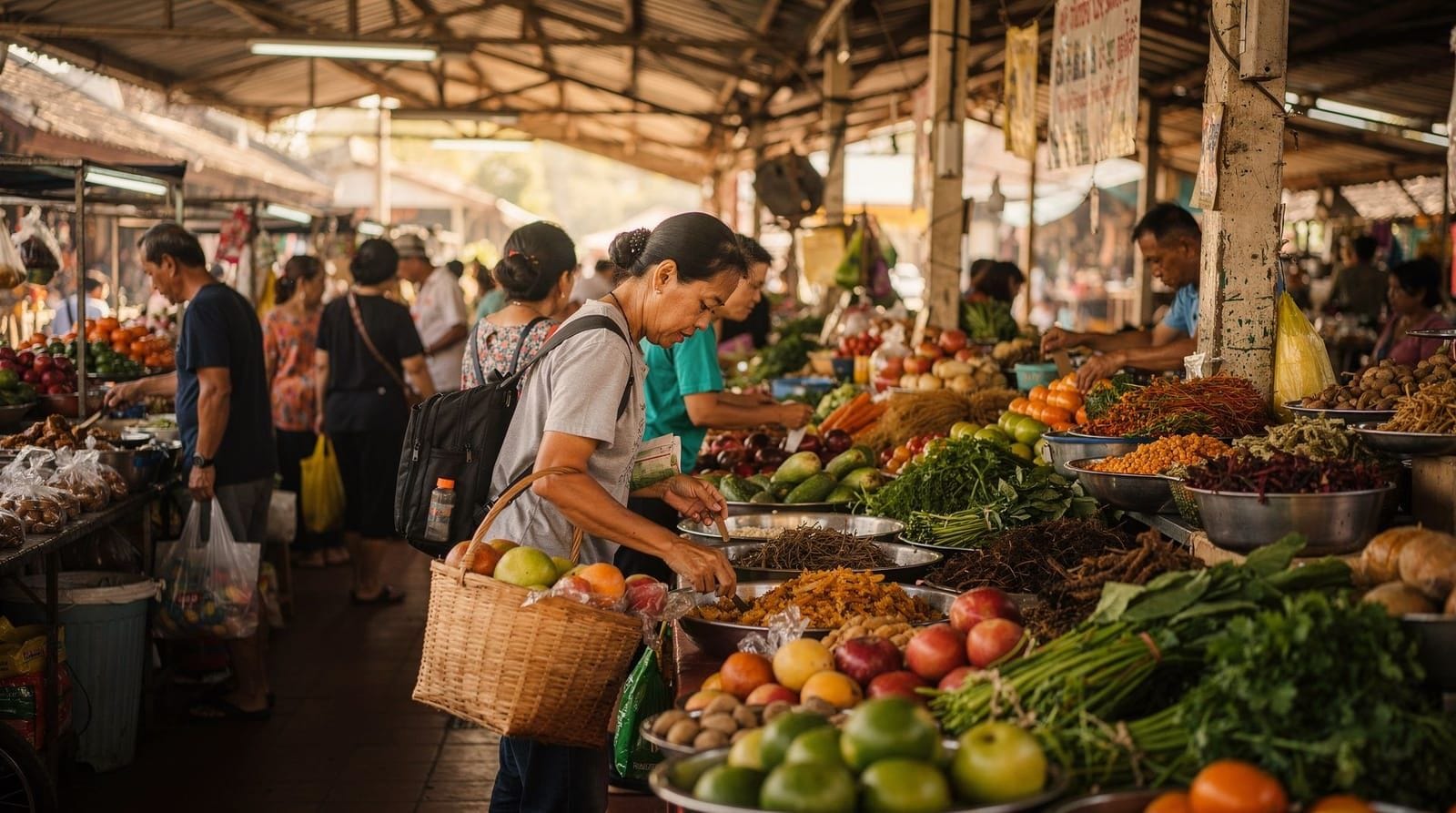
Warorot Market (Kad Luang to locals) is the city’s oldest and largest day market, a multi-storey building near the Ping River that’s been trading since the early 1900s, alongside the adjacent Ton Lamyai flower market. This is where Chiang Mai residents actually shop, and prices reflect that — a bag of northern sausage, a portion of khanom jeen, or a tray of Thai-Chinese pastries costs noticeably less here than the equivalent at a market built around evening tourist footfall. It’s busiest early (5-9am) and again in the late afternoon, and it’s the best single reference point for what things “should” cost before you compare against night-market prices. A full walkthrough of what to eat stall by stall is in the Warorot Market food guide.
Guided local food and markets walking tourNight markets: pick one, don’t try to do all of them
Chiang Mai runs several distinct night markets and trying to see all of them in one trip usually means rushing through each without eating properly at any. The realistic options:
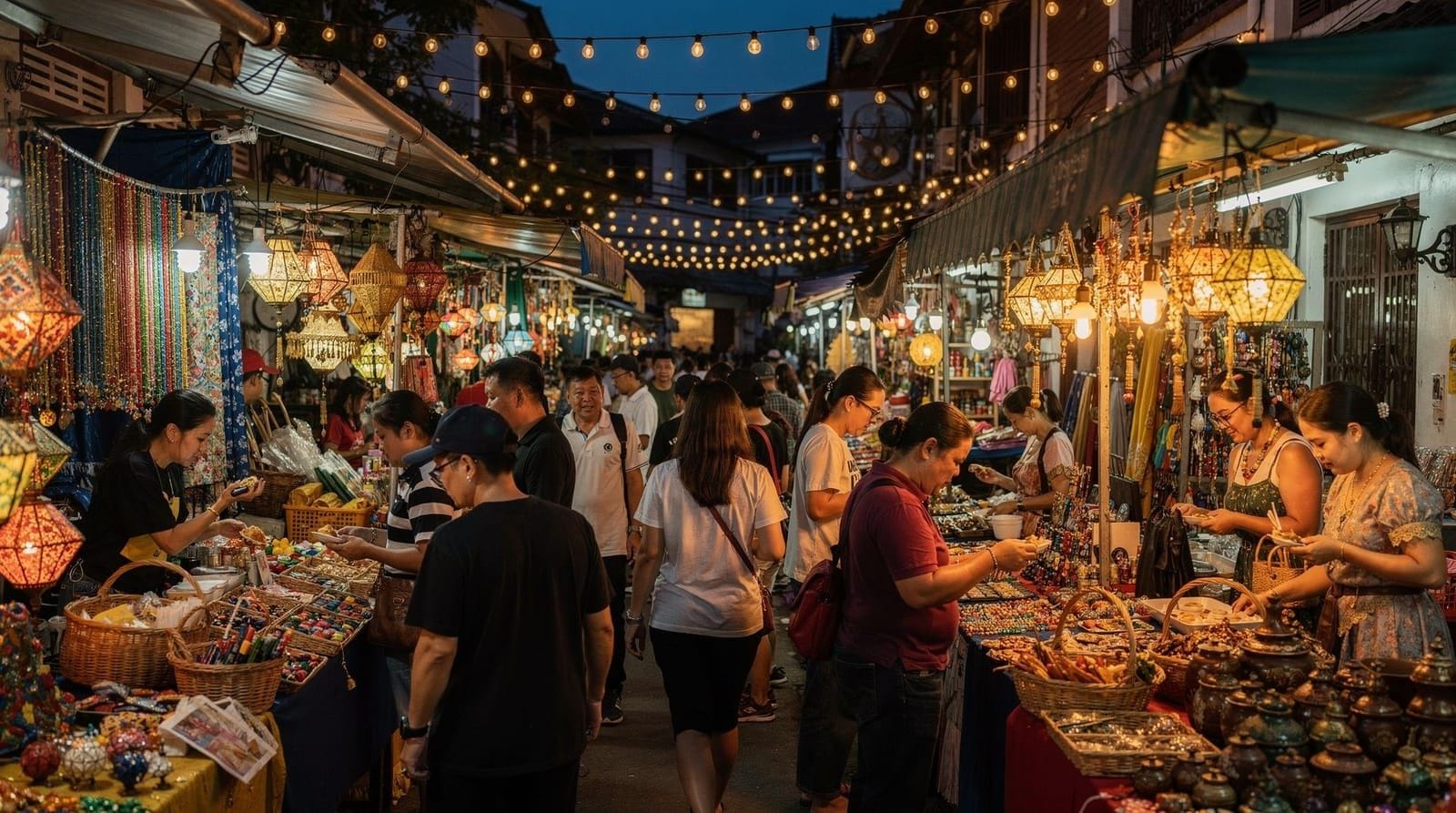
- Sunday Walking Street (Ratchadamnoen Road, Sundays only) — the biggest weekly market, food stalls threaded between craft and clothing vendors the length of the Old City’s main east-west street. See the dedicated Sunday Walking Street food guide.
- Saturday Walking Street (Wua Lai Road, Saturdays) — smaller, more locally used, strong on silver crafts with food clustered near the Wua Lai end.
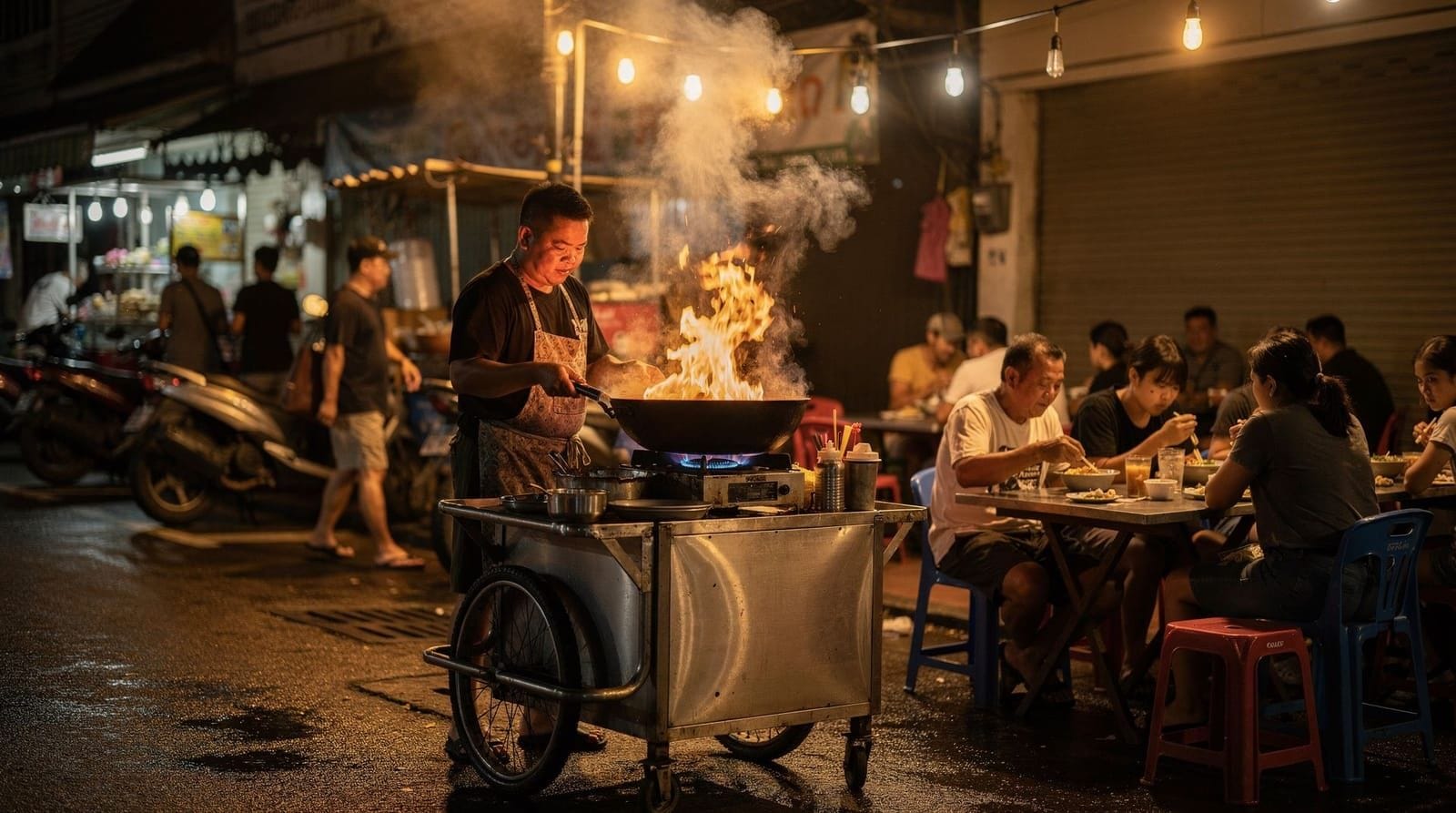
- Chang Phueak Gate night market — nightly, unpretentious, best known for the vendor locals call the “Cowboy Hat Lady,” who has sold khao kha moo (stewed pork leg over rice) from the same spot for decades. No entry hype, no crafts, just food carts feeding people on their way home.
- Night Bazaar area — the Chang Khlan Night Bazaar itself is now mostly clothing and souvenirs, but Kalare and Ploen Ruedee food courts nearby run nightly and are genuinely convenient if you’re staying in that part of town, at a modest tourist-area markup.
- Anusarn Market — a smaller cluster near the Night Bazaar combining food stalls with massage shops, useful as a low-key dinner stop rather than a destination in its own right; see Anusarn Market.
A side-by-side comparison of all of these, ranked specifically for food (not shopping), is in the best night markets for food guide.
Evening local street food market tourNimman: cafés, modern Thai, and a different kind of street food
Nimmanhaemin operates on a different rhythm — fewer folding tables, more air-conditioned cafés and modern Thai-fusion restaurants, plus a genuinely strong specialty coffee scene. It’s not the place for the cheapest khao soi in the city, but it’s a legitimate stop for a coffee break between temple visits, and several respected khao soi shops have opened modern branches there that trade some authenticity for comfort and consistency. Read more in the coffee culture guide.
How the street food scene changes by season
Chiang Mai’s eating rhythm shifts noticeably across the year, and it’s worth planning around this rather than assuming the city eats the same way in July as it does in December. Cool season (roughly November-February) is when the outdoor markets are at their most comfortable — pleasant evening temperatures make lingering over multiple stalls genuinely enjoyable, and this is also when the biggest food-adjacent festivals land, including Yi Peng and Loy Krathong, which bring extra temporary food stalls into the Old City and riverside. Hot season (March-May) pushes more eating toward shaded, covered stalls and later evening hours once the daytime heat breaks, and it also overlaps with peak mango season, which matters directly for dishes like mango sticky rice. Rainy season (June-October) is the trickiest for street food logistics specifically — open-air markets like Sunday Walking Street can be disrupted by sudden downpours, while covered options like Warorot’s main building or the Kalare and Ploen Ruedee food courts near the Night Bazaar continue largely unaffected. None of this should discourage a visit in any season, but it’s worth building a little flexibility into your food plans if you’re traveling June through October.
Common mistakes first-time visitors make
A few recurring missteps are easy to avoid once you know about them. The first is trying to “do” every market in a single trip rather than picking two or three and eating properly at each — Chiang Mai’s markets overlap enough in what they offer that spreading yourself across all of them usually means rushed, half-finished meals rather than a satisfying eating experience. The second is assuming the most photographed or most-queued stall is automatically the best one; popularity among visitors and popularity among locals are different signals, and the practical checklist further down this guide is a better filter than a queue of people taking photos. The third is skipping Warorot Market entirely in favor of only the evening markets — Warorot’s daytime rhythm and pricing baseline genuinely change how you read every other market’s prices afterward, so it’s worth doing early in your trip rather than treating it as optional. The fourth is not carrying enough small cash; running out of 20 and 50 baht notes mid-evening at a market that can’t break a large bill is a common, easily avoided frustration.
Combining street food with day trips and the wider region
Food quality and variety thin out noticeably once you leave the city center, which is worth factoring into day-trip planning rather than assuming the same density of options everywhere. Trips to Doi Inthanon, Chiang Rai or Pai will have their own local food scenes worth trying — Chiang Rai in particular has a respectable night bazaar of its own — but rural stops along the way, hill-tribe villages and national park areas have far fewer or no street food options, so eating a substantial breakfast in the city or packing snacks is sensible for full-day excursions. If you’re staying near Mae Rim or the Doi Suthep foothills for elephant sanctuary or nature activities, plan your food stops around the city center rather than expecting much variety near those attractions themselves.
What food actually costs — and where the markup shows up
Rough, honest benchmarks based on Warorot and neighborhood stalls (not tourist-area night bazaar pricing, which runs 20-40% higher for the same dish):
| Item | Typical price (THB) | Approx. USD |
|---|---|---|
| Bowl of khao soi | 40-60 | $1.15-1.70 |
| Noodle soup (kuay teow) | 35-50 | $1-1.40 |
| Grilled meat skewer | 10-20 | $0.30-0.55 |
| Sai oua (northern sausage), per portion | 30-60 | $0.85-1.70 |
| Fresh fruit shake | 25-40 | $0.70-1.15 |
| Mango sticky rice | 50-80 | $1.45-2.30 |
If a dish costs noticeably more than this at a stall aimed squarely at tourists — often signaled by English-first menus, laminated photo boards, and staff calling out to passersby — it isn’t necessarily bad, but it isn’t the local price either. For dedicated pricing on that specific dessert, see the mango sticky rice guide.
Choosing a stall: the practical checklist
- Queue of local customers, not just tourists — the single most reliable signal.
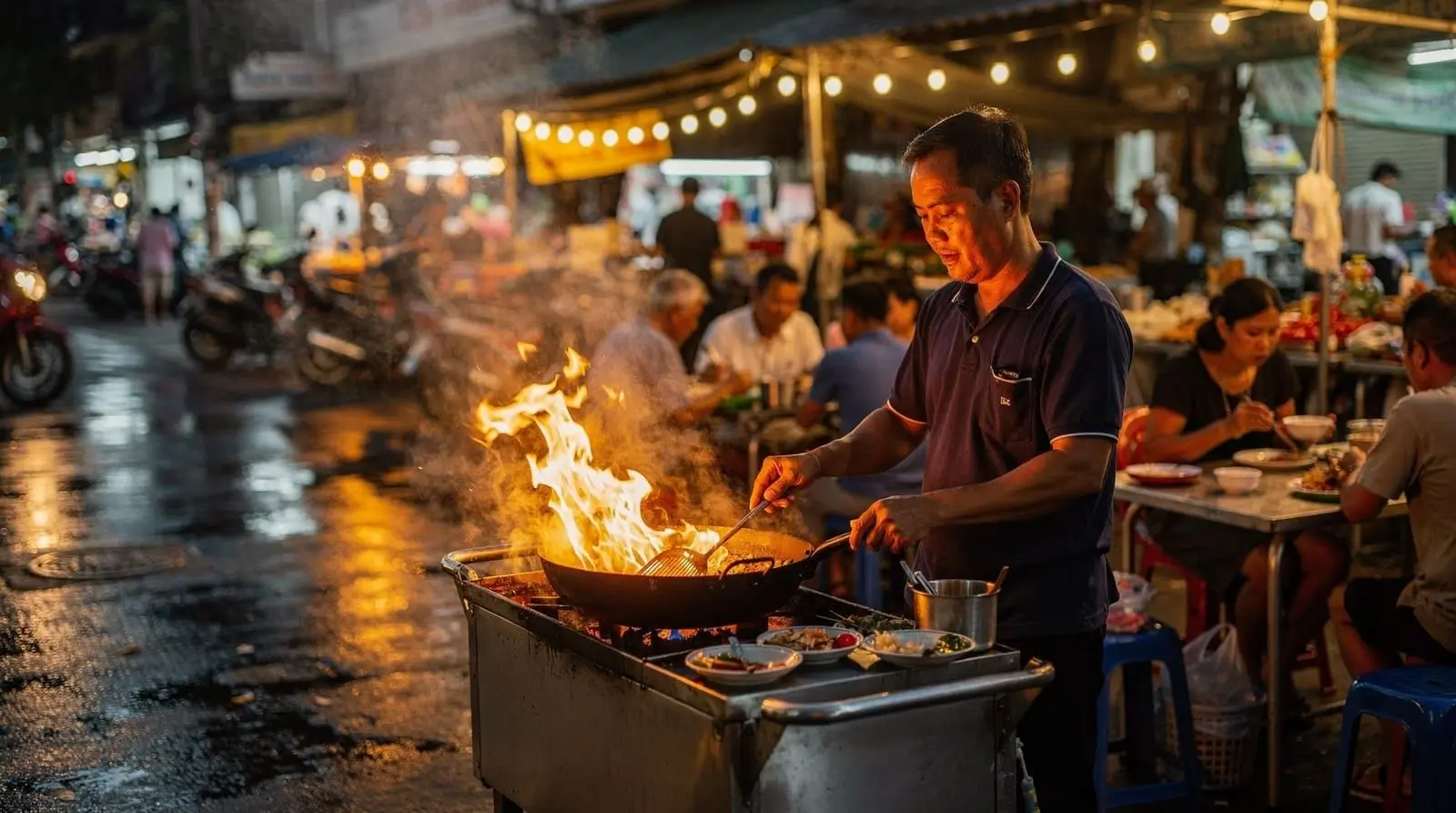
- Food cooked to order over a visible flame or wok, rather than sitting pre-made under a heat lamp for hours.
- High turnover — a stall selling out and restocking ingredients through the evening is fresher than one with the same tray sitting since 5pm.
- Ice from a bag, not a block — bagged ice is factory-made and safer; block ice, chipped with a pick, has a higher contamination risk.
A longer, more cautious breakdown — including what to do if you do get an upset stomach — is in the street food safety guide.
Dietary needs: vegetarian, vegan and halal
Chiang Mai’s Chinese-Thai community means genuine vegetarian (“je”) stalls exist at most markets, especially visible with yellow flags during the September vegetarian festival, and there’s a small but well-established halal food cluster around Ban Ho and Chang Klan Road tied to the city’s Chin Haw Muslim community. Named recommendations for each are in the vegetarian and vegan restaurants guide and the halal food guide.
Guided food tours vs going it alone
A guided evening food tour — walking or by songthaew truck, typically 3-4 hours with guides ordering on your behalf at multiple stops — costs roughly 1,200-2,000 baht (US$34-57) per person. That’s a real premium over eating the same dishes independently, but it buys local ordering knowledge, a sequenced route through several neighborhoods in one evening, and company if you’re travelling solo. We break down exactly when that trade-off is worth it in the is a Chiang Mai food tour worth it guide.
Food tour by songthaew truck with 15+ tastingsA realistic two-day eating plan
Day one: Warorot Market at 8am for breakfast and browsing, a khao soi lunch near the Old City, coffee break in Nimman mid-afternoon, dinner at the Chang Phueak Gate night market.
Day two: if it’s a Sunday, save the evening for Sunday Walking Street; otherwise, try a guided food tour on one night and an independent night at Anusarn or the Night Bazaar food courts on the other, so you get both the curated version and the DIY version to compare. Pair either day with a stop at Three Kings Monument or a walk through the Tha Phae Gate area, since most of the food destinations above sit within a short walk of the Old City’s main sights.
Market etiquette worth knowing
A handful of small habits go a long way toward a smoother experience. Ordering by pointing is completely normal and not considered rude — vendors deal with language gaps constantly and appreciate directness over hesitation. Eating standing up or perched on a low plastic stool is standard at most stalls, not a sign of a lesser establishment; some of the best food in the city is eaten this way. Queue discipline matters more than it might appear — Thai customers generally wait their turn quietly rather than crowding the counter, and following that norm is appreciated. Tipping isn’t expected at street stalls the way it might be at a sit-down restaurant, though rounding up small change is a common, low-key gesture rather than an obligation. Finally, haggling over food prices is not part of local practice — prices are fixed and usually already low, unlike the crafts and souvenirs sold alongside food at markets like Sunday Walking Street, where a different, separate bargaining culture applies.
Building confidence over a longer stay
If you’re in Chiang Mai for more than a few days, a reasonable progression is to start at Warorot Market during its busiest morning hours, where the queue-of-locals signal is easiest to read and turnover is highest, before moving to a single evening market like Chang Phueak Gate. Once you’re comfortable with that pace, branching into Sunday or Saturday Walking Street (if your dates line up), and finally the Night Bazaar’s food courts if convenience matters more than seeking out the cheapest or most local option, rounds out a realistic week of eating that builds familiarity rather than throwing you into the most crowded, tourist-heavy market on day one.
Frequently asked questions about Chiang Mai street food
Do I need to speak Thai to order at a market stall?
No — pointing at what you want, or at what another customer is eating, works at almost every stall. Numbers on fingers cover quantity, and most vendors are used to tourists doing exactly this.
Is it rude to take photos of food stalls?
Generally fine for the food itself; ask before photographing the vendor directly, especially at smaller family-run stalls, as a matter of basic courtesy rather than any strict rule.
Can I find air-conditioned indoor options if the heat or rain is too much?
Yes — food courts inside Kalare and Ploen Ruedee near the Night Bazaar are partly covered, and Nimman’s cafés and restaurants are fully air-conditioned, though you trade some street-food character for comfort.
What’s the best single meal for a first-timer with only one night in the city?
A bowl of khao soi followed by a walk through whichever night market runs that evening — it covers the signature dish and the market atmosphere in one outing without overplanning.
Are portions at Chiang Mai markets big enough for a full meal?
Individual dishes are often small by design, meant to be combined — order two or three different items rather than one large plate, which is both more authentic to how locals eat and better value.
Is street food cheaper than eating at an actual restaurant?
Substantially, yes — a full restaurant meal with service and air conditioning runs 150-400+ baht per person, versus 80-150 baht for an equivalent two-to-three dish street meal.
Top experiences
Bookable activities with verified prices and instant confirmation on GetYourGuide.