Is a Chiang Mai food tour worth it? Honest cost-versus-DIY comparison
Chiang Mai: Food Tour by Songtheaw Truck with 15+ Tastings
Is it worth paying for a guided food tour in Chiang Mai?
For first-time visitors, solo travelers who don't want to eat alone, or anyone who finds ordering at unfamiliar stalls stressful, yes — a 3-4 hour tour (1,200-2,000 baht / US$34-57 per person) delivers a curated, guide-ordered route through several markets or neighborhoods. If you're comfortable pointing at food and navigating markets yourself, the same dishes cost a fraction of that eaten independently, and the honest answer is that the tour is paying mainly for guidance and company, not for access to food you couldn't otherwise find.
The honest answer up front
This question comes up constantly among travelers planning a Chiang Mai trip, and the volume of marketing around food tours (understandably, since they’re a genuine revenue category for tour operators) makes it hard to find an unbiased answer. This guide is structured to give you the actual trade-offs rather than a sales pitch either for or against booking one, working through cost, format and traveler type in turn so you can reach your own conclusion rather than take a single blanket recommendation on faith.
Whether a Chiang Mai food tour is worth paying for depends less on the food itself — which is broadly the same food available to anyone walking into the same markets — and more on what kind of traveler you are. A guided tour is genuinely useful for people who want the decision-making and language barrier removed, and genuinely poor value for people who are comfortable navigating markets themselves and would rather spend that money elsewhere. This guide walks through the actual cost and experience trade-off rather than simply recommending a tour, since the right answer is different for different travelers.
What you’re actually paying for
Breaking the price down into its actual components makes the value question much easier to reason about than treating “food tour” as a single undifferentiated purchase.
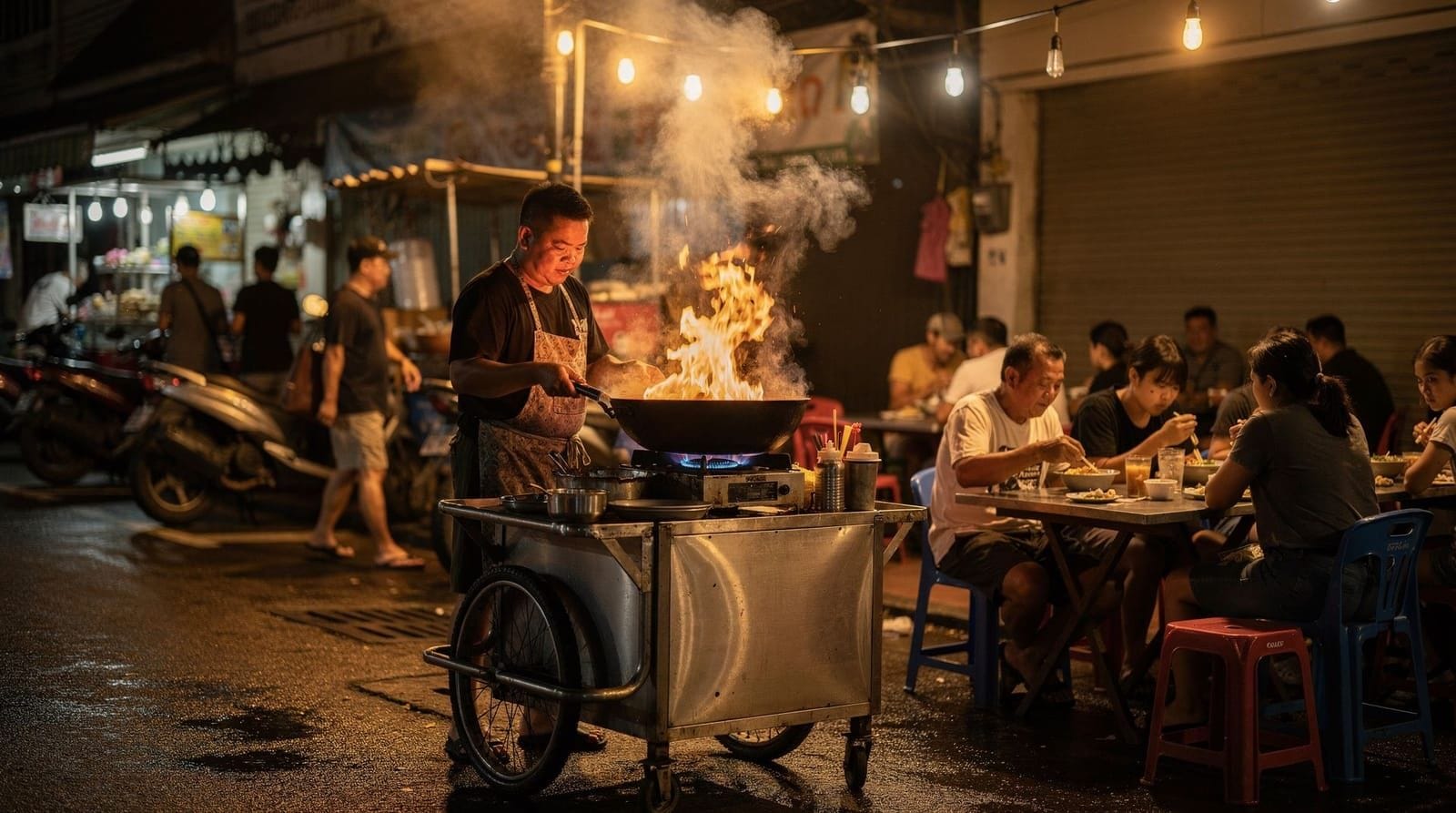
A typical guided food tour — walking, or by songthaew truck for tours covering more ground — runs 3-4 hours, hits multiple stops across one or two neighborhoods or markets, and includes somewhere between 8 and 20 tastings depending on the format. The price, typically 1,200-2,000 baht (US$34-57) per person, covers:
- A guide who orders in Thai at each stop, removing any language or menu-reading barrier.
- A pre-researched route hitting several genuinely good stalls across neighborhoods you might not otherwise combine in one evening.
- Context and explanation of each dish as you eat it — origin, ingredients, how it’s traditionally eaten.
- Company, which matters more than it might sound for solo travelers who’d otherwise be eating alone at a folding table.
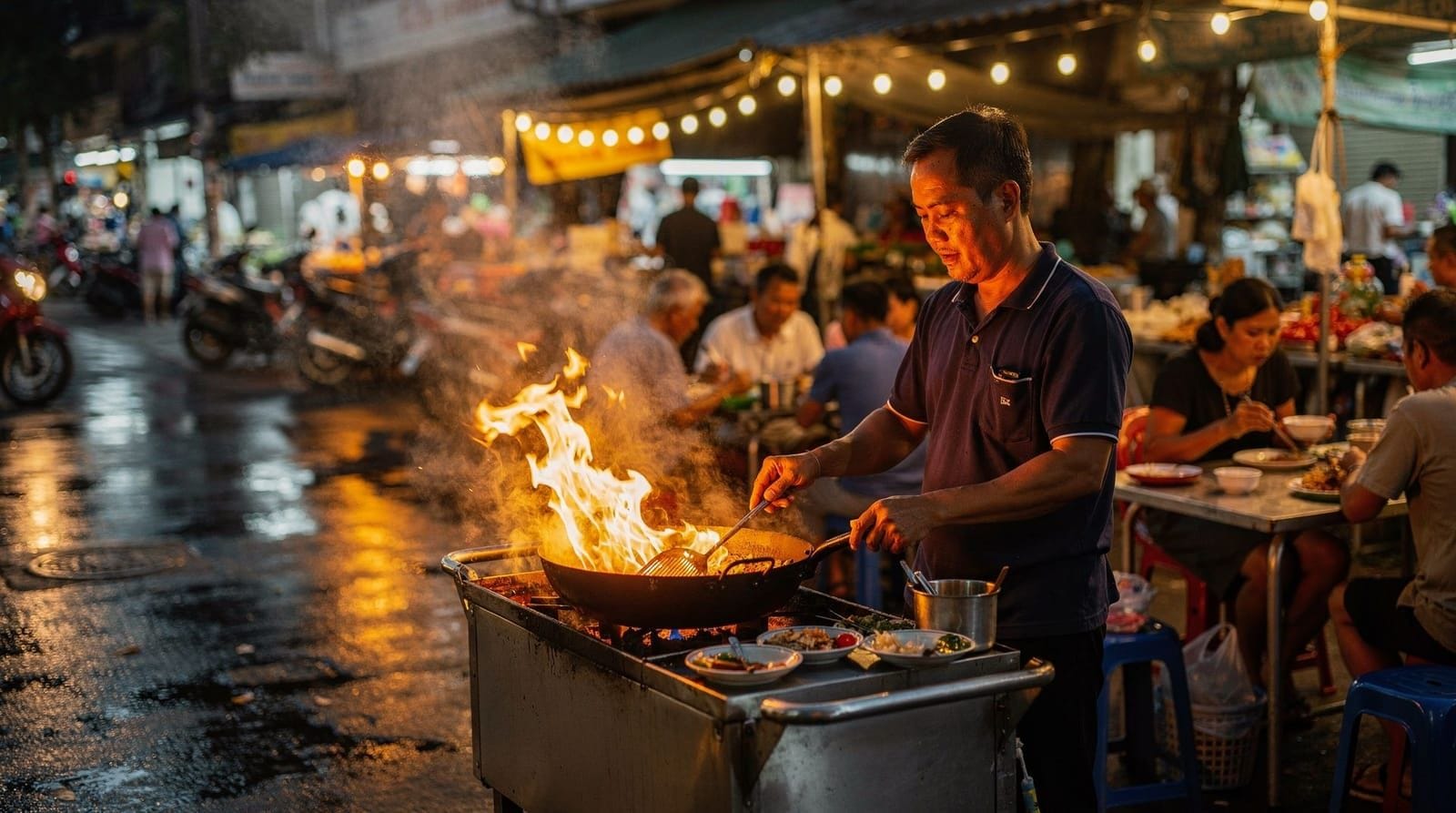
What it does not include is access to food unavailable to independent diners — these are public market stalls open to anyone, and the same bowl of khao soi or plate of sai oua costs the same whether you order it yourself or a guide orders it for you.
Food tour by songthaew truck with 15+ tastingsThe cost comparison, done honestly
Numbers make this trade-off concrete in a way general statements about “value” don’t.
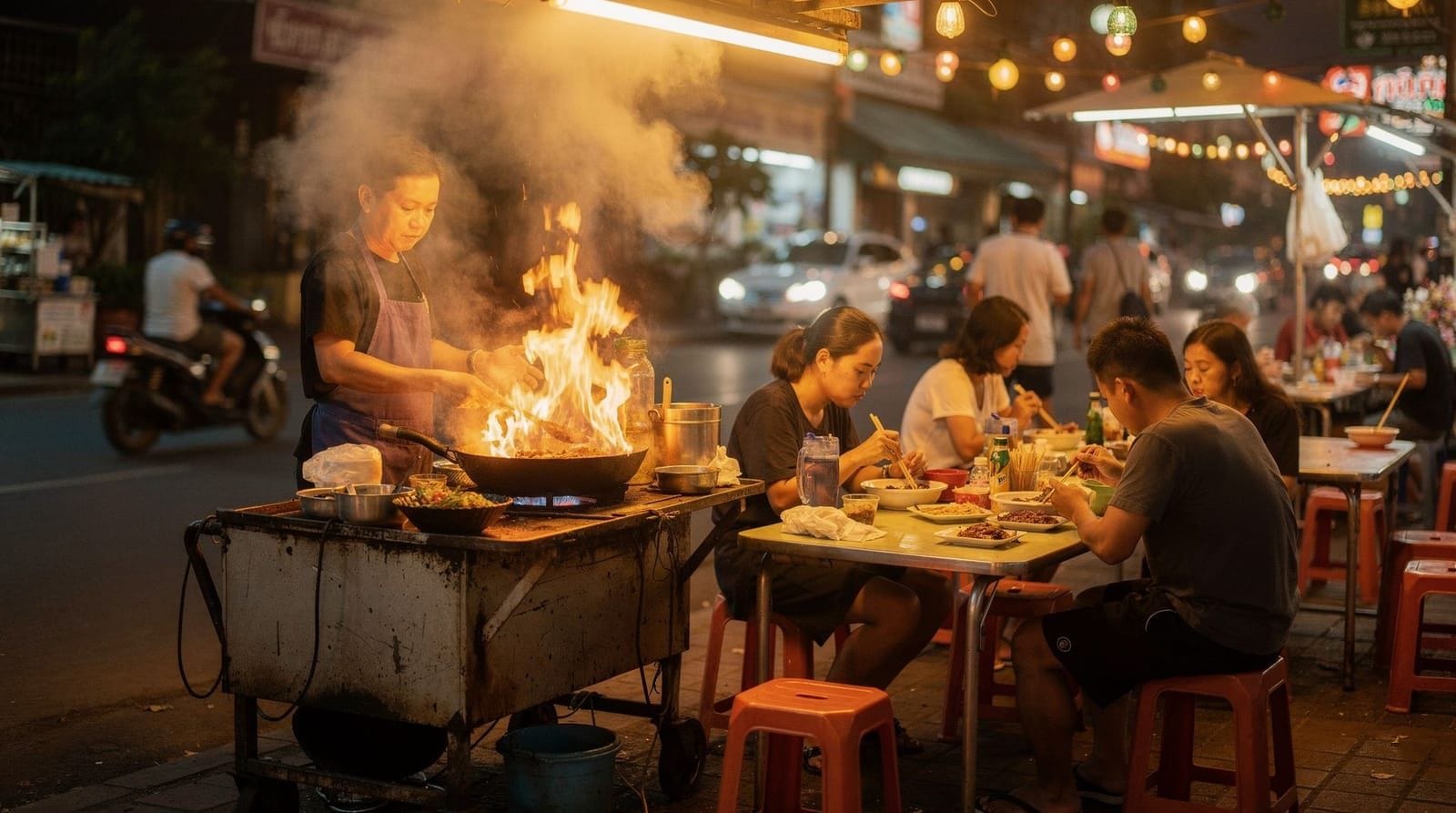
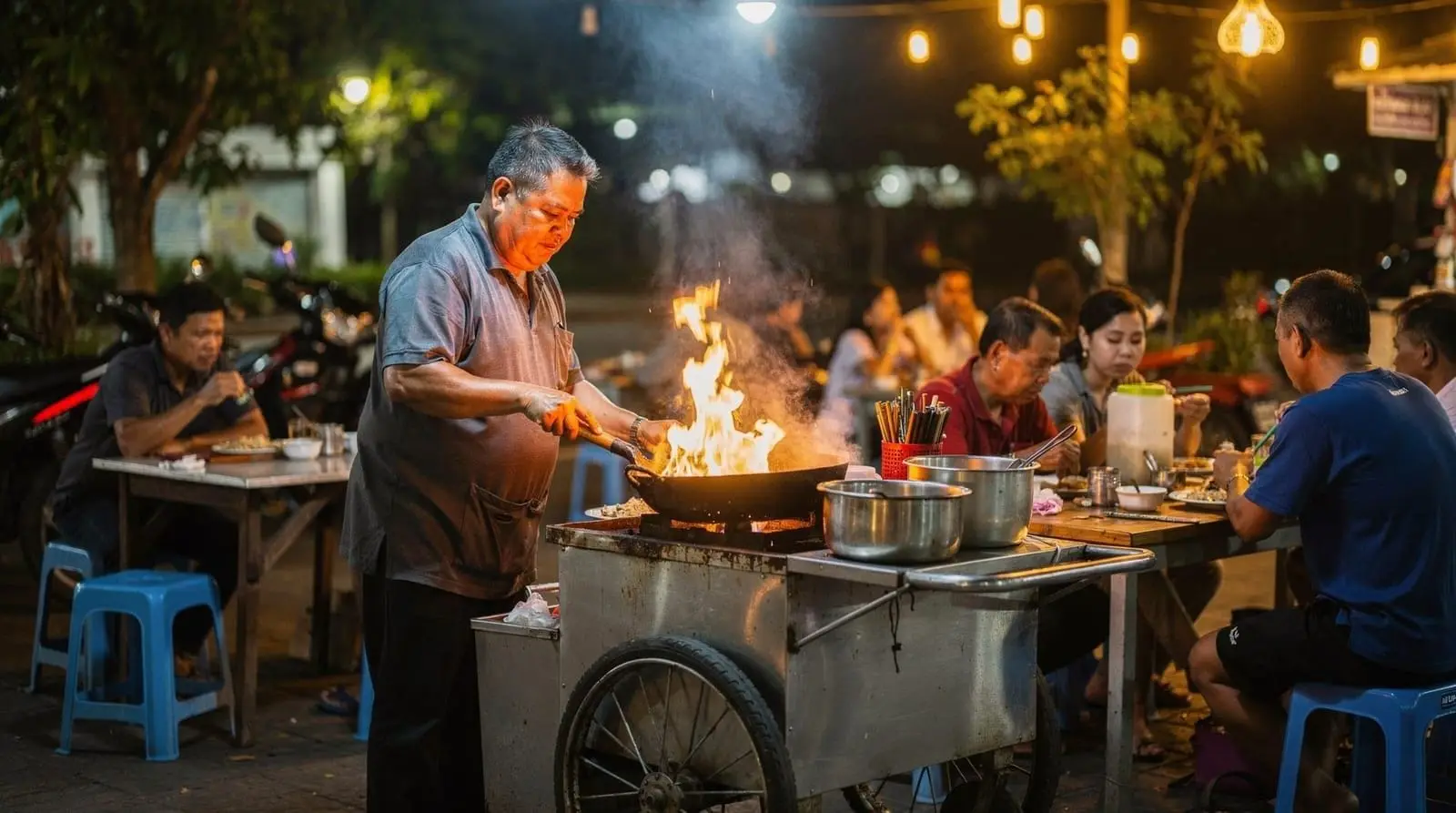
Eating the same range of dishes independently — say, a bowl of khao soi, a few grilled skewers, a dessert and a fruit shake, spread across an evening at Warorot Market or a night market — costs roughly 150-300 baht (US$4.30-8.60) per person. A guided tour covering a comparable range of tastings costs 1,200-2,000 baht. That’s a genuine four-to-ten-times premium, and it’s important to be clear-eyed about that rather than framing the tour as somehow a “good value” way to eat cheaply — it isn’t, in cost-per-calorie terms. Its value is entirely in the guidance and experience layered on top.
Different tour formats, different strengths
Not all food tours are structured the same way, and knowing the format differences helps you pick one that actually matches what you want out of the evening.
- Walking tours (such as a local food and markets guided walking tour, or a straightforward walking food tour) — cover a compact area on foot, generally better for a focused single-neighborhood deep dive.
- Songthaew truck tours — cover more ground across multiple, more distant neighborhoods in the same time window, useful if you want breadth over depth.
- Michelin-guide-focused tours — target specifically recognized, vetted stalls, useful if the credibility of “someone else has already judged these good” matters to you.
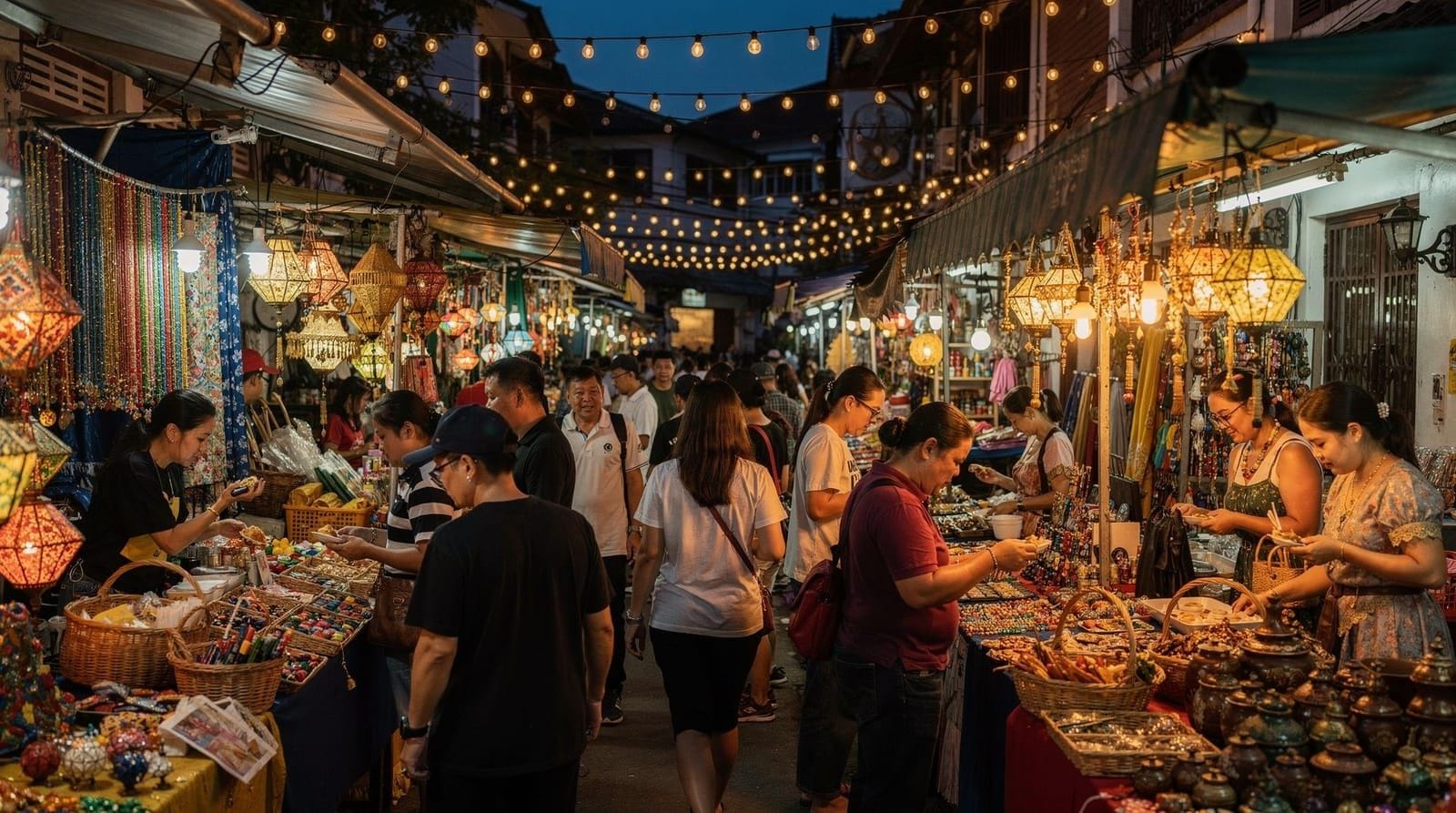
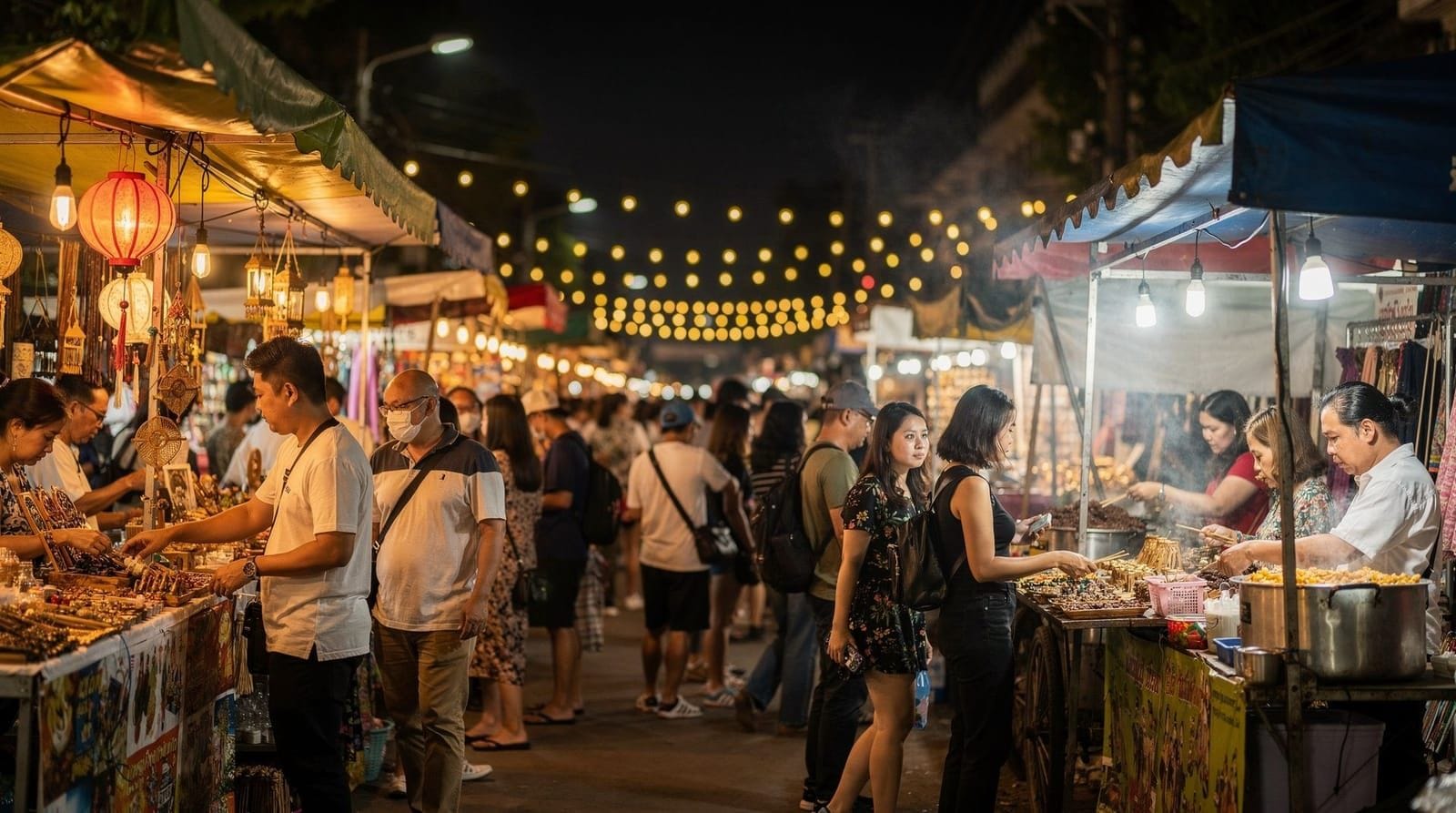
- Evening/night-focused tours — timed around the night market scene specifically, overlapping with the destinations covered in our best night markets for food guide.
How group composition changes the calculation
The worth-it question genuinely shifts depending on who you’re traveling with, and it’s worth being specific about this rather than giving one blanket answer for all travelers. For solo travelers, the company and structure a tour provides carries real, non-financial value that’s harder to replicate independently — eating alone at a folding table every night of a trip is a different experience than doing it occasionally, and a tour breaks that pattern at least once. For couples, the calculation is more purely about convenience versus cost, since the company factor matters less when you’re already not eating alone. For families with children, tours can be genuinely useful for the built-in structure and pacing, though it’s worth confirming in advance that a specific tour’s stops and portion sizes work for younger children, since some tours are paced and portioned more with adult palates and appetites in mind. For larger groups of friends, the cost premium is diluted per person less than you might expect since group tours are usually priced per individual regardless of group size, so a larger group doesn’t necessarily make a tour relatively cheaper the way splitting a taxi fare would.
Seasonal timing considerations for tours
Food tours run year-round in Chiang Mai, but a few seasonal factors are worth knowing. Rainy season (roughly June-October) can disrupt walking tours specifically, since a sudden downpour mid-tour is a real possibility and not all operators have a clear contingency plan beyond simply continuing in the rain or seeking brief shelter — worth asking about when booking during this window. Cool season (November-February) is generally the most pleasant time for an evening walking tour, comfortable temperatures making the multi-stop pace more enjoyable than during the hotter months. Hot season (March-May) evening tours are still comfortable once the sun sets, though daytime heat can make waiting between stops less pleasant if a tour runs earlier in the evening than the typical 5-6pm start time. None of these seasonal factors should be a dealbreaker for booking a tour in any given month, but they’re worth factoring into which specific evening you choose if your schedule has flexibility.
Who genuinely benefits from booking a tour
Certain traveler profiles get disproportionately more value out of this format than others, and recognizing yourself in the list below is a reasonable shortcut to the right decision.
- First-time visitors to Southeast Asia uncertain about how markets work, what’s safe, or how to order.
- Solo travelers who’d rather not eat alone at a folding table for an entire evening.
- Time-constrained travelers who want to cover several food neighborhoods in one evening rather than researching and navigating each independently.
- Anyone anxious about street food safety — a guide effectively pre-vets stalls through repeated personal use, addressing some of the concerns covered in our street food safety guide.
Who is better off going independently
Being just as specific about the other side of the equation matters for a genuinely balanced recommendation, since a guide that only lists reasons to book would be marketing rather than honest advice.
- Budget-conscious travelers for whom the four-to-ten-times price premium isn’t worth the convenience.
- Confident, experienced Southeast Asia travelers who already know how to navigate a market and order without language help.
- Travelers who prefer a slower, self-directed pace over a scheduled, guide-led itinerary with fixed stops and timing.
- Groups or couples who don’t need the company aspect that benefits solo travelers most.
What a typical evening actually looks like on a tour
Understanding the actual flow of a tour, rather than just its price, is the most useful way to judge whether the format suits your travel style.
To make the abstract cost-benefit discussion more concrete, it’s worth walking through what a typical 3-4 hour evening food tour actually involves. Groups are usually small (6-12 people), starting with a meeting point and brief introduction from the guide before setting off on foot or by songthaew truck. Each stop typically involves the guide ordering a shared tasting portion for the group, a few minutes of eating and explanation, then moving to the next stop — the pace is brisk enough to cover 5-8 distinct locations without feeling rushed at any single one. Guides commonly share context beyond just the food itself: neighborhood history, occasionally a stop at a temple or market landmark along the route, and practical tips for continuing to explore independently afterward. By the end, most participants report feeling genuinely full, having tried a wider range of dishes than they likely would have ordered independently in one sitting.
Comparing tour value against a cooking class
A food tour is often mentioned in the same breath as a cooking class, but the two experiences deliver genuinely different things and deserve a direct comparison rather than being treated as interchangeable.
It’s worth distinguishing a food tour from the related but different option of a cooking class, since both are common Chiang Mai experiences that overlap in appeal but deliver something different. A cooking class, typically running a half day and costing somewhat more than a food tour, teaches you to actively make several dishes yourself, often including a market visit as part of the session, and you leave with a skill rather than just a set of memories and photos. A food tour is purely a tasting and orientation experience, more efficient for covering breadth (multiple neighborhoods, many dishes) in a shorter window than a cooking class, which necessarily focuses on fewer dishes prepared in more depth. Travelers with time for only one of the two and a strong interest in northern Thai cooking specifically might lean toward a cooking class for the more lasting takeaway; those prioritizing broad orientation to the city’s food scene in a single evening are better served by a tour.
A middle-ground approach
For most travelers genuinely undecided between the two extremes covered above, a hybrid strategy captures most of the benefit of both without fully committing to either.
You don’t have to choose exclusively one way or the other for an entire trip. A reasonable middle path is booking one guided tour early in your visit — to get oriented, learn some dish names and build confidence — and then applying that knowledge independently for the rest of your stay, using our Chiang Mai street food guide and northern Thai dishes guide as reference. This captures most of the tour’s educational value in the first evening while saving money on subsequent nights. A Michelin-guide-focused tour or an evening market tour both work well for that first orientation night, since either gives you named, vetted stalls to compare your own independent finds against later.
How tour routes compare to going to specific named destinations yourself
One of the clearer ways to judge value is to look at whether a tour is taking you somewhere you couldn’t easily go yourself, or simply adding a guide to a route that’s already fully accessible independently.
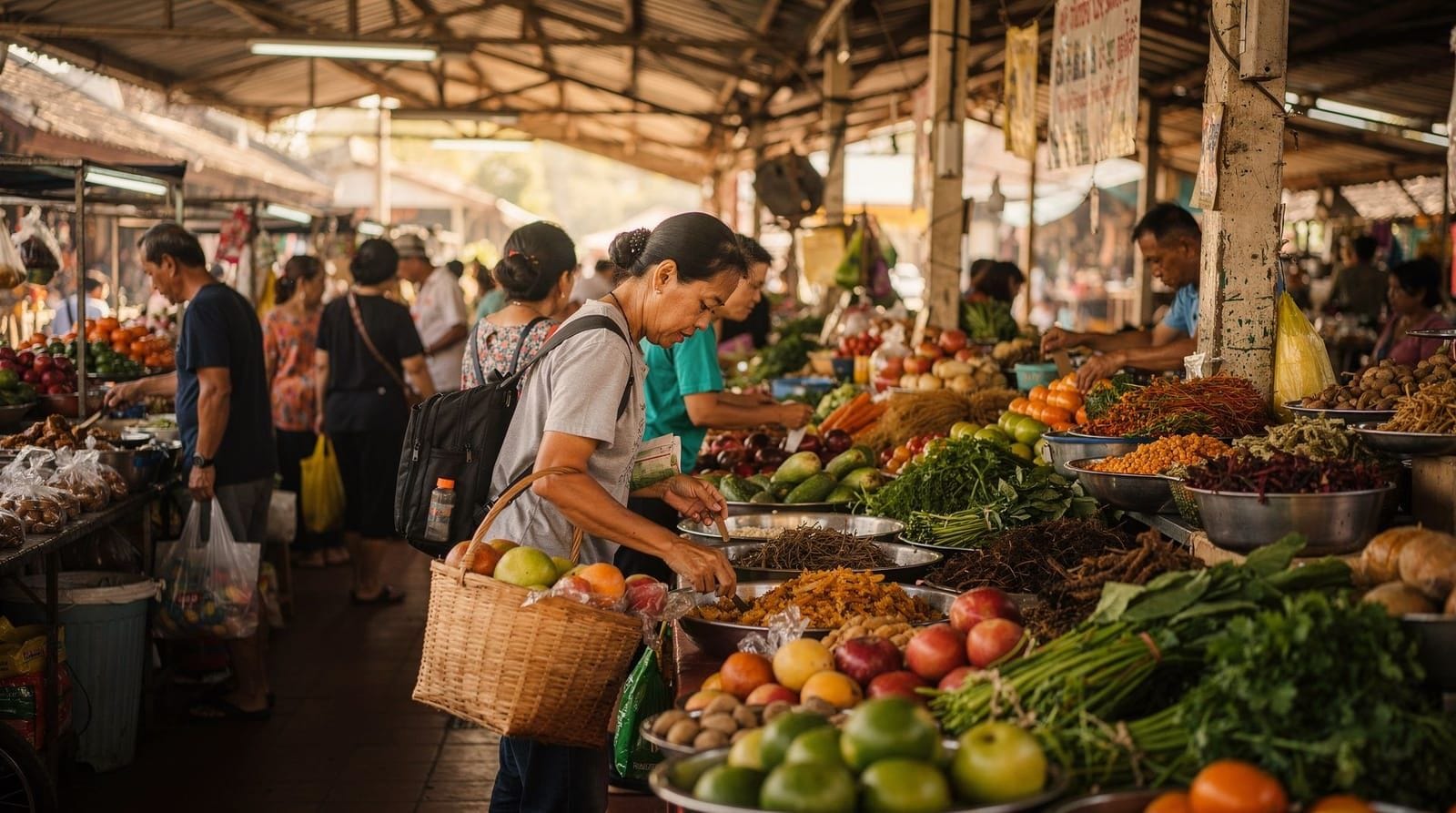
If you’re weighing whether a tour actually adds value versus simply visiting the same neighborhoods on your own, it helps to know what these tours typically cover. Many overlap substantially with our destination guides for the Night Bazaar area, Warorot Market and the Old City — places you can absolutely visit independently using our guides to the same food and markets. What the tour adds isn’t access to new locations so much as sequencing and local knowledge layered onto places that are otherwise fully open to independent visitors. If you’ve already read our Warorot Market food guide and feel confident navigating that market alone, a tour’s marginal value there is lower than if it’s covering a market or neighborhood you know nothing about.
Reading reviews and choosing a specific tour operator
Beyond the general worth-it question, it’s worth a note on picking a specific operator once you’ve decided a tour makes sense for your trip. Group size is one of the more meaningful differentiators — smaller groups (6-8 people) generally mean more individual attention from the guide and less time spent waiting at each stop for everyone to be served, compared to larger group tours that can feel more rushed and impersonal despite similar pricing. Recent review dates matter more than overall rating for this kind of experience, since specific stalls featured on a tour can change if a vendor closes or a guide’s route shifts — a tour with strong recent reviews is a better signal than one with an excellent rating built up years ago. Confirming the exact meeting point, start time and what’s included (drinks, specific dietary accommodations) before booking avoids the most common sources of day-of confusion or disappointment with this type of experience.
Frequently asked questions about Chiang Mai food tours
Do food tours in Chiang Mai include alcohol?
Some evening tours include a beer or local spirit tasting as part of the itinerary; this varies by operator, so check the specific tour description if it matters to you.
How much walking is involved in a typical food tour?
Walking tours generally cover 2-4km over the course of the evening at an easy pace with frequent stops; songthaew truck-based tours involve less walking since transport is provided between stops.
Are food tours suitable for children?
Many operators welcome families, though the pace, portion sizes geared toward adult tasting rather than full meals, and later evening timing of some tours are worth checking against your children’s needs specifically.
Can I request specific dietary accommodations on a food tour?
Vegetarian requests are commonly accommodated; stricter needs (vegan, halal, allergies) are worth confirming directly with the operator before booking rather than assuming a fixed multi-stop itinerary can adapt easily on the day.
Is tipping expected on a Chiang Mai food tour?
Not strictly required, but a modest tip for the guide (100-200 baht) is appreciated and increasingly common practice, similar to guided tours elsewhere in Thailand.
Will I still be hungry after a food tour, or is it a full meal replacement?
Most tours are designed to leave you genuinely full given the number of tastings involved (often 8-20 stops), effectively replacing a full dinner rather than being a light snack addition to your evening.
Should I book a food tour in advance or can I book on the day?
Booking at least a day or two in advance is safer, particularly for smaller-group tours which can sell out, though some operators do accept last-minute or same-day bookings depending on availability — advance booking gives more certainty if a specific evening matters to your schedule.
Do food tours operate every day of the week, including during festivals?
Most run daily year-round, though it’s worth confirming availability during major festival periods like Yi Peng or Songkran, when normal city routines and some vendor schedules can shift and a tour operator may adjust or pause its usual route accordingly.
Top experiences
Bookable activities with verified prices and instant confirmation on GetYourGuide.