Khao soi in Chiang Mai: where to eat the city's signature curry noodle
Chiang Mai: Food Tour by Songtheaw Truck with 15+ Tastings
Where is the best khao soi in Chiang Mai?
There's no single best bowl — old-school shops like Khao Soi Mae Sai, Khao Soi Khun Yai and Khao Soi Lam Duan near Faham each have loyal followings and cost 40-60 baht (US$1.15-1.70), while Khao Soi Prince and modern Nimman versions cost more (70-150 baht) but add comfort and consistency. The honest approach is to try at least two shops from different price tiers rather than trusting one 'best in Chiang Mai' claim.
Why khao soi gets its own guide
Ask ten Chiang Mai residents where to find the city’s best khao soi and you’ll get ten different answers, most of them defended with real conviction. That’s the honest starting point: khao soi isn’t a dish with one definitive version, it’s a family of recipes shaped by decades of individual shops guarding their own curry paste and broth ratios. This guide isn’t a ranked “number one” list — it’s a map of the main styles and named shops so you can pick based on what you actually want from a bowl: maximum authenticity, minimum wait, air conditioning, or a specific dietary need.
For broader context on the dish’s Burmese-influenced origins and how it fits alongside the city’s other signature dishes, see the northern Thai food dishes guide. This page assumes you already know roughly what khao soi is and want to know where to actually sit down and eat it.
Where the dish actually comes from
Khao soi’s history is genuinely tangled up with trade rather than being a purely Thai invention refined over centuries in isolation. The prevailing account traces it to Yunnanese Chinese Muslim traders (the Chin Haw community, also central to the city’s halal food scene) and Burmese Shan cooking traditions, both of which moved through and settled in northern Thailand along historic overland trade routes connecting Yunnan, Burma and the Lanna kingdom. The coconut curry base and the technique of topping a noodle soup with crispy fried noodles both point toward these external influences rather than a central-Thai culinary lineage. This is part of why khao soi tastes and feels different from Thai curries most visitors already know — it genuinely is a different tradition, absorbed into Chiang Mai’s food identity over generations rather than a regional variant of a national dish.
What separates a great bowl from a mediocre one
A handful of details, in rough order of importance:
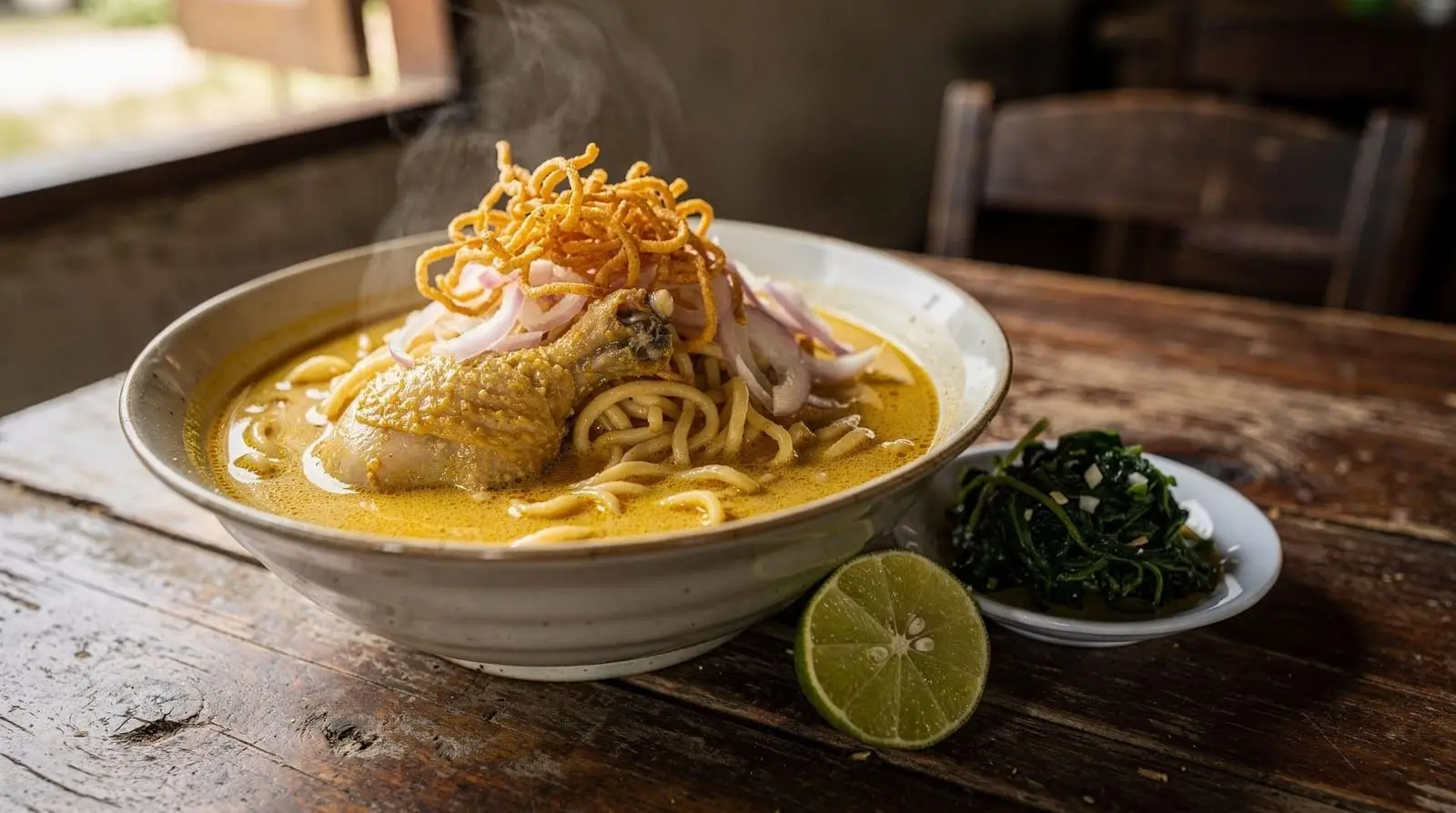
- Broth depth — the coconut curry should taste of toasted spice and slow-cooked meat, not just coconut milk and pre-made curry paste stirred together quickly. This is the single biggest quality gap between shops.
- Crispy noodle topping made fresh — the crunchy noodles on top should still be crisp when served, not soggy from sitting in the broth’s steam for an hour before your bowl was made.
- Balance of add-ins — pickled mustard greens (cutting through the richness), raw shallot (sharpness) and lime (acid) should all be present and fresh, not an afterthought.
- Meat that’s actually tender — particularly with beef versions, which need longer cooking; tough, under-simmered beef is a reliable sign of a shop cutting corners for turnover.
Old-school, no-frills shops
These are the names most worth writing down before your trip, since they’re the ones locals mention first and the ones a general online search doesn’t always surface prominently.
These are the shops most often cited by Chiang Mai residents rather than travel guides, typically plastic stools, a single specialty, and decades of the same routine:
- Khao Soi Mae Sai — a long-running shop known for a rich, deeply spiced broth and reliably tender chicken; often sells out by mid-afternoon.
- Khao Soi Khun Yai — another multi-generation family operation with a loyal local following, simple setup, no menu beyond khao soi itself.
- Khao Soi Lam Duan (Faham) — clustered in the Faham neighborhood on the Ping River’s east bank, an area with several khao soi specialists near each other, worth combining into one outing since you can compare two or three shops within a short walk.
- Khao Soi Samer Jai — another well-regarded neighborhood option, useful if the more famous names have a long queue.
Expect 40-60 baht (US$1.15-1.70) per bowl at all of these, cash only, minimal seating, and no English menu beyond “chicken or beef.”
Food tour by songthaew truck with 15+ tastingsSlightly more polished, still authentic
Khao Soi Prince sits between the old-school and modern categories — a proper sit-down restaurant with air conditioning and an English menu, but still cooking a recognizably traditional broth, and popular enough with both locals and visitors that queues form at lunch. Prices run 60-90 baht (US$1.70-2.60), a reasonable middle ground if you want comfort without losing the character of the dish.
Modern and Nimman-area versions
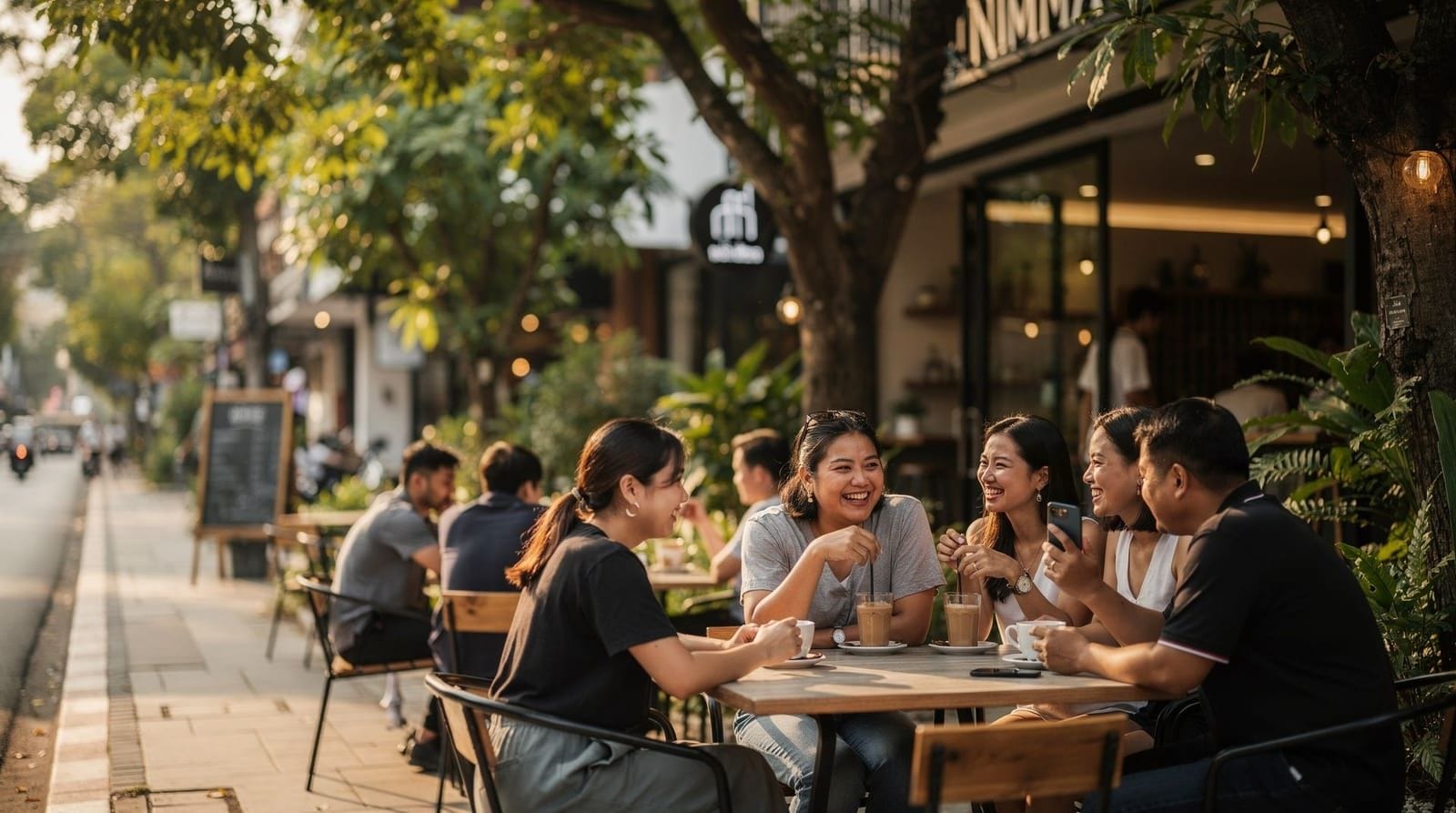
Several khao soi specialists have opened newer branches in Nimmanhaemin, trading some old-school grit for consistency, air conditioning and often a wider menu of northern Thai dishes alongside khao soi itself. These run 70-150 baht (US$2-4.30) and are a sensible choice if you’re already spending the afternoon in Nimman for coffee (see the coffee culture guide) and don’t want to cross town for the same dish.
Taste of Chiang Mai: Michelin Guide and street food tourVegetarian and halal khao soi
Vegetarian khao soi — tofu or vegetable-based, using a meat-free curry stock — is less common but findable, especially at stalls that also serve the city’s broader vegetarian (“je”) menu; see the vegetarian and vegan restaurants guide for named options. For halal khao soi, Khao Soi Islam, near the Ban Ho mosque and Chang Klan Road, is the established option, serving the dish to Chiang Mai’s Chin Haw Muslim community for generations — details in the halal food guide.
Faham: the neighborhood built around the dish
If one part of the city deserves special mention, it’s Faham, on the east bank of the Ping River not far from Wat Ket. Several long-running khao soi specialists operate within a few hundred meters of each other here, a genuine cluster rather than a coincidence, and it’s the single easiest place in the city to compare two or three shops in one sitting without significant travel time between them. The neighborhood itself is workaday rather than picturesque — this is a residential area with a few khao soi shops, not a curated food street — but that’s part of the appeal: the shops here serve local regulars first, and the quality reflects decades of a genuinely competitive local market rather than positioning for passing tourist traffic. A short walk along the riverside afterward, taking in Wat Ket and the small galleries nearby, makes a reasonable way to round out the visit.
What ingredients actually go into the broth
Understanding the broth’s construction helps explain why quality varies so much between shops. The base starts with a curry paste — typically red curry paste augmented with additional dry spices like curry powder, turmeric and coriander seed, reflecting the dish’s Burmese and Yunnanese Chinese lineage rather than the fresh wet pastes of central Thai curries. This paste is fried in oil to release its aromatics before coconut milk and stock are added and the whole broth is simmered, sometimes for hours, to let the flavors deepen. Shops that skip this slow build — using a thinner, quicker-cooked broth — produce a noticeably flatter-tasting bowl, which is the single biggest quality signal separating an excellent shop from a mediocre one selling the same basic dish. The crispy noodle topping is a separate component entirely: fresh egg noodles deep-fried until crunchy, ideally added just before serving so they retain their crunch rather than steaming soft against the hot broth underneath.
How to order like a regular
A few phrases and habits make ordering smoother. “Khao soi kai” gets chicken, “khao soi neua” gets beef; some shops also offer a mixed option or, less commonly, pork. If you want the broth mild, “mai phet” (not spicy) is understood, though as noted above most of the heat comes from the table-side chili paste rather than the broth itself, so this mainly affects how much of that paste the vendor might stir in for you by default. Portions are generally fixed rather than available in half sizes at most old-school shops, though asking politely for a smaller portion (“khao soi lek”) sometimes works if you’re trying to sample multiple shops in one outing, particularly at Faham’s cluster where vendors are used to visitors doing exactly that. Payment is virtually always cash, handed over after eating rather than in advance, following standard Thai casual-dining practice.
A practical way to compare bowls yourself
If you want to form your own opinion rather than trust a list, the most useful approach is a short khao soi crawl: order a half portion (many shops will do this on request) at two or three shops in the same afternoon, ideally one old-school and one modern, so the comparison is close in time and your palate isn’t reset by other meals in between. Faham’s cluster of shops makes this especially easy since several specialists sit within walking distance of each other.
If comparing shops yourself isn’t appealing, a guided street food tour that includes a khao soi stop removes the decision entirely — a local orders at a vetted shop and explains what you’re tasting, which is covered in more detail in the is a food tour worth it guide. For general market context beyond just khao soi, see the Chiang Mai street food guide and, if you’re near the Old City, several of the shops above are a short songthaew ride away.
Khao soi beyond Chiang Mai city
Khao soi isn’t unique to the city itself — it’s found throughout Thailand’s north, and if your itinerary includes day trips or overnight stops elsewhere, it’s worth trying regional variations rather than assuming the Chiang Mai version is the only one. Chiang Rai, a few hours north, has its own respected khao soi shops, sometimes with a slightly different curry powder blend reflecting the province’s closer proximity to Myanmar and Laos. Mae Hong Son, further west and more remote, sits in an area with a historically strong Shan and Burmese cultural presence, and its versions of the dish sometimes lean even more toward those roots. None of this is a “more authentic than Chiang Mai” claim — it’s more that the dish exists on a genuine regional spectrum, and trying it in more than one place, if your trip allows, gives a fuller picture than treating any single bowl as definitive.
What these shops serve beyond khao soi
Most khao soi specialists, especially the old-school single-focus shops, genuinely only serve khao soi — perhaps with a side of pickled vegetables or a simple dessert, but no broader menu. This is different from a general Thai restaurant, and it’s worth setting expectations accordingly: you’re visiting these shops for one dish, not for a full meal’s worth of variety. The modern Nimman-area versions and Khao Soi Prince tend to offer a wider northern Thai menu alongside khao soi — sai oua, nam prik, and other dishes covered in our northern Thai food dishes guide — making them a more practical single stop if you want to sample several dishes in one sitting rather than visiting specialist shops individually.
A realistic half-day khao soi itinerary
If khao soi is a genuine priority rather than just one dish among many, a half-day built around it works well given how early some shops close. Start at Faham around 10-11am, trying a half portion at two of the neighborhood’s specialists while they’re still comfortably before the lunch rush. From there, a short ride back toward the Old City puts you within reach of Khao Soi Prince for a third, more polished comparison bowl around midday. If you still have appetite and curiosity left, finish the afternoon in Nimman, pairing a modern khao soi version with a coffee stop covered in the coffee culture guide. This sequence deliberately moves from old-school to modern so the contrast is clear while your palate is still fresh, and it naturally avoids the early-afternoon closures that affect some of the most traditional shops.
Price tiers at a glance
| Tier | Examples | Typical price | What you’re paying for |
|---|---|---|---|
| Old-school | Khao Soi Mae Sai, Khao Soi Khun Yai, Khao Soi Lam Duan | 40-60 baht | Maximum authenticity, minimal comfort |
| Mid-tier | Khao Soi Prince | 60-90 baht | Air conditioning, English menu, still traditional |
| Modern/Nimman | Nimman-area branches | 70-150 baht | Consistency, comfort, wider menu |
| Halal | Khao Soi Islam | 50-80 baht | Halal certification, Chin Haw heritage recipe |
This table is a useful reference if you’re trying to plan a khao soi crawl on a budget, or simply want to know roughly what you’re paying extra for as you move up the comfort scale — none of the tiers is objectively “better,” just different trade-offs between authenticity, comfort and price.
Frequently asked questions about where to eat khao soi in Chiang Mai
Is khao soi available at Warorot Market?
Occasionally at scattered stalls, but Warorot is better known for other dishes; the dedicated khao soi shops above are generally a better bet for this specific dish. See the Warorot Market food guide for what Warorot itself is best for.
Can I learn to cook khao soi in a class?
Yes — several Chiang Mai cooking schools include khao soi as one of the dishes taught, since it’s the most requested northern recipe by visitors; look for classes that specifically mention northern Thai or Lanna dishes rather than generic Thai cooking classes.
Do old-school khao soi shops take credit cards?
No, virtually all of them are cash-only; carry small notes, since change for large bills is often unavailable at single-dish specialist shops.
Is there a “wrong” way to eat khao soi that marks you as a tourist?
Not really — stirring in the chili paste and squeezing the lime before eating is standard, and adding the raw shallot and pickled greens throughout the bowl rather than all at once is common practice, but there’s no strict etiquette to worry about.
How spicy can I ask for it to be made?
You can ask for the broth itself to be made with extra chili (“phet”) at some shops, though most simply serve the standard broth and let you add heat yourself via the table-side chili paste — safer if you’re unsure of your spice tolerance.
Is one bowl of khao soi enough for a full meal?
Generally yes — portions are meal-sized rather than a small tasting portion, unlike many other individual street food dishes in the city, so treat a khao soi stop as lunch or dinner in its own right rather than one course among several unless you’re specifically doing a comparison crawl with smaller portions.
Can I order khao soi to take away rather than eat in?
Yes, most shops will pack it for takeaway on request, though it’s worth eating it fresh where possible — the crispy noodle topping softens quickly once packed, and part of the dish’s appeal is that contrast between crunchy and soft textures at the moment it’s served.
Top experiences
Bookable activities with verified prices and instant confirmation on GetYourGuide.