Black House (Baan Dam Museum)
Thawan Duchanee's dark teak museum near Chiang Rai — animal bones, hides and unsettling art as a deliberate counterpoint to the White Temple.
From Chiang Mai: Chiang Rai's Iconic Temples & Black House
Duration: Full day
Quick facts
- Getting there
- ~5km (10 min) north of Chiang Rai town center; ~3-3.5hr from Chiang Mai
- Key sight
- Dozens of dark teak pavilions filled with animal bones, hides, horns, and Thawan Duchanee's unsettling art
- Time needed
- 45 minutes to 1 hour
- Best time
- Morning, when it's cooler for walking between the scattered pavilions
- Cost / entry
- ~80 THB foreigner entry (~$2.25)
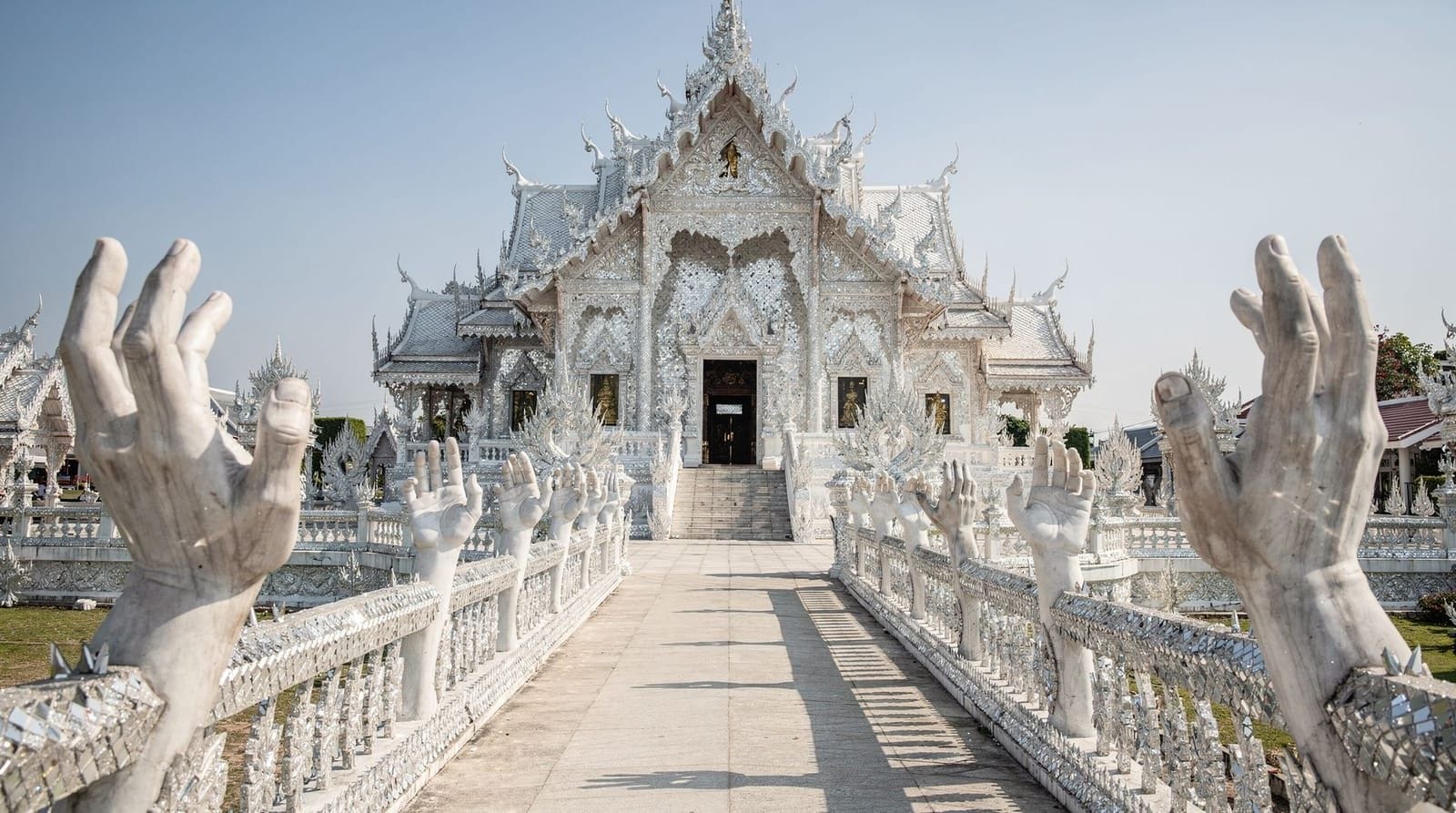
Baan Dam, universally known as the Black House, is the deliberate opposite of the White Temple a short drive away — dark instead of pale, secular instead of devotional, and built from animal remains and unsettling art rather than gilded Buddhist imagery.
Quick answer: Baan Dam (the Black House) is a sprawling museum-residence about 5km north of Chiang Rai town, created over three decades by the late Thai national artist Thawan Duchanee as his home, studio, and personal collection. It consists of more than 40 dark teak and concrete buildings scattered across landscaped grounds, many filled with animal bones, hides, horns, and skulls arranged as art alongside Duchanee’s own paintings and sculptures. Entry runs about 80 THB (~$2.25), and most visitors need 45 minutes to an hour to walk the grounds.
An artist’s home, not a temple
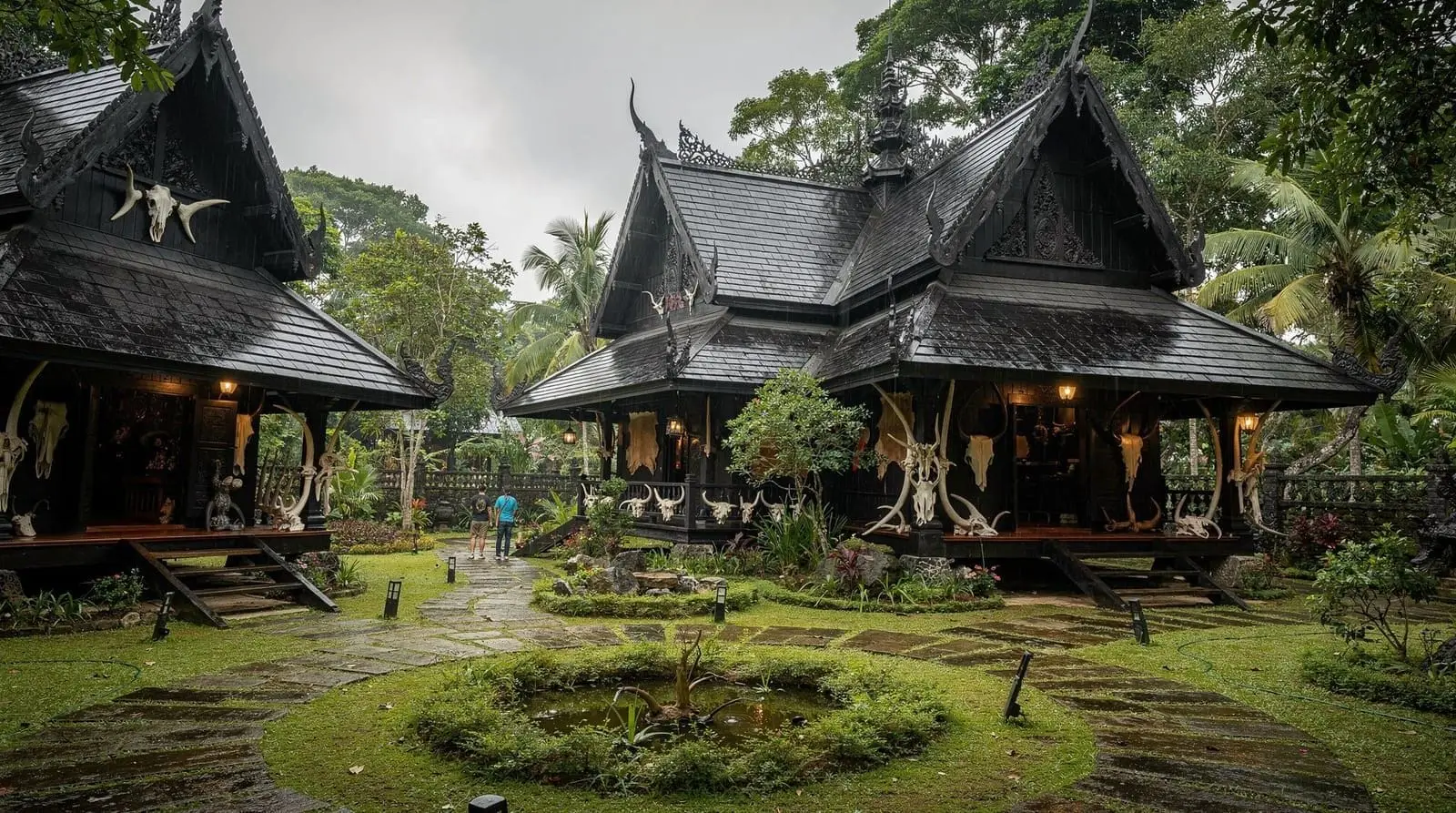
Unlike the White Temple and Blue Temple nearby, the Black House has no religious function at all — it’s the former home and working studio of Thawan Duchanee, one of Thailand’s most acclaimed and provocative modern artists, who began building the complex in the 1970s and continued adding structures until his death in 2014. The result feels less like a single museum and more like an entire dark village: dozens of black teak buildings, ranging from small pavilions to a large main hall, connected by paths across open grounds, each housing a different part of his collection or work.
Duchanee trained as a painter and was known for unflinching, sometimes disturbing imagery exploring death, sexuality, and the natural world — themes reflected directly in the buildings’ contents rather than softened for a general tourist audience.
What’s inside: bones, hides, and unsettling art
The defining feature of a Black House visit is the sheer quantity of animal remains on display — full crocodile skins, deer and buffalo skulls and horns, snake skins, and other bones arranged as furniture, wall hangings, and standalone sculptural pieces throughout the various buildings. Some pavilions are built almost entirely around a single large piece, such as a dining table ringed with animal horn chairs, while others house Duchanee’s paintings and smaller sculptural work in a more conventional gallery arrangement.
The overall effect is genuinely unsettling for some visitors and fascinating for others — there’s little attempt to soften the material for squeamish tourists, which is part of what makes the Black House feel authentic to Duchanee’s artistic vision rather than a sanitized attraction built for crowds. If you’re traveling with children or are sensitive to imagery involving animal remains, it’s worth knowing this in advance rather than discovering it on arrival.
The grounds: more village than single building
Part of what makes a Black House visit take longer than its modest entry fee might suggest is the sheer scale of the site — more than 40 separate structures spread across landscaped grounds with ponds, gardens, and open lawns between them, rather than a single museum building with rooms. Walking between the pavilions in the open air, especially in Chiang Rai’s midday heat, is part of the experience, and it rewards comfortable shoes and a bit of patience rather than a rushed 20-minute pass-through.
Some structures are large communal halls built from massive teak beams and roofed in a style echoing traditional northern Thai architecture, scaled up dramatically and darkened with black lacquer or paint; others are small, single-purpose pavilions housing just one or two pieces. There’s no single fixed route — visitors wander at their own pace, which suits the site’s function as a personal collection more than a curated museum experience with a prescribed path.
Getting there and combining with other sights
The Black House sits about 5km north of Chiang Rai town center, roughly a 10-minute drive, making it one of the more convenient stops for anyone staying overnight in the city. From Chiang Mai, it’s part of the same roughly 3-3.5 hour drive that reaches any of Chiang Rai’s sights, and it’s almost never visited as a standalone day trip given the distance involved — nearly everyone pairs it with the White and Blue temples on the same day.
A White Temple and Black House small group tour is a common pairing that keeps group sizes down relative to the larger coach tours, while a two-temple and Black House museum tour adds the Blue Temple into the same day for a complete circuit of Chiang Rai’s three signature sights. Travelers who’d rather explore at their own pace can also consider the Blue Temple and Black House private bike tour, covering both stops by bicycle rather than a fixed coach schedule.
Why it’s paired with the White Temple
Guides and tour operators consistently frame the Black House and White Temple as two halves of a single artistic conversation — both built by major modern Thai artists working near Chiang Rai around the same era, both drawing on Buddhist and cosmological themes, and both pushing far beyond traditional temple design, but arriving at nearly opposite conclusions. Where Chalermchai Kositpipat’s White Temple uses purity, light, and an all-white palette to represent the path to enlightenment, Thawan Duchanee’s Black House confronts death, the body, and the natural world directly and without ornament. Seeing both on the same day, ideally with the Blue Temple as a third stop, gives a genuinely fuller sense of the range of contemporary art coming out of the Chiang Rai region than any single site alone.
Practical details
There’s no strict dress code enforced at the Black House the way there is at active temples, since it’s a secular museum rather than a place of worship, though modest, comfortable clothing suited to walking outdoors in Thailand’s heat remains the practical choice. Shade is limited between buildings, so water and a hat are worth carrying, particularly if you’re visiting at midday between other Chiang Rai stops rather than as a cooler morning outing.
Thawan Duchanee’s place in Thai art
Thawan Duchanee was one of the small handful of artists granted Thailand’s National Artist title during his lifetime, recognized for a body of work spanning painting, sculpture, and architecture that consistently returned to themes of impermanence, the animal body, and the boundary between life and death — themes drawn in part from his training in Buddhist philosophy alongside his formal art education in Thailand and later in the Netherlands. Baan Dam represents the culmination of this career: rather than confining his work to gallery walls, he built an entire environment for it, blending architecture, sculpture, and collected natural specimens into a single, walkable body of work that he continued expanding for nearly four decades. Understanding this context helps explain why the site feels less like a conventional tourist attraction and more like stepping into the mind of a single, singular artist — an intention Duchanee was explicit about in interviews before his death in 2014.
How the Black House compares to other Chiang Rai sights
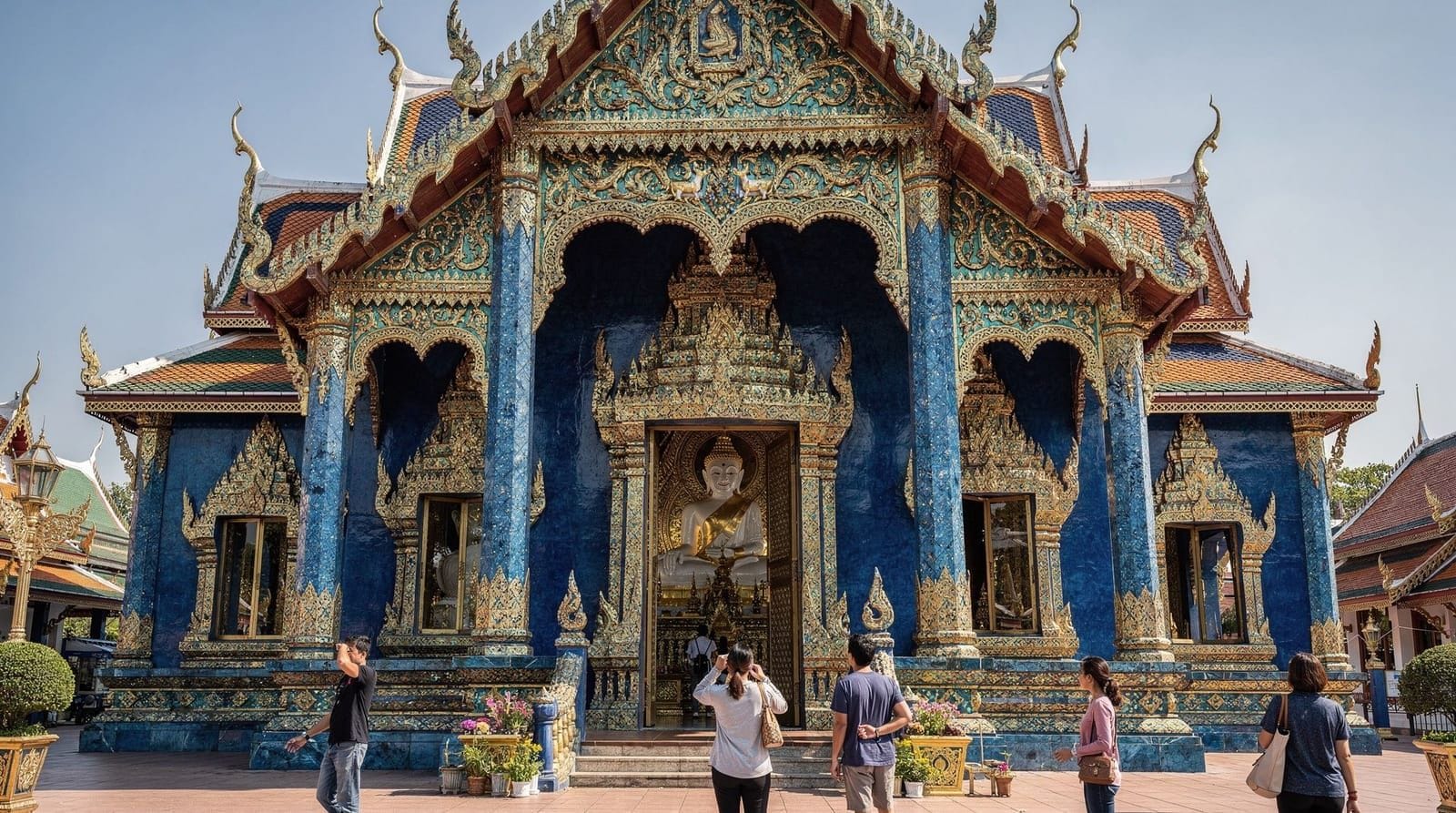
Within Chiang Rai’s cluster of contemporary artist-built sites, the Black House occupies a clear and distinct niche. The White Temple uses Buddhist cosmology and an all-white palette to explore themes of desire, purity, and the path to enlightenment in an explicitly devotional context. The Blue Temple works within a similar devotional framework but with a different color language and calmer visitor experience. The Black House alone steps outside religious framing entirely, using natural materials — bone, hide, horn, wood — to confront mortality and the body directly, without the softening effect of Buddhist iconography. Seeing all three in a single day, as most visitors do, gives a genuinely rounded sense of how differently contemporary Thai artists have approached shared themes of impermanence and the sacred within a few kilometers of each other.
Weather and seasonal notes
Because a Black House visit involves walking substantial distances between open-air pavilions with limited shade, the cooler November-to-February season is noticeably more comfortable for a leisurely visit than the hot season from March to May, when midday heat can make the walk between the more distant structures genuinely tiring. Rain during the June-to-October wet season doesn’t close the site, but exposed walkways between buildings offer little shelter, so a compact umbrella or rain jacket is worth carrying if visiting during this period. As with other outdoor sights in the region, the February-to-April burning season can also affect air quality and comfort for an extended outdoor walk, one more reason the cool season remains the most reliable time to visit if your schedule has any flexibility.
A different kind of souvenir
Unlike the print-and-merchandise gift shops at the White and Blue temples, the Black House’s own shop leans toward small wood carvings, leather goods, and craft items echoing the natural materials used throughout the complex itself, rather than temple-branded trinkets. It’s a fitting, if modest, extension of the site’s overall aesthetic for visitors who want a tangible memory of the visit beyond photographs.
Facilities on site
A small café and rest area near the entrance offers a place to pause partway through the visit, useful given how much walking the full grounds require. Restroom facilities are available near the main entrance and at a couple of points further into the complex, and a covered area near the ticket booth provides shelter if a sudden rain shower interrupts an otherwise open-air walk between pavilions.
Best time of year to visit
Because so much of the visit involves walking between open-air structures, the cool season (November-February) offers the most comfortable conditions for exploring the grounds at a relaxed pace. The hot season (March-May) can make an unhurried walk between the more distant pavilions genuinely tiring by midday, and the rainy season (June-October) brings the risk of sudden downpours with limited shelter along the outdoor paths. None of these seasonal factors close the site, but the cool season remains the most pleasant window if your travel dates have any flexibility.
If you’re short on time
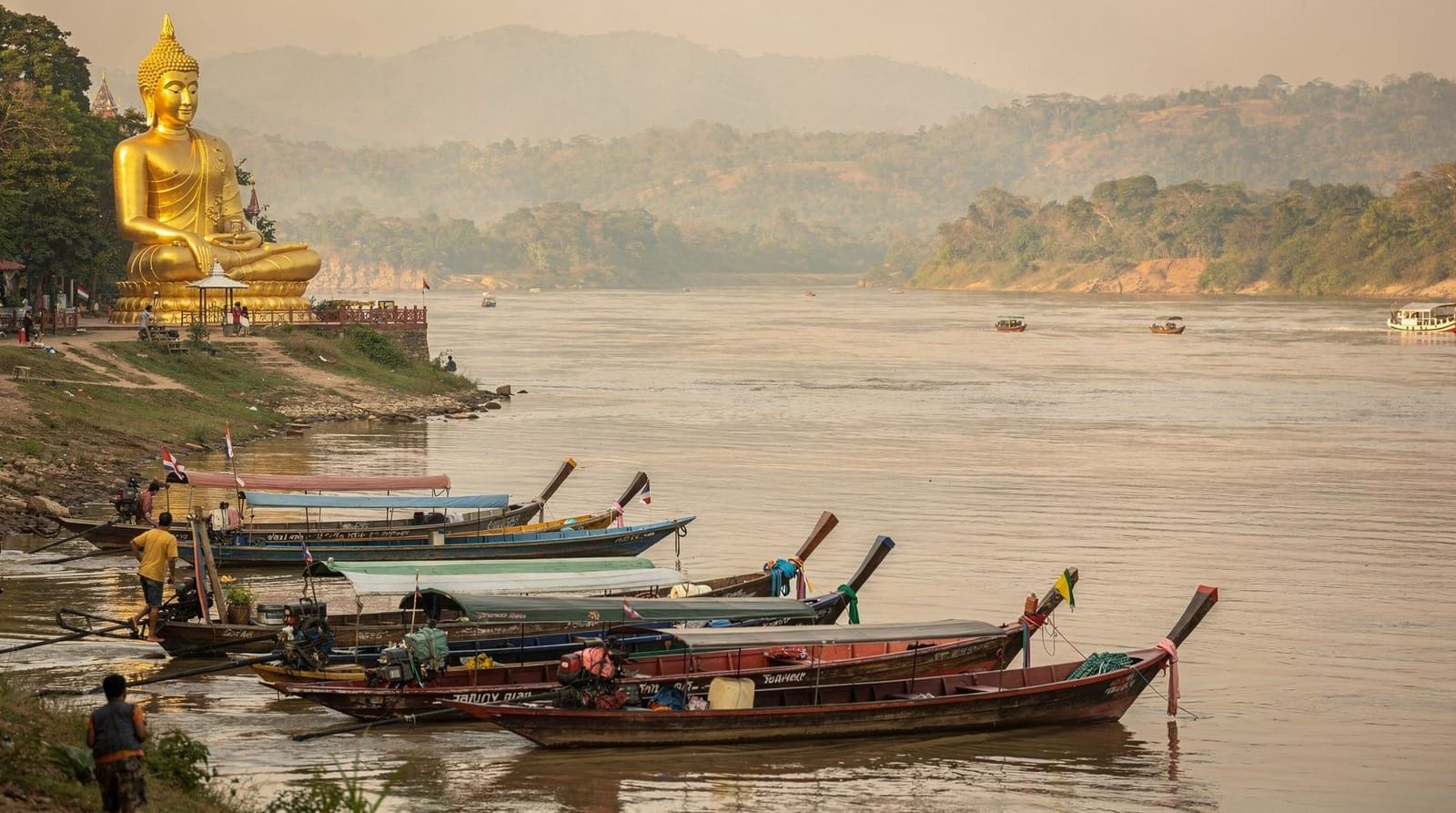
Visitors squeezed for time between the White Temple and a return drive to Chiang Mai sometimes ask whether the Black House can be skipped without much loss. It’s a fair question given the long day most Chiang Rai tours already involve, but the honest answer is that skipping it removes the one stop in the standard circuit that isn’t a temple at all — the only genuinely different experience among the three signature sights. If a choice must be made between the Black House and the Golden Triangle further north, the Black House is the shorter, closer, and more reliably included option on standard day tours, while the Golden Triangle adds significant extra driving time for a different kind of experience entirely.
What to bring
Given the extensive outdoor walking between pavilions and the limited shade across much of the grounds, water and sun protection are worth carrying regardless of season. Comfortable walking shoes matter more here than at almost any other single stop in the Chiang Rai circuit, since the site’s scale genuinely rewards exploring beyond the two or three most-photographed buildings near the entrance. A small amount of cash is useful for the entry fee and any handicraft stalls near the parking area, which sell local crafts distinct from the temple-adjacent souvenir stands found at the White and Blue temples.
Etiquette and photography
Because the Black House is a secular museum rather than an active place of worship, the etiquette expectations are more relaxed than at a functioning temple — there’s no dress code enforcement and no requirement to remove shoes before entering most buildings. Photography is broadly permitted across the grounds and inside most structures, making it one of the more photography-friendly stops in the region, though visitors should stay mindful that some displayed items are genuine animal remains rather than replicas, and a respectful, unobtrusive approach to photographing them is appropriate given the site’s serious artistic intent rather than novelty framing.
Frequently asked questions about the Black House
What is the entry fee for the Black House?
Around 80 THB (roughly $2.25) for foreign visitors.
Is the Black House a temple?
No — it’s the former home, studio, and personal collection of artist Thawan Duchanee, with no religious function, unlike the nearby White and Blue temples.
How far is the Black House from Chiang Rai town?
About 5km, roughly a 10-minute drive north of the town center.
Is the Black House appropriate for children?
It depends on your family’s comfort level — the extensive displays of animal bones, hides, and horns can be unsettling for some younger visitors. Worth considering in advance rather than discovering on arrival.
How much time should I budget for the Black House?
45 minutes to an hour is typical, given the site’s scale — more than 40 separate buildings spread across open grounds.
Can I visit the Black House on its own, without the White or Blue temples?
You can, but almost no one does, given how far Chiang Rai sits from Chiang Mai — most visitors combine it with the temples on the same day trip or overnight stay.
Who was Thawan Duchanee?
A Thai national artist known for provocative, unflinching work exploring death, sexuality, and nature, who built the Black House as his home and studio from the 1970s until his death in 2014.
Is photography allowed at the Black House?
Generally yes across the outdoor grounds and most buildings, though it’s worth checking for any posted restrictions at specific structures during your visit.
Top experiences
Bookable activities with verified prices and instant confirmation on GetYourGuide.