Golden Triangle day trip guide
Golden Triangle, Mekong River & Laos Private Guided Tour
Duration: Full day
Can you visit the Golden Triangle as a day trip from Chiang Mai?
Yes, but only as part of a combined full-day tour with Chiang Rai's temples, since the Golden Triangle itself sits about an hour further north of Chiang Rai town — roughly 4-4.5 hours (~250km) from Chiang Mai. It's not realistic as a standalone Chiang Mai day trip without the Chiang Rai stops built in.
The Golden Triangle — the point where Thailand, Laos and Myanmar meet along the Mekong River — carries a name recognition well beyond what most travelers actually know about it, largely thanks to its history as the center of the regional opium trade. Visiting it from Chiang Mai is straightforward logistically, but only once you understand it’s not really a standalone day trip destination — it’s the northern extension of a Chiang Rai day out.
Quick answer: the Golden Triangle sits about 250km (4-4.5 hours) from Chiang Mai, roughly an hour north of Chiang Rai town at the riverside settlement of Sop Ruak. It’s visited almost exclusively as part of a combined Chiang Rai and Golden Triangle full-day tour, rather than as an independent Chiang Mai day trip.
Why it’s not a standalone day trip
Given the distance and the fact that Chiang Rai’s temples sit directly along the same route, essentially every tour operator packages the two together rather than offering the Golden Triangle alone. Trying to visit just the Golden Triangle without stopping in Chiang Rai would mean covering the same 4+ hour drive for a single stop, which makes little practical sense when the White Temple and Black House sit conveniently along the way. If you’re weighing whether Chiang Rai itself is worth the trip in the first place, the Chiang Rai day trip guide covers that question directly.
What’s actually at the Golden Triangle
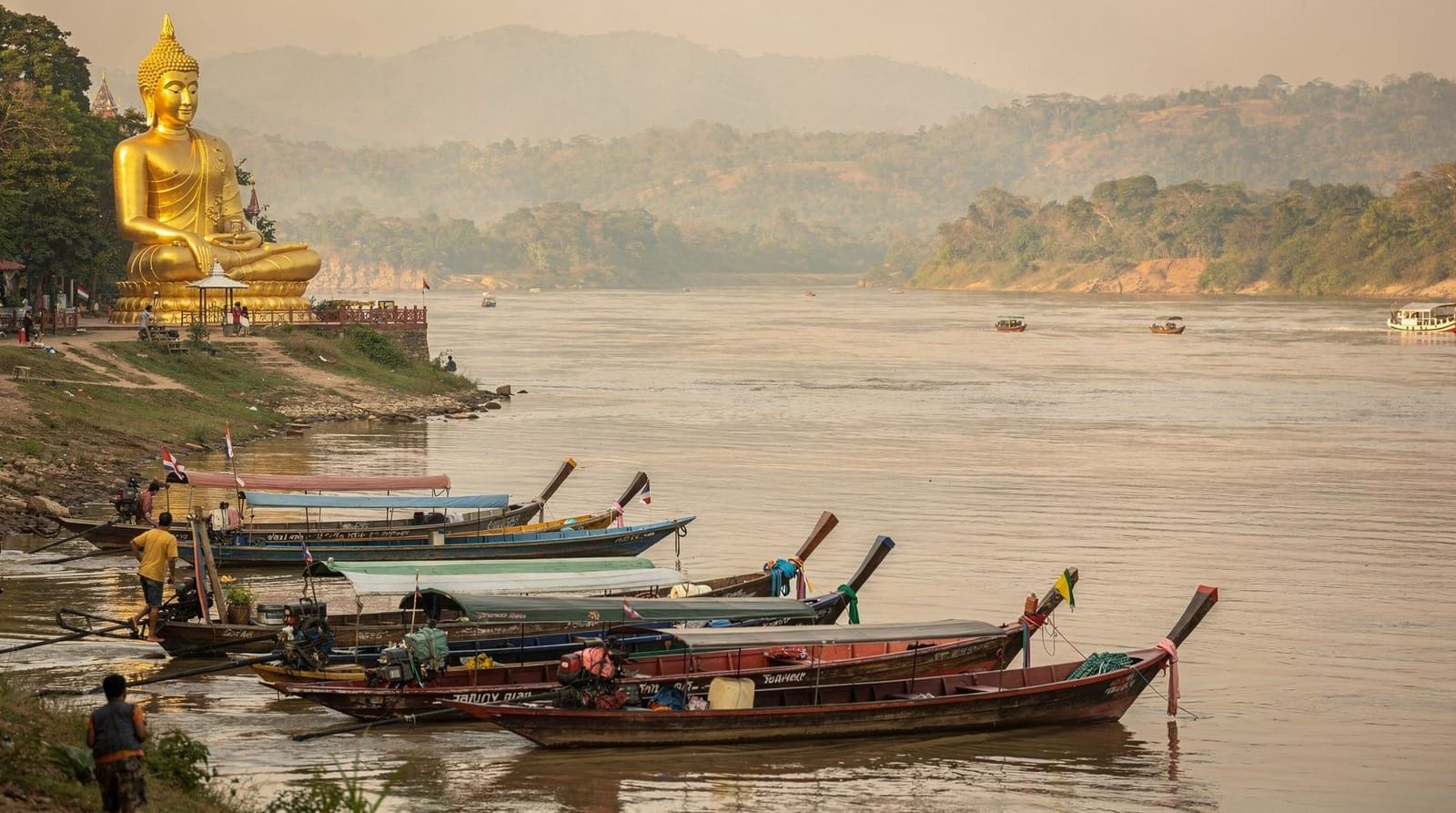
The tripoint itself is marked by viewpoints over the Mekong River and a large seated golden Buddha statue overlooking the water where the three countries’ borders converge. The Hall of Opium museum, a short distance away, gives real historical depth to the site — a detailed account of the region’s opium trade, from colonial-era commerce through to the Thai royal agricultural projects that shifted local farming away from poppy cultivation. Most full-day tours, like a Golden Triangle, Mekong River and Laos private guided tour, allow an hour or two here, split between the viewpoints, a photo stop, and sometimes the museum.
The Mekong boat trip
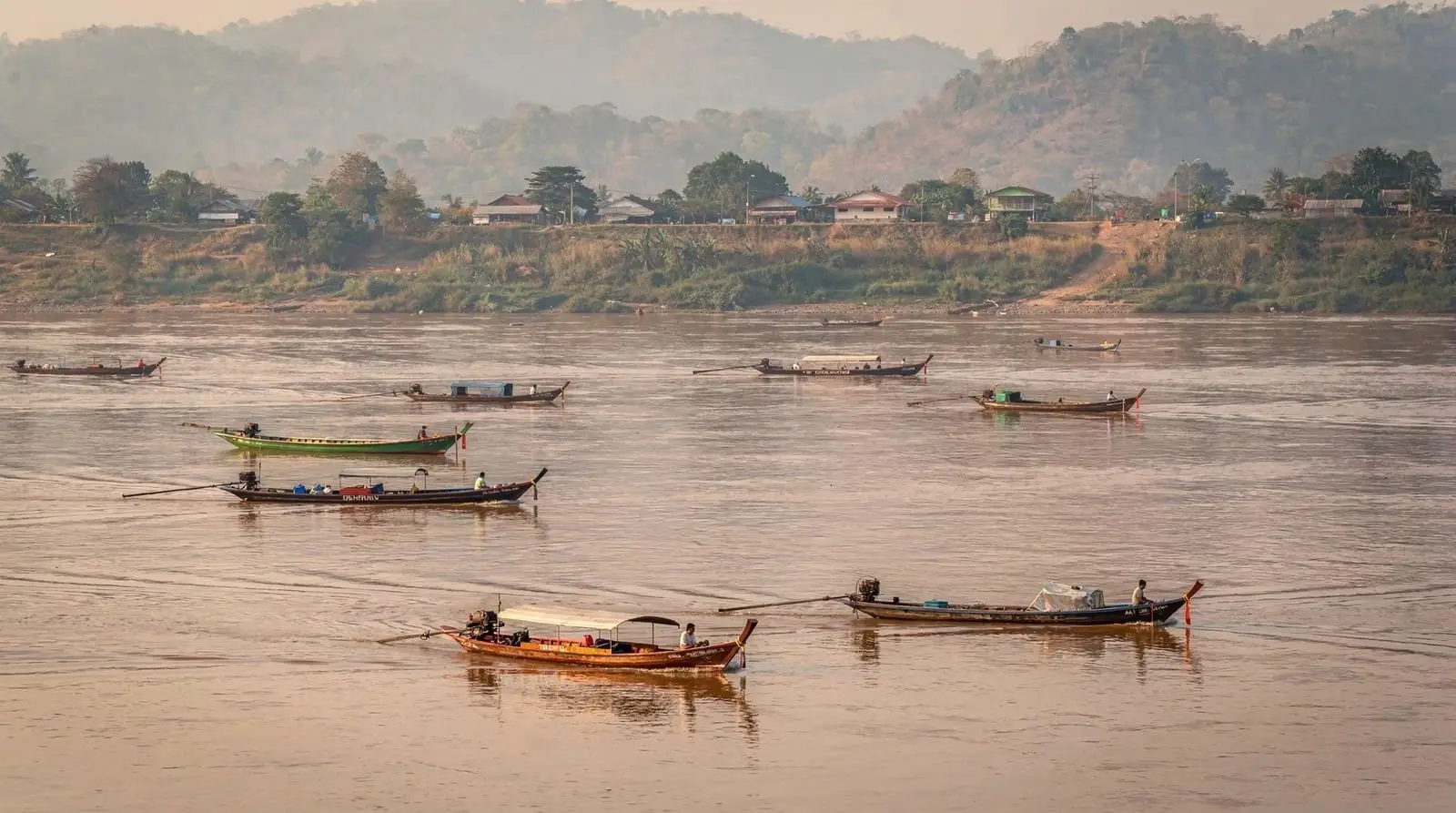
A longtail boat trip along the Mekong is the signature Golden Triangle experience for most visitors — a Golden Triangle and Maekhong private boat trip typically runs 30-45 minutes, passing close to the riverbanks of all three countries and sometimes stopping briefly at a market island on the Laos side. The market stop itself is fairly touristy — souvenir stalls and photo opportunities rather than a genuine cultural experience — but the river perspective on the tripoint is worth the short trip regardless.
A typical combined itinerary
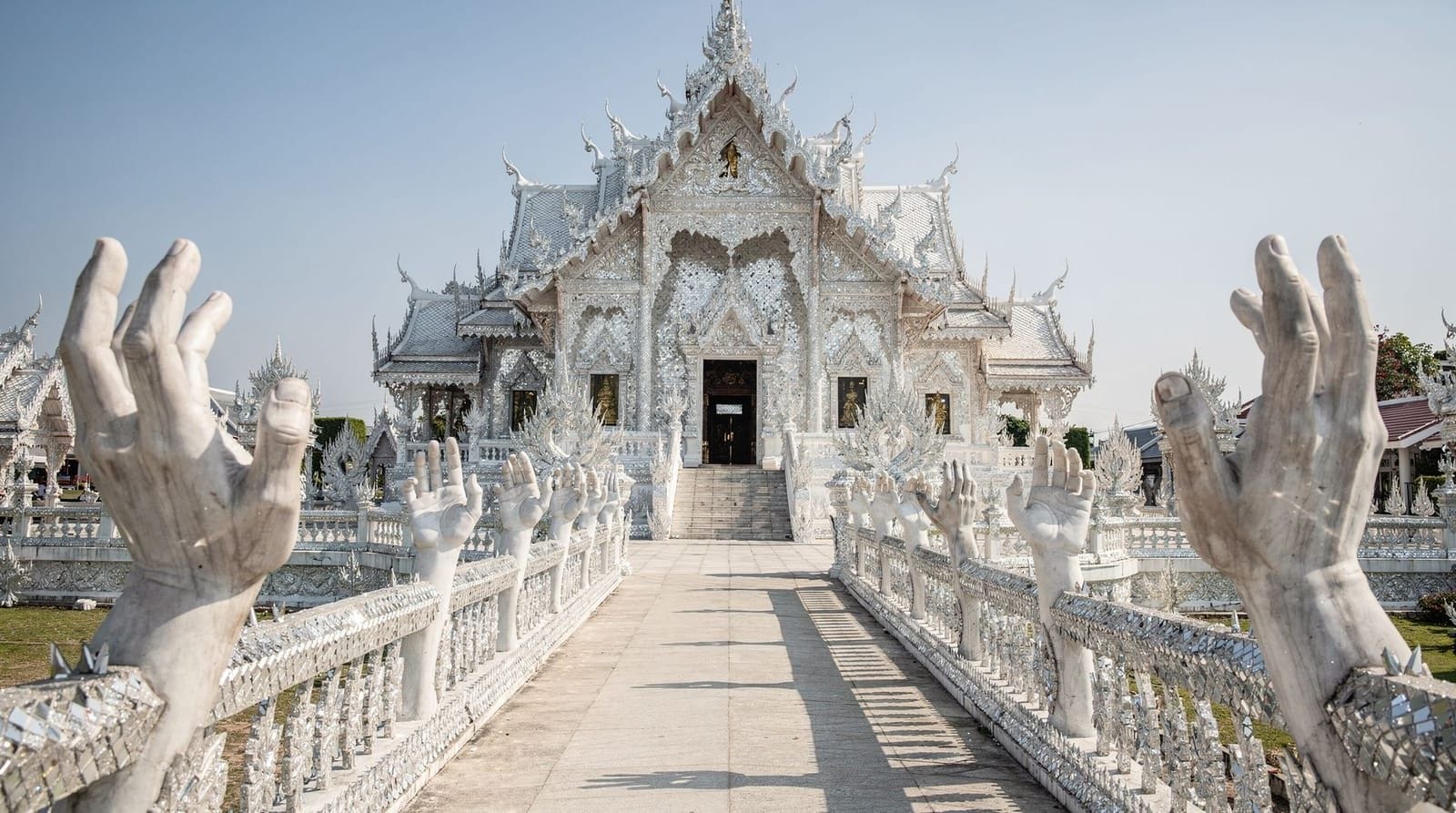
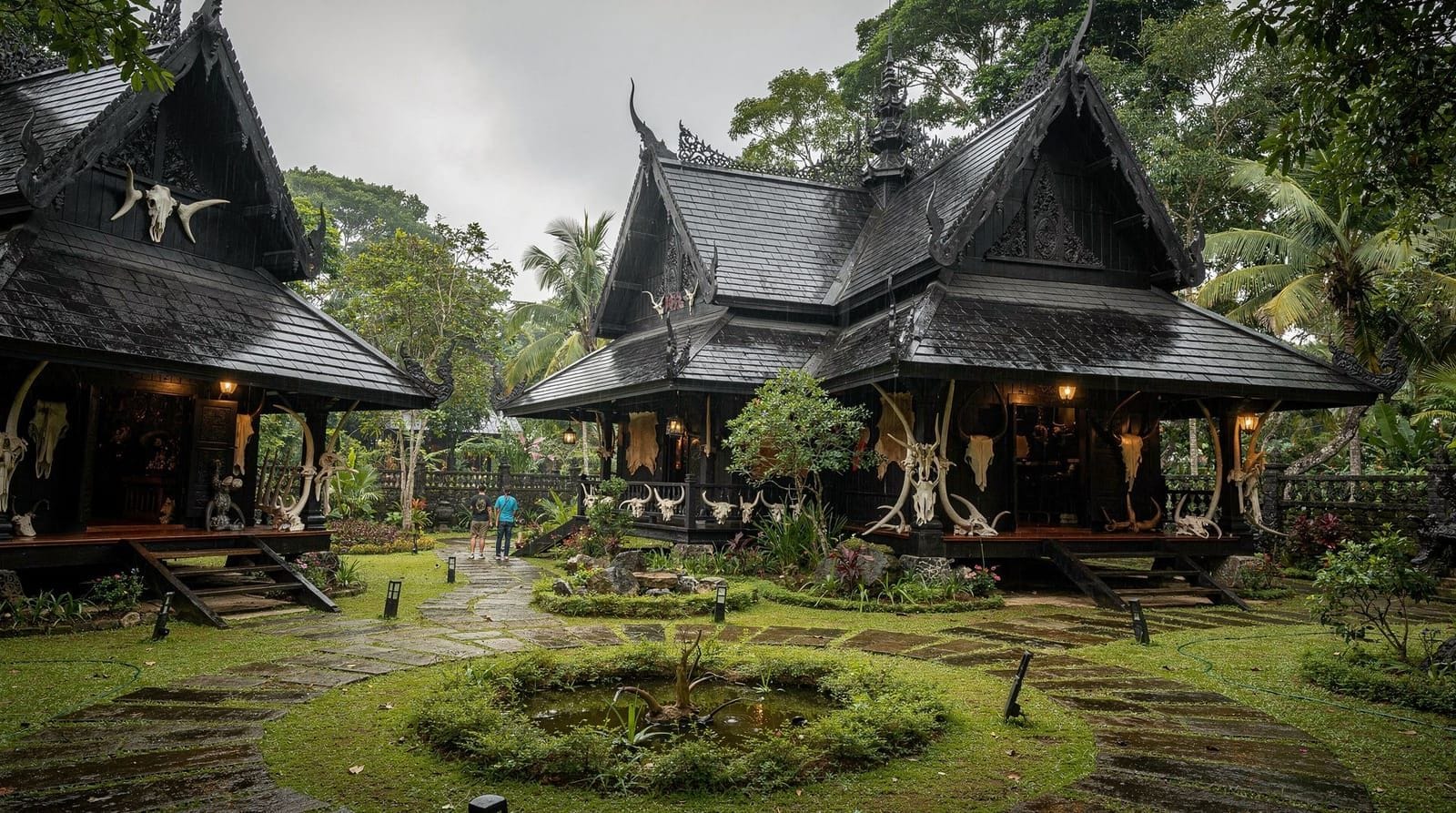
A full day covering both destinations, such as a Chiang Rai temples and Golden Triangle tour, generally departs Chiang Mai before 7am, covers one or two Chiang Rai temples (usually the White Temple, sometimes the Black House) in the morning, continues north to the Golden Triangle for the viewpoints and boat trip around midday, and returns to Chiang Mai by evening. This is a genuinely long day — 4-4.5 hours of driving each way plus the internal Chiang Rai-to-Golden Triangle leg — so temper expectations about lingering at any single stop.
For travelers who’d rather split this into two calmer days, an overnight in Chiang Rai (covered in the Chiang Rai day trip guide) allows the temples on one day and a more relaxed Golden Triangle and river excursion on the next, via a Chiang Rai and Golden Triangle private full-day tour departing from a Chiang Rai base rather than all the way from Chiang Mai.
Crossing into Laos
The market island stop on the Laos side is typically a short, informal crossing that doesn’t require a passport or visa — usually just a small entry fee collected on the spot — though rules around this can shift, and it’s worth confirming current requirements with your tour operator rather than assuming. Some tours skip the Laos crossing entirely and simply pass by on the river, which is worth clarifying when booking if the crossing itself matters to you.
Best time to visit
November-February offers the clearest river views and most comfortable boat-trip conditions, with mornings generally calmer on the water than afternoons. The February-April burning season can noticeably haze the river views, similar to its effect on Chiang Rai more broadly.
Combining with other northern sights
Travelers continuing further into northern Thailand sometimes extend a Golden Triangle visit toward Mae Hong Son or loop back via Chiang Dao, though these require additional days rather than fitting into the same single-day Chiang Rai-Golden Triangle circuit. For a full comparison of how the Golden Triangle fits into a broader Chiang Rai itinerary, the White Temple vs Blue Temple guide helps prioritize which Chiang Rai stops to pair with the trip north.
The opium trade in more depth
The “Golden Triangle” name itself dates to the mid-20th century, coined to describe the roughly 950,000 square kilometer area spanning parts of Thailand, Laos and Myanmar that once produced a substantial share of the world’s illicit opium. Thailand’s portion of that history shifted dramatically from the 1970s onward through a series of royal development projects, most notably initiatives associated with the late King Bhumibol, which introduced alternative cash crops — coffee, temperate fruits, flowers — to hill-tribe farming communities that had previously relied on poppy cultivation. The Hall of Opium museum near Sop Ruak documents this transition in detail, alongside the broader regional and colonial-era history of the opium trade, giving genuine substance to a site that could otherwise be reduced to a photo-op at a border marker.
Nearby Mae Sai and the Myanmar border
Some extended tours push slightly further to Mae Sai, Thailand’s northernmost town and a formal border crossing into Myanmar, about 30-45 minutes from the Golden Triangle viewpoints. This isn’t part of a standard combined Chiang Rai-Golden Triangle day trip, but it’s worth knowing about if you’re planning a longer stay in the area and want to see the formal border crossing itself, distinct from the more scenic, informal river crossing near Sop Ruak. Crossing into Myanmar for anything beyond a brief market visit typically requires separate visa arrangements, which is well beyond the scope of a standard day trip from Chiang Mai.
What to pack and photography notes
Given the riverside setting and the open-air boat trip, sun protection (hat, sunscreen) matters more here than at some of the shadier temple stops elsewhere in the region, along with a light layer for the breeze on the water. Photography-wise, the tripoint viewpoints and the seated Buddha statue photograph best in the morning, before the midday sun flattens the scene and before any afternoon haze builds, particularly outside the clearest November-February window. The boat trip itself offers some of the more distinctive photo opportunities in the region — riverbank views of three different countries within a single short trip — worth timing your boat departure for morning light if the option is available on your itinerary.
Shopping at the Golden Triangle
The area around the tripoint viewpoints has a modest cluster of souvenir stalls, selling a mix of regional handicrafts, dried goods and Golden Triangle-branded memorabilia — mostly straightforward tourist-market fare rather than anything distinctive to the specific site. The market stop on the Laos-side river island, if your boat trip includes it, has its own small selection of goods, often at prices reflecting the captive audience of a boat-trip stop rather than particularly good value. Serious souvenir shopping is better saved for Chiang Rai’s night bazaar (if visiting on an overnight basis) or Chiang Mai itself, rather than treating the Golden Triangle stalls as a shopping destination in their own right.
Family suitability
The Golden Triangle’s main sightseeing components — the viewpoints, the seated Buddha statue, and the Hall of Opium museum — are all manageable for families with children of most ages, involving minimal walking and no significant physical demands. The boat trip is generally suitable for children too, though standard water-safety precautions apply given the open river setting, and younger children should wear a life jacket if provided. The Hall of Opium museum’s subject matter (drug trade history) is presented informatively rather than graphically, making it appropriate for most ages, though very young children may find the extensive historical text panels less engaging than the more visual, hands-on stops elsewhere on a combined Chiang Rai day.
Setting realistic expectations
Some visitors arrive at the Golden Triangle expecting a more dramatic or atmospheric border experience given the site’s notorious historical reputation, and are mildly surprised to find a fairly ordinary riverside settlement with tourist infrastructure rather than anything visibly remarkable about the tripoint itself beyond the marker and the view. The real value here lies less in the physical scenery — pleasant but not extraordinary river views — and more in the historical weight of the location and the genuine insight the Hall of Opium museum provides into how the region transformed from an illicit-crop economy into the more diversified agricultural and tourism economy it has today. Visitors who engage with the museum content tend to come away with a considerably richer sense of the stop than those who treat it purely as a viewpoint-and-photo destination.
Visiting independently without a tour
For travelers who’ve already reached Chiang Rai independently (by minivan, bus or self-drive) rather than joining a Chiang Mai-based day tour, reaching the Golden Triangle from Chiang Rai town is straightforward via a local songthaew, a hired driver for a half day, or a rental car for the roughly hour-long drive north. This is a reasonable option for travelers doing an overnight or multi-night stay in Chiang Rai who’d rather visit the Golden Triangle at their own pace on a separate day, rather than as part of a single, tightly scheduled combined tour from Chiang Mai. Independent visitors have more flexibility to spend extra time at the Hall of Opium museum, take a longer or shorter boat trip depending on interest, or skip the boat entirely in favor of more time at the viewpoints and museum.
What to wear and bring
Given the riverside setting and typically warm conditions even in the cool season, lightweight, breathable clothing works best, along with a hat and sunscreen for the open-air boat trip and viewpoint areas. If crossing to the market island is part of your itinerary, comfortable walking shoes help navigate the informal, sometimes uneven paths between stalls. A small amount of cash in small denominations is worth carrying separately from your main funds, useful for the market stop and any small entry fees not already covered by your tour package. Since this stop is typically the northernmost point of a long combined day, having a reusable water bottle on hand helps manage hydration across what is, in total, one of the longer single days available from Chiang Mai.
A final note on timing your visit
Because the Golden Triangle is almost always the last major stop on a combined Chiang Rai day, arriving here later in the afternoon is common, particularly on itineraries that prioritize the temples earlier in the day. If you have any influence over your tour’s schedule — for instance, booking a private tour rather than a fixed shared-group departure — requesting an earlier arrival at the Golden Triangle can noticeably improve the boat trip experience, with calmer water and better light than the later afternoon slot many standard itineraries default to.
A note on seasonal river levels
The Mekong’s water level at the Golden Triangle varies noticeably by season, running higher and faster during and just after the rainy season (roughly June-November) and considerably lower during the dry season (December-May), which can affect both the boat trip’s route options and the visual drama of the river itself. Neither extreme is a reason to avoid visiting, but it’s worth knowing that photographs and descriptions of the site from different times of year can look surprisingly different simply due to this seasonal water-level swing, rather than reflecting a change in the site itself.
Frequently asked questions about a Golden Triangle day trip
How far is the Golden Triangle from Chiang Mai?
About 250km, roughly 4-4.5 hours by road, or about 1 hour north of Chiang Rai town at Sop Ruak, where the tripoint sits.
What is the Golden Triangle exactly?
It’s the point where Thailand, Laos and Myanmar meet along the Mekong River, historically notorious as a center of the regional opium trade. Today it’s marked by viewpoints, a large seated Buddha, and the Hall of Opium museum documenting that history.
Do I need a passport to visit the Golden Triangle?
No passport is needed to view the tripoint from the Thai side or to take a Mekong River boat trip that stays in Thai waters. Crossing into Laos market islands typically requires only a small fee, not a visa, though rules can change.
Is the Golden Triangle boat trip worth it?
Most visitors find the longtail boat trip worthwhile for the river perspective and photo opportunities of all three countries’ riverbanks, even if the market stop on the Laos side is fairly touristy.
Can I visit the Golden Triangle without going to Chiang Rai?
Not practically as a Chiang Mai day trip — nearly all tours combine it with Chiang Rai’s temples since they’re on the same route and splitting them into separate day trips would mean covering the same long drive twice.
What’s inside the Hall of Opium museum?
A detailed history of the opium trade in the region, from its role in colonial-era commerce to the Thai royal projects that shifted the Golden Triangle away from poppy cultivation toward legal agriculture.
How much does a Golden Triangle day trip cost?
Combined with Chiang Rai temples, a shared group tour typically runs 1,200-2,500 THB ($34-70) per person, with the Mekong boat trip sometimes priced separately at around 300-600 THB ($8.50-17) per person.
Is the Golden Triangle safe to visit?
Yes, the tourist areas around Sop Ruak are well-established and safe for visitors; the region’s historical opium trade is presented as history in the Hall of Opium museum rather than an ongoing activity near the viewpoints.
Top experiences
Bookable activities with verified prices and instant confirmation on GetYourGuide.

Golden Triangle, Mekong River & Laos Private Guided Tour
Chiang Rai: The Golden Triangle & Maekhong Private Boat Trip
Chiang Rai: 7 Most Famous Highlights with Mekong Boat Trip
From Chiang Mai: Chiang Rai Temples and Golden Triangle Tour