Was the Chiang Rai day trip actually worth it? Our honest verdict
We debated this day trip for weeks before booking it, mostly because of one recurring warning in almost everything we’d read: it’s a long day, roughly three hours each way, for what amounts to a handful of hours actually on the ground in Chiang Rai. Having now done it, that warning is accurate, and the verdict is more nuanced than a simple yes or no.
The drive is real, and it’s not padding
Our van left Chiang Mai at 6:45am, and the drive north took just over three hours each way, mostly highway with a rest stop roughly halfway. That’s six hours of a single day spent in transit before accounting for time actually spent at any of the sites. If you’re the kind of traveler who finds long drives tedious regardless of scenery, this single fact should weigh heavily in your decision before anything else about the temples themselves. Our Chiang Rai day trip guide is upfront about this, and having lived it, I’d say the guide undersells rather than oversells the time commitment.
The White Temple: exactly as striking as advertised
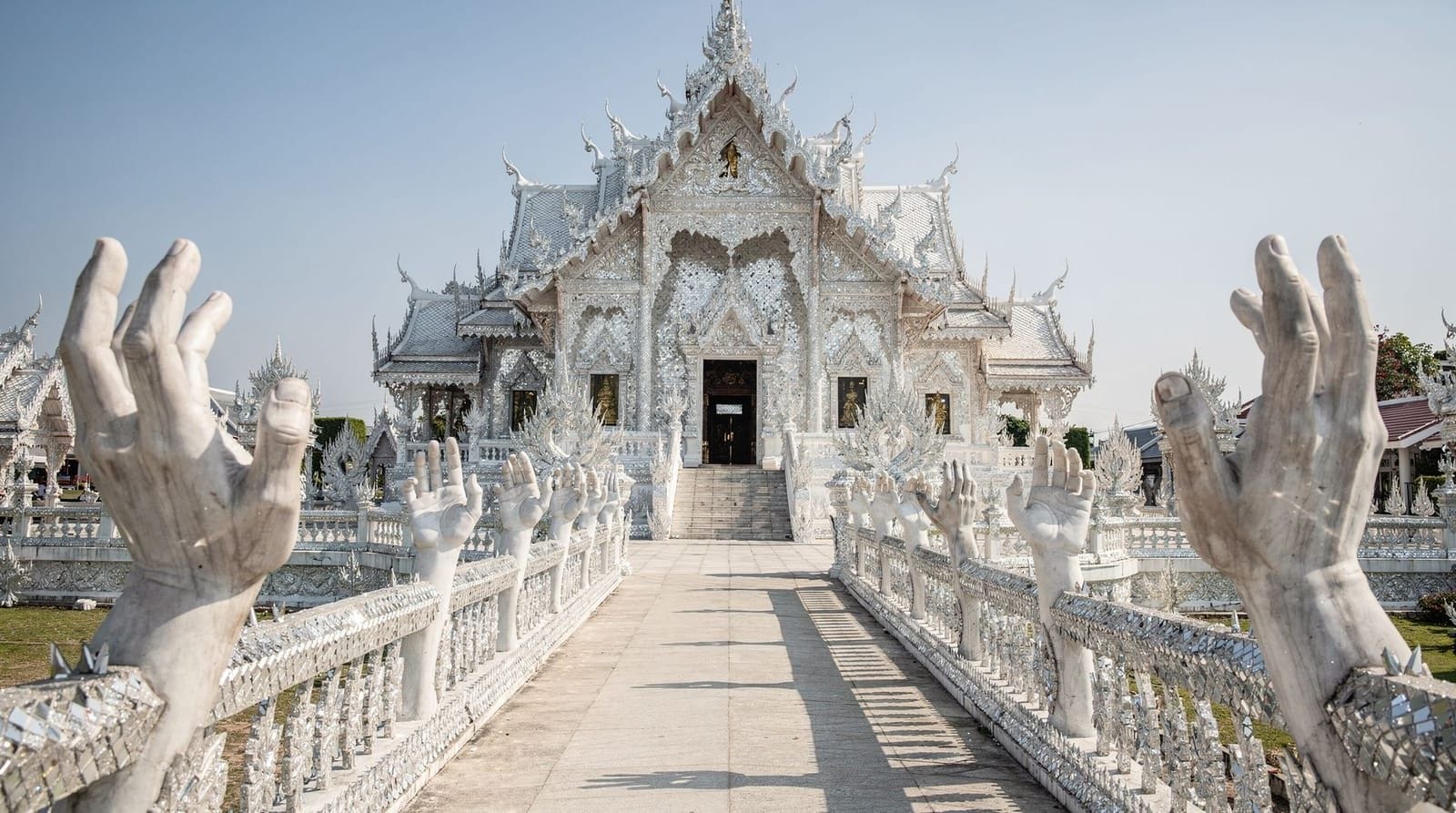
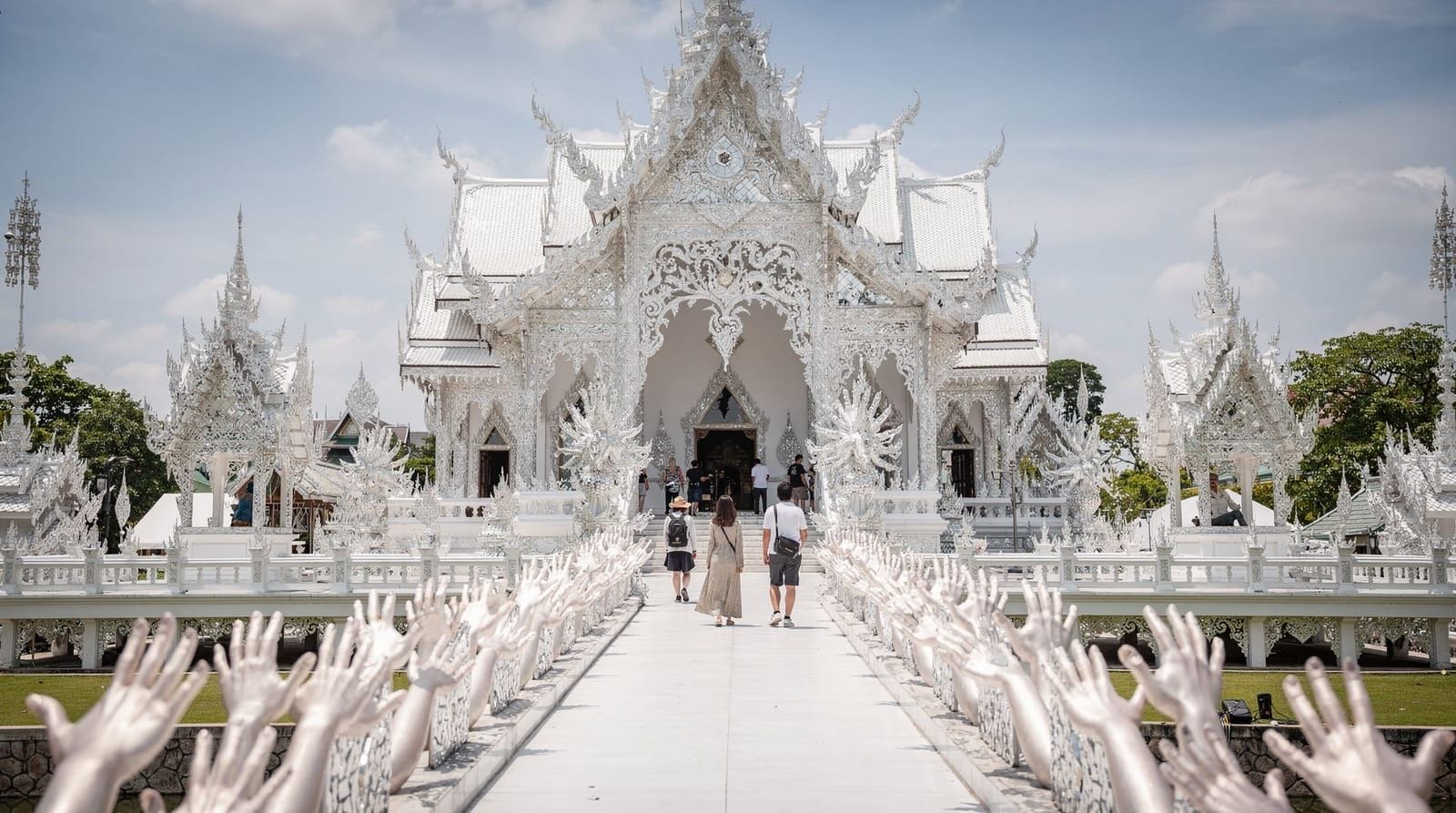
Wat Rong Khun, the White Temple, is the one site on this trip that genuinely lived up to the hype. Photos don’t fully prepare you for the scale or the detail — the bridge crossing the “cycle of rebirth” moat lined with reaching hands, the shimmering mirrored mosaic tiles catching light from every angle, and the sheer intricacy of Chalermchai Kositpipat’s design work up close. It was also, unsurprisingly, the most crowded stop of the day by a wide margin; we arrived around 10am and the bridge crossing required real patience, shuffling forward in a queue rather than walking freely. If crowds are a dealbreaker, an earlier tour departure that reaches the temple before 9am is worth specifically requesting.
The Blue Temple: smaller, quieter, arguably prettier up close
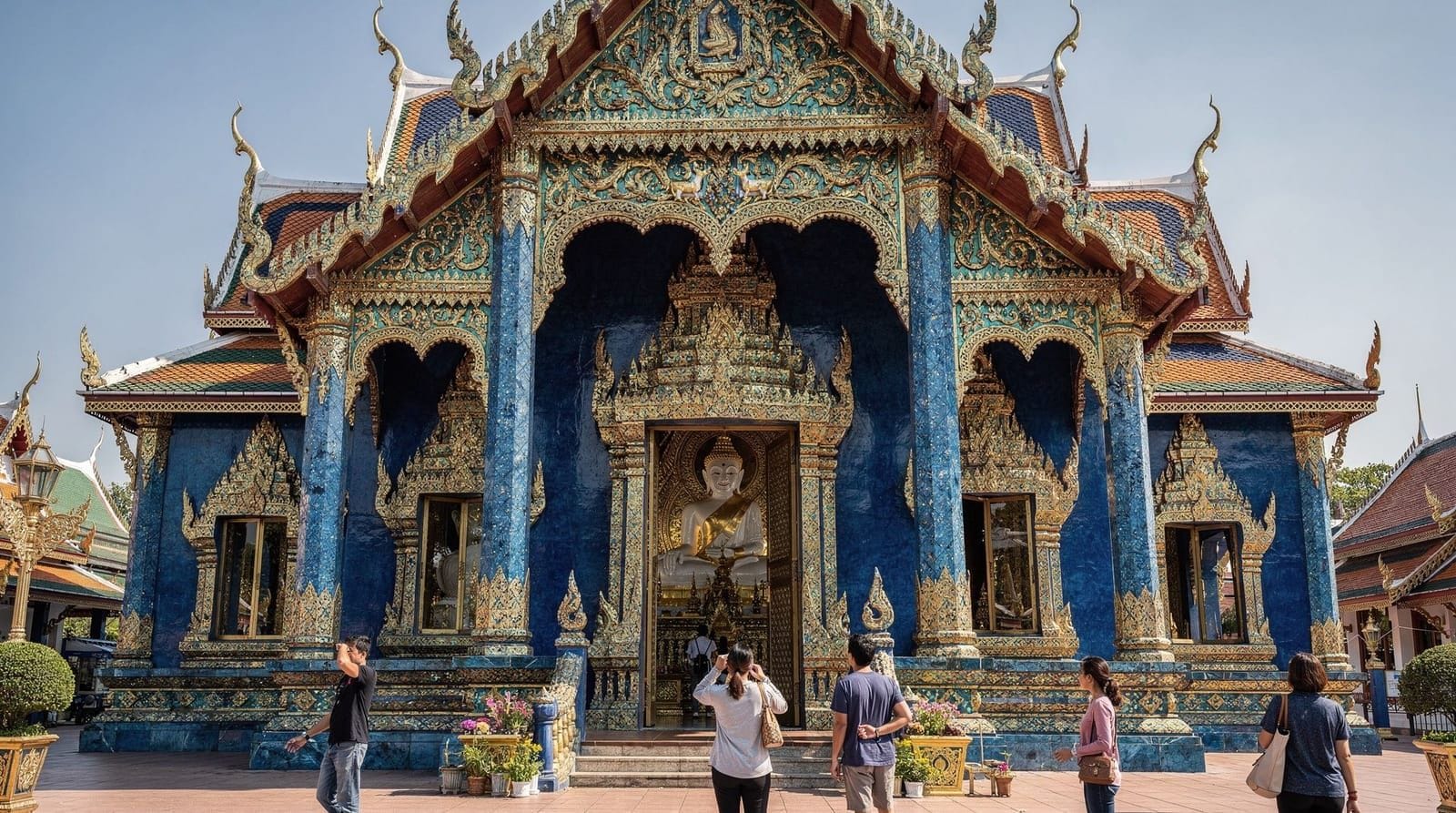
Wat Rong Suea Ten, the Blue Temple, gets a fraction of the White Temple’s crowd despite being, in our opinion, more photogenic in the details — the deep sapphire blue against gold trim, and a striking white Buddha image at the center that photographs beautifully against the blue backdrop. Our comparison piece on the two temples makes the case that most day-trip visitors underrate this stop relative to the White Temple, and after seeing both back to back in the same afternoon, we’d agree completely — if time is tight, don’t let the White Temple’s larger reputation crowd out proper time here.
The Black House: the one people forget to mention
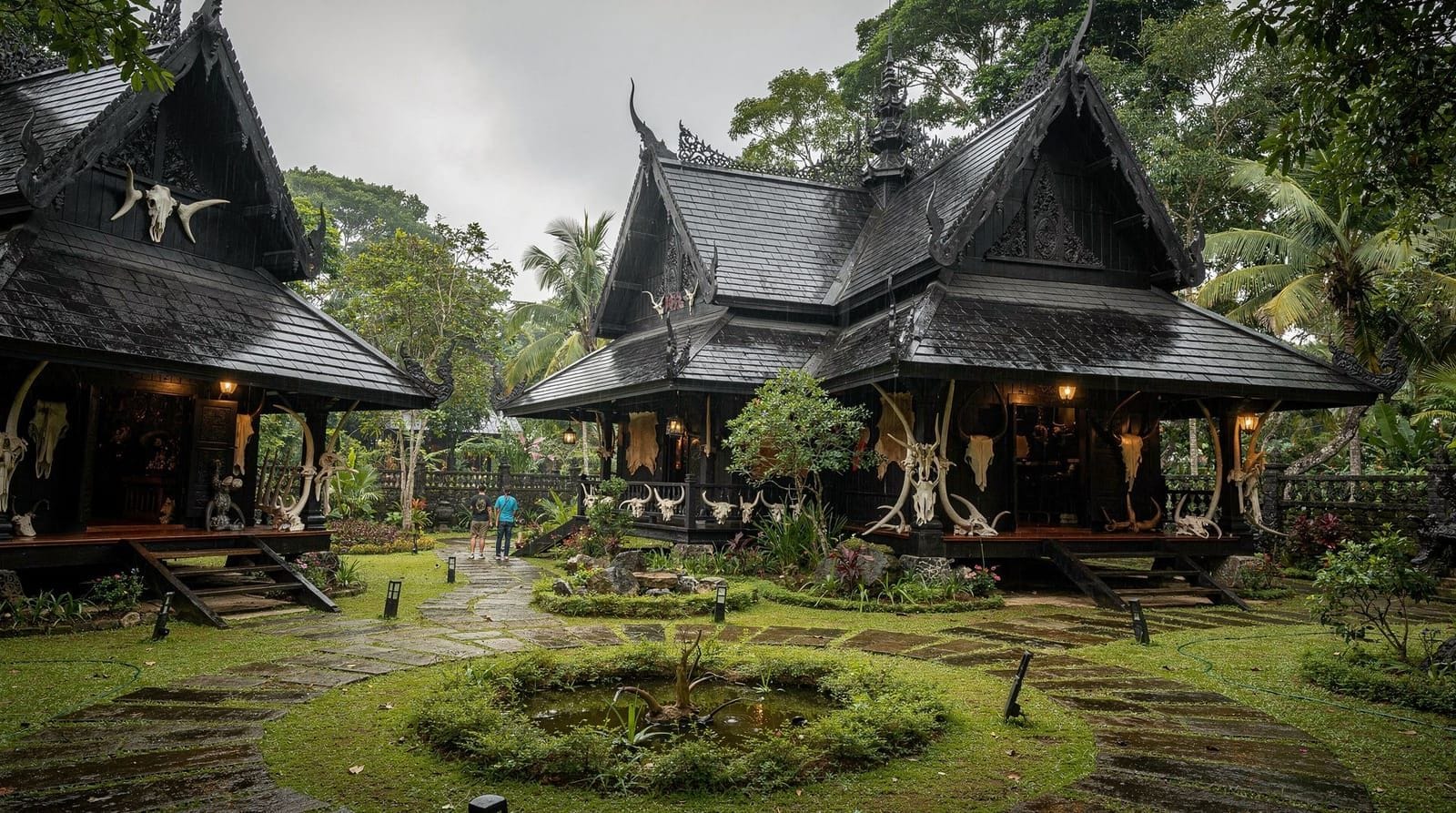
Baan Dam, Thawan Duchanee’s Black House museum, was the stop that most surprised us, mostly because almost nobody had described it accurately beforehand. It’s not a temple at all — it’s a sprawling compound of dark timber structures filled with animal skulls, skins, bones, and unsettling art installations that feel closer to a gothic art project than anything explicitly religious. Some in our group found it genuinely disturbing rather than merely atmospheric; others found it the most memorable stop of the day precisely because it was so unlike the ornate gold-and-mirror aesthetic of the other two temples. Go in expecting something stranger and darker than the “temple” framing suggests, and you’ll likely come away appreciating it more.
The lunch stop and the tour-group rhythm
One detail that shaped the day more than we expected going in was the structure of the group tour itself — a set lunch stop at a restaurant clearly built around bus tour groups, buffet-style, competent but unremarkable food at a price that felt built into the tour cost rather than a genuine local recommendation. Having read enough about the region’s food scene beforehand, we knew not to expect much here, and we weren’t disappointed by low expectations. What we hadn’t anticipated was how much the whole day runs on a fixed group rhythm rather than personal pace: forty-five minutes at the White Temple whether you’re ready to leave or not, thirty at the Blue Temple, a set lunch window, and a similarly fixed allotment at the Black House. For travelers who like to linger at a single site rather than move through a checklist, this rigid pacing is worth knowing about before booking, since a private tour or self-drive arrangement offers considerably more flexibility, at a correspondingly higher price.
Chiang Rai the city, briefly glimpsed
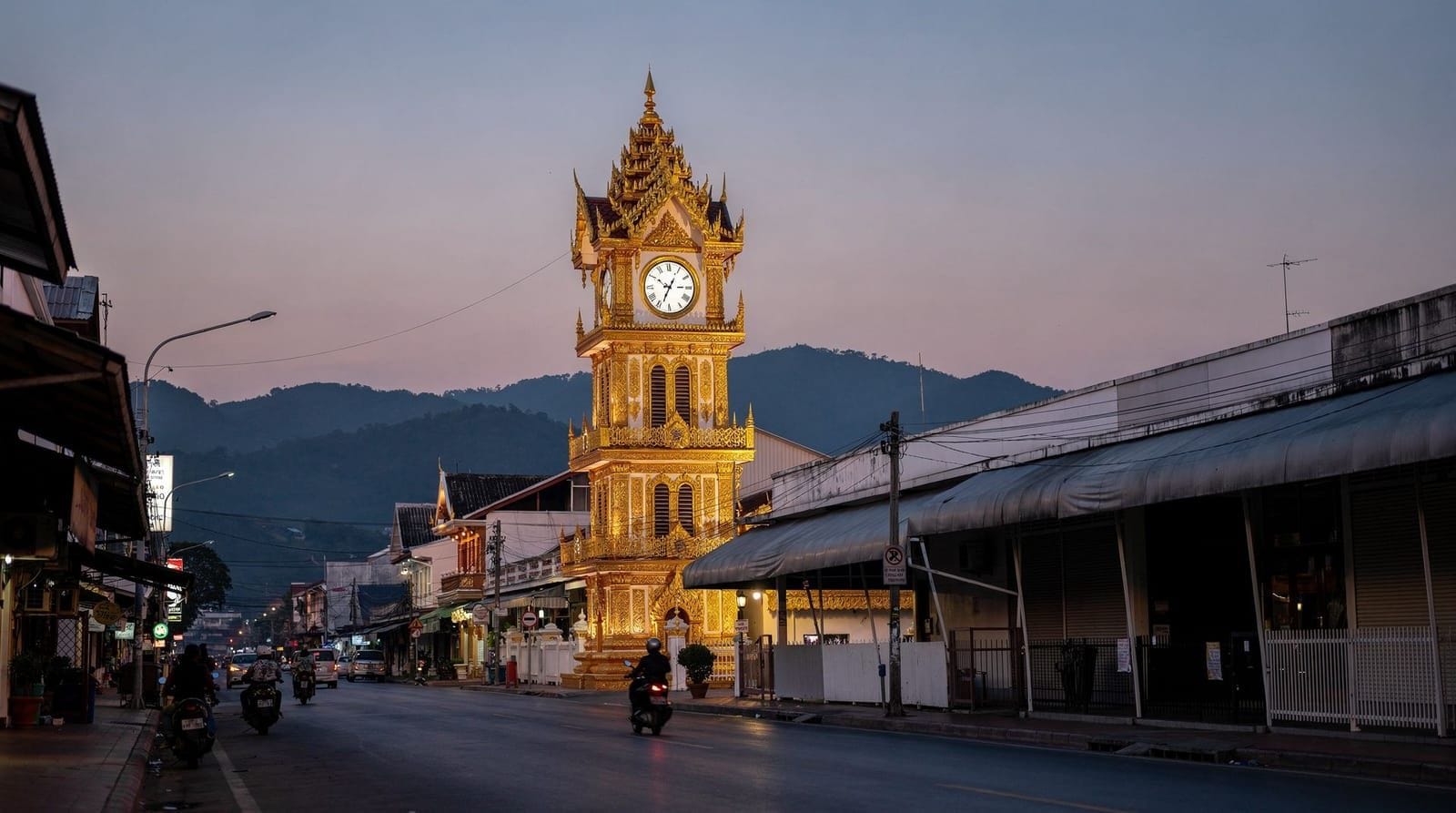
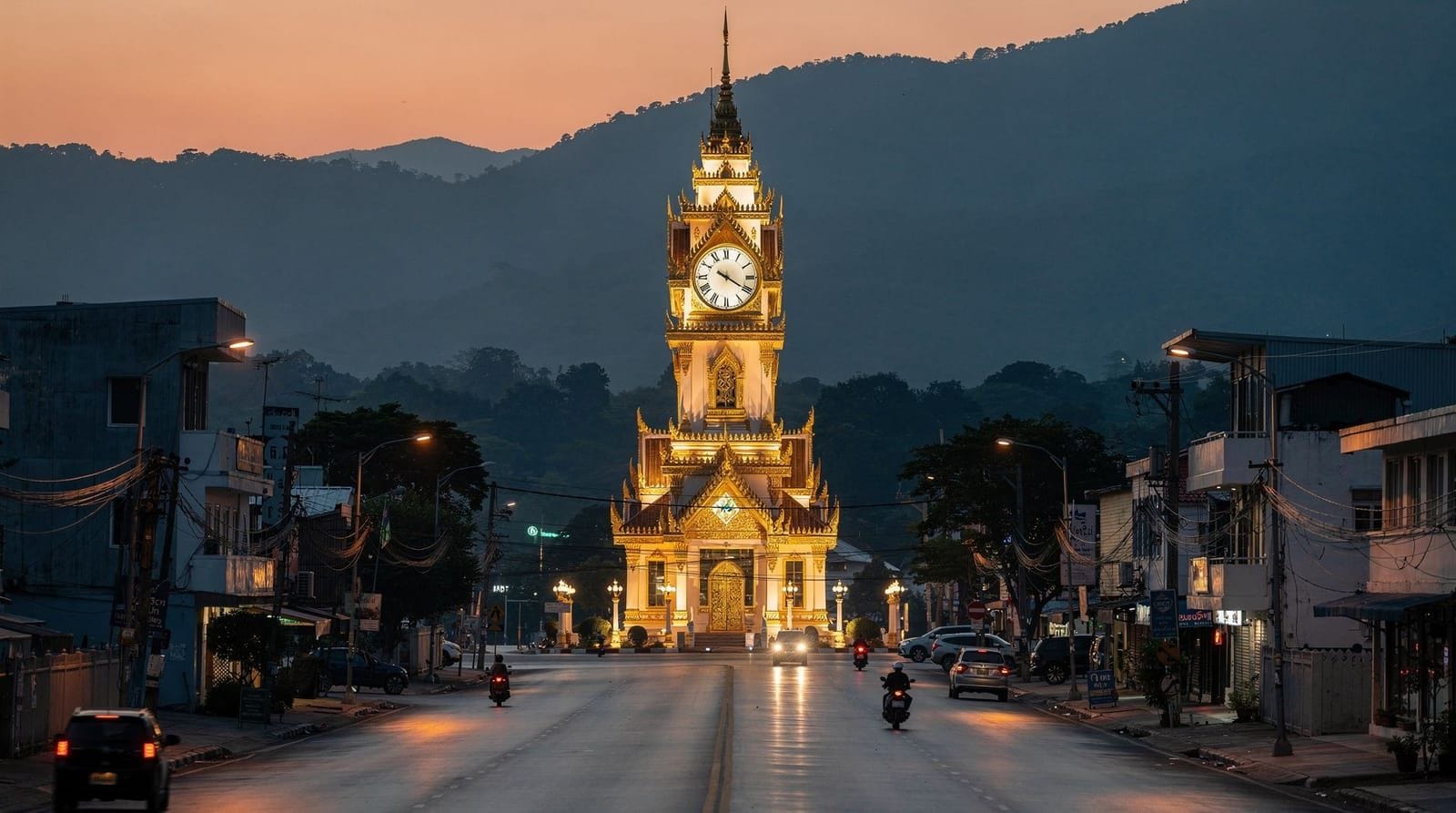
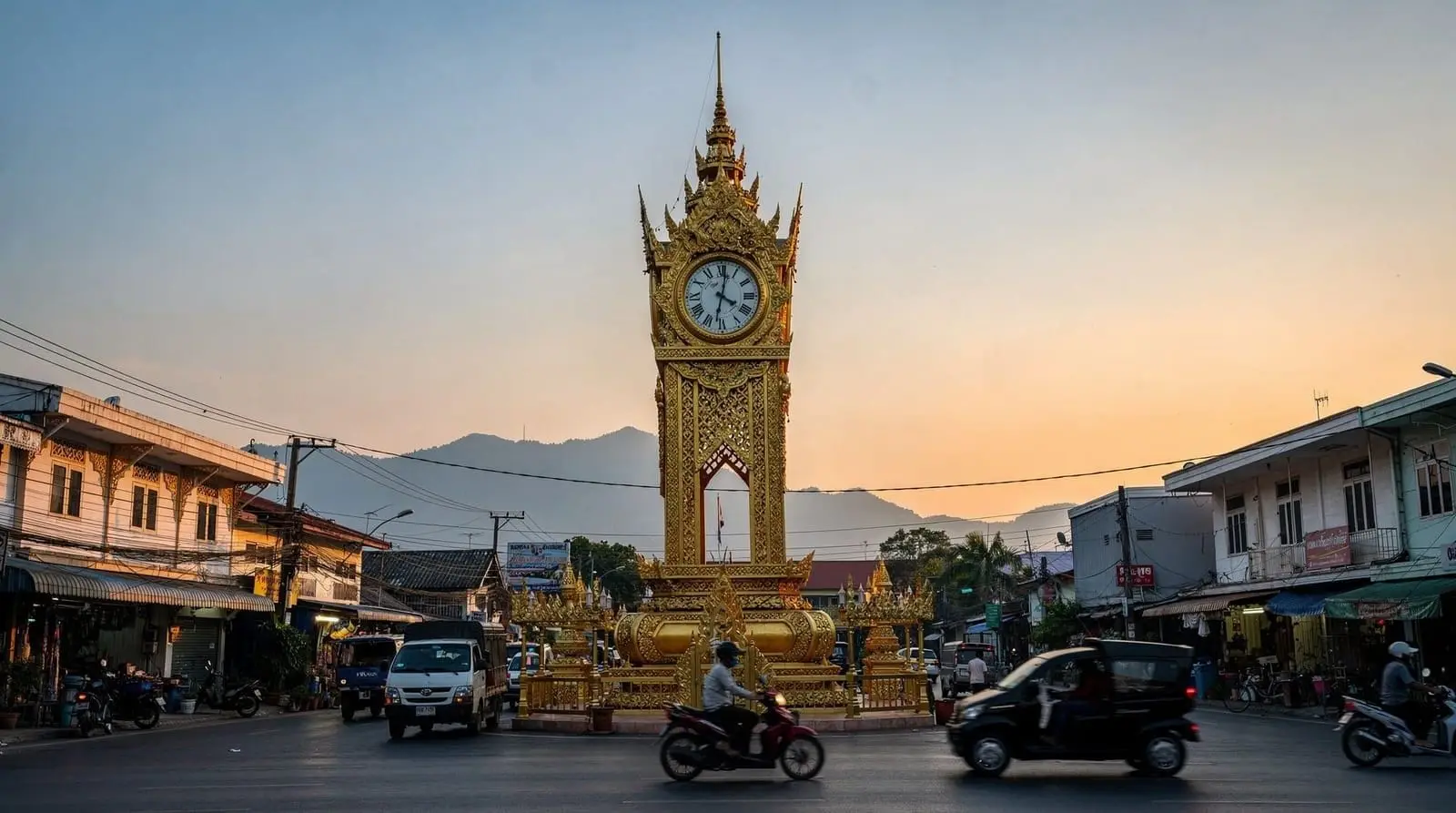
Our itinerary didn’t include meaningful time in Chiang Rai’s actual town center — the day was structured entirely around the three temple-adjacent sites, with the bus route bypassing the city core almost entirely except for a brief pass through on the way to the highway back south. That felt like a genuine gap in retrospect; several people we spoke with afterward who’d stayed overnight in Chiang Rai rather than day-tripping described a walkable night bazaar and a noticeably slower, more relaxed pace than Chiang Mai’s, worth experiencing on its own terms rather than only as a jumping-off point for the temples. If your schedule allows for an overnight stay rather than a single compressed day, it’s a genuinely different, less rushed way to see the same sites plus the city itself.
Did we make it to the Golden Triangle
Our specific tour didn’t include the Golden Triangle — the Thailand-Laos-Myanmar tripoint further north — and in hindsight, trying to add it would have made an already long day genuinely punishing. Tours that combine all four stops exist and run closer to fourteen hours round trip; we’d only recommend that combination to travelers who are certain they won’t return to the region, since splitting Chiang Rai’s temples and the Golden Triangle into two separate, less rushed days is a meaningfully better experience if your schedule allows it.
Chiang Rai white temple, blue temple and black house day tourWhat we’d tell someone deciding between a tour and self-driving
A few people in our group had considered renting a car and doing this route independently rather than joining an organized tour, and comparing notes with them afterward was instructive. Self-driving offers real advantages: no fixed lunch stop, the freedom to linger at the Blue Temple as long as you like, and the option to add a stop at Chiang Rai’s own night bazaar or a coffee farm along the way without needing group consensus. The trade-offs are real too, though — three hours of mountain highway driving each way is its own kind of fatigue on top of the sightseeing itself, parking logistics at the busier temples require some local knowledge, and the cost, once fuel and any tolls are factored in for a party of two or three, isn’t meaningfully cheaper than a mid-range group tour ticket. For a solo traveler or a couple comfortable driving unfamiliar roads, self-driving is a legitimate option worth considering; for a full group prioritizing convenience over flexibility, the tour bus remains the simpler choice, exactly as we experienced it.
The souvenir shop stops nobody asked for
One frustration worth flagging honestly for anyone booking a similar tour: our itinerary included two unscheduled stops at what were clearly commission-based souvenir and handicraft shops, neither mentioned in the original tour description, each eating fifteen to twenty minutes of our already tight day. Nobody in our group bought anything at either stop, and the stop itself felt like a transparent, slightly awkward padding exercise rather than a genuine cultural inclusion. This isn’t unique to this particular operator — it’s a fairly common practice across budget and mid-range group tours throughout the region — but it’s worth asking a tour operator directly, before booking, whether unscheduled shopping stops are built into the itinerary, since that’s effectively additional time subtracted from the temples themselves without being disclosed upfront.
So, was it worth it
Yes, on balance, but with real caveats. The White Temple alone justifies a good portion of the effort, the Blue Temple exceeded our expectations, and the Black House provided a genuinely unexpected, memorable counterpoint to the other two. What we’d tell a friend considering the same trip: go in accepting the six hours of driving as simply the cost of admission, not a flaw to be minimized, and don’t schedule anything demanding for the evening you return — we were more drained by the transit than by anything we actually did in Chiang Rai itself.
If the whole comparison between basing yourself in one city versus the other is still an open question for your trip, our deeper dive into Chiang Mai versus Chiang Rai lays out the case for each as a home base rather than just a day-trip destination — and for what it’s worth, having now seen both, we’d still pick Chiang Mai as the base and treat Chiang Rai exactly as we did: a long, worthwhile day trip rather than a required overnight stop.
The version of this trip we’d book again, given the choice, would keep the same three stops but push for an earlier departure — closer to 6am rather than 6:45 — specifically to beat the White Temple’s crowd more decisively and buy back a little extra time at the Blue Temple, which remains, even after everything else we saw that day, the stop we talk about most when the trip comes up.