The cooking class that finally taught us how khao soi actually works
I’d eaten khao soi maybe a dozen times before this trip and never once thought about what actually goes into that bowl beyond “coconut curry with noodles.” It took a five-hour cooking class outside Chiang Mai to understand that the dish is really two separate curries layered into one, built from a paste that takes real technique to get right, and topped with a contrast of textures that isn’t accidental at all. This is the story of that class, and why it changed how I order the dish now.
Starting at the market, not the stove
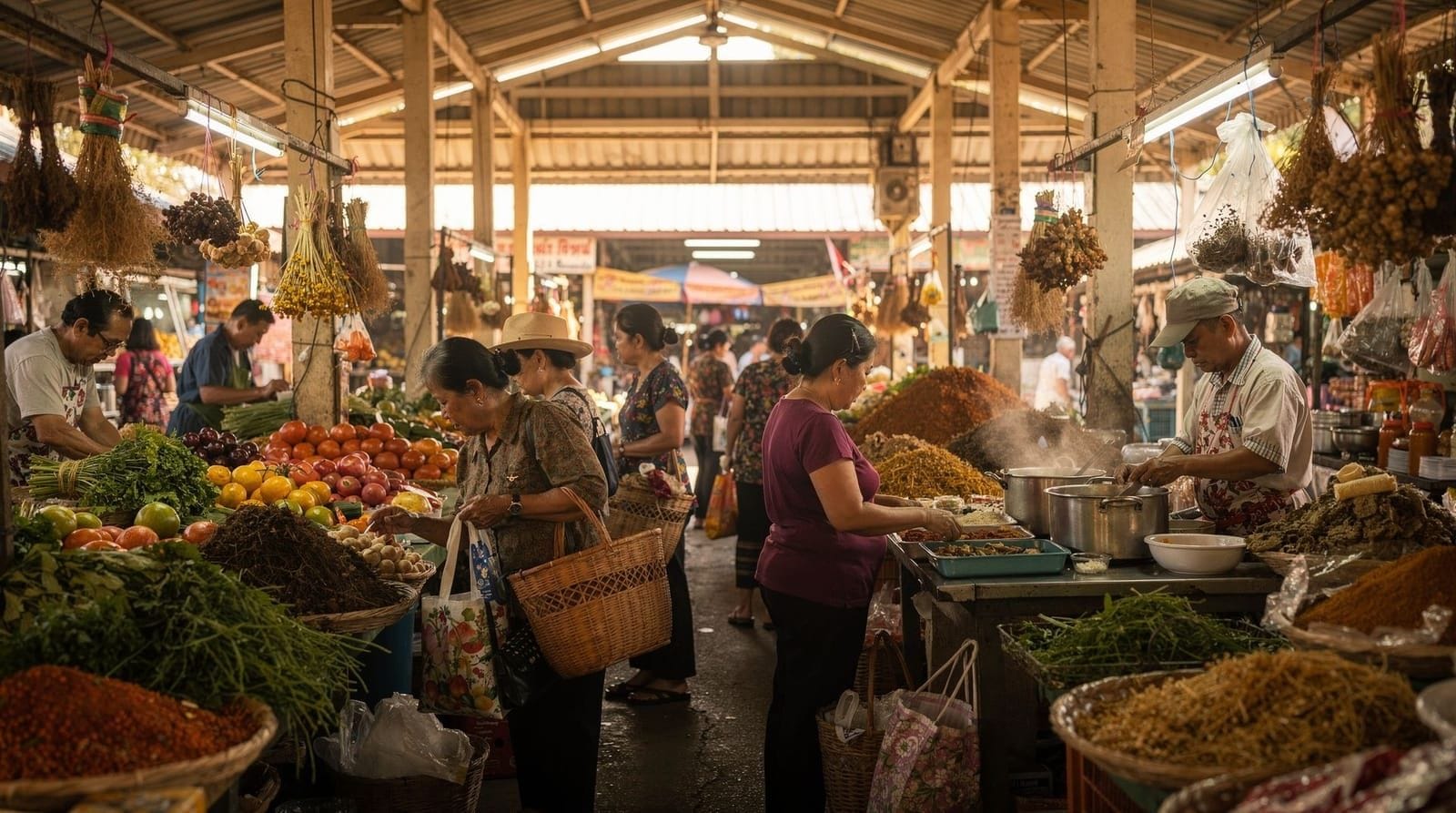
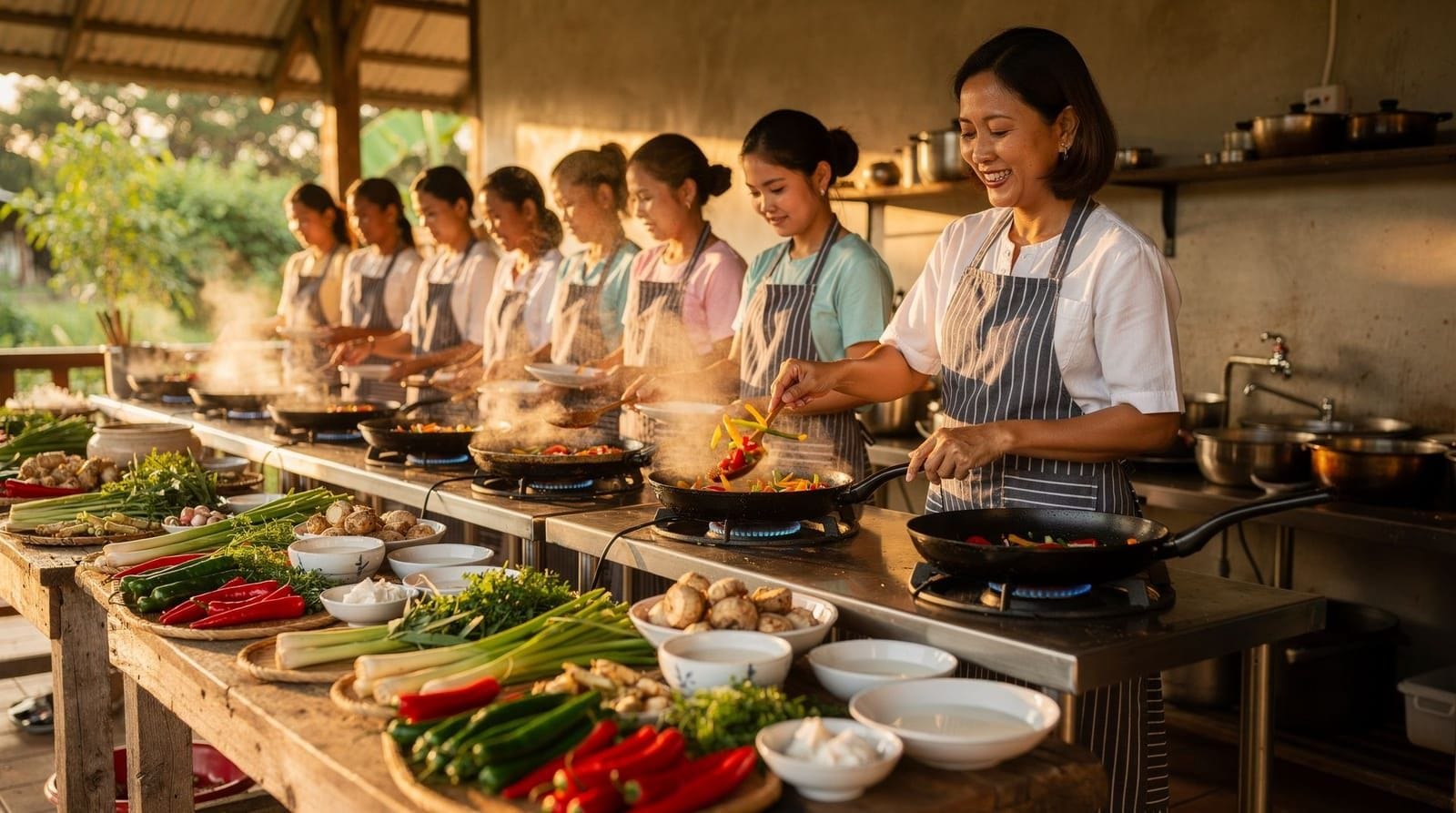
We were picked up early from our guesthouse in the Old City, and our class began not in a kitchen but at Warorot Market, where our instructor, a home cook who’d been teaching for over a decade, walked our small group of six through the stalls pointing out ingredients most of us had walked past without recognizing — dried chiles by heat level, fresh turmeric root next to the more common dried powder, and a specific brand of curry powder that she insisted made the difference in the final dish’s color and depth. Our cooking class guide recommends specifically looking for classes that include this kind of market component rather than pre-portioned ingredients waiting at the kitchen, and having now done it this way, I understand exactly why: watching someone select ingredients by smell and feel taught us more about northern Thai cooking in twenty minutes than any recipe card could.
The paste is the whole dish
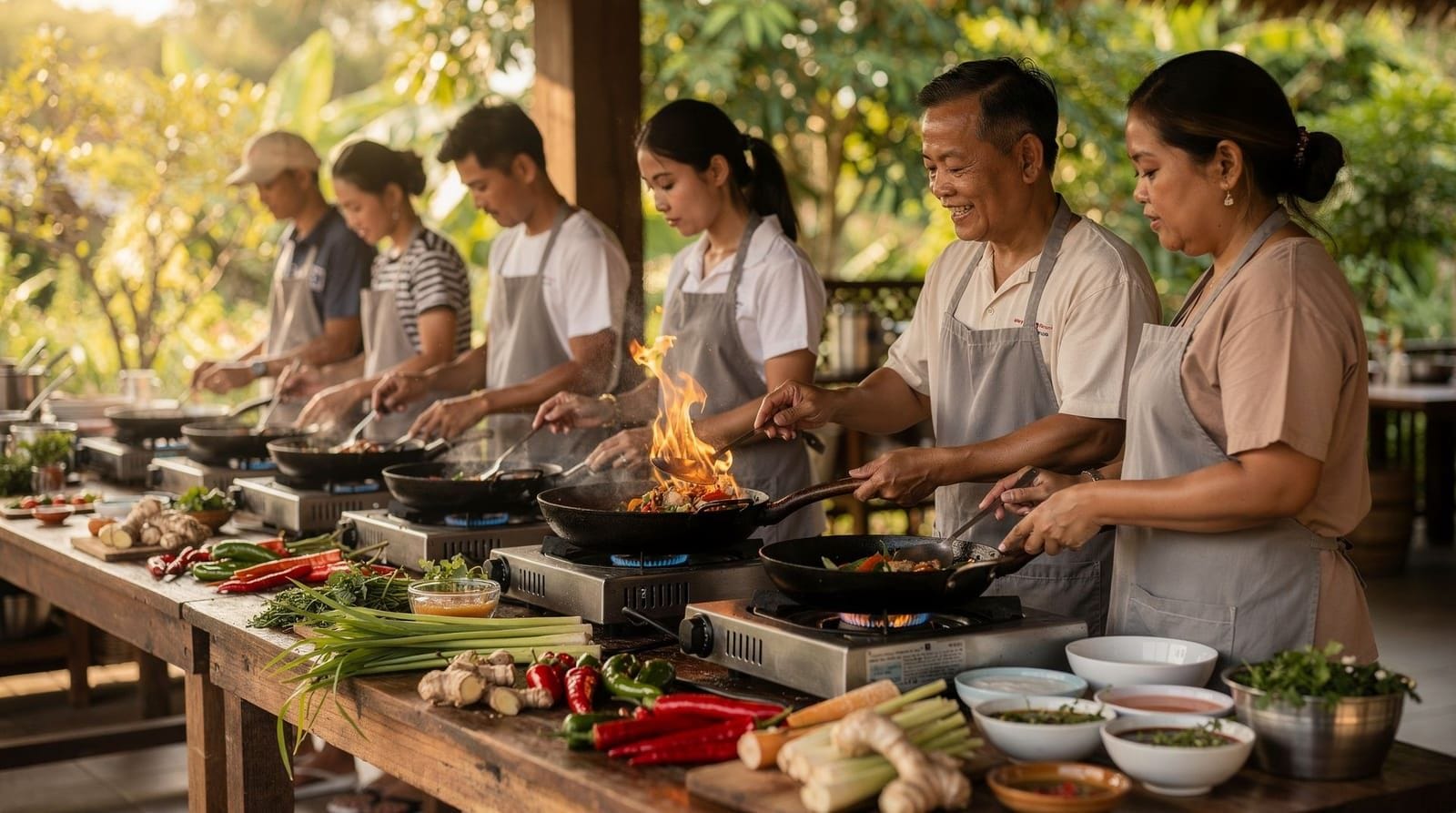
Back at the teaching kitchen, a covered outdoor pavilion at a small farm just outside the city, we learned the part that actually surprised me most: khao soi’s curry paste isn’t a single quick blend. It’s built in stages — dried chiles soaked and pounded first, then combined with lemongrass, galangal, shallots, garlic, and a specific ratio of curry powder that varies household to household, each cook we spoke with insisting theirs was the “correct” version. Using a stone mortar and pestle rather than a blender, as our instructor insisted on for texture reasons, took genuine physical effort — my arm was sore the next day in a way that made me newly appreciate every bowl of khao soi I’d ever ordered without a second thought.
If learning specifically this dish rather than a broader Thai cooking overview is the goal, it’s worth being selective about which class to book — not every cooking school in the city teaches khao soi specifically, since it’s a northern Lanna dish rather than a central Thai staple most standard curricula default to. Our guide to where to learn the khao soi recipe specifically was what led us to this particular class in the first place, and I’d recommend checking a class’s menu for the dish by name before booking if it’s the reason you’re signing up.
Local Northern Thai cooking class at Grandma’s home cooking schoolWhere the dish actually comes from
Between the market visit and the actual cooking, our instructor spent a good fifteen minutes on something I hadn’t expected from a hands-on cooking class: the history of the dish itself. Khao soi’s roots trace to Yunnanese Chinese Muslim traders who settled in northern Thailand generations ago, and the dish carries that lineage visibly — the use of curry powder, unusual in most Thai cooking but central here, and the pairing of egg noodles with a coconut curry base reflects a genuinely cross-cultural origin rather than a purely indigenous Lanna recipe. Hearing that context before touching a single ingredient changed how the rest of the class felt; we weren’t just learning a recipe, we were being handed a small piece of a specific regional history that most restaurant menus never bother to mention.
That context also explained something we’d noticed eating around the city without understanding why: khao soi varies more from stall to stall than most other Thai dishes we’d tried, with some versions leaning heavier on the curry powder’s earthiness and others favoring a sweeter, more coconut-forward balance. Rather than one “authentic” version, our instructor was clear that regional and family variation is the norm, not the exception, which took some pressure off our own attempt tasting slightly different from any specific bowl we’d had before.
Two curries, not one
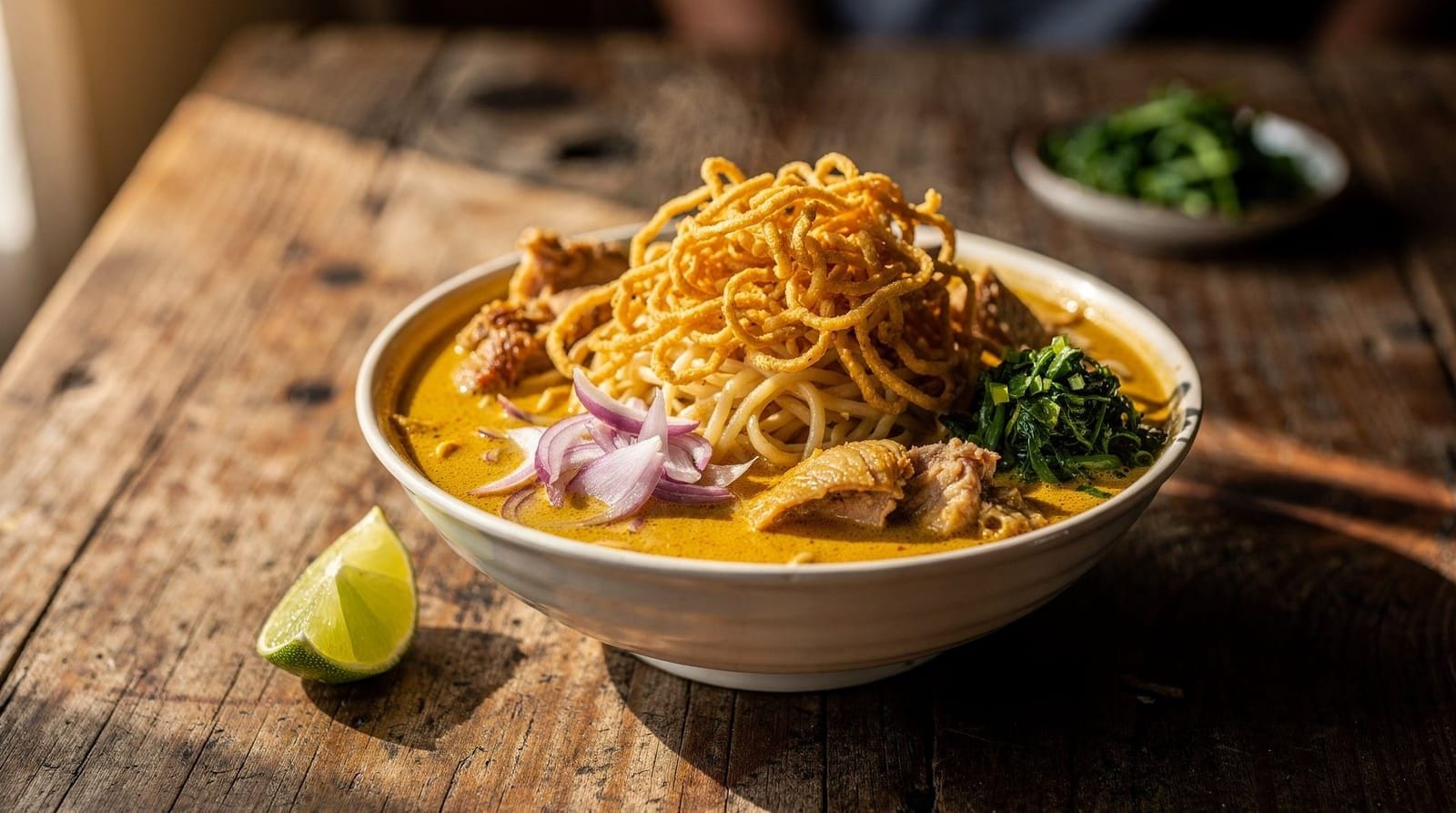
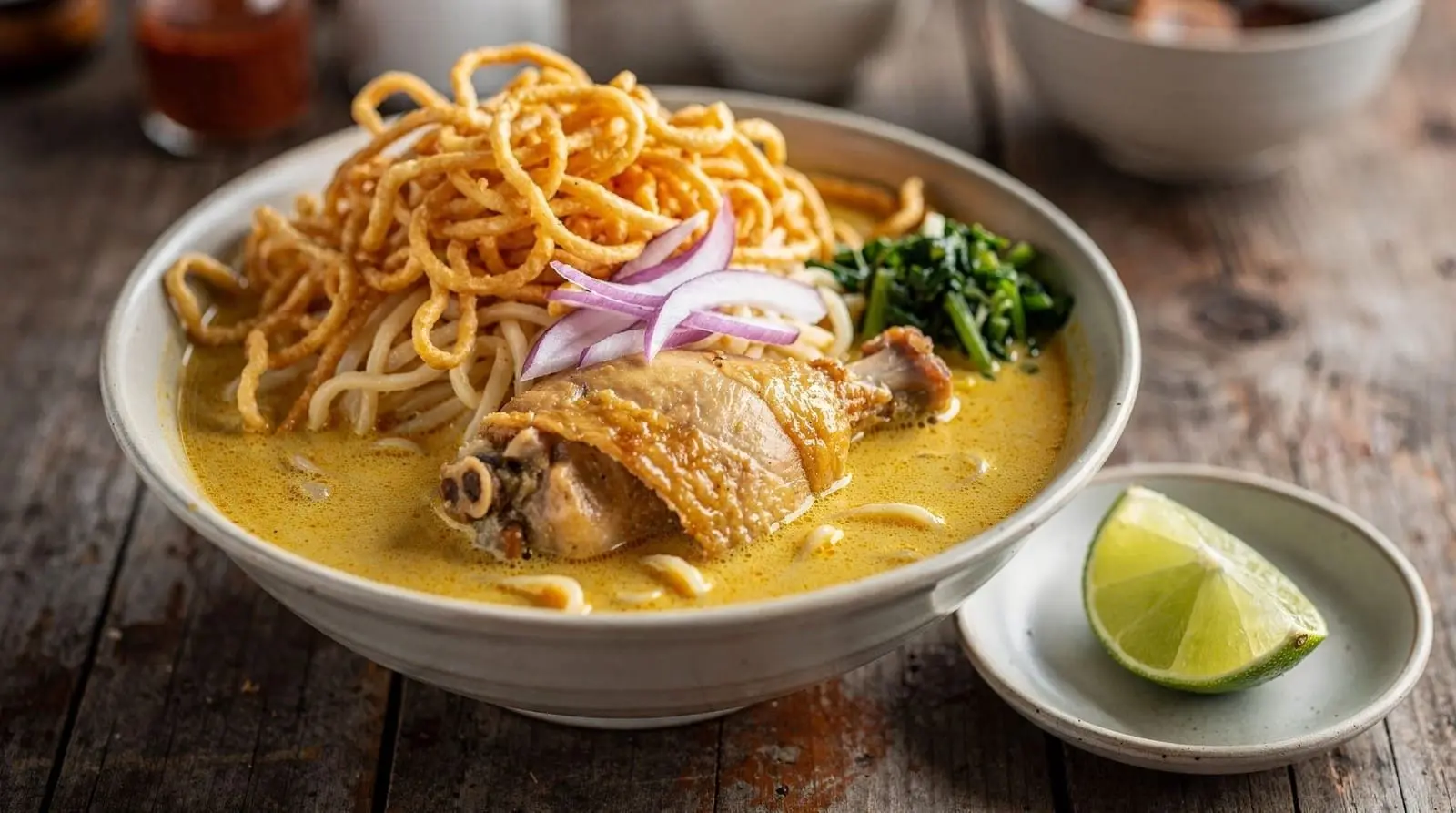
The technical detail that reframed the dish for me entirely: proper khao soi involves cooking the curry twice, in a sense. The paste is first fried in oil until fragrant and the color deepens, then simmered with coconut milk to build the base sauce that coats the boiled egg noodles. But the topping — a smaller portion of the same base curry, sometimes with less coconut milk — gets simmered separately and used partly to fry the crispy noodle garnish that sits on top of every bowl. That crispy noodle topping, it turns out, isn’t a garnish for texture alone; it’s cooked in the same curry base as everything underneath it, so the crunch carries flavor rather than just contrast. I’d never once considered that before, despite having eaten the dish dozens of times.
Getting the balance right, and wrong
Our first attempt at the curry was, by our instructor’s polite but clear assessment, “too thin” — we’d added the coconut milk too early and let it simmer too long, which broke down the richness rather than concentrating it. The fix, done properly on our second attempt with closer supervision, involved adding a portion of the coconut cream later in the process to preserve that final layer of richness rather than cooking it all the way through from the start. It’s a small technical point that nonetheless explained why some bowls of khao soi we’d had around the city tasted noticeably richer and more layered than others — the sequencing of when coconut milk enters the pot matters more than the ratio.
Eating our own work
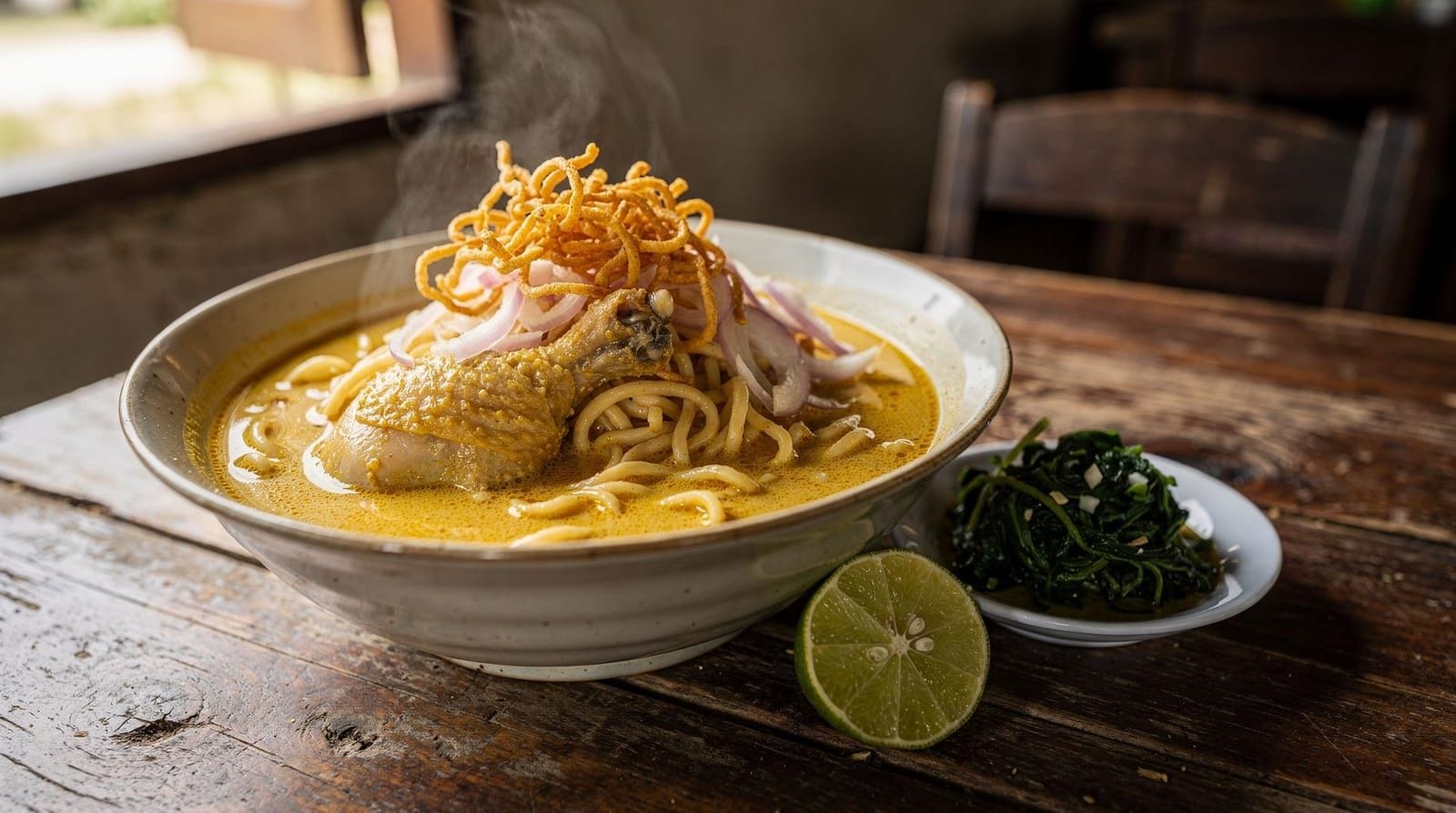
We finished the class sitting at long communal tables, each of us with our own bowl, comparing results with the rest of the group over the shared meal. Mine wasn’t as good as what I’d eaten at the better stalls we cover in our khao soi where-to-eat guide, and I don’t think that’s false modesty — years of practice clearly separate a home cook’s fifteenth attempt from a first-timer’s first — but it was recognizably, unmistakably the dish, and eating something I’d built from raw chiles and a mortar and pestle two hours earlier changed how satisfying an ordinary bowl felt afterward.
The rest of the menu, and why it mattered
Khao soi wasn’t the only dish on our class curriculum that day, and in hindsight the other three dishes we made — a simple som tam papaya salad, a mild jungle curry, and spring rolls fried fresh rather than the frozen versions most of us had eaten unknowingly at home — mattered more to the overall experience than I expected going in. Making the papaya salad first, using a wooden mortar dramatically smaller than the stone one reserved for the khao soi paste, gave us a warm-up in basic knife and pounding technique before the more demanding curry paste work began. That sequencing felt deliberate rather than arbitrary, easing a group of mostly first-time cooks into progressively more difficult techniques rather than starting with the hardest dish and risking early frustration.
Eating all four dishes together at the end, rather than khao soi in isolation, also underlined something about northern Thai food more broadly that a single-dish class wouldn’t have taught us: the balance of textures and temperatures across a full northern Thai meal, contrasting a cool, sharp papaya salad against a rich, warm curry, is as much the point as any individual recipe. If you’re choosing between a class focused narrowly on one dish and a broader multi-dish curriculum, our best cooking schools comparison is worth checking specifically for which schools balance those two approaches well, since we came away glad our class had included the full spread rather than khao soi alone.
What it changed about how I eat now
I’ve ordered khao soi at least half a dozen times since that class, and I notice completely different things now: whether the curry tastes like it was built in layers or just blended once and simmered, whether the crispy noodle topping tastes like it shares DNA with the curry underneath or was fried separately as an afterthought, whether the paste has real depth from a properly worked mortar rather than a quick blender shortcut. None of that changes whether I enjoy the dish — I still order it constantly — but it’s given me a way of appreciating good versions and forgiving lesser ones that I simply didn’t have before. If you want to understand this dish, or northern Thai food more broadly, beyond eating it, our guide to northern Thai dishes worth trying and the wider street food guide are good starting points — but honestly, nothing replaced actually standing at a mortar and pestle, arms aching, watching a paste slowly turn from separate ingredients into something that smelled, finally, exactly like the bowls I’d been eating for years without understanding.