Chiang Mai Zoo and Night Safari guide
Is Chiang Mai Zoo worth visiting with kids?
Yes, as a straightforward, air-conditioned-adjacent option for a hot or low-energy day, particularly for families who've already done an ethical elephant sanctuary and want a more conventional zoo experience alongside it. It's a large site (expect several hours to see comfortably), with a long-running panda exhibit as the main highlight and a separate paid Night Safari section for evening visits.
Chiang Mai Zoo sits on a large, hilly site near Chiang Mai University, and together with its adjoining Night Safari section, it’s one of the more conventional family attractions in a city otherwise known for temples, markets, and ethical wildlife tourism. It’s worth understanding what it actually offers - and how it differs from an elephant sanctuary or nature-based day trip - before deciding whether it earns a spot on a short family itinerary.
Quick answer: yes, as a straightforward, air-conditioned-adjacent option for a hot or low-energy day, particularly for families who’ve already done an ethical elephant sanctuary and want a more conventional zoo experience alongside it. It’s a large site (expect several hours to see comfortably), with a long-running panda exhibit as the main highlight and a separate paid Night Safari section for evening visits.
Background: how the zoo fits into Chiang Mai’s tourism landscape
Chiang Mai Zoo has operated for decades as one of the city’s longer-standing family attractions, predating much of the region’s more recent growth in eco-tourism and ethical wildlife sanctuaries. That history is part of why it reads differently from the newer generation of Mae Rim and Mae Taeng elephant sanctuaries that have built their entire visitor experience around rescue and rehabilitation narratives developed more recently in response to growing awareness of unethical elephant tourism. The zoo predates that shift and operates on a more traditional model, which isn’t a criticism so much as a useful way to set expectations before visiting.
What the daytime zoo actually offers
Chiang Mai Zoo is a fairly large, traditional zoo laid out across hilly, partly forested terrain, with a mix of enclosures housing a broad range of species alongside walking paths, rest areas, and food stalls scattered throughout the site. Given the size and terrain, most visitors use the internal tram or golf-cart shuttle system to move between distant sections rather than walking the entire route, particularly with young children or during the hottest part of the day. Expect to spend at least half a day (3-4 hours) to see the main areas at a comfortable, unhurried pace, longer if you’re stopping for meals or lingering at feeding times.
The panda exhibit
The giant panda exhibit has been one of the zoo’s most consistently popular draws for years, part of a long-running conservation loan arrangement between Thailand and China. It’s worth checking the exhibit’s current status and any supplementary ticket requirement before your visit, since panda loan arrangements are periodically renewed or adjusted and occasional relocations do happen at zoos hosting pandas internationally. If seeing pandas specifically is your family’s main reason for visiting, confirm availability close to your travel dates rather than assuming based on older information.
The Night Safari section
Adjoining the main zoo, the Night Safari is a separate attraction with its own entrance and admission, built around after-dark viewing via a tram-based safari route through more open enclosure areas, plus walking trails and scheduled shows. The after-dark format changes the experience meaningfully from the daytime zoo - many nocturnal and crepuscular species are more active in the evening, and the tram ride itself has a different, more adventurous feel for kids than daytime walking paths. Because both the zoo and Night Safari are large enough to fill several hours each, most families visit them as separate outings - a daytime zoo visit on one day, an evening Night Safari visit on another - rather than trying to combine both in a single very long day.
Rainy day and hot day fallback value
One practical reason the zoo earns a place on many family itineraries despite the ethical caveats above is its usefulness as a fallback plan for a poor-weather or unusually hot day when a waterfall hike or elephant sanctuary visit feels like too much. Covered rest areas, food stalls, and the option to ride the tram rather than walk make it a lower-effort day than most of the region’s other family activities, which is a genuinely practical consideration when traveling with young children whose tolerance for heat or a sudden downpour is lower than adults’. Our rainy day activities guide covers other indoor and semi-covered fallback options for the same kind of day.
Tickets and practical planning
Admission to the zoo and the Night Safari are priced and ticketed separately, each with standard adult and child rates plus an additional charge for the internal tram or golf-cart shuttle, which is worth budgeting for given the site’s size. Prices are adjusted periodically, so checking current rates close to your visit is more reliable than relying on older published figures. Arriving earlier in the day for the zoo helps beat both the heat and the largest crowds, particularly during school holiday periods when local families visit in larger numbers; for the Night Safari, arriving close to opening in the early evening tends to catch animals at their most active before the after-dark heat and humidity settle in fully.
Who this attraction suits best
The zoo and Night Safari suit families looking for a lower-effort, higher-certainty day than a nature-based outing like a waterfall or trek - the paths are paved, food and rest areas are frequent, and the format (walk or ride between enclosures, stop to watch feeding times) is familiar and easy for young children to follow without much explanation. It’s a reasonable choice for a day when the group is tired from more active outings earlier in the trip, or when weather (an unusually hot or hazy day during burning season) makes an outdoor waterfall or trekking day less appealing. It’s a less good match for families specifically prioritizing ethical wildlife encounters over conventional zoo viewing - our elephant sanctuary with kids guide covers that alternative model in depth.
Comparing the zoo to an elephant sanctuary
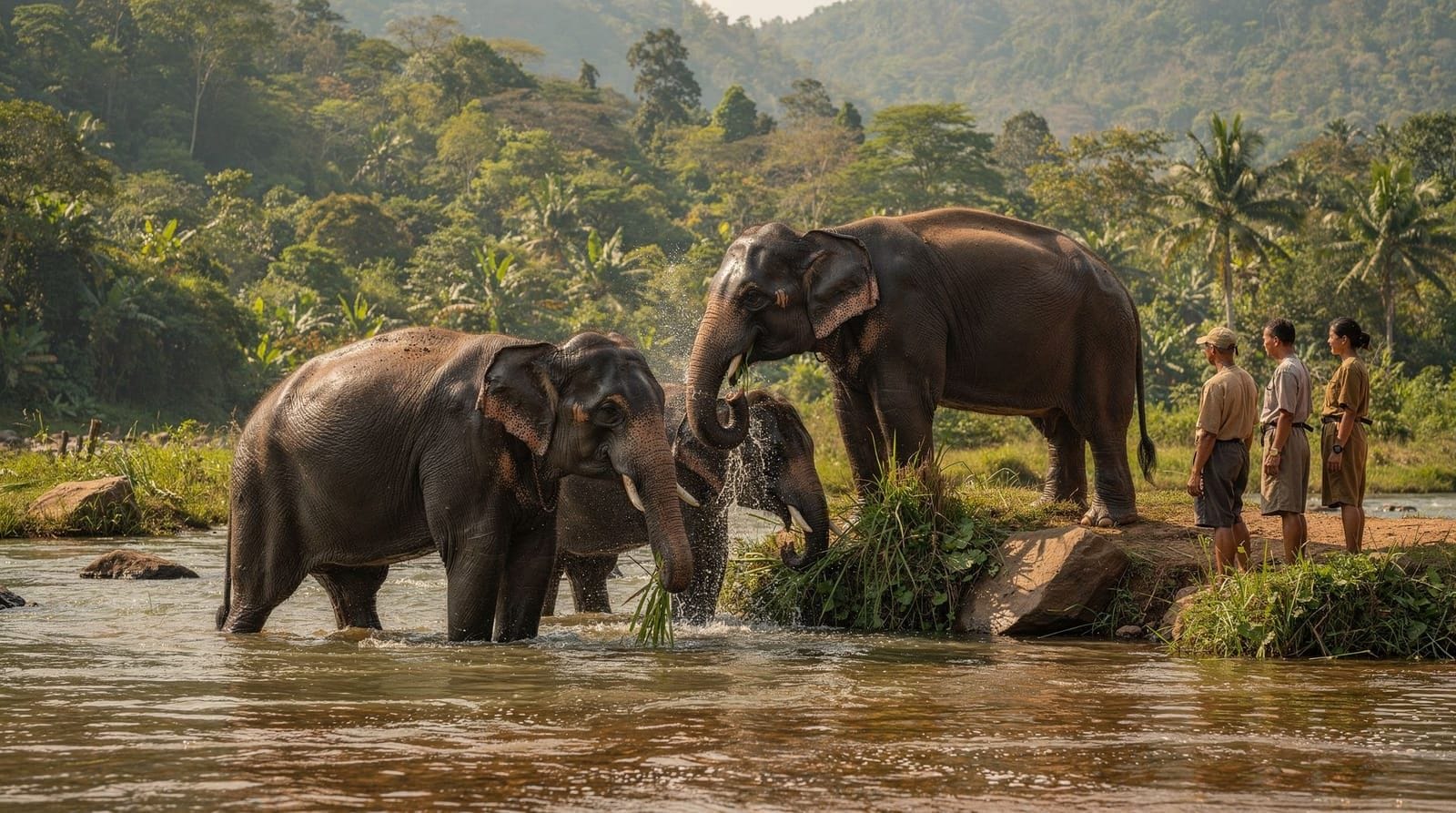
It’s worth being explicit about the difference in model here, since both get grouped together as “animal encounters” by visiting families without necessarily distinguishing them. An ethical elephant sanctuary is built around rescued animals, no riding, and observation or feeding at a respectful distance, with an explicit conservation and welfare narrative woven into the visit. Chiang Mai Zoo is a conventional zoo - enclosures, scheduled feeding and show times, a broad multi-species collection - without that same rescue-specific framing. Neither is inherently wrong to visit, but they answer different questions: a sanctuary if ethical, hands-on wildlife engagement is the priority; the zoo if a familiar, lower-effort day covering a wide range of species is what you’re after.
Combining a zoo visit with other Huay Kaew stops
Since the zoo sits at the base of the Doi Suthep foothills near Chiang Mai University, some families combine a morning zoo visit with an afternoon stop at nearby Huay Kaew Waterfall, a short and easy waterfall walk that suits tired legs better than a longer hike further up the mountain. Others prefer to keep the zoo as a standalone day given how much time the site itself can absorb, particularly with young children who want to linger at favorite enclosures rather than move through efficiently. Either approach works - the right call depends on your family’s stamina and how much of the day you’ve already used up by the time you’re ready to move on.
Weather and seasonal timing
The zoo’s hilly, partly shaded terrain is more comfortable during the cool season (November-February) than the hot season (March-May), when the combination of walking distance and heat can wear down younger visitors faster than a flatter, fully shaded attraction would. The Night Safari’s evening timing sidesteps peak daytime heat regardless of season, which is one reason some families prefer it specifically during the hottest months. During the rainy season (June-October), covered rest areas and food stalls scattered through the site offer reasonable shelter from the short afternoon downpours typical of this period, though a poncho or umbrella is still worth packing.
Show times and feeding schedules
Both the zoo and the Night Safari run scheduled shows and feeding demonstrations at various points through the day and evening, which are worth checking on arrival and planning your route around rather than stumbling into by chance. These scheduled moments tend to be the highest-engagement parts of a visit for young children, since watching an animal fed or a show performed holds attention better than passive walking between static enclosures. Arriving with a rough sense of the day’s schedule, available at the entrance or information points, makes for a noticeably better-paced visit than winging it entirely.
Getting there and combining with other Nimman-area stops
The zoo sits near Chiang Mai University and the Huay Kaew area, within reasonable Grab or songthaew distance of both the Old City and Nimmanhaemin, making it straightforward to combine with a café stop or shopping in Nimmanhaemin before or after your visit. Our destination guide to the CMU and Huay Kaew area covers the wider neighborhood and other nearby stops worth combining with a zoo day.
Food and rest options on site
Food stalls and a handful of sit-down options are scattered through the zoo grounds, generally a mix of standard Thai dishes and simpler snack fare aimed at families and school groups, which is the zoo’s primary domestic visitor base outside of tourist season. Bringing a reusable water bottle and light snacks for younger children is still sensible, since queues at peak times (weekends, school holidays) can add up. Shaded rest areas are frequent enough that a genuinely tired child has somewhere to sit down without needing to leave the site.
What to wear and bring
Given the hilly, partly exposed terrain and the amount of walking or tram-riding involved, comfortable closed-toe shoes make more sense than sandals, particularly for the Night Safari’s less evenly paved sections. Light, breathable clothing suits the daytime heat, and a light layer is worth having for the Night Safari’s evening cooler air, especially during the cool season (November-February) when evenings can turn genuinely chilly by Chiang Mai standards. Insect repellent is a sensible addition for the Night Safari specifically, given the after-dark timing and more vegetated sections of the route.
Photography considerations at the Night Safari
Photographing animals after dark presents different challenges than a daytime zoo visit - lower light levels mean a wider aperture, higher ISO, or simply accepting more motion blur on a moving tram than you would at a stationary daytime enclosure. Flash photography is typically restricted around certain enclosures to avoid disturbing nocturnal animals, so it’s worth checking posted signage or asking staff before assuming flash is permitted throughout the route. A phone camera generally produces disappointing low-light results here compared to a dedicated camera with manual settings, worth knowing in advance if wildlife photography specifically matters to your visit.
Accessibility on site
The zoo’s tram and golf-cart shuttle system is a genuine advantage for visitors with limited mobility, since it removes the need to walk the site’s considerable hilly distances on foot. Wheelchair users and visitors with strollers should still expect some uneven or sloped sections outside the main paved paths, and it’s worth asking staff at the entrance about the most accessible route through the site on the day, since specific path conditions can vary with recent maintenance or weather.
Honest-planner notes and common visitor feedback
A recurring piece of feedback from visiting families is that the zoo’s size and hilly layout make it a more tiring day than expected if you try to see everything on foot rather than relying on the tram system from early on - budgeting the shuttle fee into your day from the start, rather than treating it as an optional extra, tends to make for a noticeably better experience. Some visitors also note that enclosure sizes and settings vary considerably across the site, consistent with a zoo that’s expanded and been renovated over time rather than built to a single uniform standard - worth setting expectations accordingly rather than assuming a fully modern, uniformly spacious layout throughout.
Alternatives if the zoo isn’t the right fit
Families who’d rather prioritize ethical, hands-on wildlife encounters over a conventional zoo format have several strong alternatives near Chiang Mai: an elephant sanctuary visit (covered in our elephant sanctuary with kids guide), a visit to the Elephant POOPOOPAPER Park, which combines a lighter wildlife-adjacent stop with a craft-making activity for kids, or simply a nature-based day at Sticky Waterfalls or Doi Inthanon without a formal wildlife component at all. None of these fully replace the specific appeal of seeing pandas or a broad multi-species collection in one place, which remains the zoo’s core draw for families who prioritize that.
Is it worth building a day around?
For most families with a short Chiang Mai stay of four to six days, the zoo is a reasonable secondary activity rather than a must-do priority on the level of an elephant sanctuary or the Old City temples - it fits well as a lower-key day slotted in when the group needs an easier pace, or as a genuine highlight for families where a conventional zoo visit is a beloved routine regardless of destination. If your time is limited and you have to choose between the zoo and one of the region’s other family activities - Sticky Waterfalls, the Grand Canyon water park, an elephant sanctuary - most honest-planner advice favors the more distinctly Chiang Mai experiences over the zoo, which is a format available in many other cities worldwide. Our Chiang Mai with kids guide and family-friendly day trips guide both help weigh the zoo against these other options for your specific trip length.
The most useful way to think about the zoo, ultimately, is as one option among several rather than a default must-see - a solid, low-risk choice for a specific kind of day (hot, tired, or simply wanting a familiar zoo format), but not the activity to build your entire family itinerary around the way an elephant sanctuary or the Old City temple circuit more naturally becomes for most first-time visitors.