Chiang Mai city tour: what's included
Chiang Mai: Tuk-Tuk City Tour
What does a typical Chiang Mai city tour include?
A standard half-day city tour covers two to four Old City temples (usually Wat Phra Singh and Wat Chedi Luang as anchors), hotel pickup and drop-off, and a guide's commentary on Lanna history and temple etiquette - typically 3-4 hours for 900-1,500 THB (about USD 25-42) per person. Full-day versions add Doi Suthep, a craft village, or a countryside loop and usually include lunch.
“City tour” covers a fairly wide range of Chiang Mai experiences, from a leisurely tuk-tuk loop of three temples to a full-day van itinerary reaching the mountain above town. Before booking, it’s worth knowing what the standard version actually includes, since the phrase alone doesn’t tell you much about pace, vehicle, or how many stops you’ll actually get.
Quick answer: a standard half-day city tour covers two to four Old City temples (usually Wat Phra Singh and Wat Chedi Luang as anchors), hotel pickup and drop-off, and a guide’s commentary on Lanna history and temple etiquette - typically 3-4 hours for 900-1,500 THB (about USD 25-42) per person. Full-day versions add Doi Suthep, a craft village, or a countryside loop and usually include lunch.
Where city tours start and end
Nearly every city tour begins and ends with hotel pickup and drop-off within a defined central zone, typically covering the Old City itself, Nimmanhaemin, and the riverside area near Ping Riverside and Wat Ket. This matters for planning your accommodation if a city tour is high on your list of priorities, since properties well outside this zone - toward the airport, or past the outer ring road - sometimes carry a small pickup surcharge or require meeting the group at a fixed central point rather than a door pickup. Our Old City versus Nimman guide helps if you’re still deciding where to stay with this in mind.
Why the Old City suits a walking-paced tour
Part of what makes the standard city tour format work as well as it does is the Old City’s layout: a compact, roughly 1.5km-square moated grid with most major temples within a short drive or walk of each other, laid out along a logical historic sequence rather than scattered across the wider metro area. This is different from many other Southeast Asian cities where a “city tour” necessarily involves long stretches of highway driving between disconnected sights - here, the actual driving between stops is minimal, and a guide’s main job is sequencing and commentary rather than covering distance.
The two anchor temples nearly every tour includes
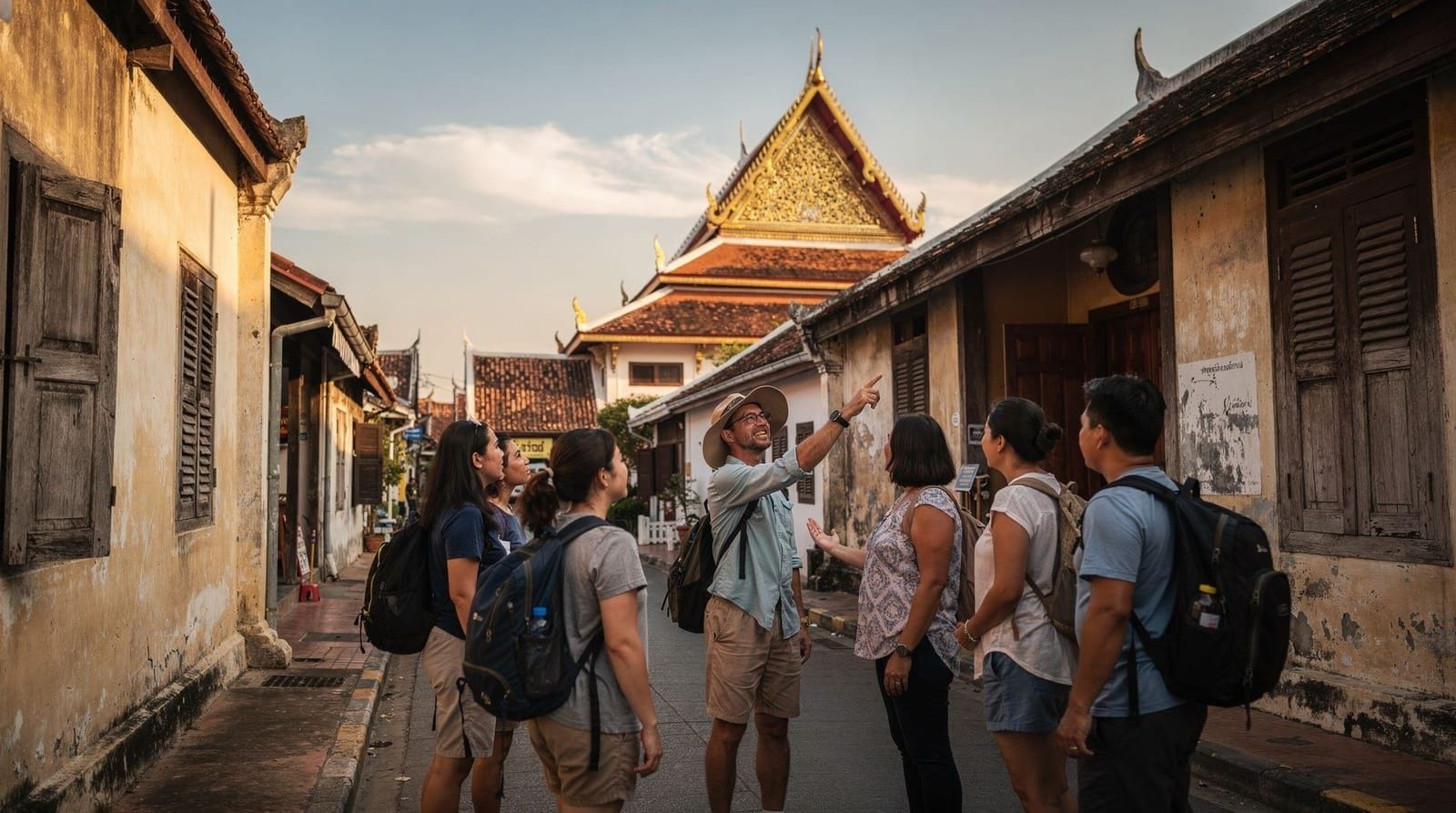
Wat Phra Singh, home to the revered Phra Singh Buddha image and the finely detailed Lai Kham chapel murals, and Wat Chedi Luang, with its massive partially-ruined 14th-century chedi and the city pillar shrine, appear as fixed stops on almost every Chiang Mai city tour regardless of operator. They sit close enough together inside the Old City walls that visiting both in sequence is efficient, and together they cover the two most historically significant temple traditions in the city - royal patronage at Wat Phra Singh, and the city’s founding-era chedi at Wat Chedi Luang. A guide’s main value at both is explaining details easy to miss independently: why the chedi was left partially ruined rather than restored, what the monk chat program at Wat Chedi Luang actually involves, and which areas of each temple are open to non-Buddhist visitors.
The variable third and fourth stops
Beyond the two anchors, operators differ on what fills out the rest of a half-day itinerary. Wat Chiang Man, the city’s oldest temple dating to 1296 and home to the crystal and marble Buddha images, is a common third stop, particularly on tours emphasizing history over pace. Others substitute a market walk-through, a viewpoint stop, or a photo stop at Tha Phae Gate, the Old City’s most photographed entrance. Reading the listing’s specific stop list rather than a generic “several temples” description is the best way to know what you’re actually booking.
Tuk-tuk versus van versus bike
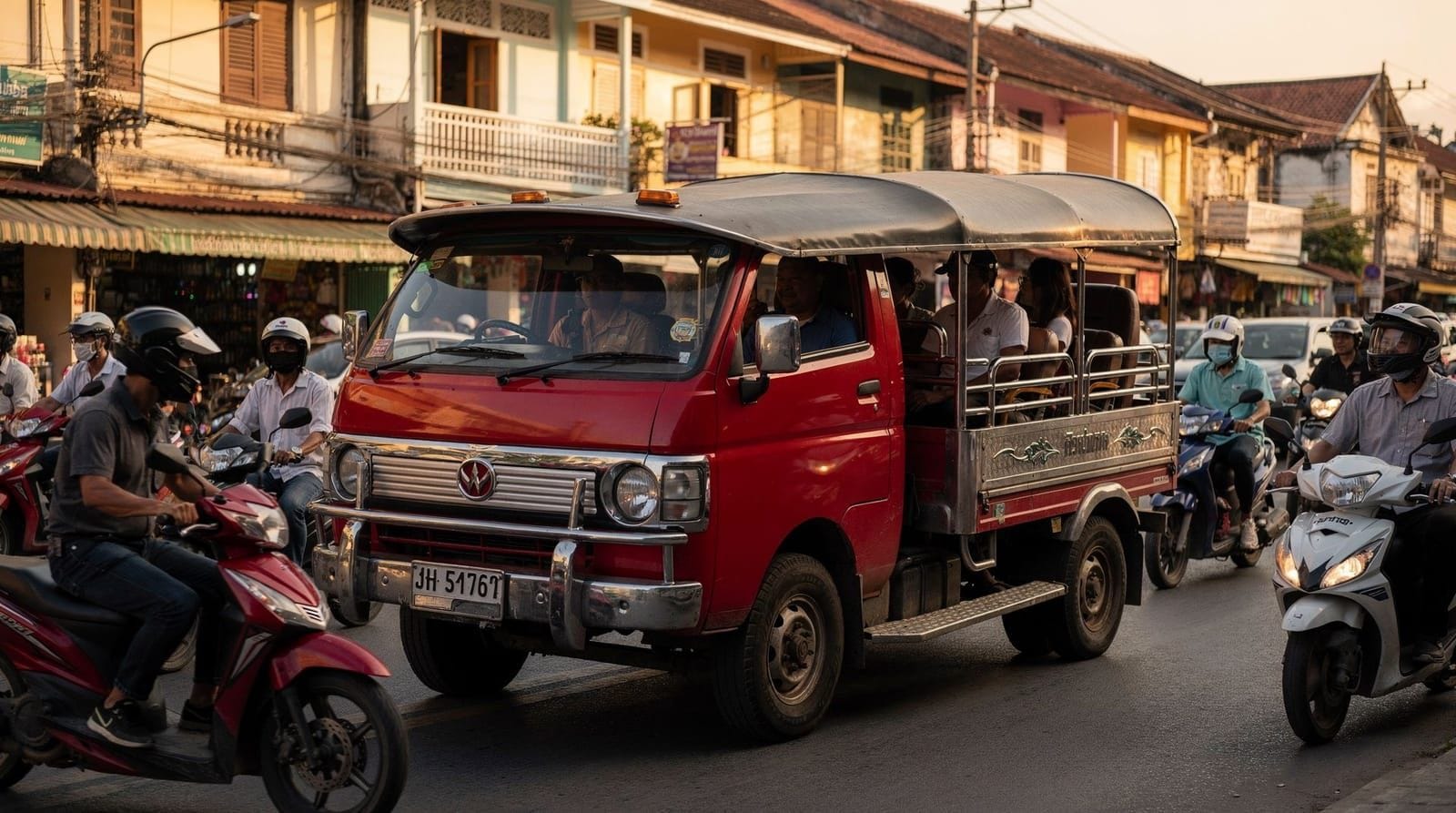
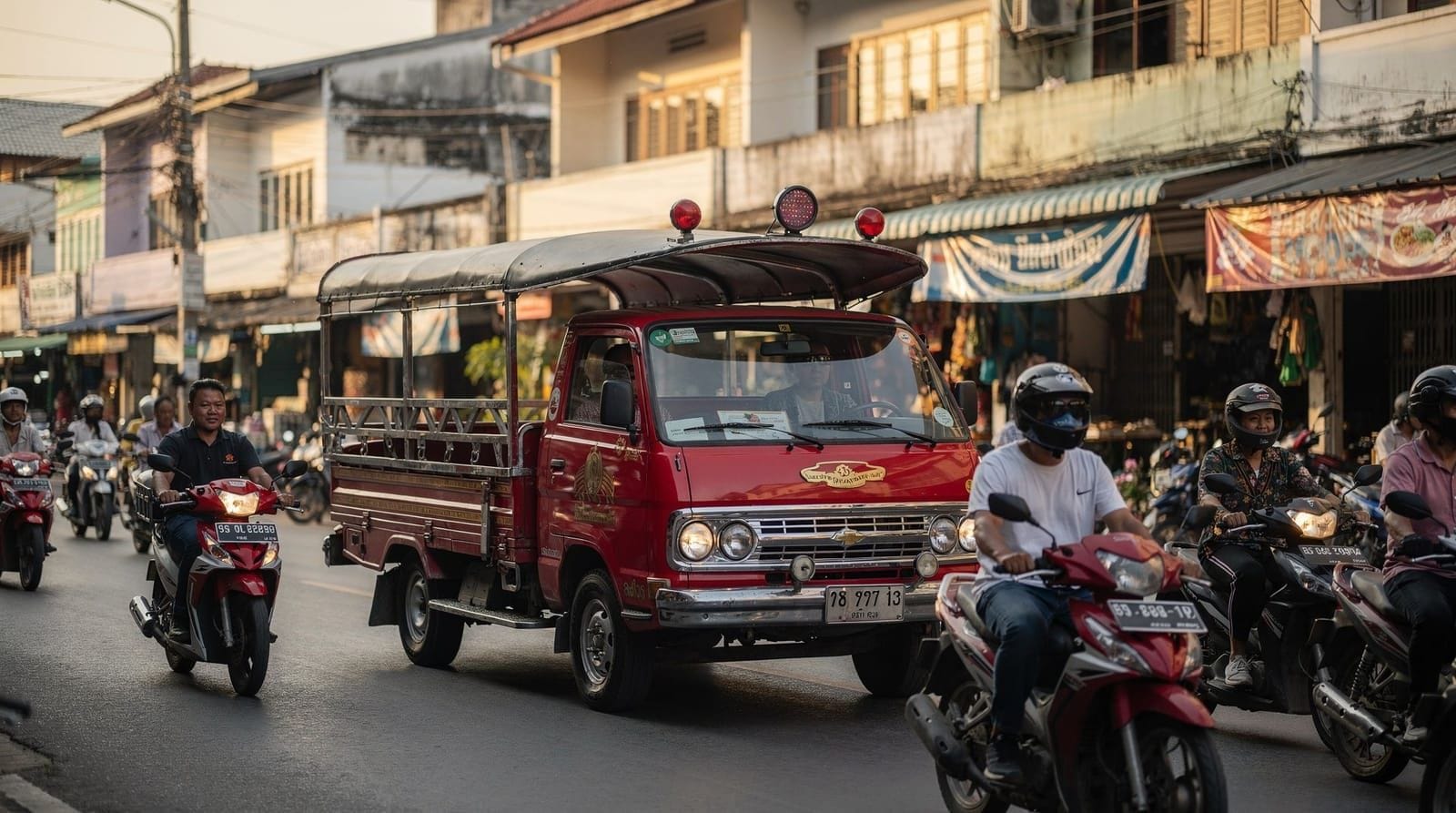
The classic open-air tuk-tuk remains the most popular vehicle for a Chiang Mai city tour, and a tuk-tuk city tour delivers unobstructed views and a breeze that makes the format genuinely pleasant even in warmer months, at the cost of no air conditioning during transit. Private versions like a half-day private tuk-tuk tour offer the same open-air experience with full schedule control. A samlor (three-wheeled cycle) tour, such as a half-day Old City samlor tour, moves at a gentler pace still and suits travelers who want a quieter, slower way to see the same temples. Van-based tours trade the open-air charm for air conditioning, a relevant trade-off during the hot season (March-May) or for anyone sensitive to heat.
Night versions of the city tour
A handful of operators run evening or night versions of the standard city loop, like a night bike tour of the Old City’s highlights, which catches temples lit up after dark and pairs naturally with an evening market visit afterward. These run cooler than daytime versions, an advantage during the hot season, though some temple interiors close earlier in the evening, so check which stops are outdoor-only (courtyards, chedis, gates) versus interior visits before booking a night tour if seeing inside a specific viharn matters to you.
Guided versus self-guided: what you’re really paying for
A city tour’s core value is sequencing, historical context, and not having to navigate or plan the route yourself - the temples themselves are open to independent visitors and cost only the entrance fee to see without a guide. If you’re comfortable with a map and enjoy reading background information yourself, a self-guided version covering the same stops, using our individual temple destination guides for opening hours and dress code details, costs a fraction of a booked tour. Our one-day Chiang Mai itinerary guide lays out a workable self-guided route through the same core stops.
Dress code and temple etiquette
Every active temple on a standard city tour enforces the same dress code: shoulders and knees covered, shoes removed before entering any viharn or ubosot, and a quiet volume maintained throughout, since these remain active places of worship rather than museums. A light scarf or wrap packed regardless of the day’s heat covers most dress-code situations, since sleeveless tops and shorts above the knee are the most common reasons visitors are turned away or asked to rent a cover-up at the entrance. Photography is generally permitted in courtyards and most interiors, though flash near Buddha images and photographing monks without asking are both worth avoiding on any tour.
Booking timing and crowds
Morning tours, with pickup around 8-8:30am, reach the main temples before both the day’s heat and the larger tour groups that tend to arrive from mid-morning onward, making this the preferable slot if crowd levels matter to you. Afternoon tours run cooler in shade but busier at the most popular temples; a late-afternoon slot around 3-4pm sometimes catches a second quieter window as day-tour groups start heading back. Our least-crowded temples guide covers timing strategies for each major temple in more depth if avoiding crowds is a priority.
Language options and guide commentary style
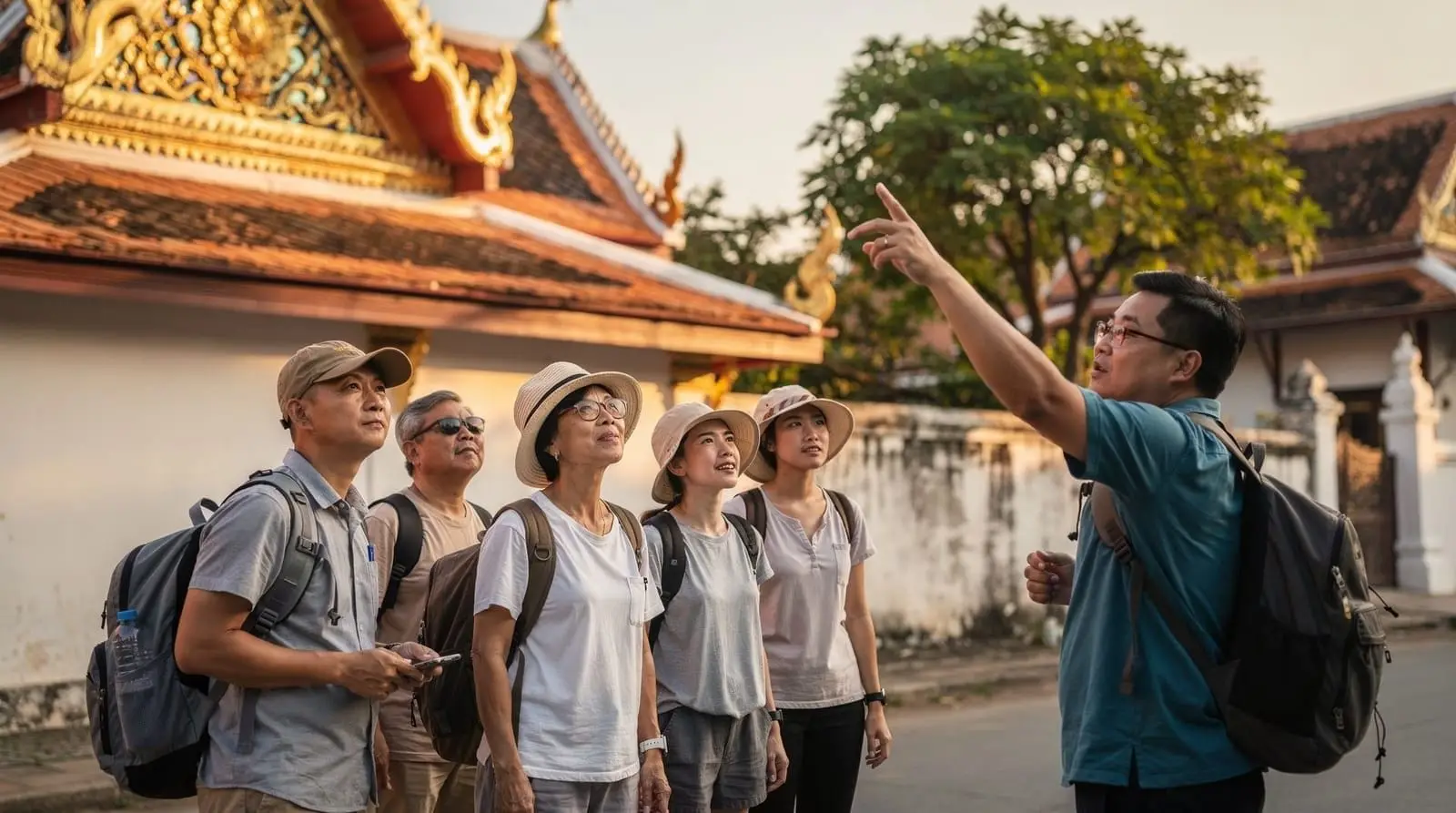
Most city tours run in English by default, with Mandarin, French, German, and Spanish guides available on a subset of listings, usually flagged explicitly in the tour title or description rather than assumed. Commentary style varies by operator - some guides deliver a fairly scripted historical overview at each stop, while others adapt more to visible visitor interest, spending longer on questions about Buddhist practice or Lanna architecture if the group seems engaged. Reviews mentioning a specific guide by name, or describing the depth of commentary rather than just friendliness, are a more useful signal here than a generic star rating when comparing similarly priced listings.
Extending into a full day
For visitors wanting to see the mountain above the city as part of the same trip, a full-day version of the city tour typically adds Doi Suthep and sometimes a craft village stop in San Kamphaeng, extending the day to 7-9 hours with lunch included. Whether this is worth it versus booking Doi Suthep as a separate, dedicated half-day trip depends on how much time you have in the region overall - our half-day versus full-day tours guide works through that decision directly.
Group size and private options
Standard city tours run as shared group bookings capped at anywhere from six to twelve travelers, or as private bookings for your own party alone at a higher total price but full schedule flexibility. For a first orientation loop where you haven’t yet identified a favorite spot worth lingering at, the group format works fine for most travelers; private makes more sense if you already know you want extra time somewhere specific, or if you’re traveling with young children whose pace doesn’t match a fixed group schedule. Our private versus group tours guide covers this trade-off directly, with real per-person price comparisons.
A sample half-day tour, hour by hour
A representative morning city tour begins with pickup around 8-8:30am, reaching the first temple - usually Wat Phra Singh - by 9am. Expect 30-45 minutes there, including time at the Lai Kham chapel if the tour includes an interior visit, before a short drive or walk to Wat Chedi Luang for a similar duration. From there, tours typically add either a third temple, a market walk-through, or a short stop at Tha Phae Gate for photos, before drop-off back at your hotel by around noon. The whole loop rarely covers more than a few kilometers of actual driving, since everything sits within or just outside the Old City walls.
What locals and repeat visitors notice about city tours
A recurring honest observation from repeat Chiang Mai visitors is that the standard city tour circuit - Wat Phra Singh, Wat Chedi Luang, sometimes Wat Chiang Man - is also the most crowded combination in the city, since every operator converges on the same two or three temples. If you’ve already done a city tour on a previous trip, or if avoiding crowds matters more to you than seeing the best-known sights, it’s worth asking your guide or operator about less-visited alternatives, or consulting our underrated things to do guide and least-crowded temples guide for a genuinely different itinerary rather than the default loop.
Photography considerations on a city tour
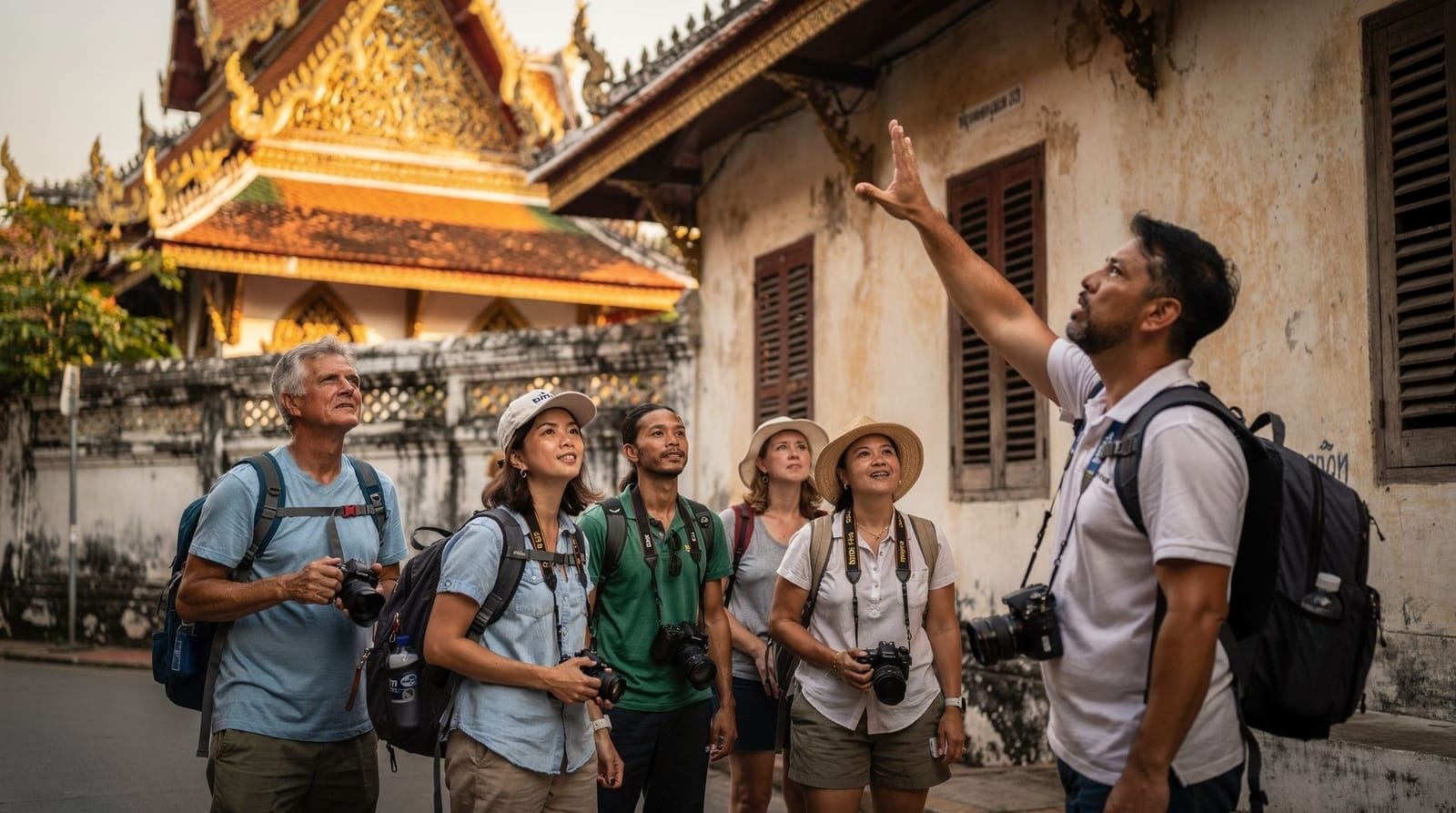
City tour stops are timed around a fixed group schedule, which can be a real constraint for photographers wanting to wait for a specific light condition or an empty frame at a popular spot. If photography is a priority, a private booking (covered in our private versus group tours guide) gives more room to linger, and an early-morning slot generally delivers both better light and fewer other visitors in the frame than a mid-morning or afternoon departure. Flash photography of Buddha images is discouraged at every temple regardless of tour format, and photographing monks directly without asking first is a common visitor misstep worth avoiding.
Taking kids on a standard city tour
The standard half-day format works reasonably well for families, since temple courtyards are flat, shaded, and not physically demanding, but young children’s attention for the second or third temple in a row tends to fade faster than adults’. A shorter, more selective itinerary - Wat Phra Singh plus one other stop, rather than the full standard loop - or a private booking that can be shortened on the day tend to work better with young kids than the standard fixed-schedule group version. Our Chiang Mai with kids guide covers age-appropriate sightseeing pacing in more depth.
Weather and seasonal timing
Morning tours are the more comfortable choice during the hot season (March-May), when midday temperatures make extended outdoor courtyard time considerably less pleasant, and this period also overlaps with the region’s burning season (typically February-April), when smoke haze can reduce visibility at any viewpoint stop included in the tour. The cool season (November-February) is comfortable at any time of day but also the busiest, with the most crowded temple courtyards of the year. The rainy season (June-October) brings mostly short afternoon downpours rather than all-day rain, and open-air tuk-tuk tours simply pause under cover briefly rather than cancelling outright.
Comparing operators before booking
Since most city tours cover a similar set of stops, the meaningful differences between listings usually come down to group size, vehicle type, whether entrance fees are included, and the specificity of the itinerary description. A listing naming exact stops and approximate time at each is a stronger signal of a well-run tour than one describing “several beautiful temples” without specifics. Recent, detailed reviews mentioning the guide by name or describing the pace of the day are more useful than an aggregate star rating alone when comparing similarly priced options.
Practical booking checklist
Before booking, confirm the specific named stops (not just “several temples”), whether entrance fees are included, the exact duration and pickup window, and whether your hotel falls within the standard pickup zone covering the Old City, Nimmanhaemin, and the riverside near Ping Riverside - properties further out sometimes carry a small surcharge or require a fixed meeting point instead of door pickup. Our best Chiang Mai tours guide covers these fundamentals across all Chiang Mai tour types, and our things to do in Chiang Mai guide gives a broader sense of what else to plan around a city tour during your stay.
Tipping and end-of-tour etiquette
A city tour typically ends with a straightforward drop-off, and while tipping isn’t obligatory in Thailand, it’s increasingly customary for a guide or driver who’s spent a few hours with your group. A rough working figure is 100-200 THB (about USD 3-6) per person for a half-day tour, handed over directly at the end rather than added to the online booking price, which covers only the tour itself. If the tour included any unplanned extras - an additional stop the guide arranged on request, or extra time somewhere you lingered - it’s reasonable to tip toward the higher end of that range.
The bottom line
A Chiang Mai city tour is a reliable, low-risk way to see the Old City’s best-known temples with useful context on your first day, at a modest price relative to the rest of a Thailand trip’s budget. It’s not the only way to see the same sights, and independent visitors with a bit of planning can cover identical ground for less, but the efficiency and commentary a guide adds make it a reasonable choice for most first-time visitors who’d rather not plan a temple route from scratch on arrival.
Frequently asked questions about Chiang Mai city tour: what's included
Which temples are included in a standard Chiang Mai city tour?
How long does a Chiang Mai city tour last?
Do I need to dress a certain way for a city tour?
Is a city tour worth it if I plan to visit the temples myself anyway?
What's not usually included in a Chiang Mai city tour price?
Can a city tour be combined with a cooking class or elephant sanctuary the same day?
Top experiences
Bookable activities with verified prices and instant confirmation on GetYourGuide.