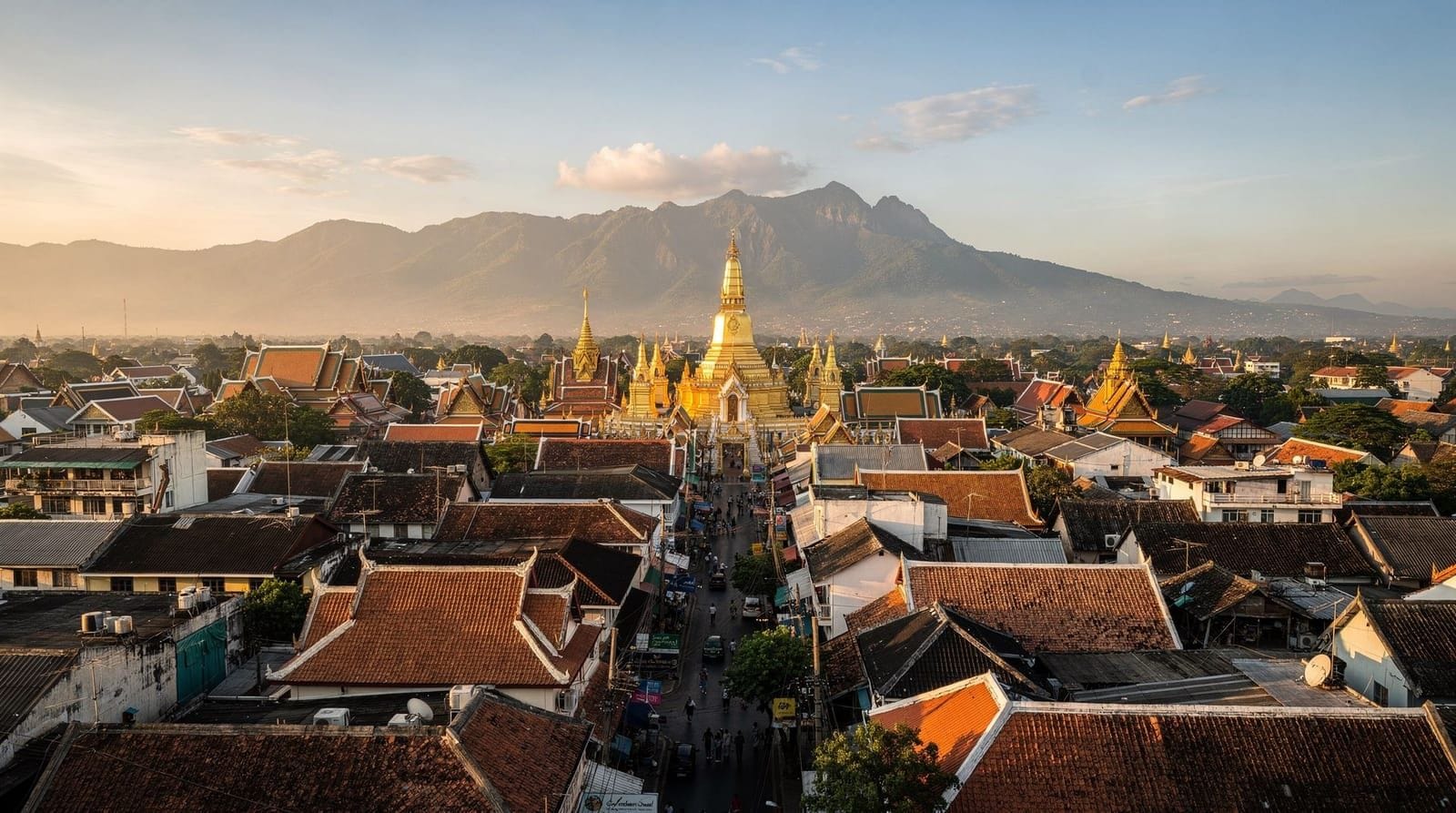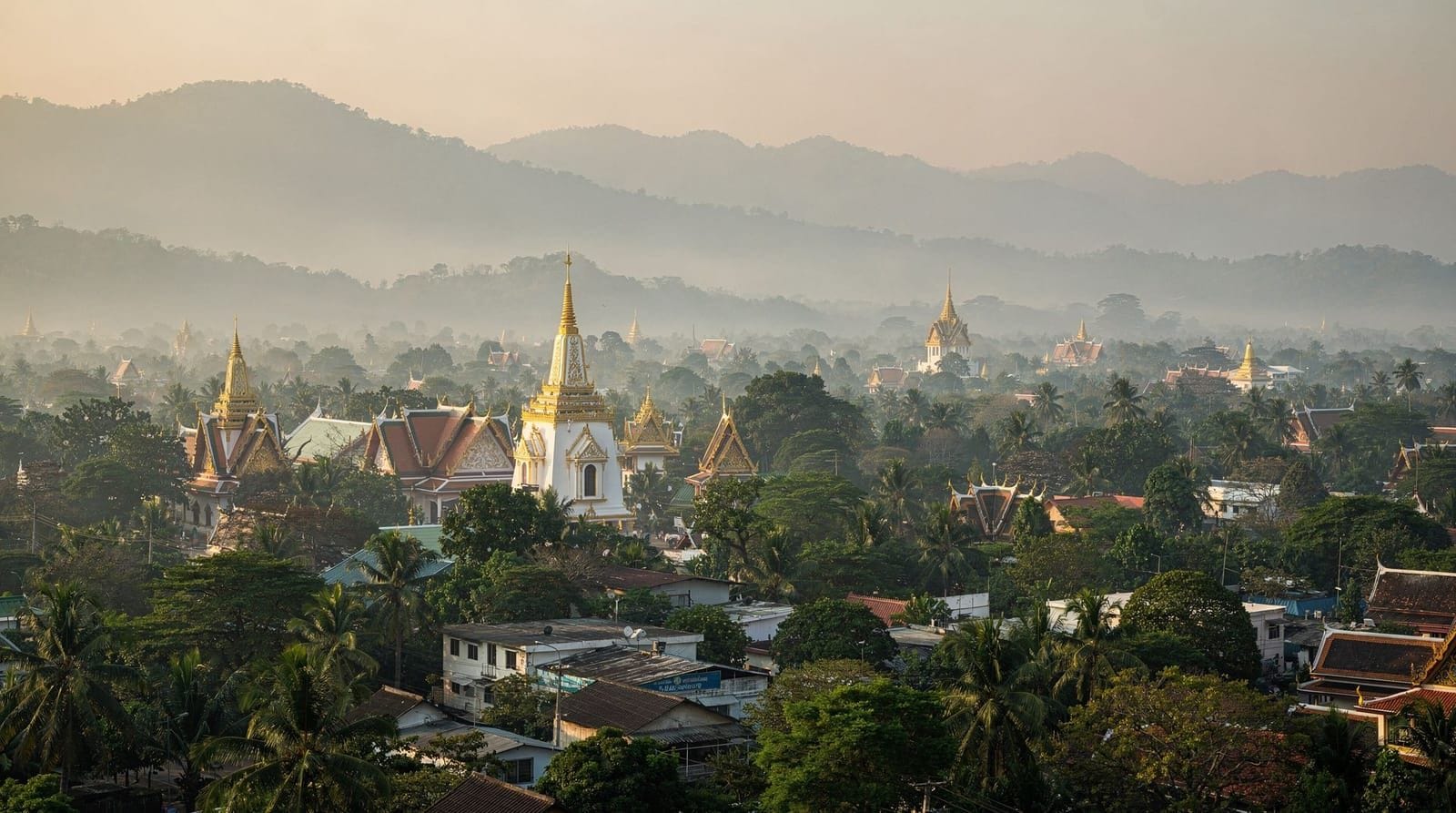
Songkran in Chiang Mai: what it's really like once you're soaked
Nobody tells you how much your phone case starts to matter until day two of Songkran, when the waterproof pouch you bought as an afterthought becomes the single most important item in your bag. We spent five days in Chiang Mai’s Old City during the water festival, and the version I’d tell a friend planning to go is quite different from what the tourism photos suggest — not worse, just far more physical, far longer, and far more exhausting than the two-minute highlight reels imply.
It starts earlier than you expect and doesn’t really stop
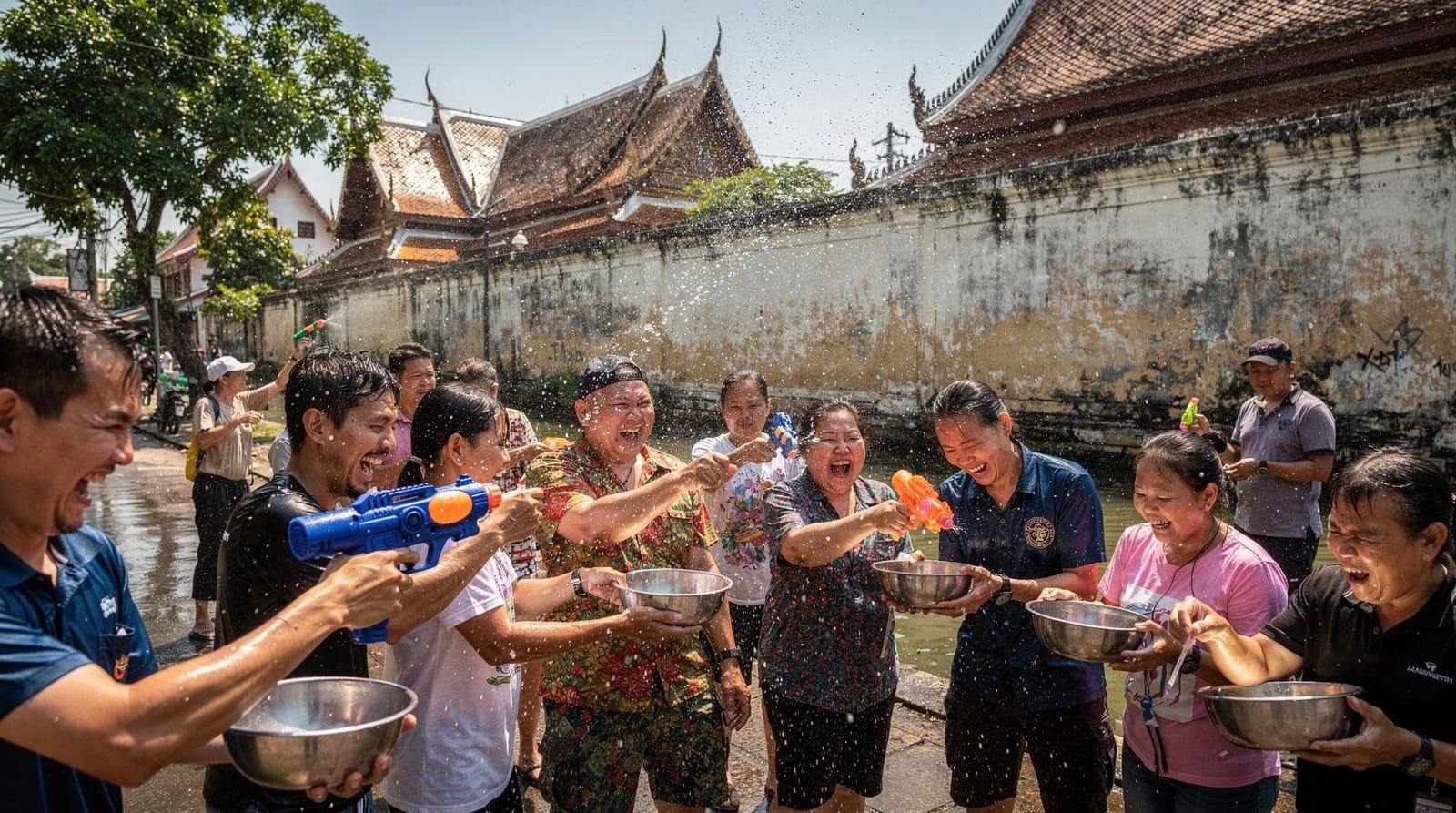
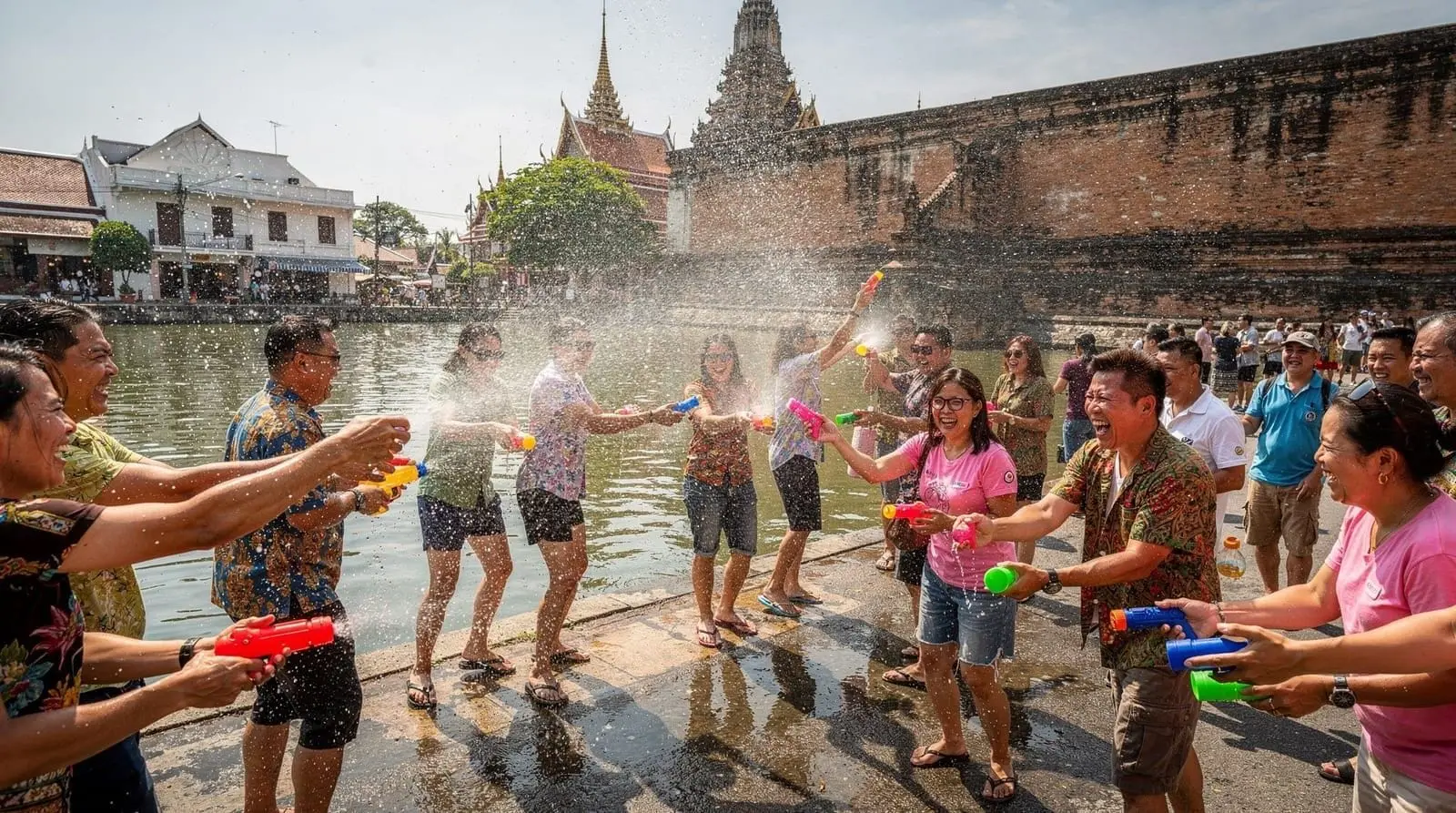
Songkran is officially a three-day national holiday in mid-April, but in Chiang Mai specifically, the water fighting stretches well beyond the official dates — closer to five or six days of activity around the moat, with the most intense action concentrated on the days immediately surrounding April 13th. By 9am on the first proper day, the moat road circling the Old City was already lined with pickup trucks carrying oil drums of water, families with garden hoses set up on their front steps, and a soundtrack of competing speaker systems blasting Thai pop from every direction. This isn’t a festival with a start time you can plan around. It’s already happening by the time you’ve had coffee.
Our full guide to Songkran in Chiang Mai covers the logistics — what to wear, what to protect, which days are calmer — in more detail than a single account can, but the short version worth repeating here: nowhere near the moat is dry, ever, for the full duration of daylight hours. Locals target everyone equally, tourists and Thai residents alike, and the water is often mixed with talcum-powder paste smeared on cheeks as a blessing gesture that’s sweet in intention and genuinely unwelcome the fourth or fifth time a stranger’s hand reaches for your face.
The heat is the real story
What surprised me most wasn’t the water — it was the heat that makes the water necessary in the first place. April in Chiang Mai regularly hits 38–40°C, and Songkran’s timing isn’t an accident: it’s a practical response to the hottest, driest stretch of the year. Within an hour of being soaked, we were dry again from the ambient heat, then soaked once more within minutes by the next truck rolling past. That cycle — wet, dry, wet again — repeated for six or seven hours a day, and by the third afternoon, exhaustion had less to do with the water fighting itself and more to do with simple heat fatigue. Bring electrolyte packets. Drink far more water than feels necessary. This part isn’t in most of the fun, splashy photos, but it’s the part that actually determines whether you enjoy days three through five or spend them recovering in an air-conditioned room instead.
Near Tha Phae Gate, the crowd density is its own experience
The stretch of moat road near Tha Phae Gate is, without question, the most intense concentration of the whole festival — stages, sound systems, foam cannons, and a crowd packed dense enough that movement becomes genuinely difficult by early afternoon. We found it thrilling for about ninety minutes and overwhelming after that; the sensory overload of noise, water, powder, and crowd density all at once is not for everyone, and if you’re claustrophobic in crowds, this specific stretch deserves a hard pass rather than a “let’s see how it goes” attitude. Quieter residential sois just a few streets back from the moat offered a gentler, more neighborhood-feeling version of the same tradition — kids and grandparents dousing passersby with buckets rather than industrial pumps, which felt closer to what Songkran must have been before it became a headline tourist draw.
The part before the water fights, easy to miss
What surprised me most, honestly, was how much genuine religious and cultural tradition sits underneath the water fighting if you look for it, and how easy it is to miss entirely if you only experience the moat-road chaos. Early on the first morning, before the trucks and hoses took over, we visited a temple in the Old City and watched a quieter, older version of Songkran: families pouring scented water gently over Buddha images and over the hands of elders as a gesture of respect and blessing, a world away from the industrial-scale soaking happening a few streets over by mid-morning. Several temples also host sand pagoda building on their grounds during this period — visitors and locals building small mounds of sand decorated with flags and flowers, a tradition tied to merit-making for the new year that most tourists never see because it happens quietly, indoors, while the water fight dominates the streets outside.
We made a point of visiting one of these temple ceremonies on our second morning specifically because a guesthouse owner recommended it, and it reframed the whole festival for us — less a chaotic party and more a water-based expression of a genuinely old cleansing ritual that’s simply grown, over recent decades, into the massive public spectacle it is today. If you only experience the moat road, you’ll leave thinking Songkran is purely a water fight. It isn’t, and the quieter side is worth actively seeking out rather than assuming it isn’t there.
Food, laundry, and the practical grind of five days soaked
A few practical realities that shaped our days more than we expected going in. Eating became a genuine logistical challenge — most restaurants directly on or near the moat road either close entirely for the festival’s duration or operate with staff who are, understandably, also participating in the water fighting between serving tables. We found better luck eating a few blocks back from the main action, and some of our best meals of the trip happened at small residential-soi restaurants that had simply posted a sign asking water-fight participants to leave diners alone, an arrangement that seemed to be respected consistently.
Laundry, too, becomes a daily rather than occasional task. Everything we wore each day came back soaked, often with a faint film of the talcum-powder paste that doesn’t always rinse out easily, and guesthouses across the city clearly anticipate this — same-day laundry service was offered almost everywhere we stayed, priced reasonably given the obvious seasonal demand. Packing fewer, quicker-drying clothes rather than a full standard wardrobe would have made the whole week considerably more manageable in hindsight.
Honest safety notes
A few things worth knowing plainly, since our honest safety assessment for Chiang Mai touches on this seasonally but deserves repeating here directly. Road traffic accidents spike significantly during Songkran nationwide — visibility drops with water in the air, roads get slick, and a combination of drinking and reduced caution among some revelers makes this genuinely one of the more dangerous periods on Thai roads each year. We avoided renting a motorbike for the duration entirely, which felt like an easy, obvious call once we saw the road conditions on day one. If you do need to get around, walking or a car with a driver is the safer choice during the peak days.
It’s also worth checking whether your visit overlaps with the tail end of burning season, which typically runs February through April — some years the smoke haze has cleared by mid-April, other years it lingers. We got lucky with clear skies, but it’s not guaranteed, and it’s a separate consideration from the water festival itself that’s easy to overlook when you’re focused on planning around Songkran dates specifically.
What we packed, and what we wished we had
A short, practical list worth passing on directly, since our general Chiang Mai packing list covers the broader trip but doesn’t get specific enough for Songkran’s particular demands. Quick-dry synthetic clothing rather than cotton made every single day more comfortable, since cotton stayed heavy and damp for hours after each soaking while synthetic fabrics dried within twenty or thirty minutes even in the humid air. A cheap pair of waterproof sandals bought locally for around 200 THB outperformed the closed sneakers we’d both brought from home, which stayed wet and uncomfortable for the entire festival once properly soaked on day one. And a genuinely waterproof phone pouch, tested beforehand rather than trusted blindly, made the difference between documenting the festival properly and losing a phone entirely, which happened to at least two people we met over the course of the week.
We hadn’t brought sunscreen seriously enough either, assuming the water fighting itself would keep us cool, and both came away with a mild sunburn by day three from hours spent outdoors in April’s harsh midday sun between soakings. A water-resistant sunscreen reapplied more often than usual would have been the single easiest fix for a problem that genuinely detracted from the last two days of an otherwise excellent week.
Would we do it again
Yes, honestly — but knowing now what we didn’t know then. We’d bring less electronics out on the street entirely rather than trusting a waterproof pouch for six hours straight, we’d pace ourselves across the full stretch rather than trying to “do” Songkran intensely in one exhausting day, and we’d retreat to quieter side streets sooner once the main moat road crowd got overwhelming. It’s not a festival that fits neatly into typical one-day sightseeing plans — it replaces sightseeing almost entirely for its duration, and that’s the trade worth understanding before you book dates around it. Some of the tourist-trap dynamics we cover in our Chiang Mai tourist traps piece apply here too: overpriced “Songkran survival kits” sold to foreigners at inflated prices near the gate, when a five-baht bucket from any local shop does exactly the same job.
What stays with me isn’t a single moment so much as the accumulated exhaustion and joy of five days spent completely soaked, slightly sunburnt, and laughing more than felt reasonable for something that’s, fundamentally, just a very large and very public water fight.