Farm-to-table cooking classes in Chiang Mai
Chiang Mai: Half Day Cooking Class at Organic Farm
Duration: Half day
What is a farm-to-table cooking class in Chiang Mai?
It's a cooking class where you harvest herbs and vegetables yourself at a working organic farm — usually on the rural fringe around Mae Rim or a similar outlying district — rather than buying pre-cut ingredients at a city market. Several real Chiang Mai operators run this format as a half-day or full-day option, typically priced 1,000-1,800 THB per person.
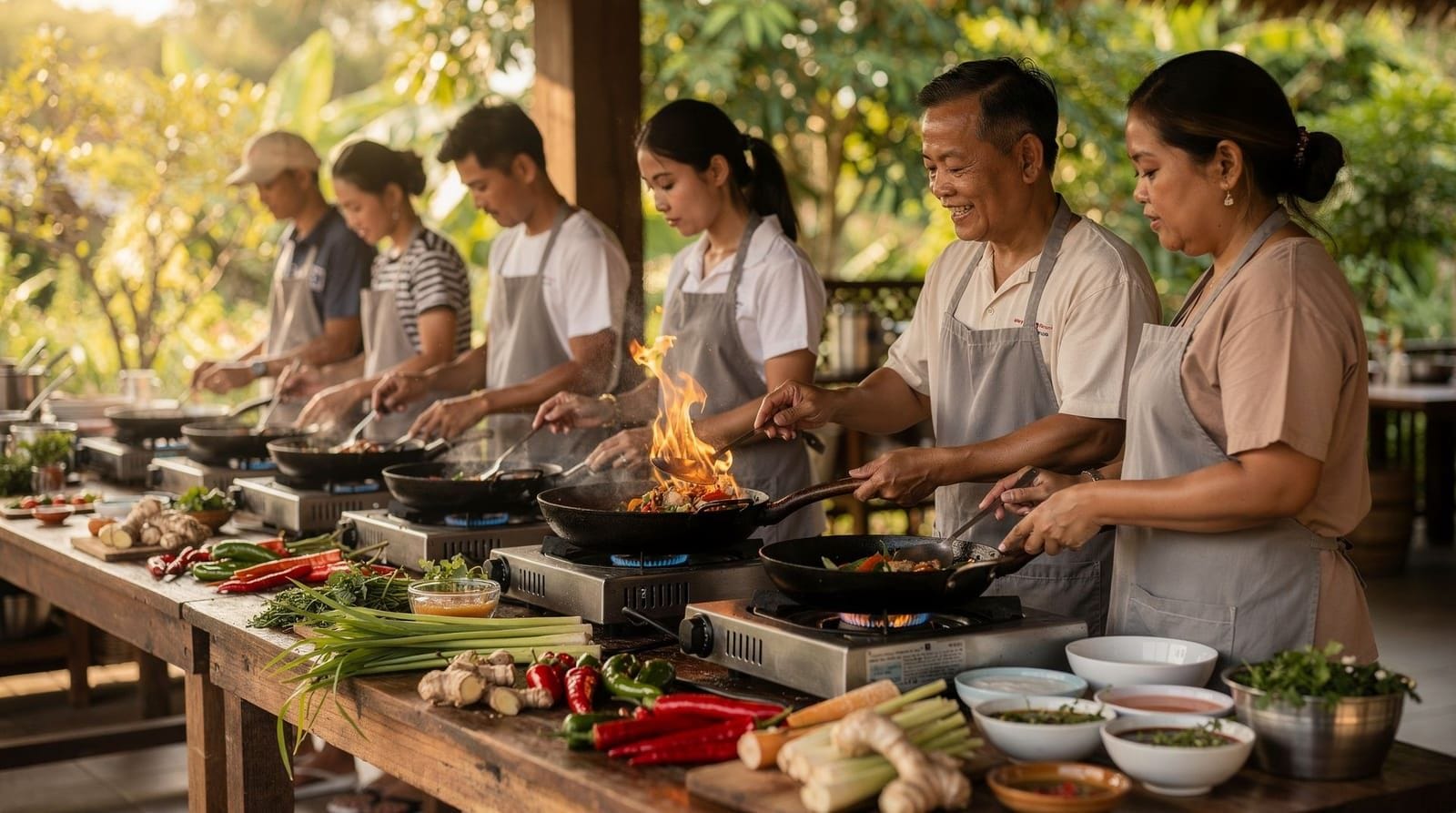
The standard Chiang Mai cooking class starts at a market. A smaller but well-established alternative starts at a farm instead, and the difference is more than cosmetic — it changes what you’re actually doing with your hands before the wok even comes out. Instead of pointing at a pile of lemongrass a vendor has already cut and bundled, you walk into a field, cut the stalk yourself, and carry it back to the cooking station still smelling like the soil it grew in. For a lot of visitors, that hour in the field turns out to be the part of the day they remember best, more than the cooking itself.
Farm-to-table classes in Chiang Mai are real, bookable experiences run by several established operators, most of them based on the rural fringe northwest of the city around Mae Rim, where flat, irrigated land and a cooler microclimate support the kind of small organic vegetable and herb farming these classes depend on. Prices typically run 1,000-1,800 THB per person (roughly $28-50) depending on whether the format is half-day or full-day and whether a market stop is included alongside the farm visit.
What makes a farm-based class different from a market-based one
In a standard market class, an instructor walks you through a wet market like Warorot Market, pointing out chilies, herbs, and produce that vendors have already picked, washed, and bundled for sale. It’s an efficient, informative introduction to Thai ingredients, but it’s fundamentally a shopping experience — you’re selecting from what’s already been harvested by someone else.
A farm-based class replaces or supplements that stop with a working organic farm, where you harvest ingredients directly: pulling lemongrass stalks, snipping kaffir lime leaves off the tree, picking Thai basil and holy basil by hand, pulling morning glory (a common stir-fry green) from a water channel, and picking your own chilies straight off the plant. You’ll usually get a short walk-through of how each crop grows and how it’s used across different dishes before harvesting begins, which is a different kind of learning than identifying pre-cut ingredients at a market stall — you see the whole plant, not just the part that ends up in your curry.
The trade-off is time and setting rather than quality: farm visits generally take longer than a market stop (farms are further from the city, and walking a working farm takes longer than moving through market aisles), and the environment is outdoors and often uneven underfoot, compared to the covered, paved environment of most city markets. For a full comparison of the two formats side by side, see the Chiang Mai cooking class with market tour guide, and for what a typical day looks like structurally regardless of which stop you take, the what to expect guide covers the shared format both types follow.
Which real classes are farm-based
Several currently bookable Chiang Mai cooking classes are built specifically around an organic farm visit rather than treating it as an afterthought.
Book the half-day cooking class at an organic farm for a compact format that pairs a farm harvest with a market stop in a single half-day session — a good option if you want the farm-to-table experience without committing a full day.
Check the full-day Thai cooking class in organic farm and market for the most complete version of the format, combining both a farm harvest and a separate market visit across a full day, plus a longer dish list than the half-day version allows.
See the cooking class with organic farm at Mama Noi for a long-running, well-reviewed operator whose whole program is built around its own organic farm plot rather than a rented commercial kitchen — the kind of setting where the person teaching the class often has a direct hand in growing what you’re cooking.
Look at the authentic cooking class with market and farm visit for a format that splits time between both a market and a working farm in one booking, useful if you want to compare the two ingredient-sourcing styles in a single day rather than choosing one over the other.
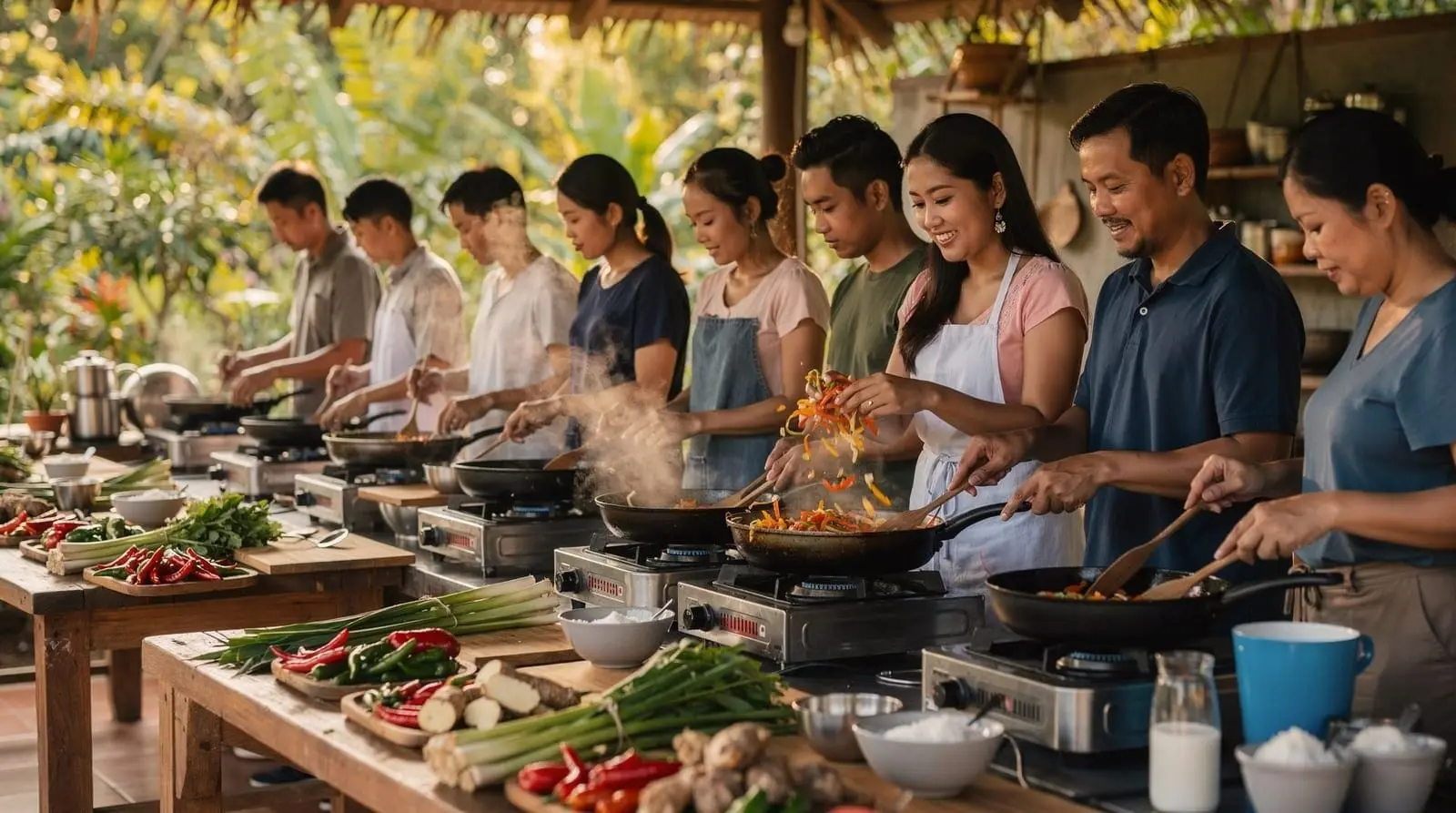
Between these four, the main decisions are half-day versus full-day, and whether you want a farm-only focus (Mama Noi) or a farm-plus-market combination (the other three). None of them require any cooking background, and all follow the same core structure — harvest, prep, cook, eat — described in the what to expect guide.
Typical farm settings: Mae Rim and the rural fringe
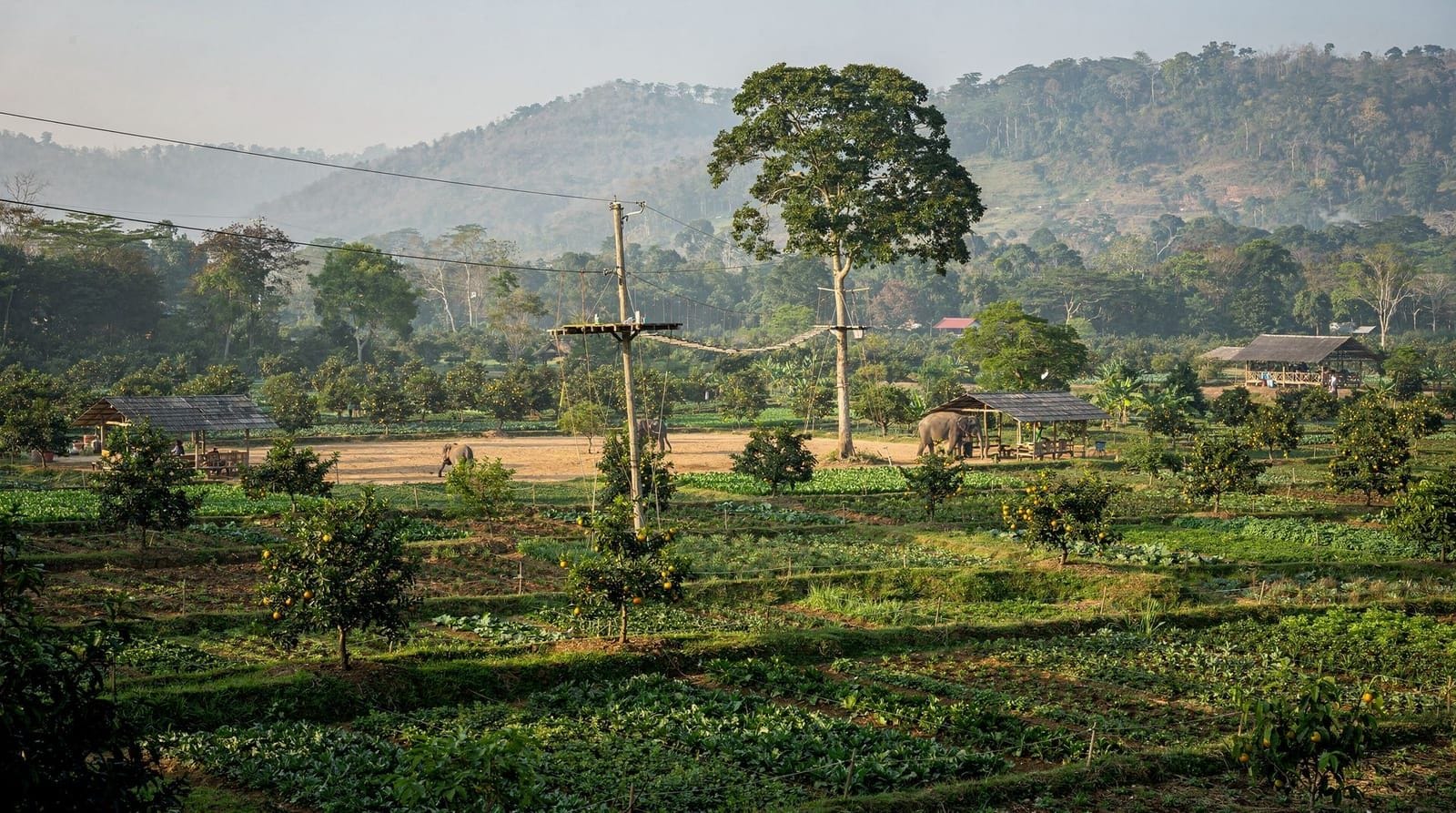
Most of the organic farms used for these classes sit in Mae Rim or similarly rural districts on the outskirts of Chiang Mai, generally a 20-40 minute drive from the old city depending on traffic and the exact farm location. The setting is usually a working smallholding rather than a manicured show garden: rows of Thai basil, holy basil, and lemongrass, a scattering of kaffir lime and chili plants, sometimes a small rice paddy or a water-channel vegetable bed for morning glory and water spinach, and occasionally a few chickens or a fish pond as part of a broader small-farm operation rather than a single-crop plot. It’s a genuinely different pace and backdrop from the covered stalls of a city market, and it puts you closer to the Mae Sa valley’s broader agricultural landscape than the city center — the same general area known for its strawberry farms, orchid nurseries, and the produce stalls that line route 1096.
Because these farms operate at a small scale and outdoors, expect the visit to move at whatever pace the crops and the weather allow, rather than the fixed, efficient rhythm of a market stop. That’s part of the appeal for most visitors, though it does mean farm-based classes are somewhat more exposed to rain delays during the wet season (roughly June to October) than an indoor market visit would be.
The sustainability angle
Farm-to-table cooking classes sit closer to a genuinely sustainable tourism model than most other Chiang Mai activities, for a few concrete reasons rather than just marketing language. The farms themselves are typically small, family-run operations practicing organic methods (no synthetic pesticide use on the herbs and vegetables you’ll be harvesting and eating within the hour), which supports a different economic model than large-scale commercial agriculture. Booking a class built around one of these farms channels tourism income directly to a small farming operation rather than solely to a commercial cooking school renting kitchen space, and it shortens the distance between where food is grown and where it’s eaten about as much as a single meal possibly can — you’re harvesting the lemongrass yourself and cooking with it within the hour, which is a genuinely rare thing to experience directly rather than just read about on a menu description.
None of this makes farm-based classes a guaranteed ethical upgrade over every market-based alternative — plenty of market classes source responsibly too, and a market stop supports local vendors in its own way — but if a shorter supply chain and direct support for small organic growers matters to you specifically, the farm format delivers on that in a way a market visit generally can’t.
Full day vs. half day: which format to choose
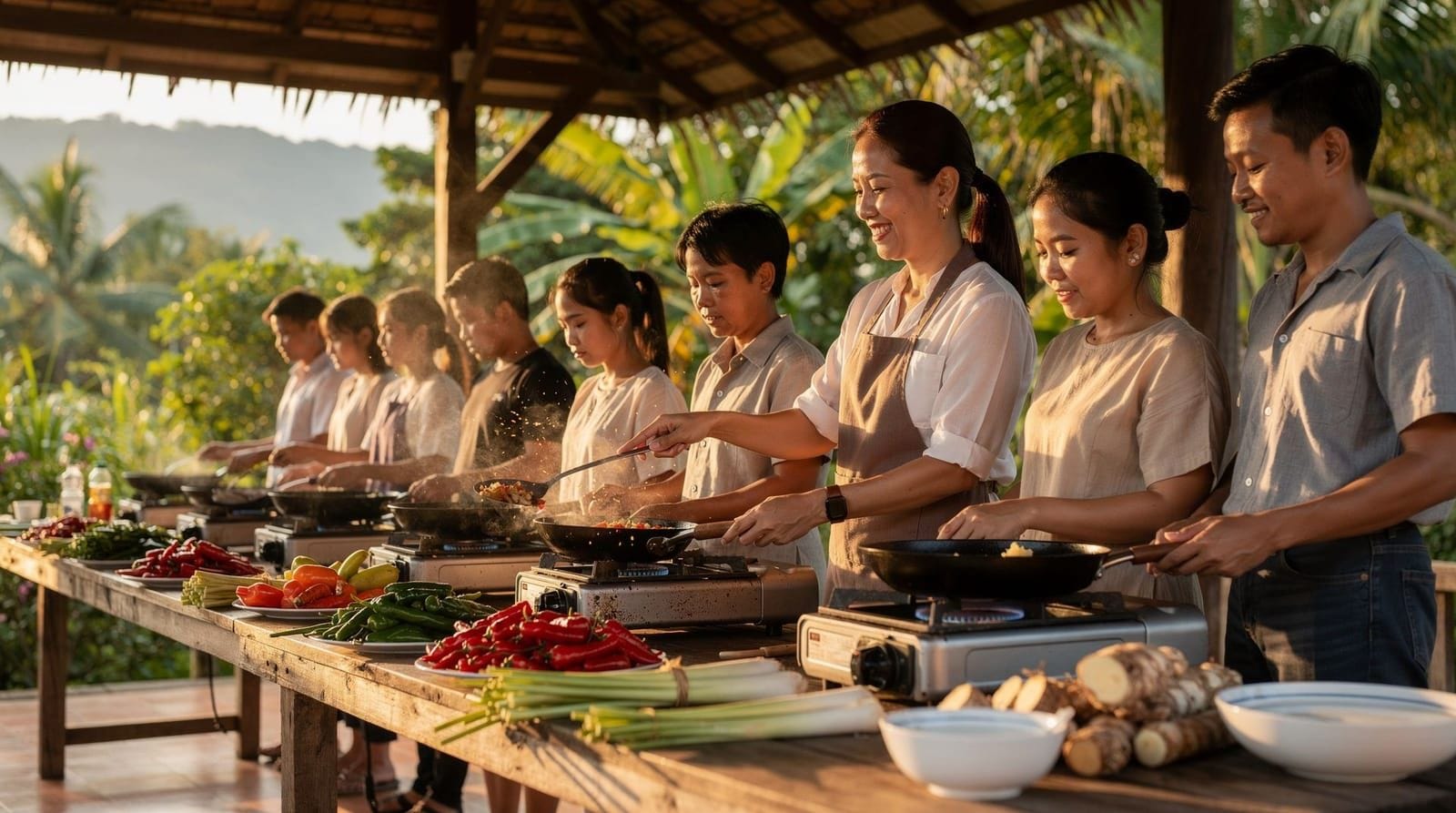
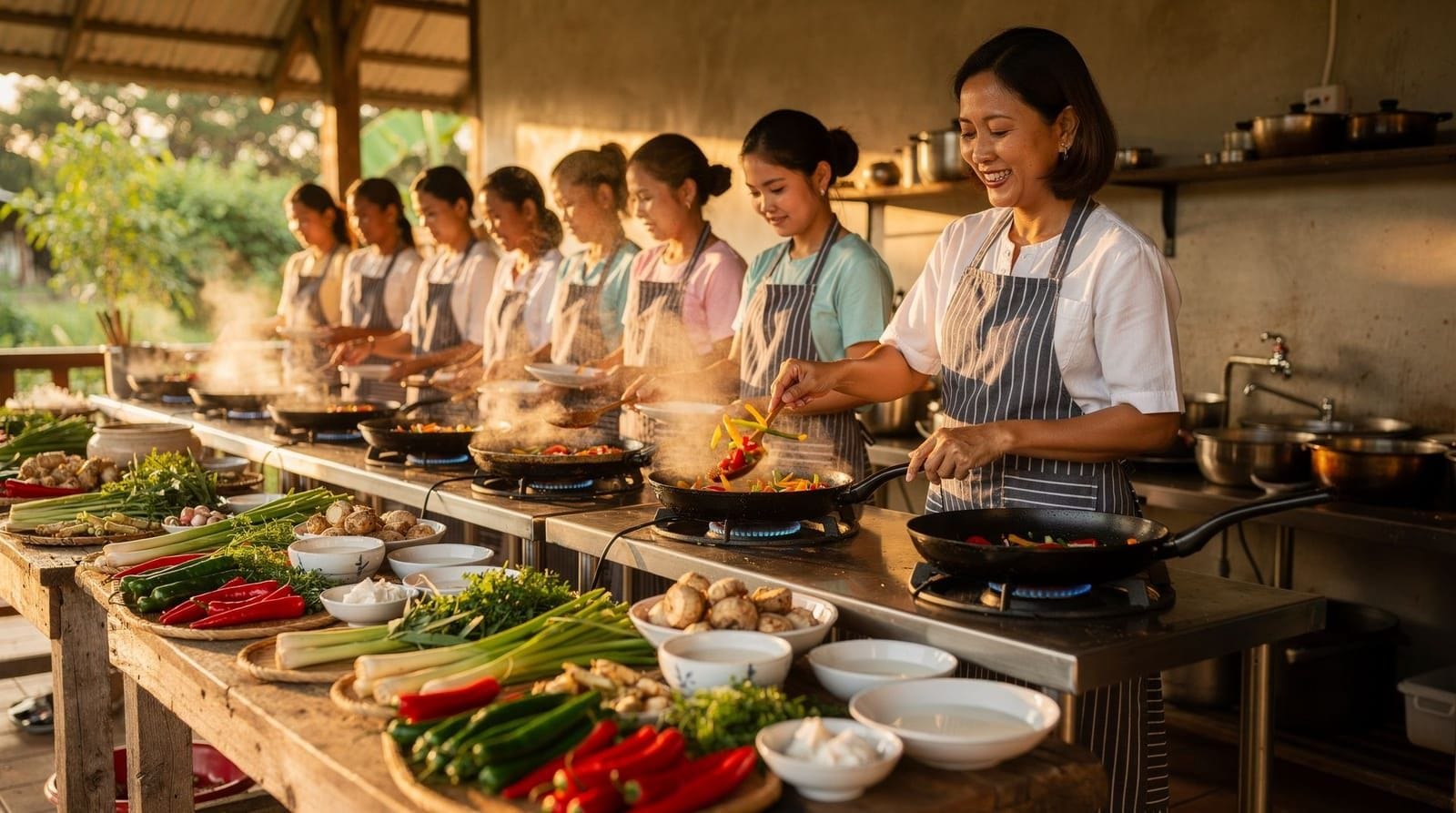
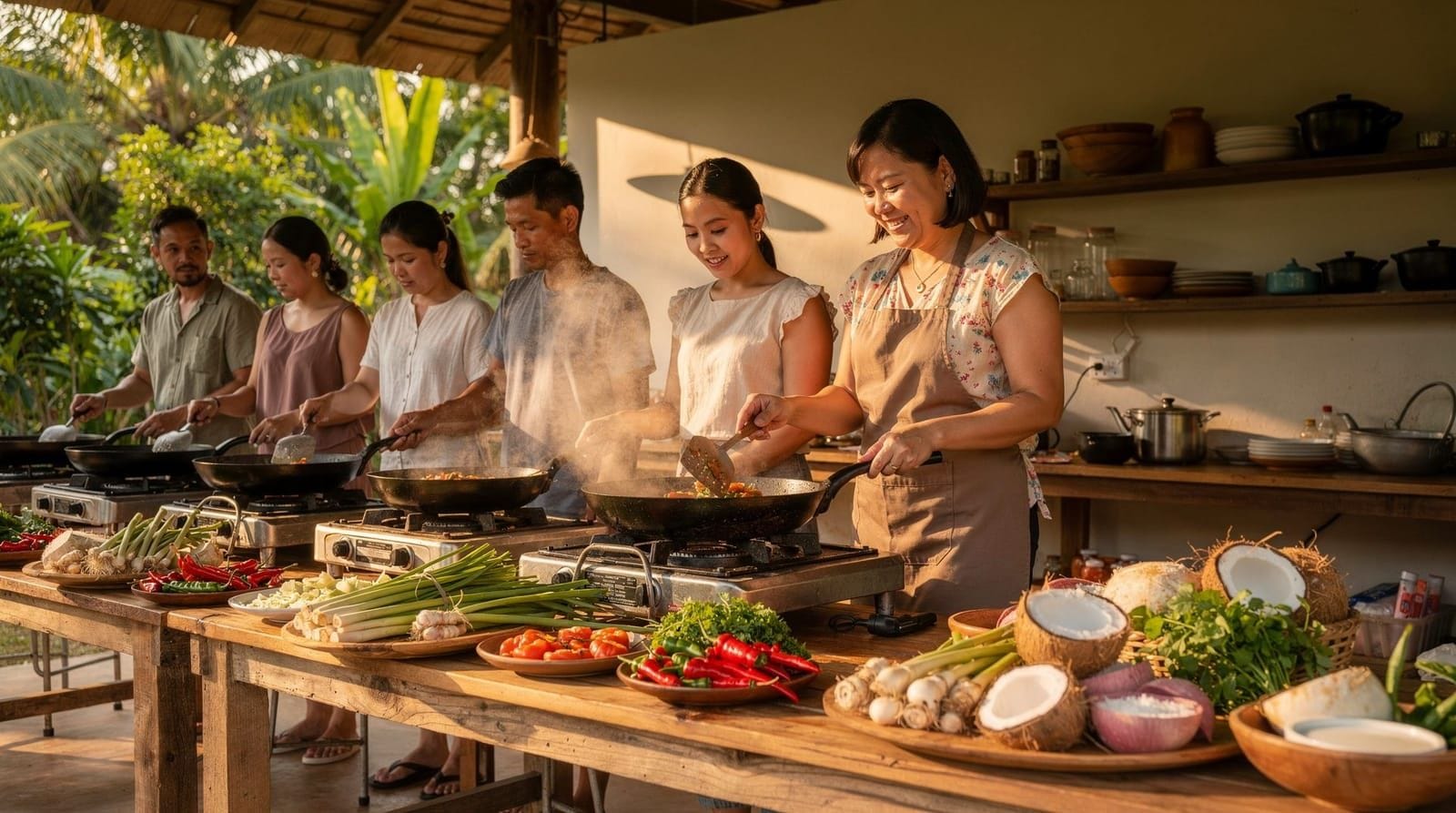
The half-day format (roughly four to five hours, 1,000-1,400 THB or about $28-39) usually condenses the farm visit into forty-five minutes to an hour, followed by three to four hours of cooking, and suits visitors who want the farm-to-table experience without giving up a full day of their trip. The full-day format (seven to eight hours, 1,400-1,800 THB or about $39-50) allows for a genuinely unhurried farm visit plus a separate market stop, more dishes cooked (often six or seven instead of four or five), and a lunch break built into the schedule rather than treating the final dish as lunch itself. If your schedule only allows a half day, you won’t miss the core experience — harvesting your own ingredients — since that happens regardless of format; the full day mainly adds breadth (more dishes, an additional stop) rather than a fundamentally different core experience.
Check availability for the Mama Noi organic farm cooking class if a farm-only, no-market format focused purely on the harvest-to-plate experience is what you’re after.
Comparing the four farm-based classes at a glance
The four operators covered above solve slightly different problems, and it’s worth being clear about which one fits your specific plan. The half-day organic farm class is the right call if your schedule is genuinely tight and you still want the core harvest-to-plate experience without a full day away from the rest of your itinerary. The full-day organic farm and market class is the most complete option, useful if you want to directly compare a market’s pre-harvested ingredients against a farm’s growing plants in the same day, and if you want a longer dish list without picking between formats. The Mama Noi organic farm class is the choice for anyone who wants the farm to be the entire day rather than one stop among several — no separate market leg, just a sustained focus on one working farm and its produce. And the authentic cooking class with market and farm visit suits travelers who haven’t decided whether they prefer the market or the farm format and would rather sample both in a single structured day than commit to one or the other in advance.
Common misconceptions about the farm-to-table format
A few assumptions trip up first-time bookers. The first is thinking a “farm visit” means a large-scale agritourism operation with a gift shop and a petting zoo — in practice, these are working smallholdings growing the specific herbs and vegetables used in that day’s dishes, not tourist attractions dressed up as farms. The second is assuming farm classes are significantly more expensive than market classes; as covered above, pricing is broadly comparable once you account for half-day versus full-day format. The third is expecting the farm visit to replace the cooking portion of the day rather than precede it — harvesting is typically the first forty-five minutes to an hour of a four-to-eight-hour day, not the whole experience, so don’t book a farm class expecting a pure agricultural tour without a cooking component. And the fourth is assuming every “farm to table” or “organic” label on a listing reflects a genuinely working farm rather than marketing language attached to what’s actually a market-based class with a small demonstration garden on site — the four operators named in this guide are ones whose listings and reviews consistently describe an actual harvest component, which is the detail worth confirming for any other farm-branded class you’re considering.
What to expect physically
Farm visits involve more physical variables than a market stop, worth knowing before you go. Paths between growing beds are often dirt or gravel rather than paved, and can be uneven or slightly muddy during or after rain, so closed-toe shoes are a genuinely better choice here than for a city-market class where sandals are fine. Sun exposure is also more direct on an open farm plot than in a covered market, so a hat and sunscreen are worth packing regardless of season. Harvesting itself is light physical work — pulling stalks, picking leaves, occasionally handling secateurs or a small knife to cut herbs — manageable for most fitness levels and ages, though your hands will get a bit dirty in the process, which is very much the point rather than an inconvenience to avoid.
Booking and prices
Farm-to-table classes are priced comparably to their market-based equivalents rather than at a premium, since the farm visit typically replaces the market stop rather than adding to the overall cost structure. Expect roughly 1,000-1,400 THB per person (about $28-39) for a half-day format and 1,400-1,800 THB (about $39-50) for a full day, both usually including hotel transfer, all ingredients, the cooked meal itself, and a printed recipe booklet at the end. Group sizes tend to run smaller than large commercial cooking schools, partly because working farms have physical limits on how many people can move through growing beds comfortably at once — a practical side benefit if a more personal pace is part of what you’re looking for. For the wider Chiang Mai cooking class landscape beyond the farm-specific format, see the best cooking schools in Chiang Mai guide, the general Chiang Mai cooking class overview, and the cooking classes hub for every format side by side.
Frequently asked questions about farm-to-table cooking classes in Chiang Mai
What’s the difference between a farm-to-table and a market-based cooking class?
A farm-to-table class has you harvest herbs and vegetables yourself at a working farm; a market-based class has you select from ingredients a vendor has already picked and bundled. Both feed into the same cooking format afterward.
Where are the organic farms used for these classes located?
Most sit in Mae Rim or similar rural districts on Chiang Mai’s outskirts, generally a 20-40 minute drive from the old city, in the same general agricultural belt as the wider Mae Sa valley.
Do I need to be physically fit to join a farm-based cooking class?
No. Harvesting involves light activity — walking uneven farm paths, pulling stalks, picking leaves — manageable for most fitness levels, though closed-toe shoes and sun protection are worth bringing given the outdoor setting.
Are farm-to-table cooking classes more expensive than market-based ones?
Not significantly. Both formats fall in a similar price range: roughly 1,000-1,400 THB (about $28-39) for a half day and 1,400-1,800 THB (about $39-50) for a full day.
Can I do both a market visit and a farm visit in one class?
Yes — some operators combine both stops in a single booking, either as a full-day format or a half-day format that splits time between the two. Check the specific class description, since not all farm-based classes include a market stop.
Is the farm-to-table format better for sustainability-minded travelers?
It generally supports a shorter, more transparent supply chain than a market-based class, since you harvest directly from a small organic farm and can see growing practices firsthand, which channels tourism income directly to small-scale growers.
What should I wear to a farm-based cooking class?
Closed-toe shoes and clothes you don’t mind getting a little dirty, plus a hat and sunscreen for the outdoor harvest portion, which tends to involve more direct sun and uneven ground than a covered city market stop.
Do farm-to-table classes teach the same dishes as market-based ones?
Largely yes — curries, stir-fries, soups, and dips are common to both formats, since the cooking techniques taught don’t depend on where the ingredients came from. The farm-based classes above sometimes lean slightly more toward vegetable and herb-forward dishes given the ingredients on hand.
Is it worth choosing a farm-to-table class over a standard market class for a first Chiang Mai cooking class?
Both are valid first choices, and the underlying cooking lesson is broadly similar either way. Choose the farm format specifically if harvesting your own ingredients, a quieter rural setting, and a shorter supply chain matter to you more than the convenience and efficiency of a city-based market stop; choose a market-based class if you’d rather see a working Thai market up close, since that’s also a genuinely worthwhile experience in its own right and one you can pair with a separate, unhurried visit to Warorot Market later in your trip regardless of which cooking class you book.
Top experiences
Bookable activities with verified prices and instant confirmation on GetYourGuide.