A day at the Sunday Walking Street, start to finish
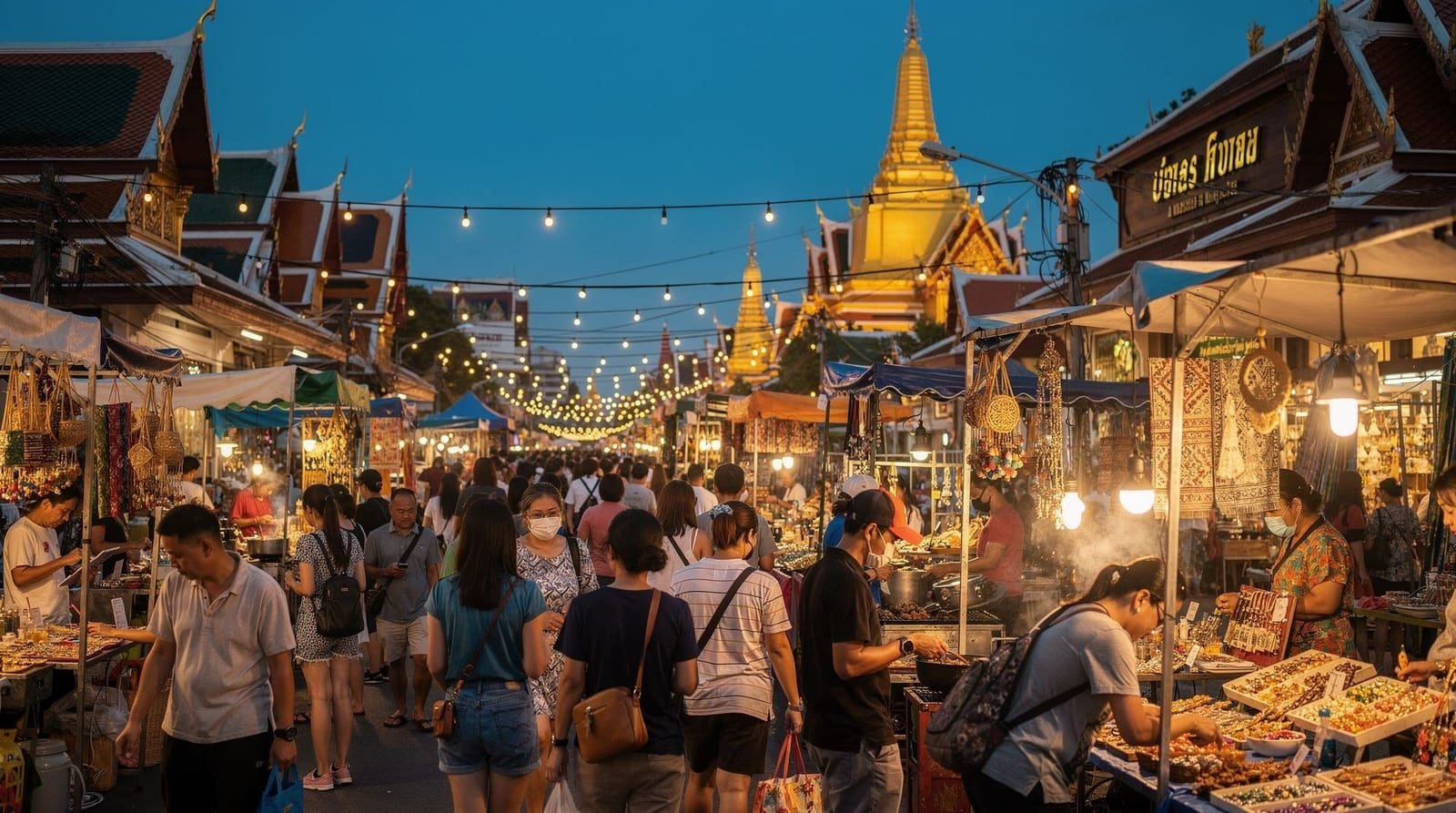
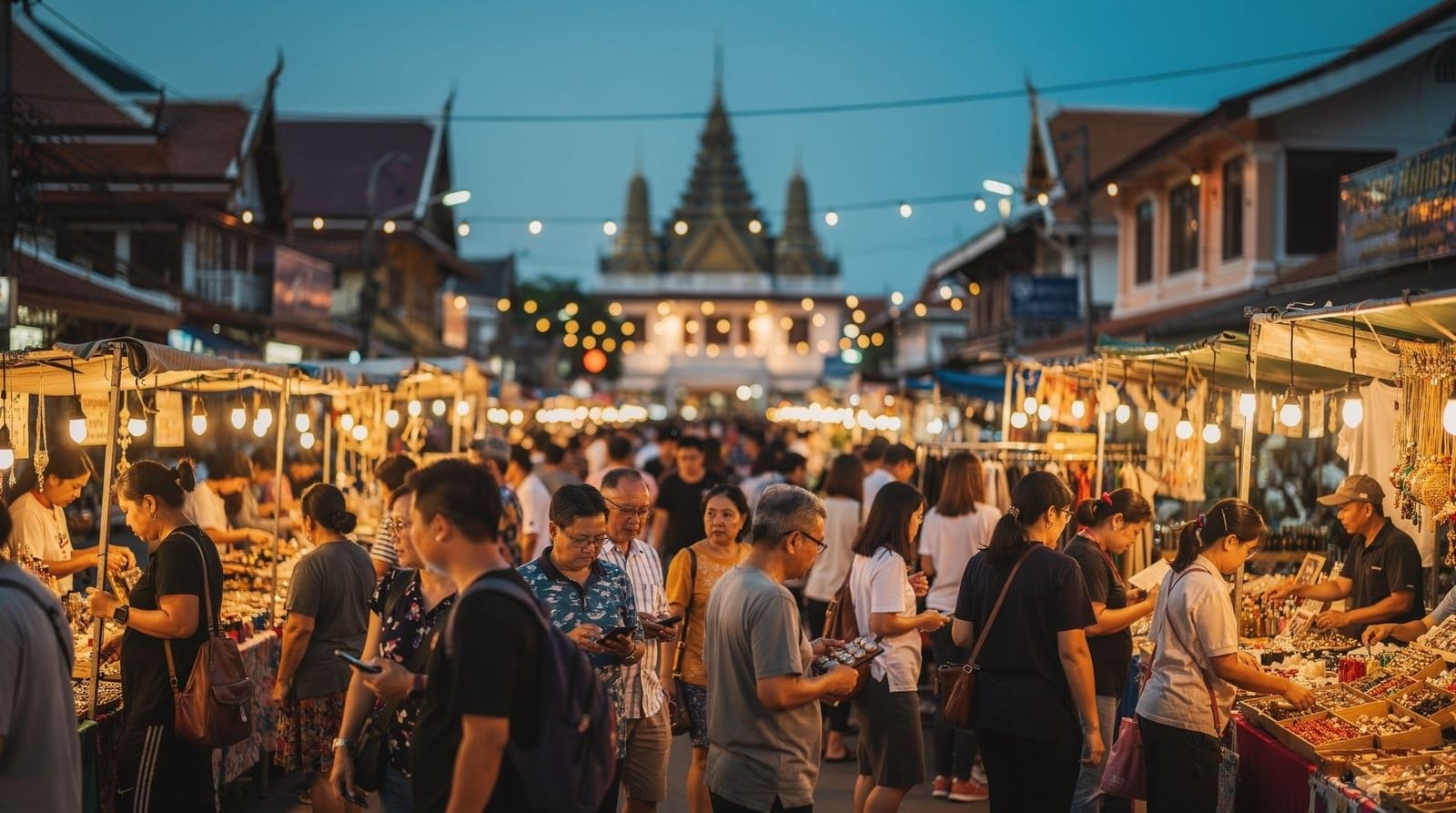
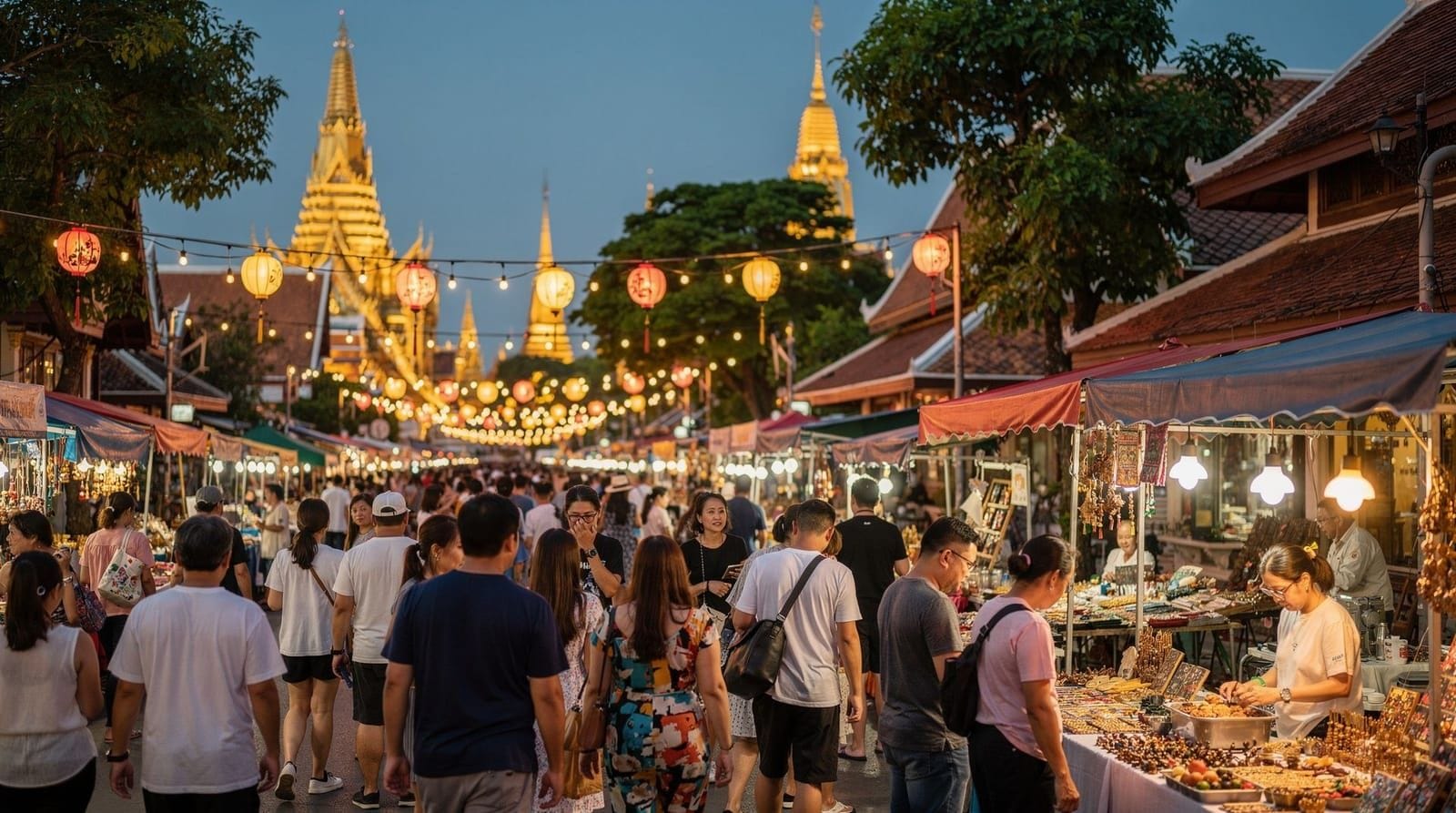
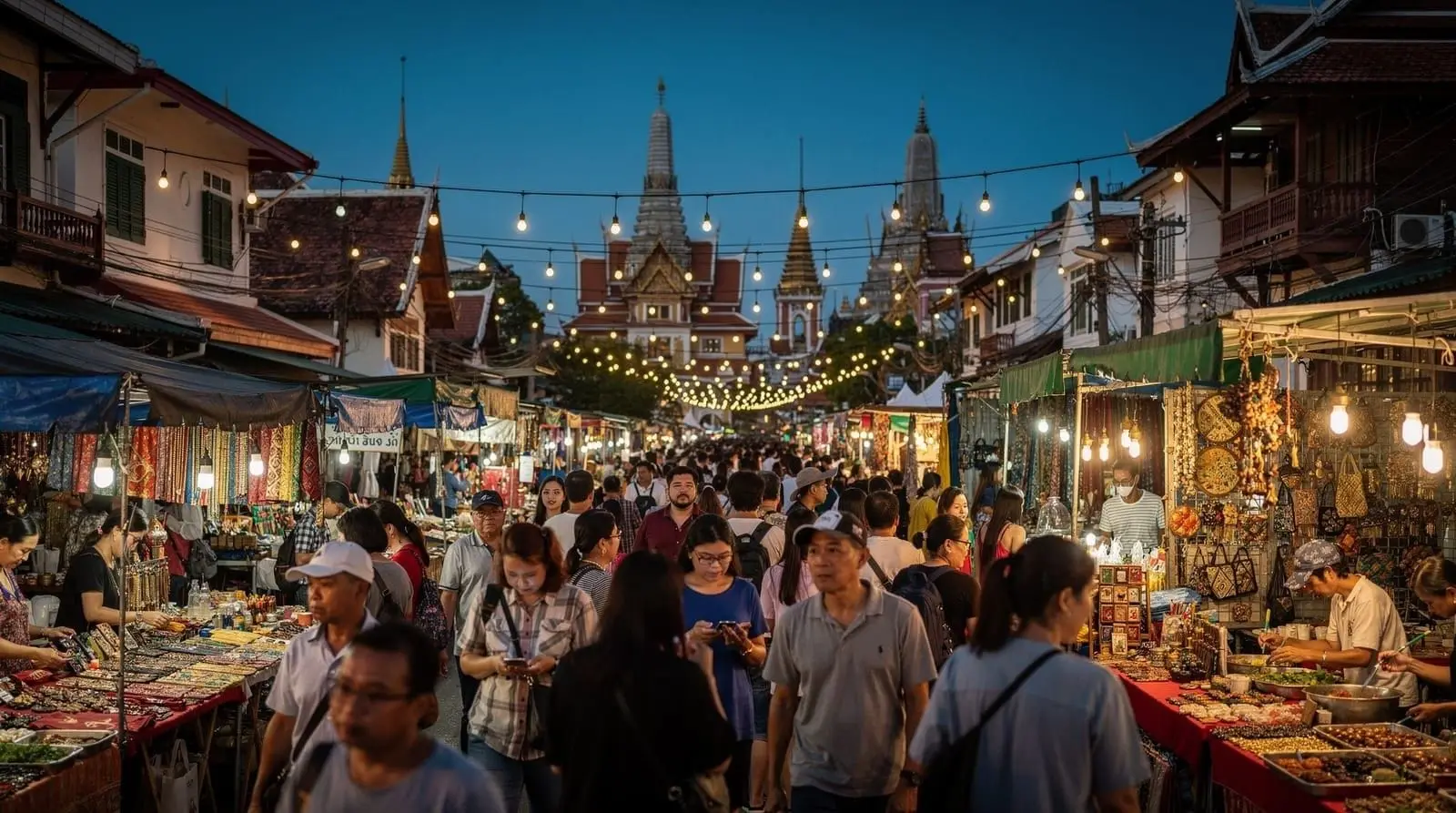
By 6pm the entire length of Ratchadamnoen Road had disappeared under a river of people, and I remember thinking that no amount of reading about the Sunday Walking Street beforehand had actually prepared me for what “busy” meant in practice. This is the day as it unfolded, hour by hour, because the market changes character so completely as it goes that a single description can’t capture it.
4pm: the calm before
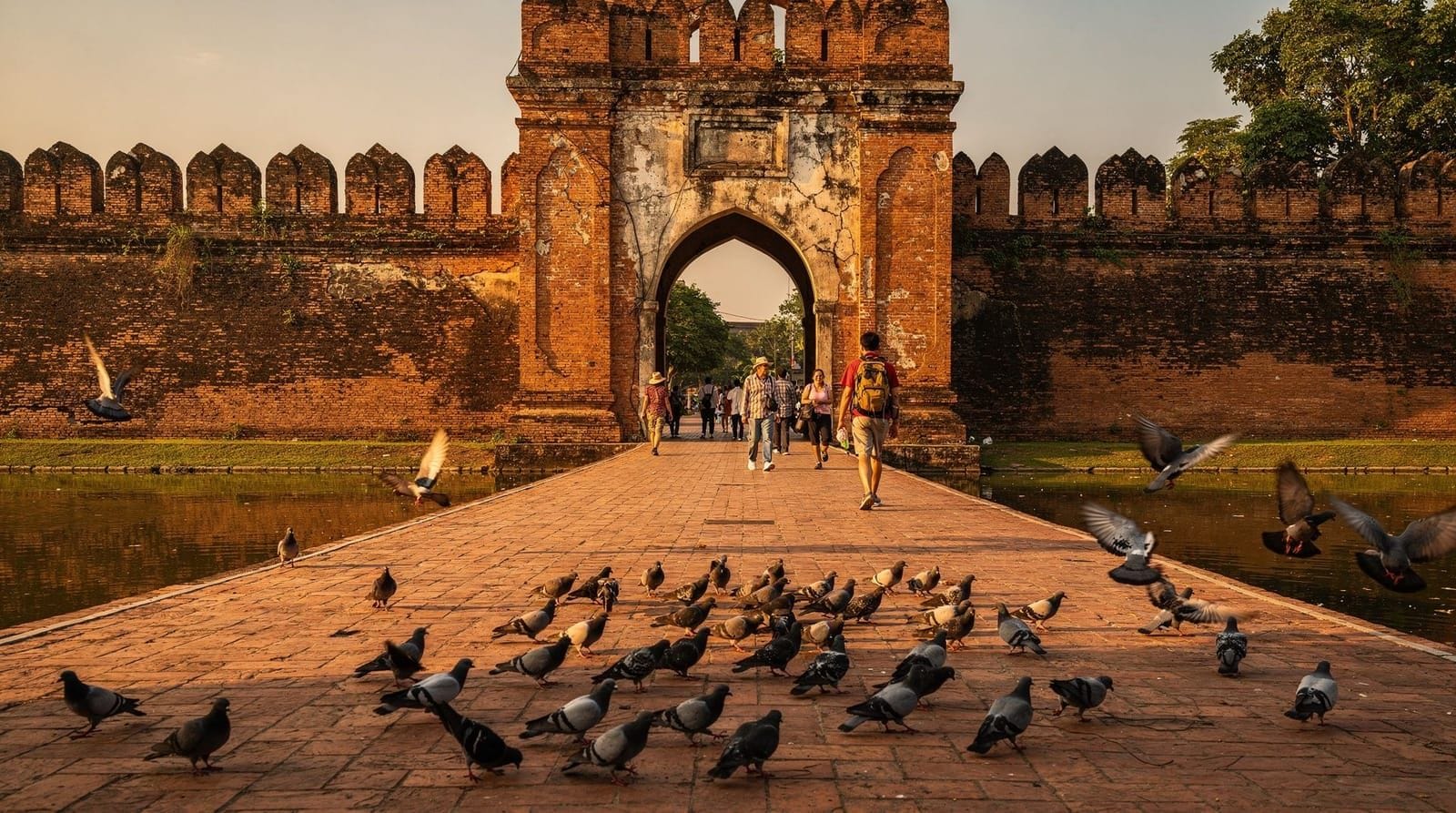
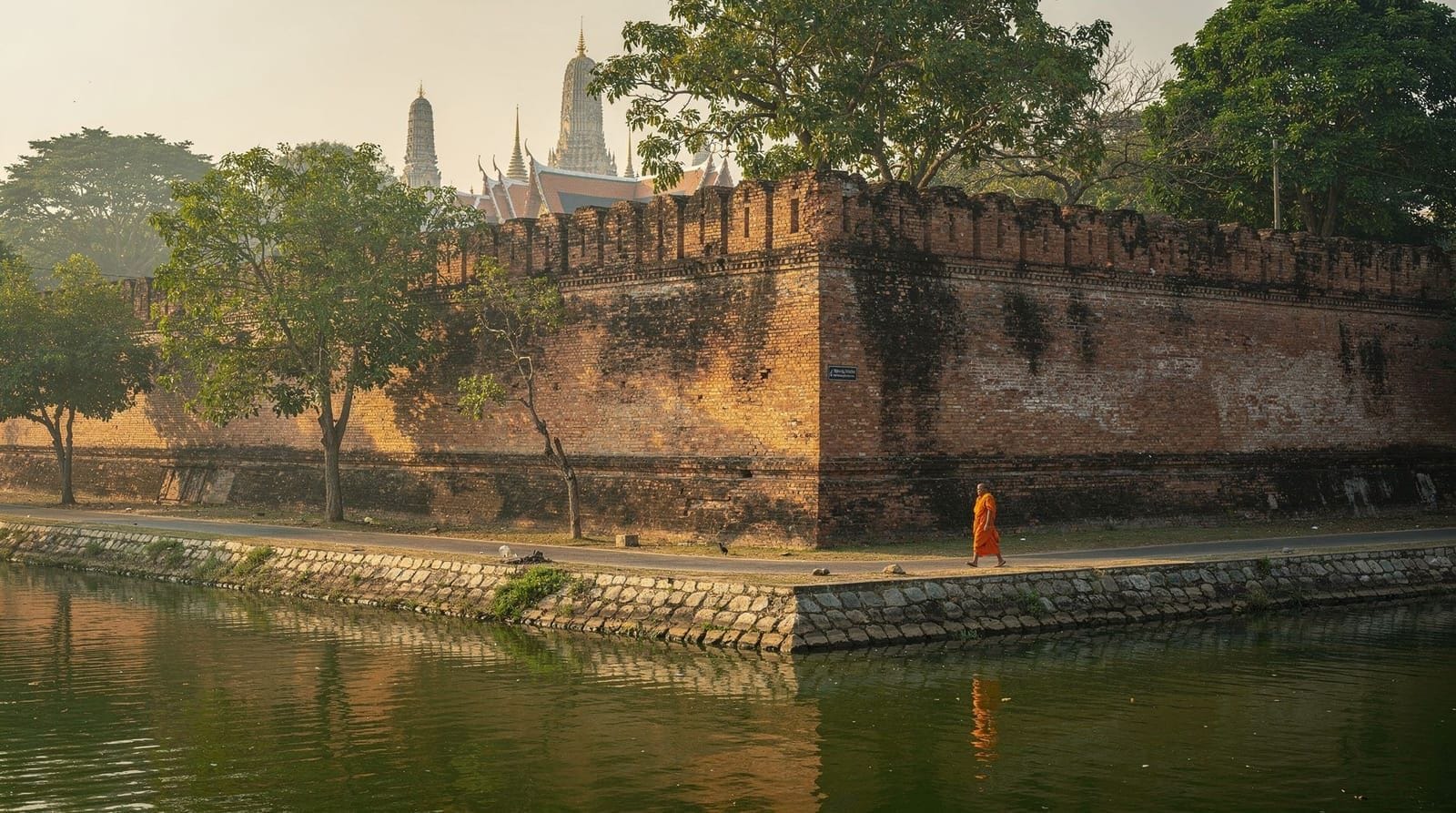
We arrived early, before the street had officially closed to traffic, and caught the last twenty minutes of vendors setting up — unrolling tarps, arranging silver jewelry into neat rows, testing the little clip-on lights that would illuminate their stalls after dark. Tha Phae Gate, the traditional starting point, was quiet enough that we could photograph the old brick without anyone in frame, a rare thing given how central this spot is to almost every Chiang Mai postcard. A handful of monks passed through on their way somewhere else entirely, unbothered by the transformation happening around them.
This early window, we learned, is when the serious hand-crafted goods vendors set up first — hill-tribe textile sellers, wood-carvers, silversmiths who won’t necessarily be easy to find later once the crowd thickens and the food stalls start dominating foot traffic. If buying something specific and well-made matters more to you than the atmosphere, arriving by 4:30 rather than the more typical 6 or 7pm start makes a real difference.
5:30pm: the street closes and fills
Around 5:30, barriers went up at both ends and the road itself became the market — no cars, no motorbikes, just an unbroken line of stalls stretching the length of the Old City’s main east-west axis. This is the point where the crowd density starts becoming noticeable but is still manageable; we moved at a normal walking pace, stopped freely to browse, and didn’t feel jostled. Our Sunday Walking Street guide recommends this window specifically for browsing before the peak crowd arrives, and having lived it, I’d repeat that advice without hesitation.
7pm: the peak, and the actual test of patience
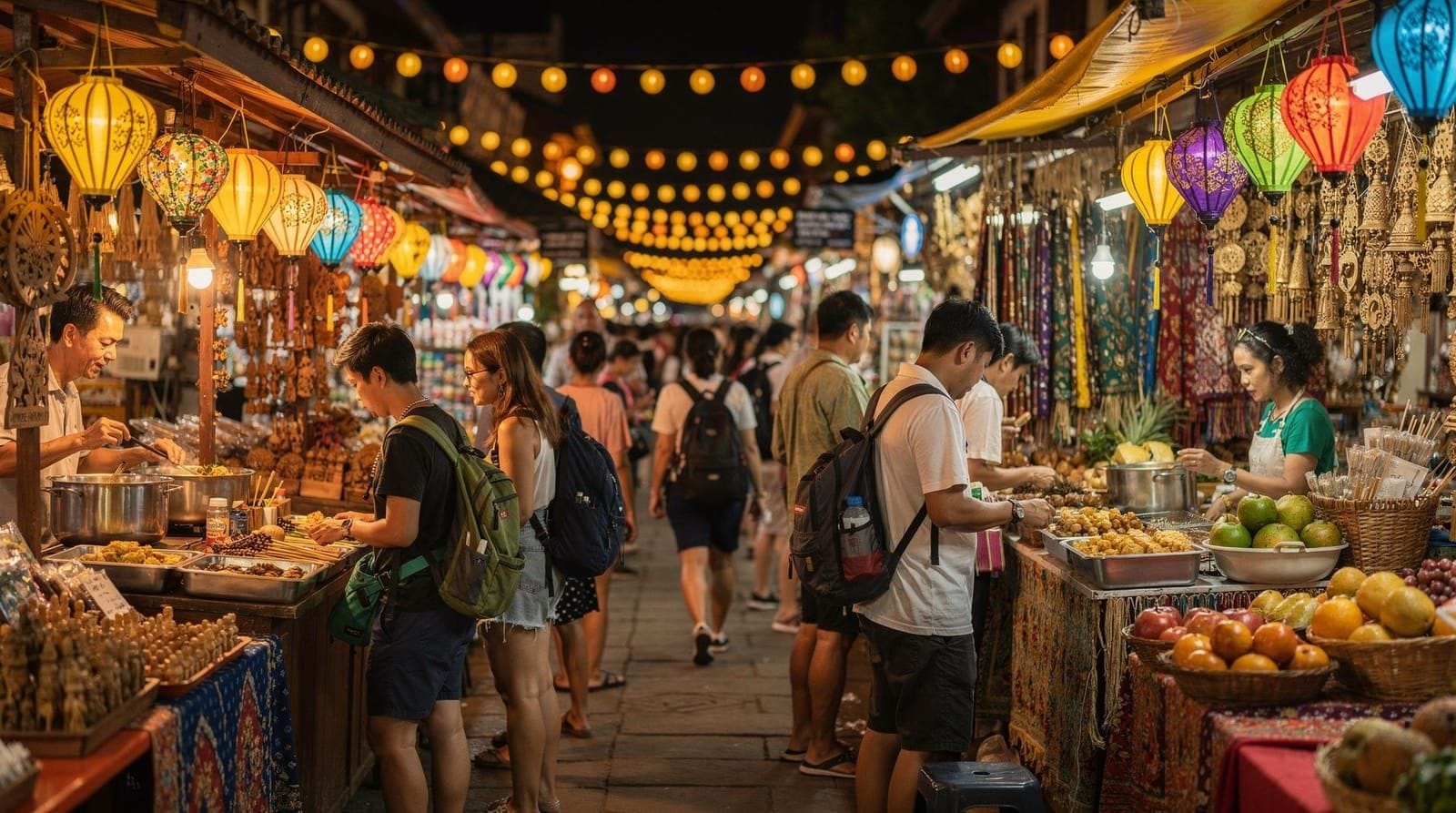
By 7pm, movement had slowed to something closer to a shuffle. The width of the street, generous by daytime standards, felt genuinely inadequate for the number of people trying to move through it in both directions simultaneously. This is when the market’s more chaotic reputation earns itself — elbow-to-elbow in places, food stall queues spilling into the walking lane, and a background noise of overlapping music from temple courtyards that have been converted into makeshift food courts for the evening.
It’s also, honestly, the most atmospheric hour of the whole event. The temple courtyards just off the main road — several wat compounds along the route open their grounds for seating and additional food vendors — offer both a slight crowd reprieve and some of the best food of the night. We ate at one of these courtyard setups, described in more detail in our Sunday market food guide, and the combination of temple architecture lit up against the evening sky, live acoustic music from a busker in the corner, and khao soi eaten sitting cross-legged on a straw mat is the single image from this trip I’d point to as distinctly “Chiang Mai” over anything else we did.
8pm: the food we almost missed
Somewhere between the peak crush and the temple courtyard detour, we nearly walked straight past what turned out to be the best food stall of the night — a woman working a single wok set up on a folding table, no signage beyond a laminated photo menu, making khanom buang (crispy Thai crepes folded over a sweet meringue and shredded coconut filling) to order. The queue was maybe eight people deep, entirely locals, which in a market this saturated with tourist foot traffic was itself a signal worth trusting. We waited twelve minutes for two crepes that cost 20 THB each and were, without exaggeration, better than a similar dish we’d paid triple for at a sit-down restaurant earlier in the week.
That’s the real lesson of walking the market slowly rather than beelining for the well-photographed stalls: the best food is often the stall with the longest local queue and the least English signage, not the one with a laminated menu translated into six languages and a line of visibly foreign customers. We started actively looking for exactly that signal — local crowd, minimal tourist-facing marketing — for the rest of the evening, and it didn’t steer us wrong once.
The massage chairs and the unexpected rest stop
By 8:30, feet aching from nearly four hours of standing and shuffling through crowds, we gave in to one of the roadside massage setups that appear along quieter side stretches of the route — plastic chairs lined up in a row, masseuses offering 15-minute foot massages for around 150 THB. It felt like a slightly absurd thing to do in the middle of a market visit, but every single other visitor sitting in that row of chairs looked exactly as relieved as we felt, and it turned into an unplanned twenty-minute rest that let us finish the last stretch of the market with genuinely renewed energy rather than trudging through it exhausted. If a day at Sunday Walking Street starts to feel like an endurance event rather than a pleasure, these roadside massage stops are a legitimate, inexpensive way to reset mid-evening rather than calling it a night early.
What was worth buying, and what wasn’t
Bargaining here is expected but should be gentle — we’d read our bargaining etiquette guide beforehand and it matched what we observed: vendors expect a counter-offer, usually settle somewhere between the ask and a 20-30% reduction, and visibly disengage if the haggling gets aggressive or disrespectful rather than good-natured. We picked up hand-poured candles, a set of ceramic bowls from a stall that clearly made its own stock rather than reselling imports, and a hand-embroidered textile piece from one of the hill-tribe vendors we’d spotted during the early calm window. Our best souvenirs guide is a genuinely useful reference for distinguishing the handmade stalls worth supporting from the identical mass-produced trinkets — elephant pants, fridge magnets, keychains — sold at nearly every third booth regardless of theme or origin.
How it compares to the alternative
We’d also visited the Night Bazaar earlier in the week, and the contrast is worth stating plainly for anyone deciding between the two rather than doing both: the Night Bazaar runs every night, feels more permanent and commercial, and leans harder into souvenir-shop density; Sunday Walking Street runs once a week, feels more like a genuine community event that happens to include commerce, and rewards showing up specifically for the atmosphere rather than treating it as a shopping errand. Our comparison of the two markets goes deeper into which suits which kind of traveler, but having done both back to back, Sunday Walking Street was the one we’d insist a first-time visitor prioritize if only one fits the schedule.
Weather, and the one Sunday it rained
We happened to return to the market on a second Sunday during the same trip, and that visit fell during a light but steady rain that started around 6pm and didn’t let up. It was a genuinely different event under those conditions — vendors pulled tarps up over their stalls rather than laying goods out openly, the crowd thinned by maybe a third compared to the dry evening we’d experienced the week before, and the temple courtyard food stalls became noticeably more appealing simply for their covered seating. We’d assumed rain might cancel or meaningfully shrink the market, and it didn’t; vendors here are clearly used to operating through Chiang Mai’s frequent evening showers, and the market carried on with only a slightly reduced footprint and a much-appreciated increase in elbow room. If a rainy Sunday coincides with your visit, don’t assume the market is off — bring a light rain layer and go anyway, since the thinner crowd is arguably a fair trade for slightly damp shopping.
The one section we’d skip next time
In the interest of full honesty, not every stretch of the market earned its length. The final few hundred meters before the market’s western end, closer to Wat Phra Singh, thinned out into a repetitive run of identical mass-produced souvenir stalls — the same printed elephant t-shirts, the same phone cases, the same keychains we’d already seen a dozen times over by that point in the evening. By the time we reached that stretch, close to 9pm and genuinely tired, it felt like padding rather than a highlight, and in hindsight we’d have turned back toward the temple courtyards and the busier central stretch rather than pushing all the way to the far end out of a sense of obligation to “finish” the market. Not every kilometer of a linear street market rewards the walk, and knowing where the genuinely interesting stretch ends is as useful as knowing where it begins.
9:30pm: the wind-down
By 9:30, the crowd had thinned considerably and some of the earlier vendors were already breaking down their stalls, tarps rolled and lights unclipped in reverse of the setup we’d watched hours earlier. Walking back through the now-half-empty street toward our guesthouse, past stall owners sharing food and quiet conversation before the last pack-up, felt like seeing the whole day’s arc complete itself — from calm, to crush, to calm again, all within about six hours on a single road that spends the other six days of the week as ordinary city traffic.