Chiang Mai mistakes we made (so you don't have to)
Nobody plans a trip perfectly, and we’re not going to pretend otherwise. Some of these mistakes cost us money, one cost us a genuinely uncomfortable afternoon, and one we’re still a little embarrassed about. Writing them down here mostly because we wish someone had told us plainly instead of burying the warning in a “top tips” list buried under ten other generic ones.
We nearly booked an elephant riding camp instead of a real sanctuary
Early in our planning, we booked what a review site called an “elephant sanctuary” without digging past the name. It was only when we cross-checked the operator against a few forums that we realized riding was still part of the package, dressed up with sanctuary language in the marketing. We cancelled and rebooked with an operator that’s explicit about no riding, no bathing-as-a-photo-op, and elephants that were rescued from logging or riding camps rather than bred for tourism. It cost us a rebooking fee, but it was worth it. If you’re deciding between operators, our honest case against riding camps and guide to choosing an ethical sanctuary go through the actual red flags to look for — mostly whether riding, elephant-painting, or forced “tricks” appear anywhere in the description, however small the mention.
Small-group ethical elephant sanctuary visitWe underestimated how early Doi Suthep gets crowded
We showed up at Doi Suthep around 10am, which felt reasonable to us — mid-morning, not the crack of dawn. It was already busy enough that the parking situation was chaotic and the naga staircase had a genuine queue for photos at the top. We’d read “go early” in more than one place and mentally translated that into “not too late,” which was the wrong read. Early actually means before 8am if you want the temple with any breathing room, particularly on weekends when domestic tour groups arrive in force, and we ended up going back a second time on a different morning just to get the calmer version of the visit we’d originally pictured.
We rented a scooter without checking the actual license requirements
This is the mistake we’re least proud of. We rented a scooter for a day thinking a standard driver’s license would cover it, without registering that Thailand requires an International Driving Permit with a motorcycle endorsement, or a Thai motorcycle license, to legally ride one — and that most travel insurance policies explicitly exclude scooter accidents if you’re riding without the correct permit. Nothing went wrong for us, which in retrospect is exactly the problem: we got away with a real gap in coverage that could have been financially and physically serious if it hadn’t gone fine. We since read the actual rules properly in our car and scooter rental guide, and if we do it again, it’ll be with the correct permit sorted in advance, or not at all. The rental shop, worth noting, never once asked to see the endorsement — which tells you plainly that the legal requirement and the shop’s actual practice are two very different things.
We planned our trip without checking burning season dates
We picked our travel dates around flight prices and a friend’s recommendation, without cross-checking them against the region’s agricultural burning calendar. We got lucky — we landed in a period with better-than-average air quality for the season — but it was luck, not planning. Anyone flying to Chiang Mai between February and April specifically should check current conditions and read our burning season guide before locking in nonrefundable bookings, especially if traveling with kids or anyone with asthma. A friend who visited the following year during a genuinely bad burning week described visibility bad enough that Doi Suthep’s summit view was essentially a grey wall, which put our own lucky timing in perspective.
We tried to negotiate at a fixed-price stall and just looked silly
Bargaining is genuinely part of shopping culture at some of Chiang Mai’s markets, but not all of them, and we didn’t know the difference going in. We tried to haggle over a printed-price bag of dried mango at a stall with a clearly displayed price tag, and got a polite but firm “fixed price” in response, which — fairly — made us feel a bit foolish. The actual rule of thumb, we learned afterward: haggling is normal and expected at handicraft stalls without visible pricing, especially at markets like Saturday Walking Street, and pointless (sometimes mildly rude) anywhere with a printed price already showing.
We booked our Yi Peng lantern experience too late
We looked into the Yi Peng lantern festival about three weeks before our trip and found the well-regarded, officially licensed release events already sold out, leaving us with pricier resale options and one operator we weren’t fully confident in. The festival’s popularity has grown to the point that the legitimate ticketed releases sell out months, not weeks, in advance. Next time we’d check dates and tickets as soon as travel dates are locked, not as an afterthought closer to departure, and we’d treat any last-minute “guaranteed availability” offer we came across with real suspicion given how tight the legitimate supply actually is.
We over-packed for heat and under-packed for cool-season evenings
We packed almost exclusively for daytime heat and had nothing warmer than a light cotton shirt for evenings, which was a genuine problem on cool-season nights in December when temperatures dropped enough that we bought a cheap fleece at a night market just to be comfortable walking around after dark. It wasn’t a disaster, just an avoidable 300-THB (roughly $8) purchase that a slightly more careful packing list would have prevented.
We assumed one day would cover the Old City temples properly
We tried to fit Wat Phra Singh, Wat Chedi Luang, and Wat Chiang Man into a single afternoon along with lunch and some market browsing, and ended up rushing the last temple in a way that didn’t feel worth the visit. Each of these temples rewards a slower pace than we gave them — even 20 unhurried minutes per temple, with time to actually sit somewhere quiet, is a meaningfully different experience than the speed-run version we did. We’d split Old City temple visits across two half-days if we went back.
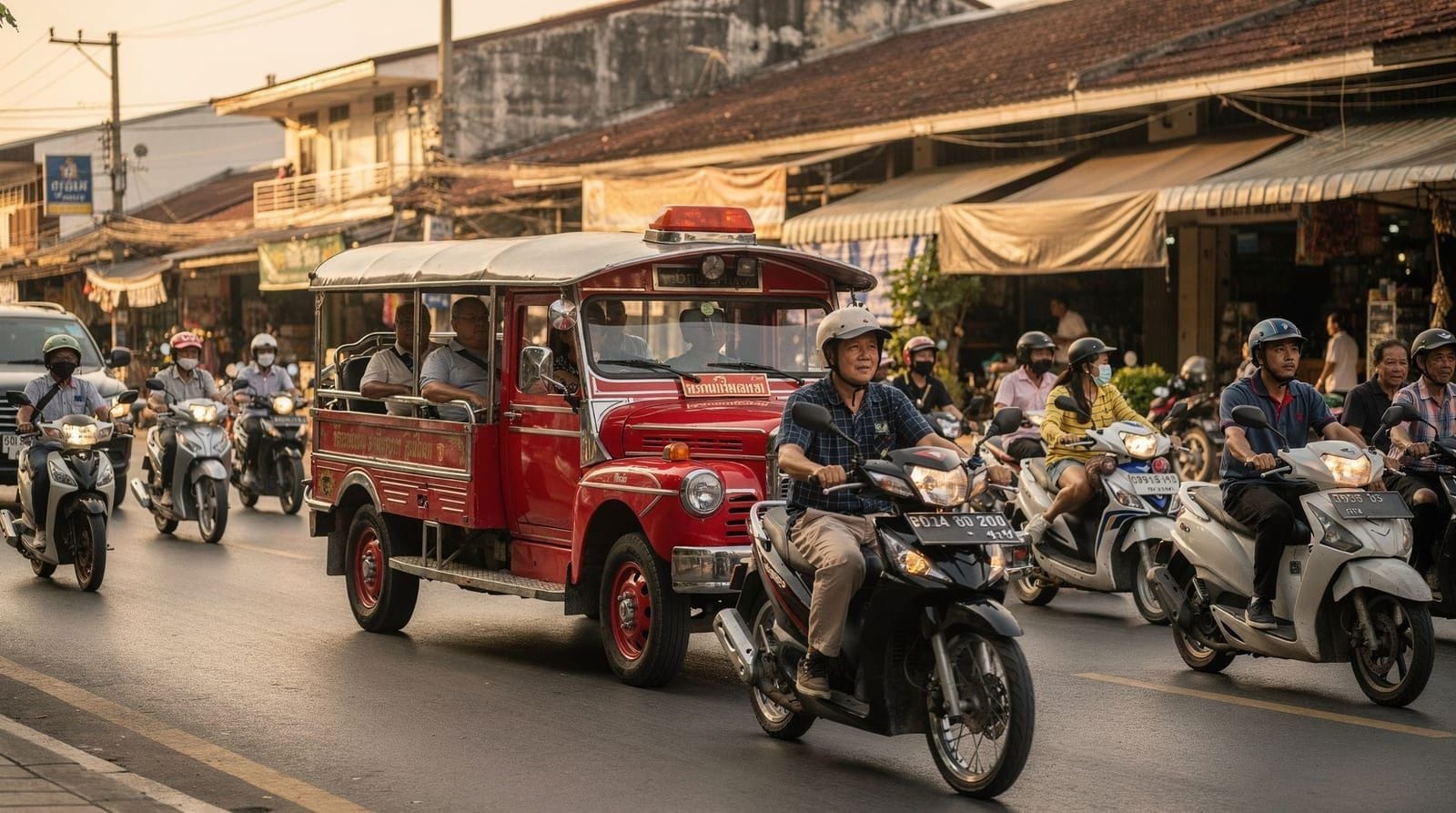
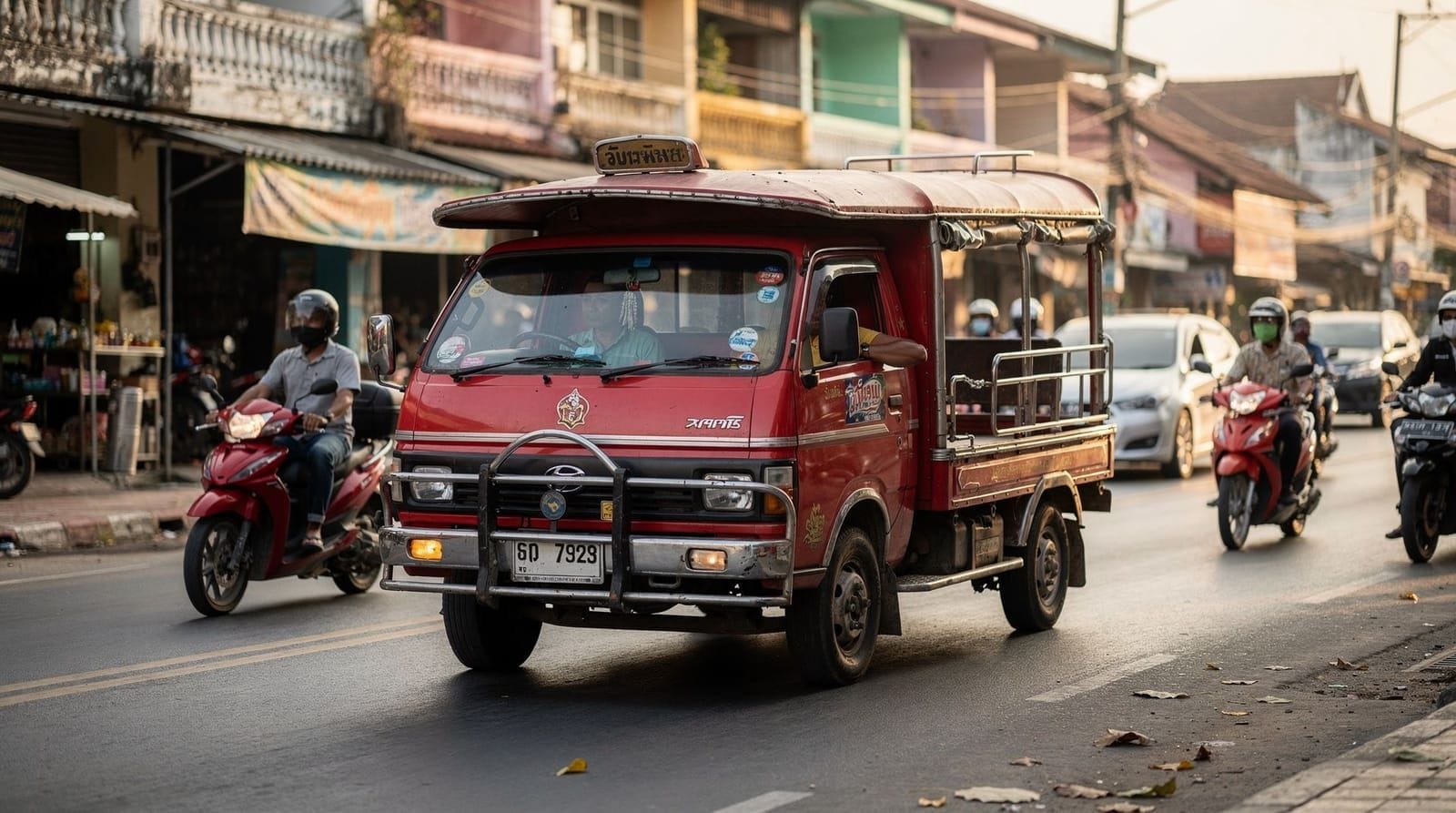
We didn’t confirm our tuk-tuk fare before getting in
Twice, we got into a tuk-tuk assuming a “normal” fare would apply and didn’t confirm the price upfront, both times ending up paying noticeably more than a Grab quote for the same route would have cost. Neither driver was doing anything illegal — there’s no meter requirement for tuk-tuks — but agreeing a price before the doors close (or asking for a Grab quote as a benchmark first) would have saved us real money across the trip, not just those two rides. Our guide to common scams covers this and a few other pricing situations worth watching for, none of which are dangerous exactly, just the kind of small overcharge that adds up.
We carried too much cash and not enough small bills
We’d read that Thailand is largely cash-based outside major hotels and overcorrected by withdrawing a large sum at once from an airport ATM, which came out almost entirely in 1,000-THB notes. Most street stalls, songthaew drivers, and small shops genuinely struggle to break a note that large for a 40-THB purchase, and we spent an awkward first couple of days either overpaying small vendors who couldn’t make change or apologetically asking shops to break bills for us. Smaller, more frequent ATM withdrawals, and actively seeking smaller denominations at the first opportunity — a 7-Eleven purchase, a bigger restaurant bill — would have avoided this entirely. Our money and ATM guide has the specifics we wish we’d read before that first withdrawal.
We didn’t research tourist-trap restaurants near the big sights
We ate our first two dinners at restaurants directly across from major attractions — one near Night Bazaar, one just outside Wat Phra Singh — assuming proximity to a landmark meant reasonable quality by association. Both were mediocre and priced noticeably above what equivalent food cost a few streets further from the tourist core. It’s an obvious pattern in hindsight, and one covered plainly in our tourist traps guide, but we’d read that advice before the trip and still fell for it twice in our first 24 hours simply out of convenience and jet-lagged laziness.
We didn’t build in a genuine rest day
We scheduled every single day of an eight-day trip with at least one major activity, assuming we’d naturally slow down if we needed to. We didn’t, mostly out of a sense that we should be “making the most” of a trip we’d spent real money getting to. By day six we were both running on fumes, short-tempered over minor things, and enjoying the activities noticeably less than the ones earlier in the trip. A single deliberately unscheduled day, ideally around the midpoint, would have made the second half of the trip meaningfully better rather than just longer.
None of these mistakes ruined the trip. Most of them are the kind of thing you only learn by getting slightly burned once. But if even one of these saves you a rebooking fee, a cold evening, or an uncomfortable haggling moment, it was worth writing down honestly rather than smoothing over for the sake of a tidier trip report.