Things that surprised us in Chiang Mai
We’d read a stack of guides before landing in Chiang Mai, and we still got a handful of things wrong. Some of that is on us for skimming the practical stuff and jumping straight to the temple photos. Some of it is just that a city doesn’t fully make sense until you’re standing in it, sweating, trying to flag down a red truck. This is the list of things that actually surprised us, in the order we ran into them, kept honest rather than smoothed over for the highlight-reel version.
The moat is real, and it changes how the Old City works
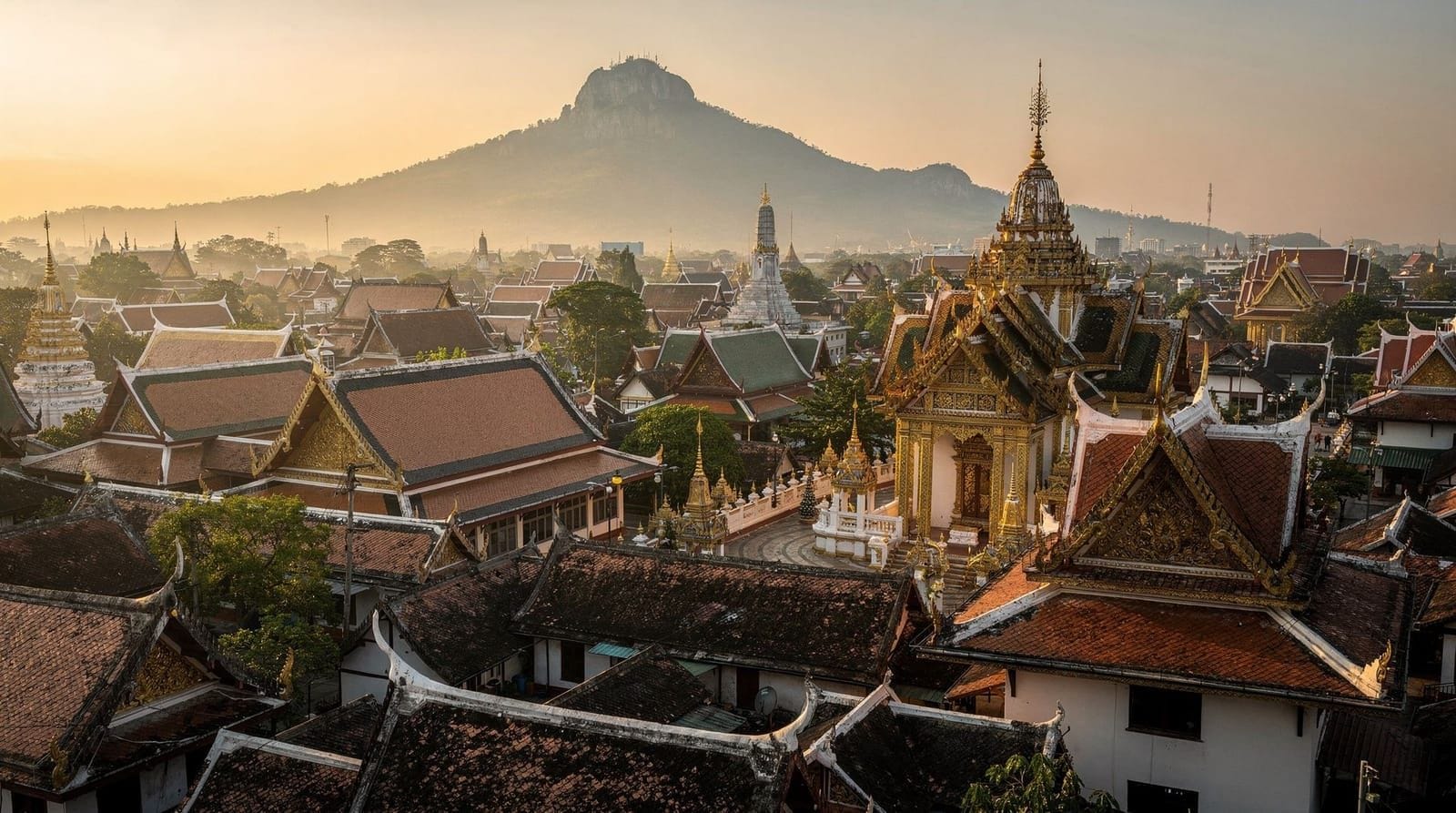
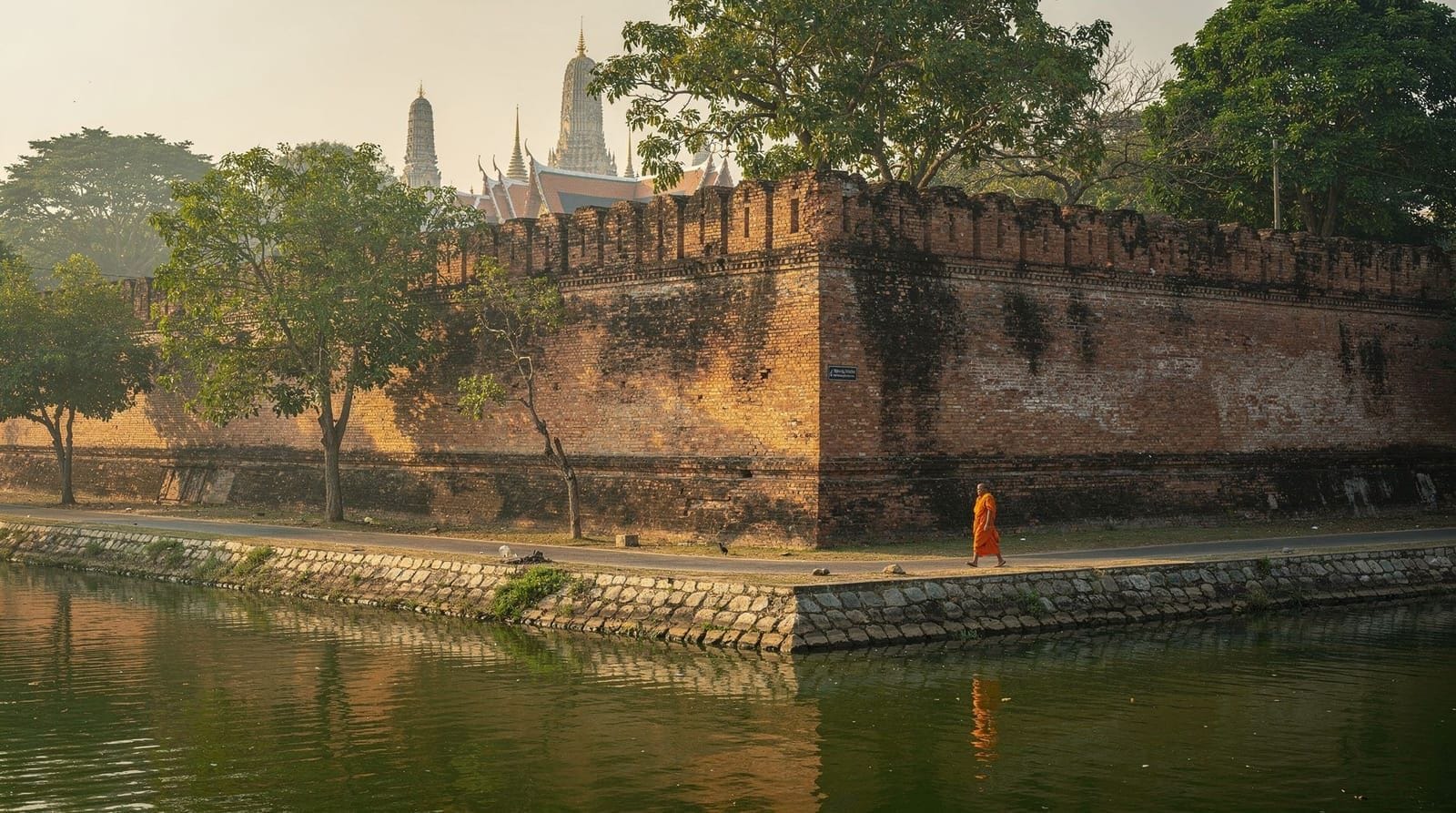
We knew Old City was “walled,” but we pictured something like a single decorative gate you photograph and move on from. It’s actually a full rectangular moat with fragments of the old brick wall still standing at each corner and gate, and it genuinely shapes how traffic and walking routes work inside it. The one-way lanes inside the moat square are narrow, motorbike-dense, and not always intuitive on a map — we did more backtracking on foot in our first two days than we expected from a place this compact. If you’re staying inside the moat, budget extra time to get properly oriented before you plan anything time-sensitive, like an early Grab pickup to the airport, since a “ten-minute walk” on the map can easily become twenty once you’ve missed a turn down a one-way soi.
Burning season smoke is a real planning variable, not a footnote
We’d seen “haze season” mentioned in passing in a couple of guides and assumed it meant slightly hazy photos. It’s more than that. From roughly February through April, agricultural burning across the region and neighboring countries pushes air quality into territory that genuinely affects how much time you want to spend outdoors, especially if you have respiratory issues or are traveling with kids. We happened to visit in a shoulder month and got lucky, but we now tell everyone to actually check the specific dates before booking, not just skim past the warning. Our burning season guide has the month-by-month reality rather than the vague version we’d read elsewhere, including which weeks tend to be worst and which shoulder periods are usually fine.
The coffee scene is genuinely serious, not just Instagram bait
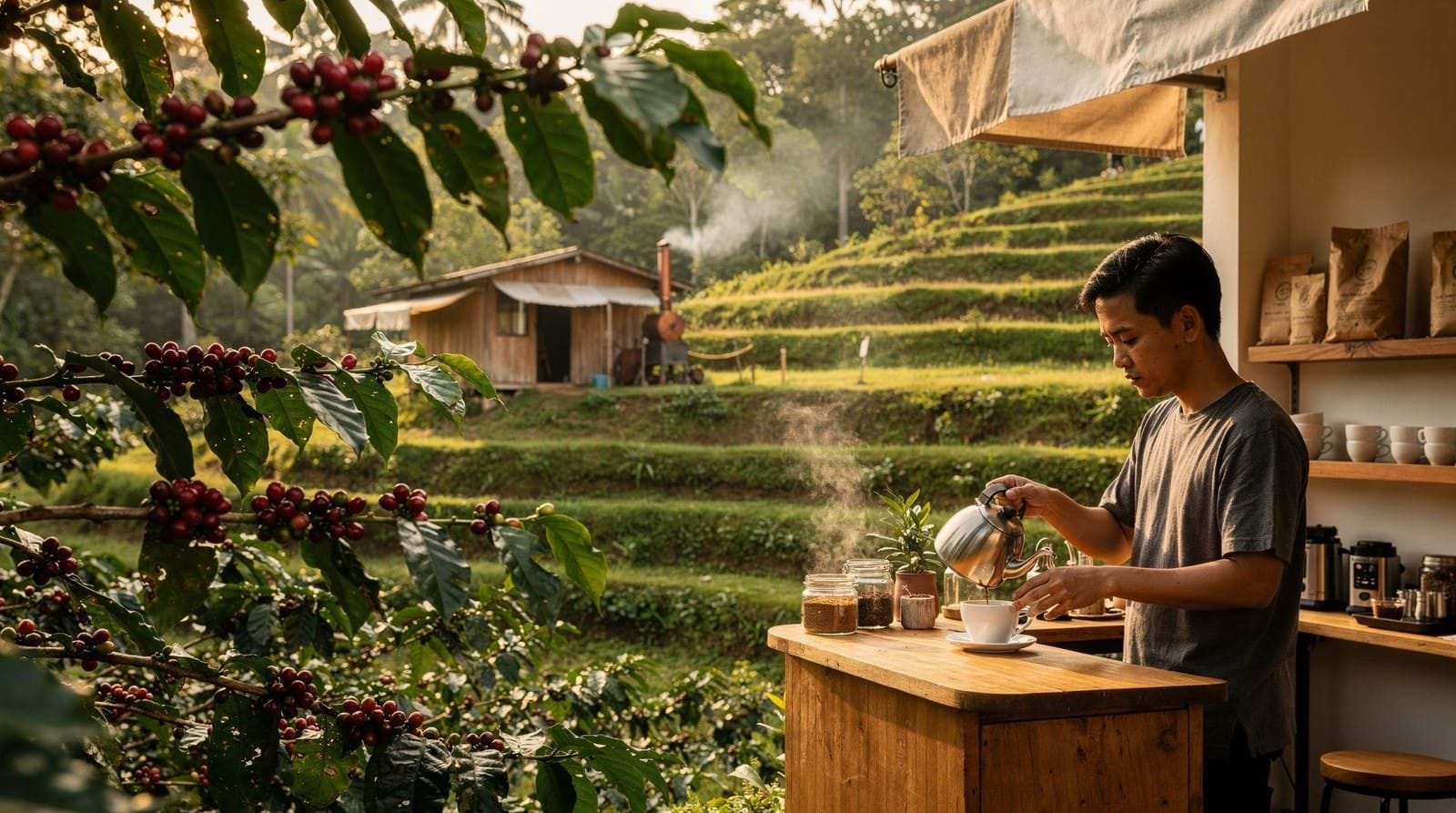
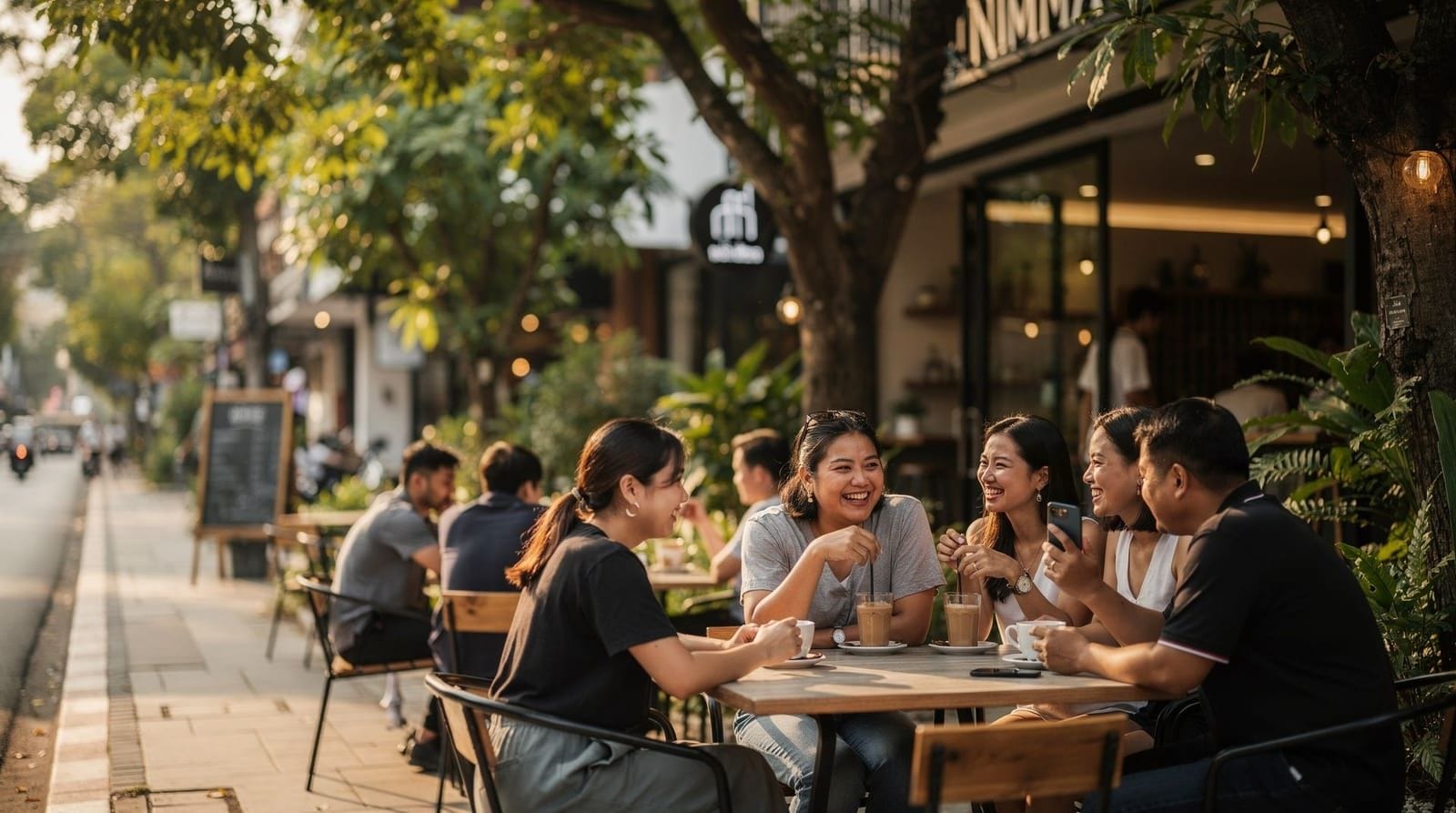
We went in assuming the elaborate latte-art cafés of Nimman were mostly styled for photos, with the coffee itself as an afterthought. That was wrong. Northern Thailand grows real coffee at altitude in Chiang Rai and Chiang Mai provinces, and a meaningful number of Nimman and Old City cafés are sourcing single-origin northern Thai beans and roasting with real intent, not just importing pre-roasted beans and building a nice interior around them. A flat white at a serious specialty café runs 90–140 THB (about $2.50–$4), which is not “cheap Southeast Asia” pricing, but the quality justified it more often than we expected. More on where we actually went in our coffee culture guide.
Temples are still active places of worship, not museum pieces
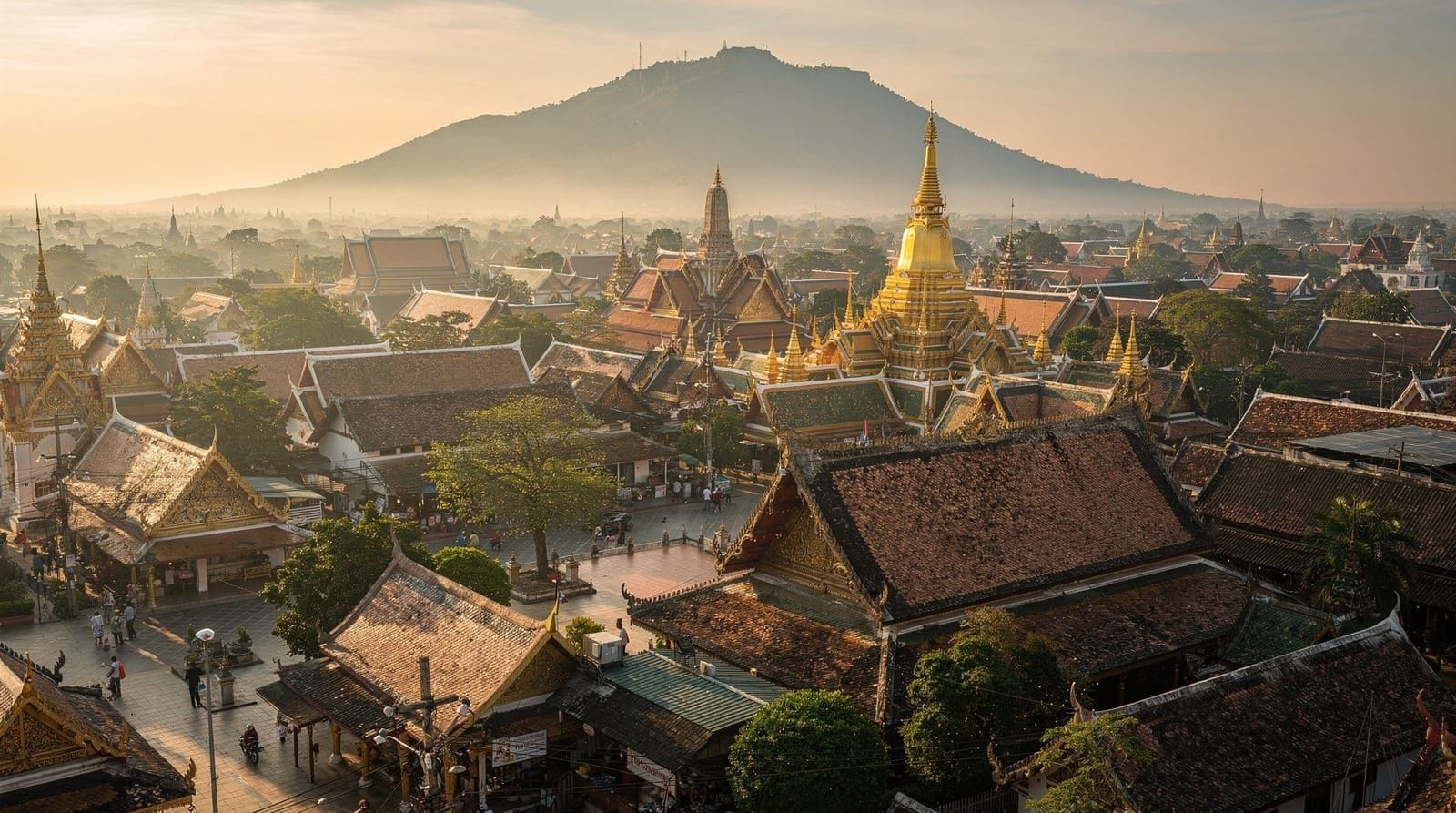
This sounds obvious written down, but it changes your behavior once it clicks. At Wat Umong and several of the Old City temples, we walked in expecting a tourist attraction with monks as scenery, and instead found ourselves genuinely in the way of people doing actual merit-making rituals, monks in quiet conversation, and locals praying at specific times of day. Nobody was rude about it, but we felt the mismatch in our own behavior — talking too loudly, wandering into areas that weren’t really meant for photo-taking. We got better at reading the room after the first couple of visits, mostly by watching what locals did before assuming a space was fair game for tourists.
Doi Suthep’s view is better than the photos suggest, but the crowd management is real
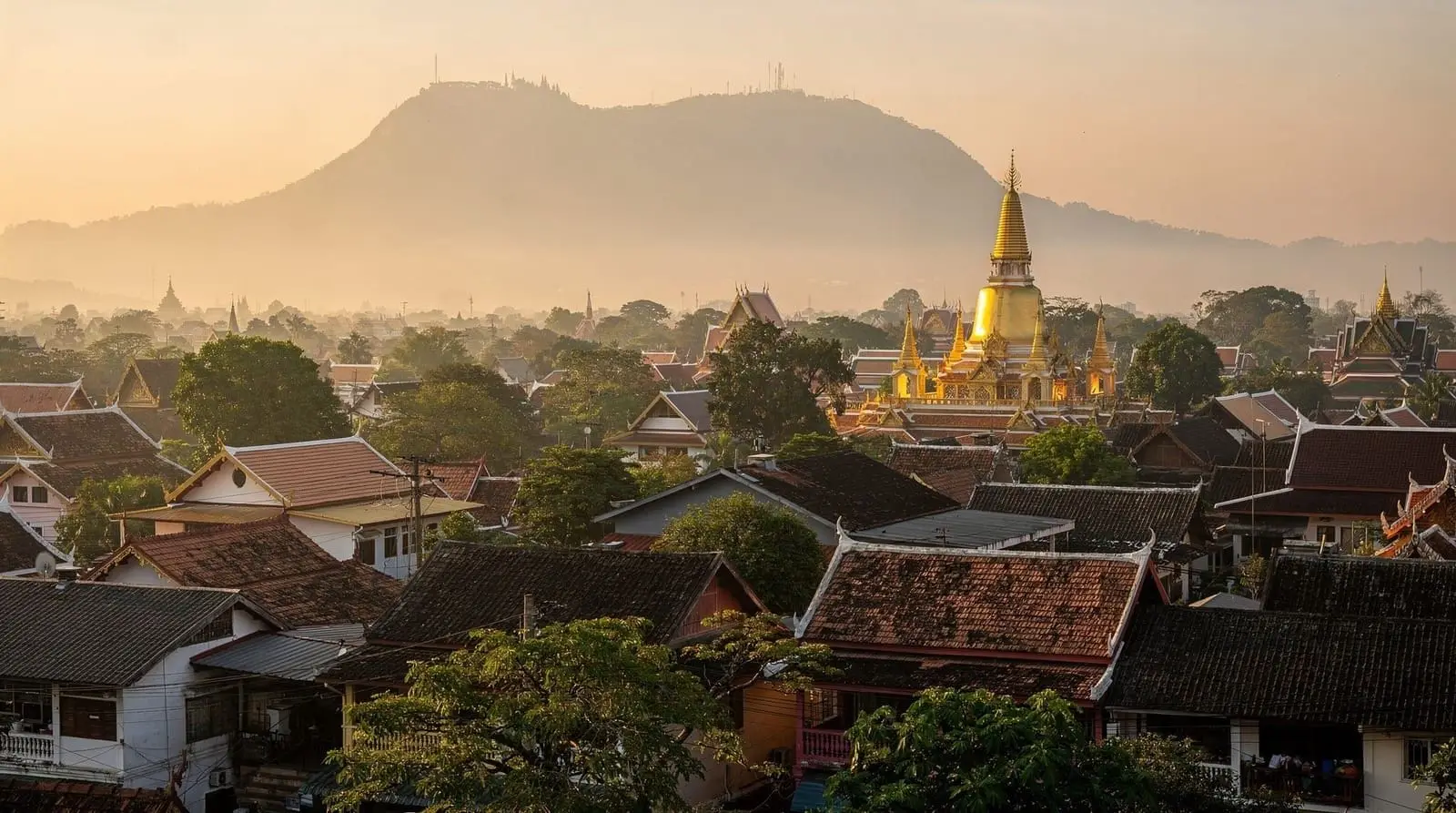
The naga staircase up to Wat Phra That Doi Suthep photographs beautifully, and the actual view over the city from the temple terrace is better in person than any wide-angle shot conveys — you can genuinely trace the moat’s rectangle from up there on a clear day. What surprised us was how organized (and at times congested) the whole operation is: paid parking tiers, a funicular alternative to the stairs, and tour buses arriving in waves that create real bottlenecks at the entrance gate around mid-morning. Going up before 8am solved most of it for us, and we’d genuinely rank this as the single highest-leverage timing decision of the whole trip.
Doi Suthep temple and Wat Pha Lat monk’s trail hikeSongthaews are a real transit system, not a novelty
The red trucks (songthaews) looked, from photos, like a quaint tourist thing. They’re actually the backbone of how a lot of the city gets around, with semi-fixed routes, flat-ish fares around 30–50 THB (roughly $1) for a shared ride within the city, and a flagging-down etiquette that took us a couple of tries to get right — you wave, tell the driver your destination, and they either nod you in or shake their head if it’s out of their way. Grab exists and works well for point-to-point trips, but for short hops around the Old City and Nimman, songthaews are cheaper and often faster once you know how to use them, and riding one shared with three or four other passengers heading the same general direction turned out to be one of the more genuinely local moments of the trip rather than a hassle.
Nights get properly cold in cool season
We arrived expecting Southeast Asian heat around the clock and were unprepared for how cold Chiang Mai gets after dark from November through February, especially up toward Doi Suthep and further out at higher elevation spots like Mon Cham. We saw locals in puffer jackets in December evenings while we shivered in the linen shirts we’d packed for “tropical Thailand.” A light fleece earns its space in the bag more than most guides let on, and we ended up buying one at a night market stall rather than admit defeat and just tough it out.
The night markets are not interchangeable
We assumed one night market experience would cover the others. It doesn’t. Night Bazaar is the big, permanent, somewhat touristy nightly market geared at souvenirs and tourist-facing food stalls. Sunday Walking Street along Ratchadamnoen Road is a completely different animal — locals selling handmade goods, genuinely good street food, and a scale that shuts down a huge stretch of Old City road just for the one night a week. Skipping the Sunday market because we’d “already done the night market thing” on a Tuesday would have been a real miss, and it ended up being one of the trip’s better evenings precisely because we almost didn’t bother going.
Elephant tourism has an ethics conversation we hadn’t fully absorbed
We knew, vaguely, that elephant riding was “not great,” but we underestimated how much the industry has actually shifted toward genuine no-riding sanctuary models, and how much due diligence it takes to tell an honest operation from one that’s just rebranded the same riding camp with sanctuary marketing. We ended up doing more research than we expected before booking, and we’re glad we did, since the difference between operators on paper was much smaller than the difference in what actually happened on the day.
Small-group ethical elephant sanctuary visitMassage prices are lower than we expected, but quality varies a lot
A one-hour traditional Thai massage at a reputable spot runs anywhere from 200–400 THB (roughly $6–11), which is genuinely inexpensive by most travelers’ home-country standards. What surprised us was how much the experience varied between two places charging almost identical prices — one gave us a technically careful, clearly trained massage, the other felt rushed and mechanical despite the similar price tag. We learned to look for the training-school-affiliated spots specifically, several of which run social-enterprise programs, rather than assuming price alone was a useful filter for quality.
Muay Thai fight nights are a genuinely bigger deal locally than we assumed
We’d filed Muay Thai under “tourist show,” expecting a watered-down performance built for foreign visitors. What we found at an actual stadium fight night was a genuinely local, high-energy event with serious betting activity among spectators, real fighters (some very young, which is its own separate conversation about the sport), and a crowd that clearly cared about the outcomes rather than treating it as background entertainment. It changed how seriously we took the sport for the rest of the trip.
Portion sizes at street food stalls are genuinely small
A single stall dish — khao soi, pad see ew, a plate of sticky rice with grilled meat — usually runs 40–70 THB ($1–2) but the portions are built for grazing across several stalls, not for one big meal at one place. We over-ordered at our first market visit assuming Western-style single-dish fullness and ended up with more food than two people could reasonably eat.
The city is smaller, and more walkable, than the guides implied
Multiple sources framed Chiang Mai as requiring constant songthaew or Grab hops between neighborhoods. In practice, Old City to the edge of Nimman is a genuinely walkable 25–35 minutes on foot, and a lot of what we’d budgeted transport time for turned out to be comfortable strolling distance, weather permitting. It changed how we planned our days for the rest of the trip — see our first-time orientation guide for how we’d sequence things differently now.
None of these were dealbreakers — if anything, most of the surprises made the trip more interesting than the flattened, pre-digested version we’d read about beforehand. But they’re exactly the kind of small friction points that are easy to miss until you’re standing there working them out in real time, and we’d rather pass them on plainly than pretend our first days went more smoothly than they did.