Chiang Mai first impressions: what actually surprised us
We’d read enough about Chiang Mai before arriving that we thought we knew roughly what to expect: temples, mountains, good food, a slower pace than the capital. Most of that turned out to be accurate. What actually surprised us was smaller and more specific than any of the big-picture stuff the guidebooks cover, and it’s the kind of detail that only shows up once you’re actually standing in the street rather than reading about it.
The airport is closer than it has any right to be
The first surprise came before we’d even left the terminal. Chiang Mai International sits close enough to the Old City that our transfer — a metered taxi, no negotiation required — took under fifteen minutes and cost about 150 THB (roughly USD 4.15). After trips where the airport-to-city transfer alone eats an hour or more, having essentially no decompression time between landing and being in the thick of the city felt almost disorienting in a good way. Our airport transport guide has the full breakdown of options if you’re planning your own arrival, but the short version matched our experience exactly: it’s genuinely one of the easiest airport transfers we’ve done anywhere.
The moat is a real, functioning piece of the city
We knew the Old City was a walled, moated square from photos, but photos flatten out how much the moat actually shapes daily movement through the city. Cars, songthaews and scooters all thread around it constantly, joggers use the perimeter path at dawn and dusk, and the four corner and four gate points — Tha Phae Gate chief among them — function as genuine orientation landmarks the way a subway map does elsewhere. Within about a day we’d stopped needing GPS inside the walls at all, purely from having internalized the moat’s shape. That’s not something any photo conveys.
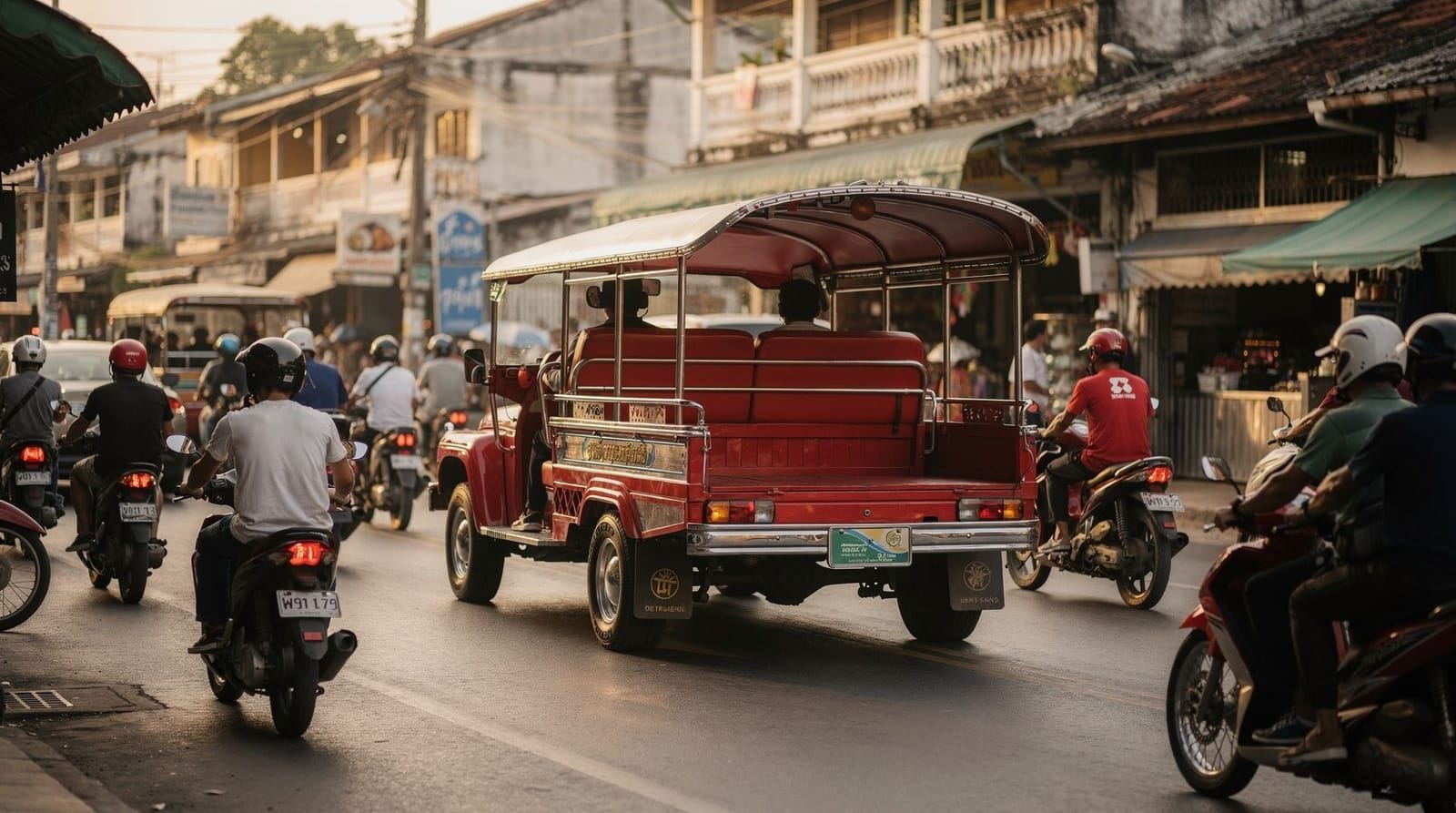
Scooters everywhere, but a workable rhythm to it
The sheer number of scooters was the single biggest sensory surprise of day one — a constant low hum of two-stroke and electric engines that never really stops, day or night. What surprised us more than the volume was how quickly a rhythm to it became apparent: scooters flow around pedestrians rather than the other way around, and crossing even a busy street becomes a matter of walking at a steady, predictable pace rather than the stop-start dodge we’d braced for. It took maybe half a day to stop flinching at every close pass and start trusting the flow.
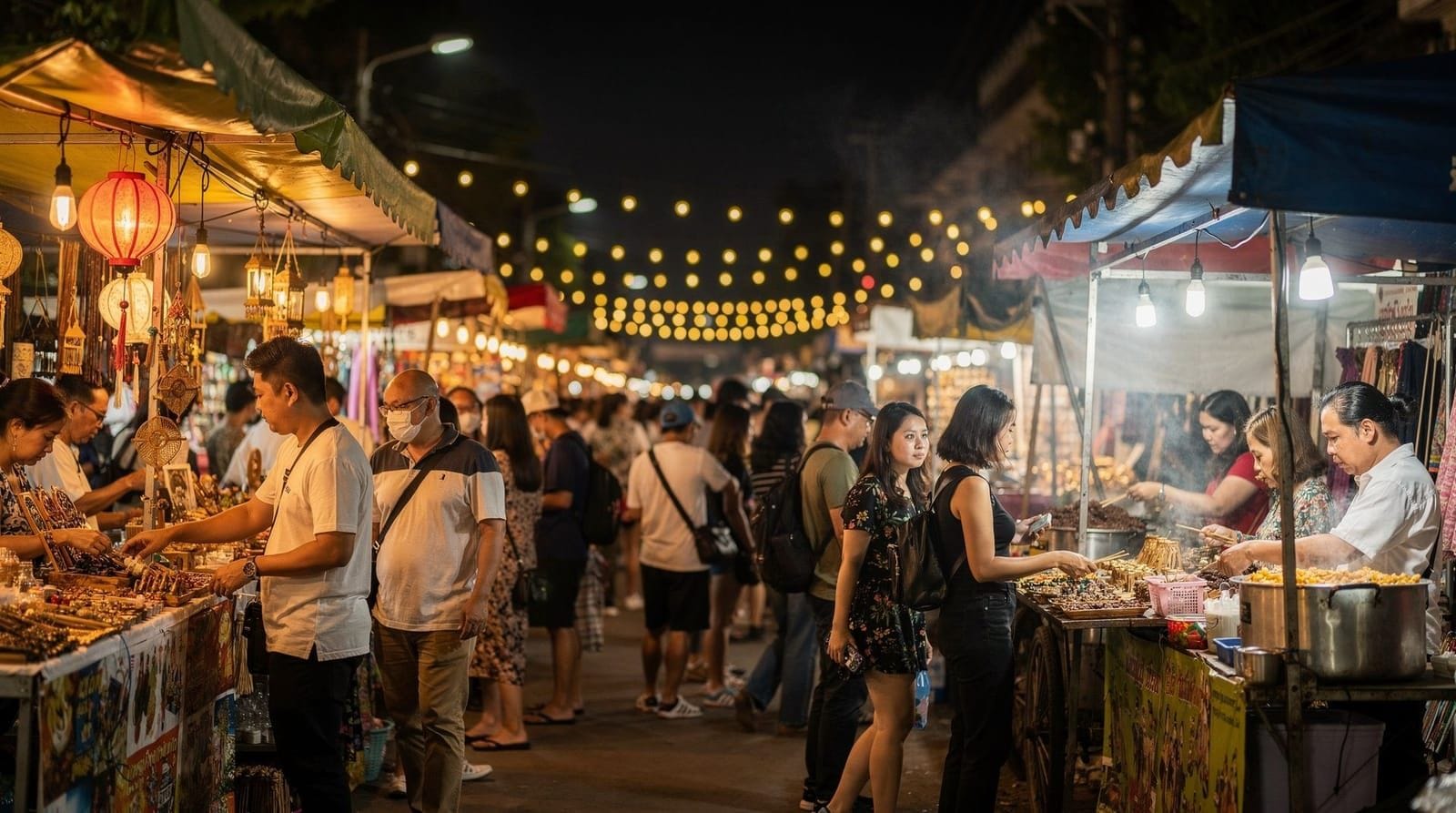
The night bazaar felt different from what we expected
We’d pictured the Night Bazaar as one dense block of identical souvenir stalls, and while that stereotype exists at the edges, the actual experience on our first evening there was a lot more textured — genuine food stalls doing serious volume next to handicraft vendors next to a section that felt more like a local market than a tourist strip. We ate better that first night, wandering with no plan, than we did at any restaurant we’d pre-researched. A bowl of khao soi from a stall with a five-deep line of locals, eaten standing at a plastic table, cost 60 THB (about USD 1.65) and outclassed a 350 THB restaurant version two nights later.
Temples that are still temples
Perhaps the biggest recalibration: the Old City’s wats aren’t museum pieces roped off for tourists. Monks live and study at most of them, morning almsgiving happens on ordinary streets rather than as a staged photo-op, and the etiquette expectations — covered shoulders, shoes off, quiet inside chapel halls — are enforced because these are working religious sites, not because of a sign at the entrance. Getting that recalibration right early made the rest of the trip’s temple visits feel more like being a respectful guest and less like ticking off a sightseeing list.
Deciding where to actually stay took longer than expected
We’d booked our first two nights in the Old City almost on a whim, and it worked out well for exactly the reasons above — walkability, temple access, orientation. Whether that’s the right call for every trip is a genuinely open question, and our Old City versus Nimmanhaemin guide is the piece we wish we’d read before booking rather than after; it would have saved us a slightly confused first hour of trying to figure out which neighborhood actually suited what we wanted from the trip.
What we’d tell someone about to land
Don’t over-plan the first day. The transfer is short, the jet lag is real, and the city rewards wandering more than it rewards a tight schedule. Our fuller first-timer orientation guide and the practical getting around piece cover everything we wish we’d skimmed on the flight over — but honestly, the single best piece of advice is to let the moat, the scooters, and the night bazaar surprise you the way they surprised us, rather than arriving with every hour of day one already booked.