Chiang Mai in rainy season: our honest verdict after a full month
Every guidebook warns you off Chiang Mai between June and October, and after spending a full month there during the height of it, I understand why the warning exists — and why it’s also more useful to visitors who never make the trip than to those of us who did. This is the unfiltered version: what the rain actually does to a day, what it doesn’t ruin, and whether the lower prices and thinner crowds make up for the inconvenience.
What the rain actually looks like, day to day
The pattern surprised me, because “rainy season” implies something more constant than what we experienced. Most days followed a rhythm: clear or lightly overcast mornings, a buildup of heat and humidity through midday, and then a genuinely dramatic downpour arriving somewhere between 3pm and 6pm that could last anywhere from twenty minutes to three hours. Mornings were, more often than not, entirely usable — several of our best temple visits and market mornings happened during what the calendar called peak monsoon, simply because we’d front-loaded the day before the afternoon system arrived. Our detailed guide to the rainy season breaks this pattern down month by month, and it matched our experience closely enough that I’d trust it over the vague “avoid June through October” blanket warning found elsewhere.
That said, some days broke the pattern entirely — an occasional grey, wet day from morning through evening, usually tied to a broader regional weather system rather than the typical afternoon monsoon cycle. Those days, roughly four or five out of the month, were the ones that actually disrupted plans rather than just requiring a slightly rescheduled itinerary.
The waterfalls are the actual reward
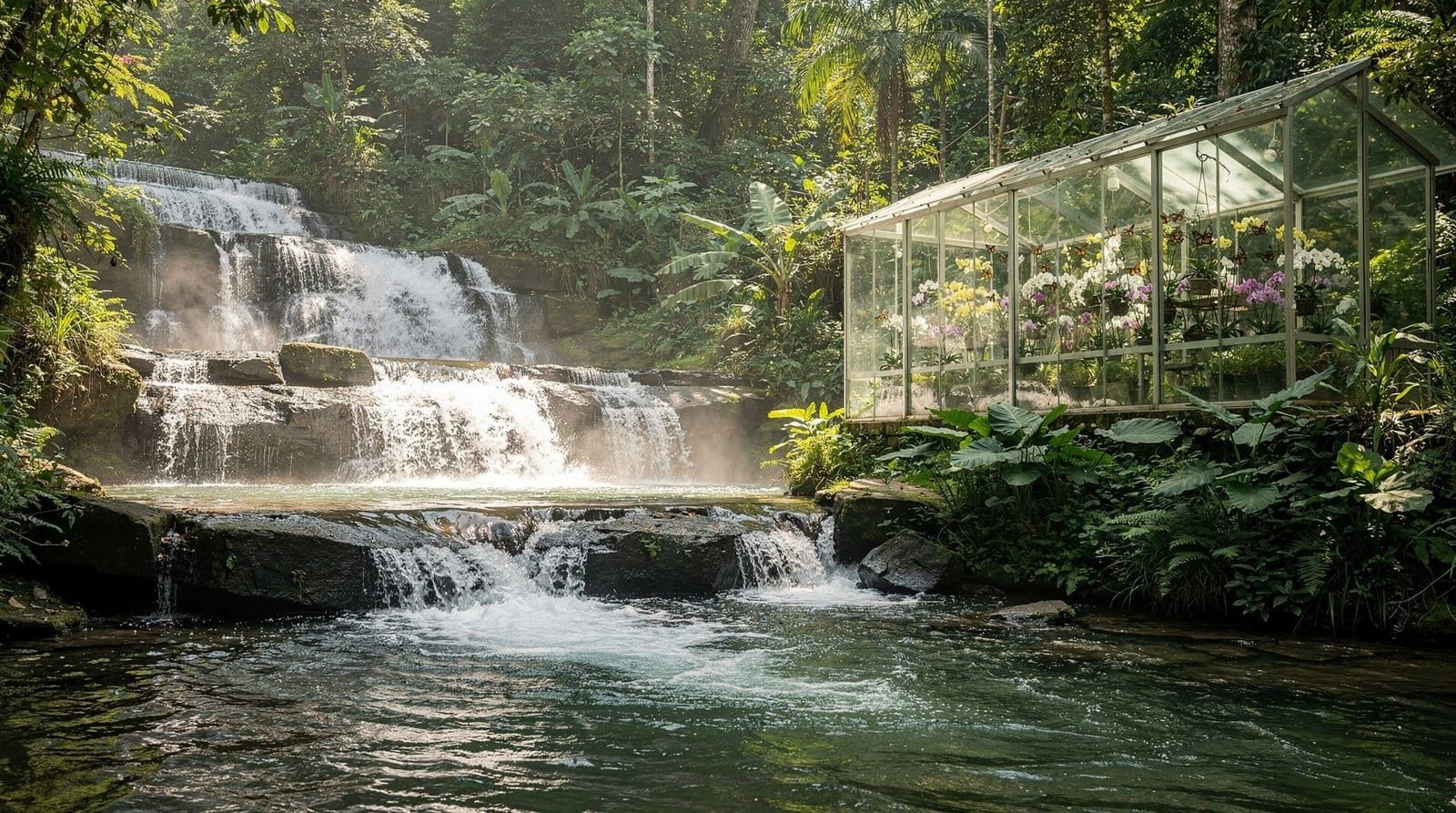
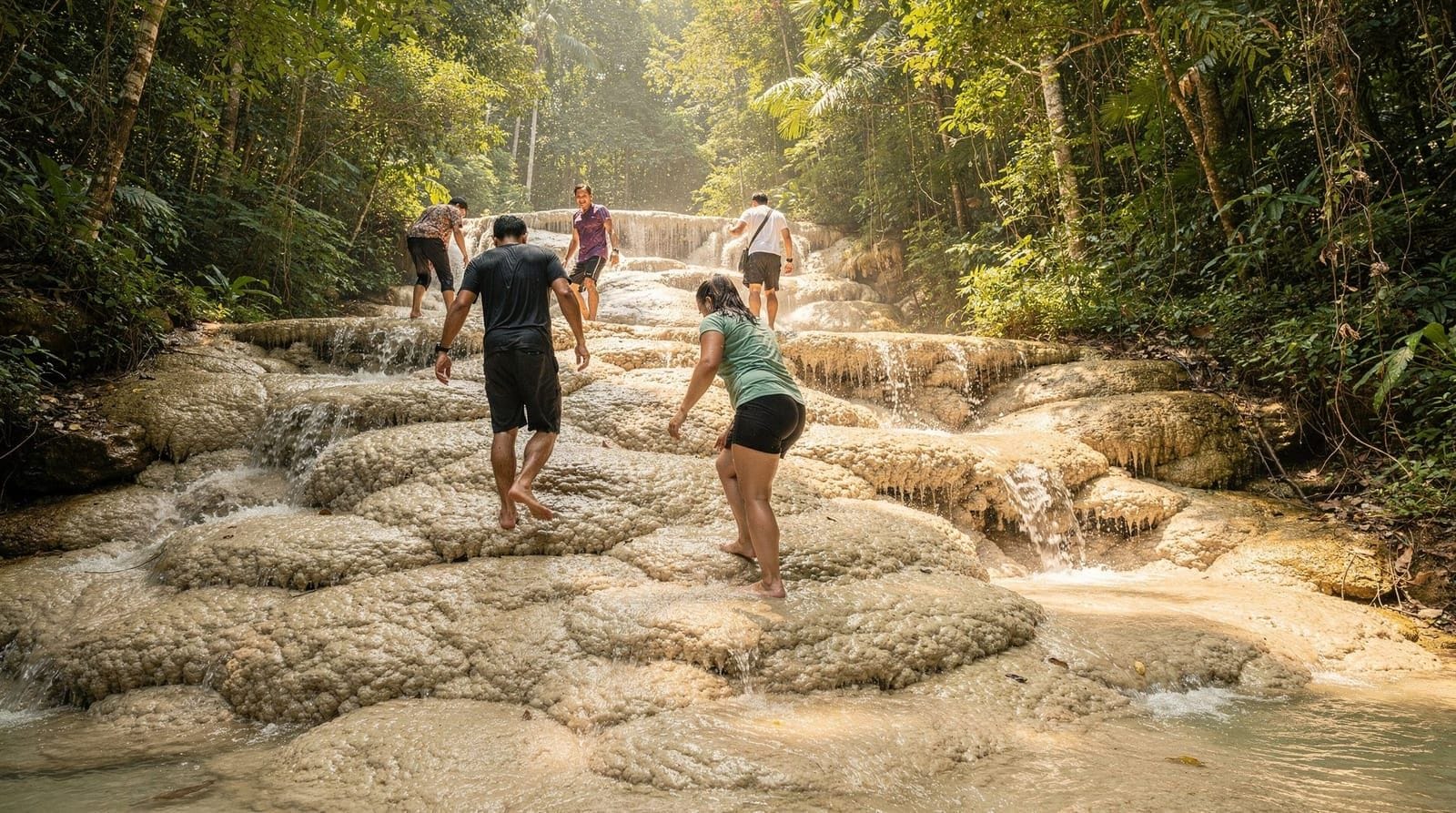
Here’s the argument in favor of rainy season that doesn’t get made often enough: this is when the waterfalls are genuinely spectacular, not the diminished trickle you’ll find in the dry months. We visited the Mae Sa Valley waterfalls in early August and the volume of water compared to photos we’d seen from March was almost a different location entirely — full, forceful, loud in a way that felt like the actual intended version of the place rather than a compromise. The Sticky Waterfalls at Bua Thong are a slightly different story worth flagging honestly: their famous climbable, grippy limestone surface can get considerably more slippery with heavier water flow, and we saw staff turning visitors back from certain sections on the heaviest-flow days. Our dedicated Sticky Waterfalls guide covers exactly when that trade-off tips from “impressive” to “not worth the risk.”
Temples without the crowds
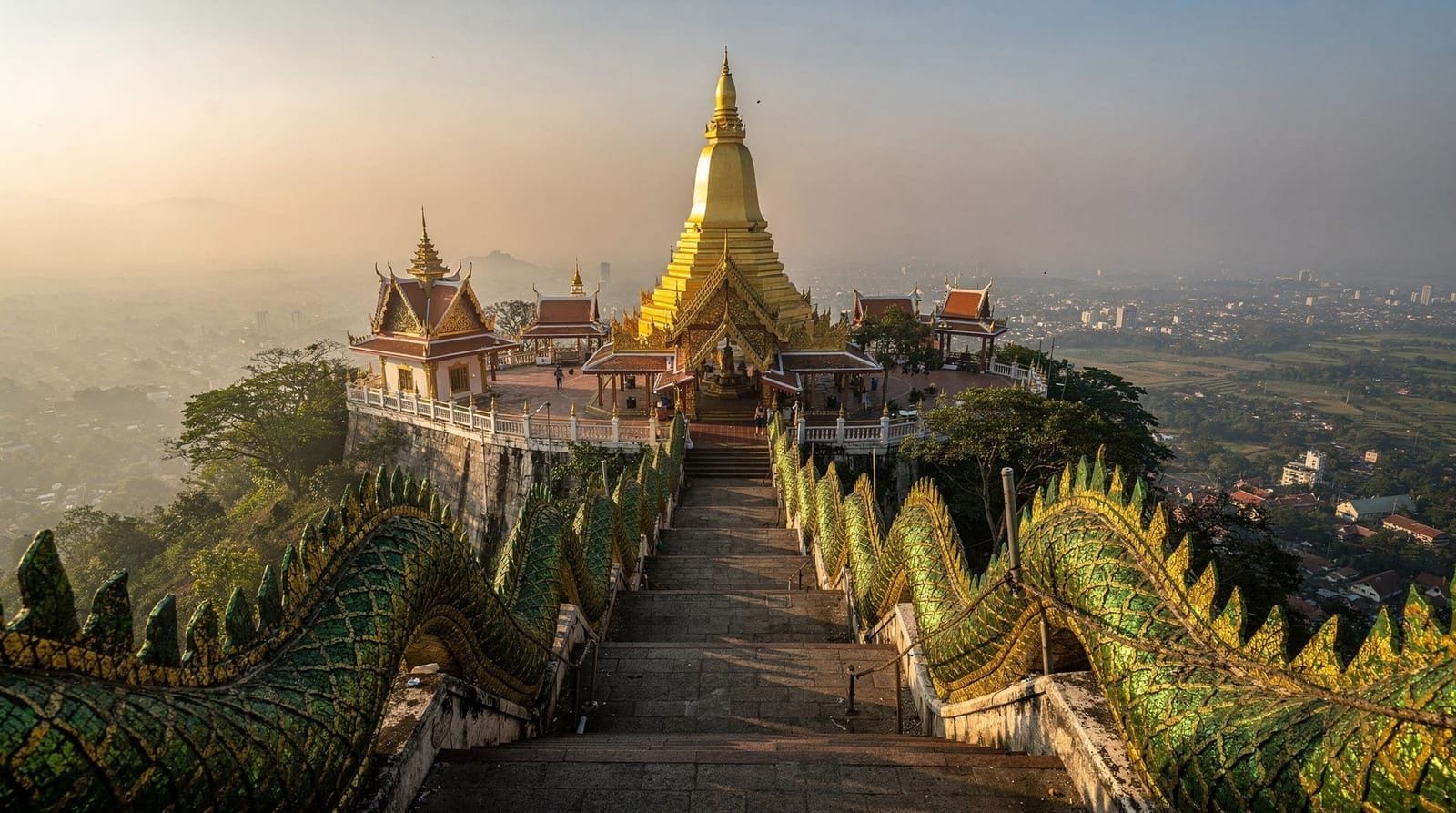
We visited Doi Suthep on a Tuesday morning in the rain and had entire sections of the temple grounds essentially to ourselves — a genuinely different experience from the shoulder-to-shoulder tour-bus crowds we’d read about and later confirmed for ourselves during a cool-season visit the following year. If quiet, contemplative temple visits matter more to you than guaranteed blue skies, rainy season delivers something the peak months simply can’t. The naga staircase glistening wet under grey skies, incense smoke hanging heavy in the still, humid air — it has its own atmosphere that isn’t lesser, just different.
The green season nobody photographs
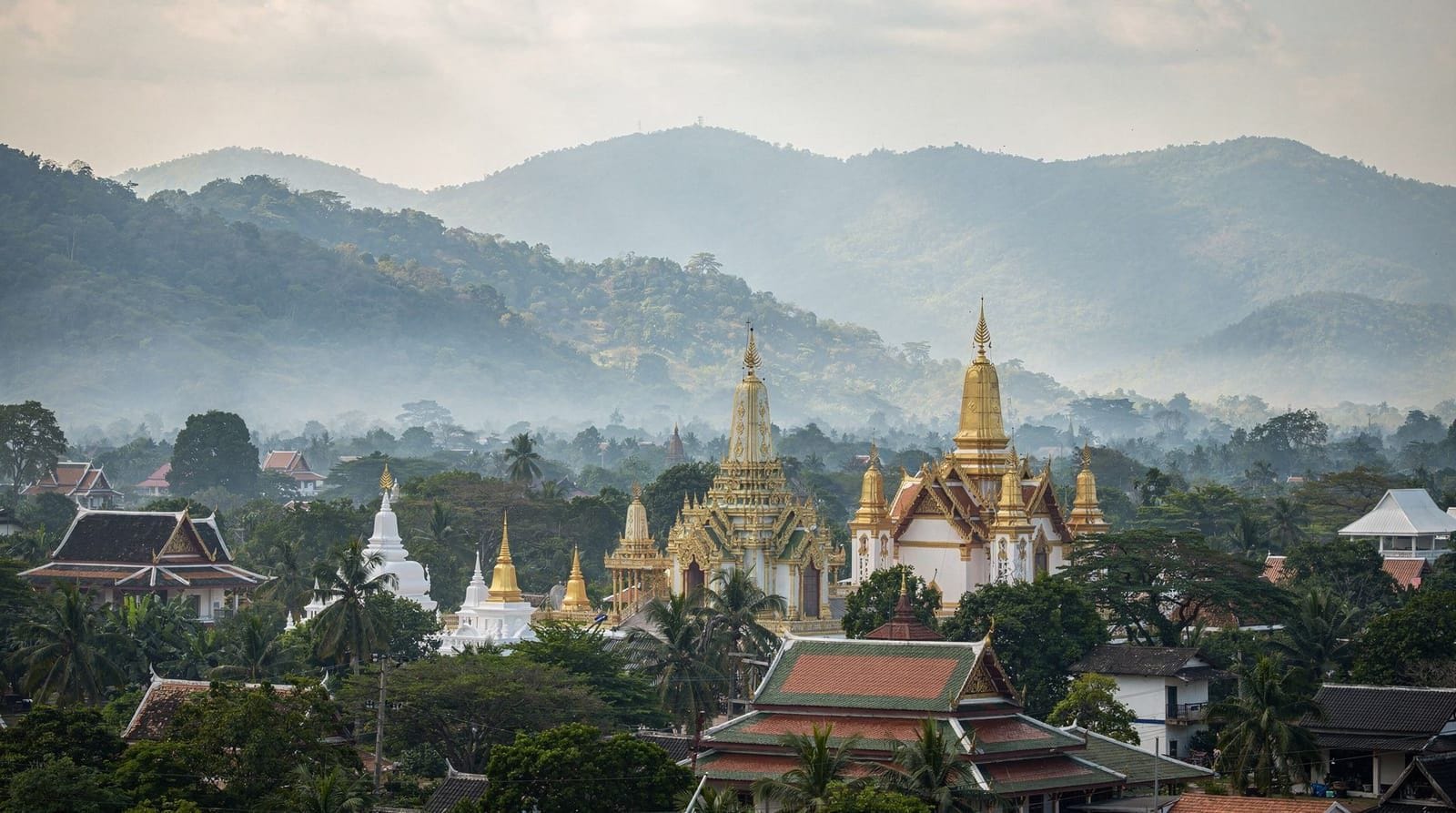
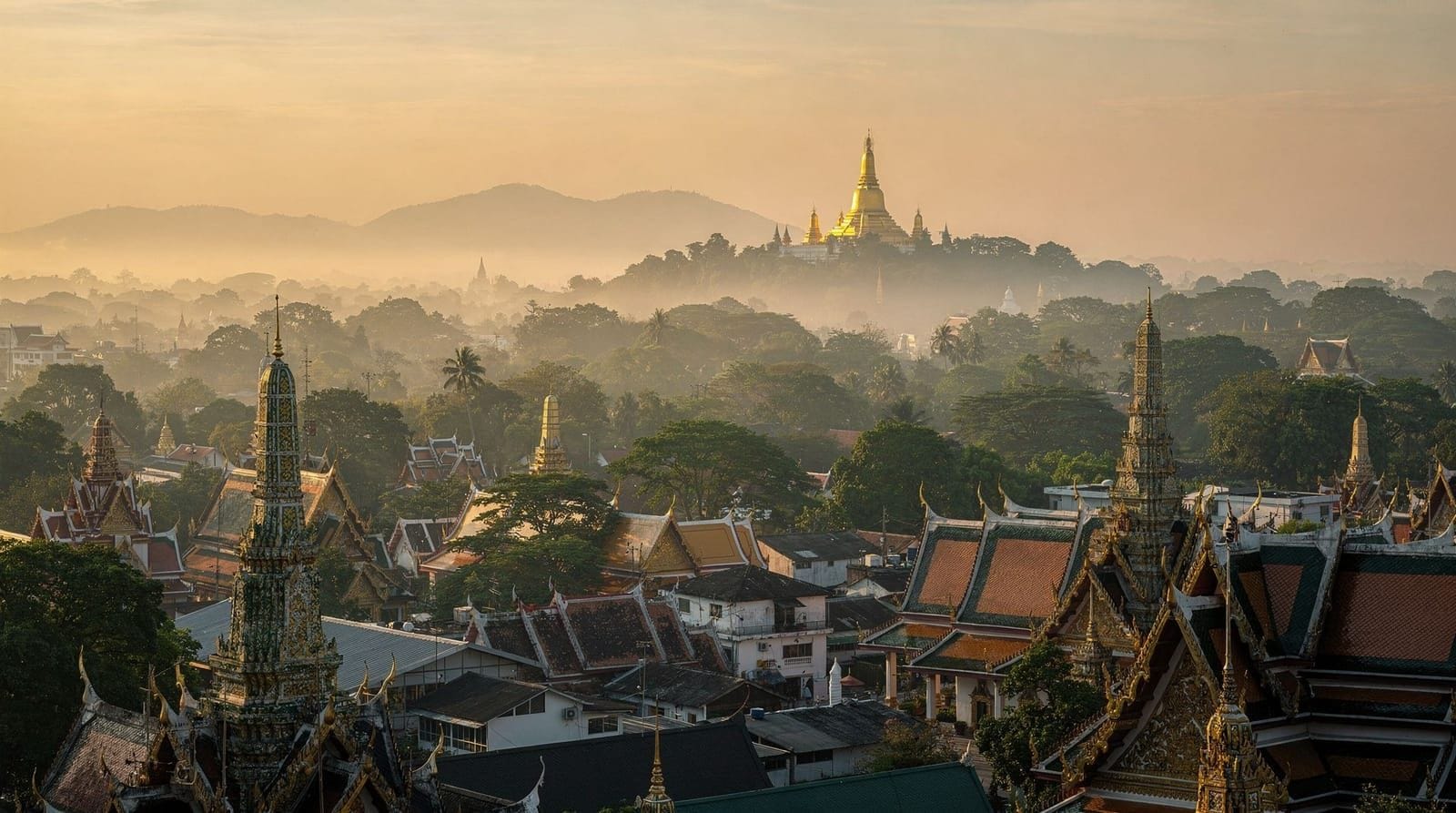
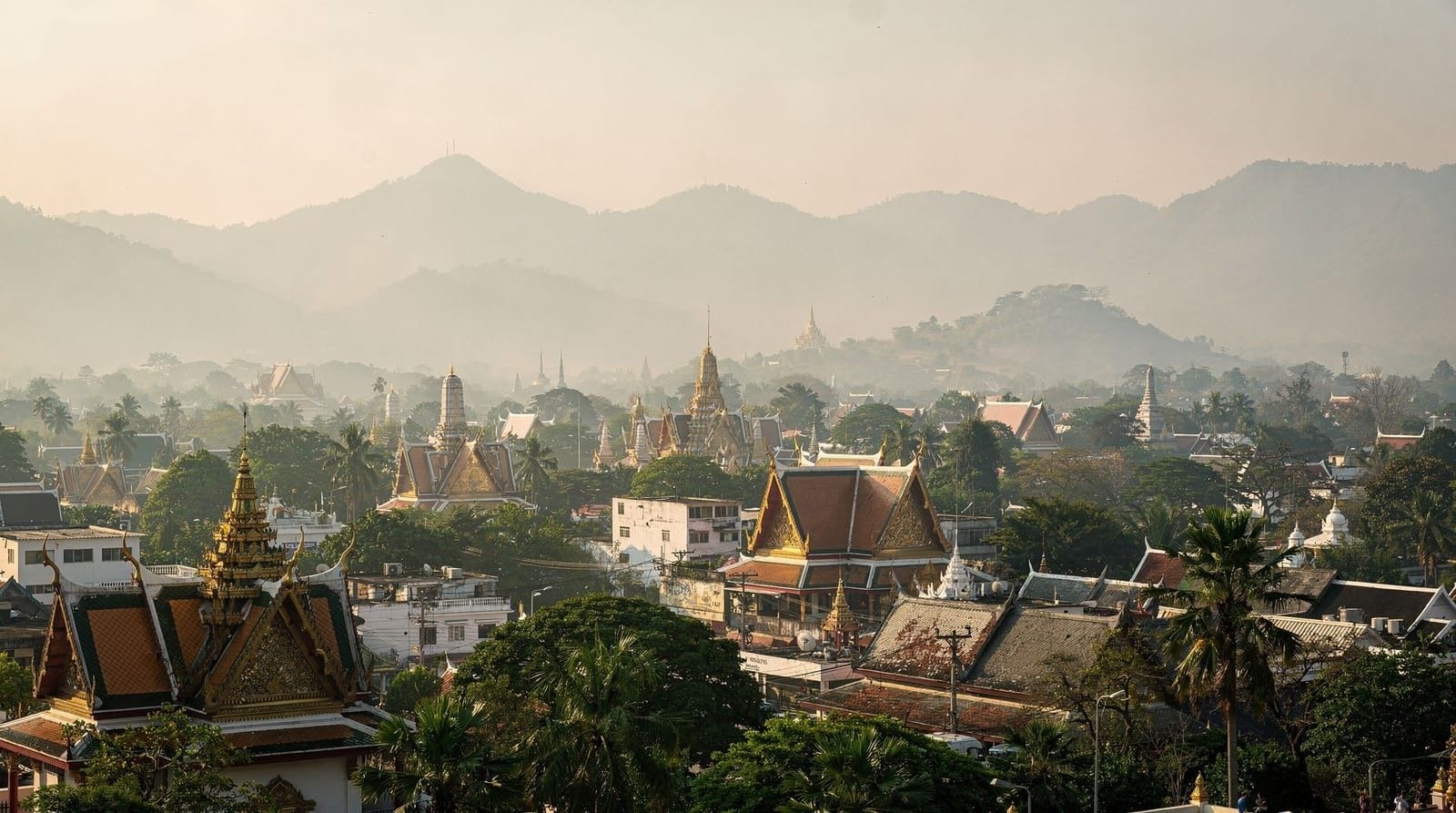
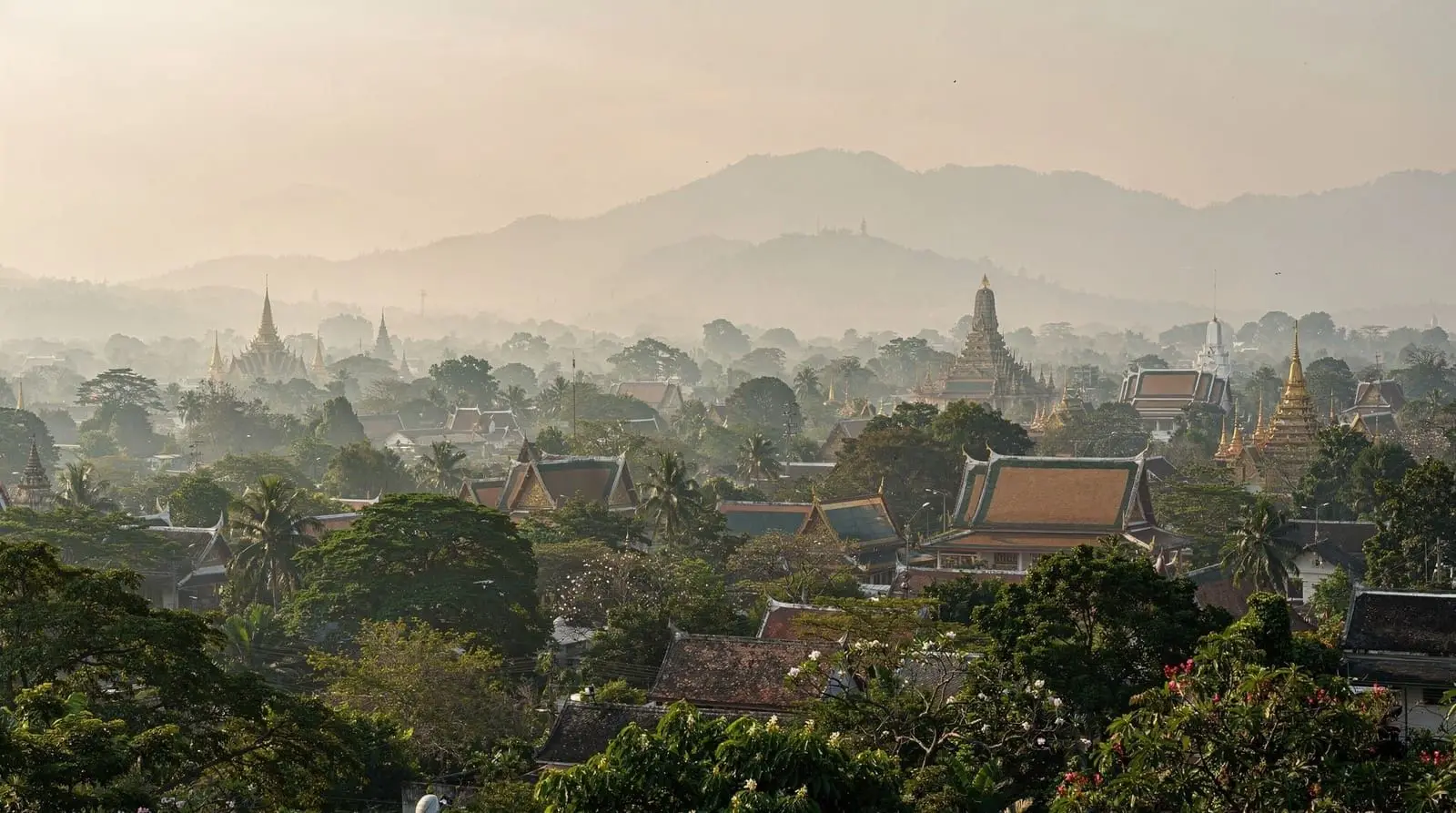
There’s a version of Chiang Mai’s landscape that simply doesn’t exist outside these months, and it took us most of the trip to appreciate it properly. Rice paddies surrounding the city, brown and stubbled for most of the year, turn a genuinely vivid green during rainy season, and the hillsides around Mae Rim and Doi Suthep thicken with a density of foliage that the dry-season photos most travel content relies on simply can’t show. Riding out toward the countryside on a clearer morning, the light after rain has a particular clarity to it too — dust and haze washed out of the air, distant mountains visible in a way they often aren’t during the hazier months elsewhere on the calendar. If landscape photography matters to your trip, rainy season offers a genuinely different, arguably richer palette than the version most visitors expect to find.
Negotiating with the weather rather than fighting it
By the second week, we’d stopped checking hourly forecasts obsessively and started reading the sky instead — a skill that felt almost silly to develop but paid off repeatedly. Building thunderheads visible from late morning onward became a reliable signal to wrap up outdoor plans by early afternoon rather than push into the 3pm window when the daily system typically broke. Locals we spoke with, from tuk-tuk drivers to a guesthouse owner who’d lived in the city for over twenty years, all described the same basic strategy: plan the morning as the productive window, treat afternoon as flexible or indoor time by default, and never schedule anything time-sensitive for late afternoon during these months. That single mental shift, more than any packing list or gear purchase, is what turned rainy season from an obstacle into simply a different operating rhythm.
What we’d do differently
The honest failures of the month: we lost two full afternoons to sudden, heavy downpours that made outdoor activity actively unpleasant rather than just inconvenient, and both times we hadn’t planned an indoor backup. Our rainy day activities guide exists precisely because this happens to nearly everyone at some point during a rainy-season visit, and building in flexibility — a cooking class, a museum, a spa afternoon — rather than a rigid outdoor-only itinerary would have saved us those lost afternoons. We’d also pack differently: a proper light rain shell rather than an umbrella, since the wind that often accompanies these downpours makes umbrellas nearly useless within minutes.
The prices that made the trade-off worthwhile
The financial side of rainy season deserves its own honest mention, because it’s a real part of why the trade-off worked for us. Accommodation across the price spectrum dropped noticeably compared to the rates we’d researched for the cool-season peak — a mid-range guesthouse room that ran close to 1,800 THB a night in December quoted us just over 1,100 THB for the same room in August, a difference that added up meaningfully across a month-long stay. Popular restaurants near the moat that we’d read had hour-long waits during peak season sat us immediately on a Tuesday evening in August, and several cooking class operators and tour companies offered noticeably more flexible group sizes and even modest discounts simply because demand was thinner.
That lower demand cuts both ways, worth saying plainly: some smaller tour operators and specialty shops we’d hoped to visit had reduced hours or were closed entirely for a slow-season break, apparently timing their own vacations around the same low-tourist stretch. It’s worth checking specific opening hours in advance for anything niche or highly specific to your plans, rather than assuming full year-round availability the way you might during the busier months.
Would we recommend it
Conditionally, yes. If your priorities are budget (accommodation rates drop noticeably), lighter crowds at major sites, and lush, dramatic landscapes rather than guaranteed sunshine, rainy season delivers real value that the “avoid at all costs” framing undersells. If your trip is short — three or four days rather than a full week — and you can’t afford to lose an afternoon to weather without derailing your whole plan, the safer bet remains the cool season window covered in our best time to visit Chiang Mai guide, and our month-by-month weather breakdown can help you land on the specific week that best balances your risk tolerance against your travel dates.
The one week we’d genuinely avoid
If pressed to narrow “rainy season” down further, there’s one specific stretch worth flagging honestly: the transitional weeks in early September, when the season sometimes shifts from the relatively predictable afternoon-downpour pattern into a stretch of more sustained, all-day rain tied to broader regional storm systems moving through the wider region. We hit exactly one of these stretches during our month, four consecutive days where the rhythm we’d grown used to broke down entirely and outdoor plans became genuinely impossible rather than just requiring an earlier start. If your travel dates are flexible within the broader June-to-October window, the two months on either end — a cautious early June or a settling-down late October — tend to offer more of the reliable afternoon-shower pattern and less risk of hitting one of these longer, less predictable systems.
What surprised me most, honestly, was how little the rain itself affected our mood by the end of the month. It becomes a rhythm you plan around rather than an obstacle fighting against you — and some of our favorite unplanned moments, ducking into a nearly empty café during a sudden downpour, watching the street outside turn briefly into a shallow river, are the ones I remember most vividly a year later. Rainy season Chiang Mai isn’t the compromise version of the trip. It’s a genuinely different one.
Looking back on the month as a whole, the single piece of advice I’d give anyone weighing this decision is to stop thinking of rainy season as a fallback for when the “good” months don’t fit a schedule, and start thinking of it as its own distinct offer with its own distinct trade-offs. It asks a little more flexibility of the traveler and gives back lusher landscapes, thinner crowds, and lower prices in return. Whether that trade is worth it depends entirely on what kind of trip you’re hoping for — but for us, having now done both a rainy-season month and a cool-season week in the same city, we came away glad we’d experienced Chiang Mai in both its moods rather than only the postcard-perfect one.