Best jungle trekking and hill-tribe tours in Chiang Mai, compared
Chiang Mai: 2-Day Hidden Jungle Trek & Local Hill-Tribe Stay
Duration: Multi-day
Trekking near Chiang Mai ranges from an easy single-day village walk to a genuine three-day jungle crossing with overnight homestays, and the right choice depends far more on how much time and physical effort you want to commit than on any single “best” operator. This page compares five bookable treks by duration, terrain, and how they handle hill-tribe village visits.
Quick answer: the 2-day hidden jungle trek with a local hill-tribe stay is the best balance for most travelers who want more than a day-trip taste of trekking — a genuine overnight in a Karen or Hmong village, roughly 2,400-2,900 THB (67-81 USD), without the full three-day time commitment. If you have limited time, the one-day option below covers the essentials in a single trip.
How to choose the right trek length
The core decision on any trekking tour is duration, since it determines everything else about the experience:
- One day gets you a single hill-tribe village visit, a waterfall stop, and 3-5 hours of walking, with no overnight gear needed and a return to your hotel the same evening.
- Two days adds a genuine homestay night in a village, more remote terrain, and usually a bamboo-rafting or second-waterfall stop, roughly doubling the price of a one-day trek.
- Three days or more covers more ground and typically visits multiple distinct villages or ethnic communities, suited to travelers specifically prioritizing depth and distance over trip efficiency.
Our trekking guide covers how multi-day treks work in more general terms; this page compares five specific bookable options across that spectrum.
The comparison: five trekking tours
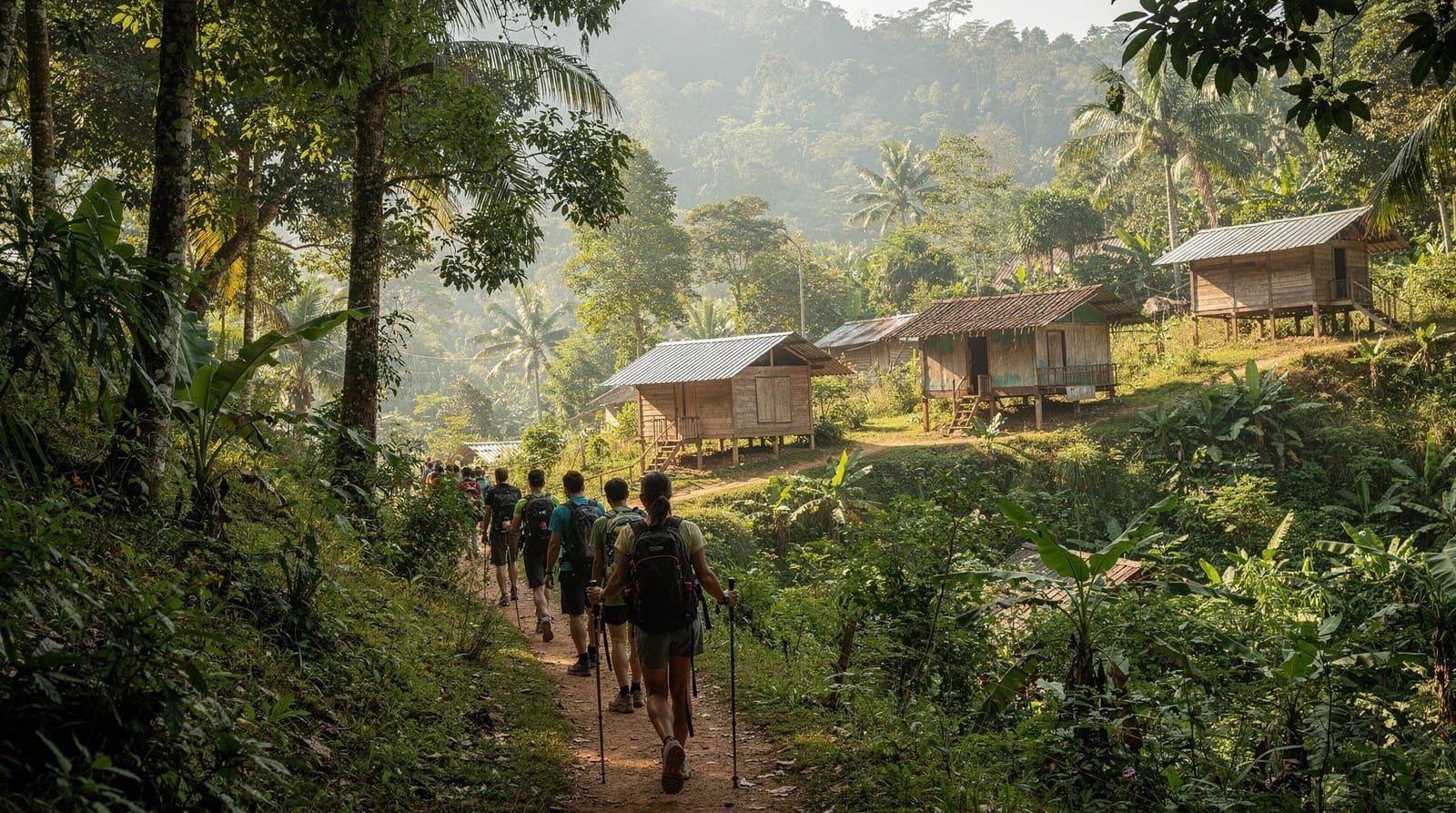
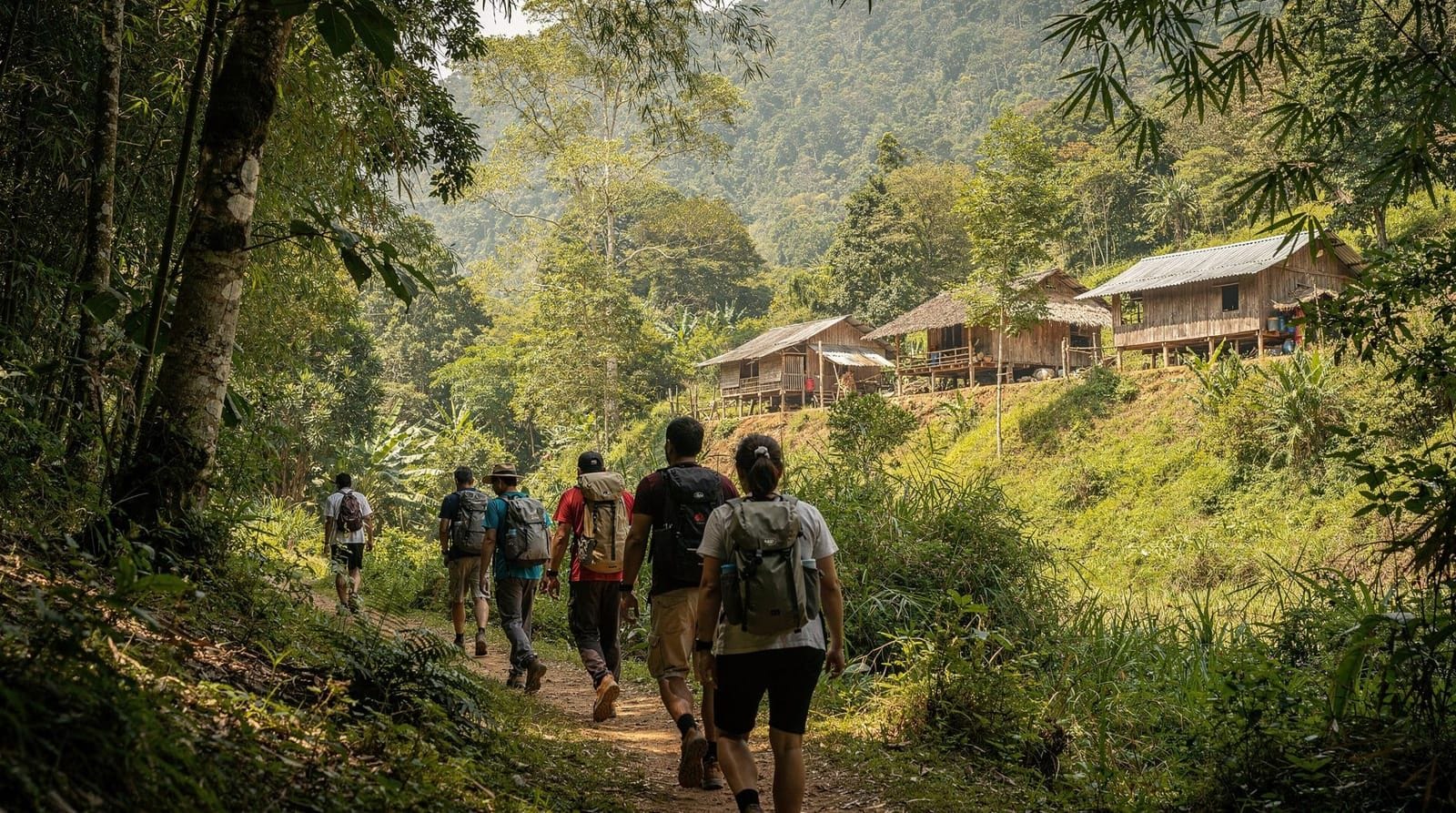
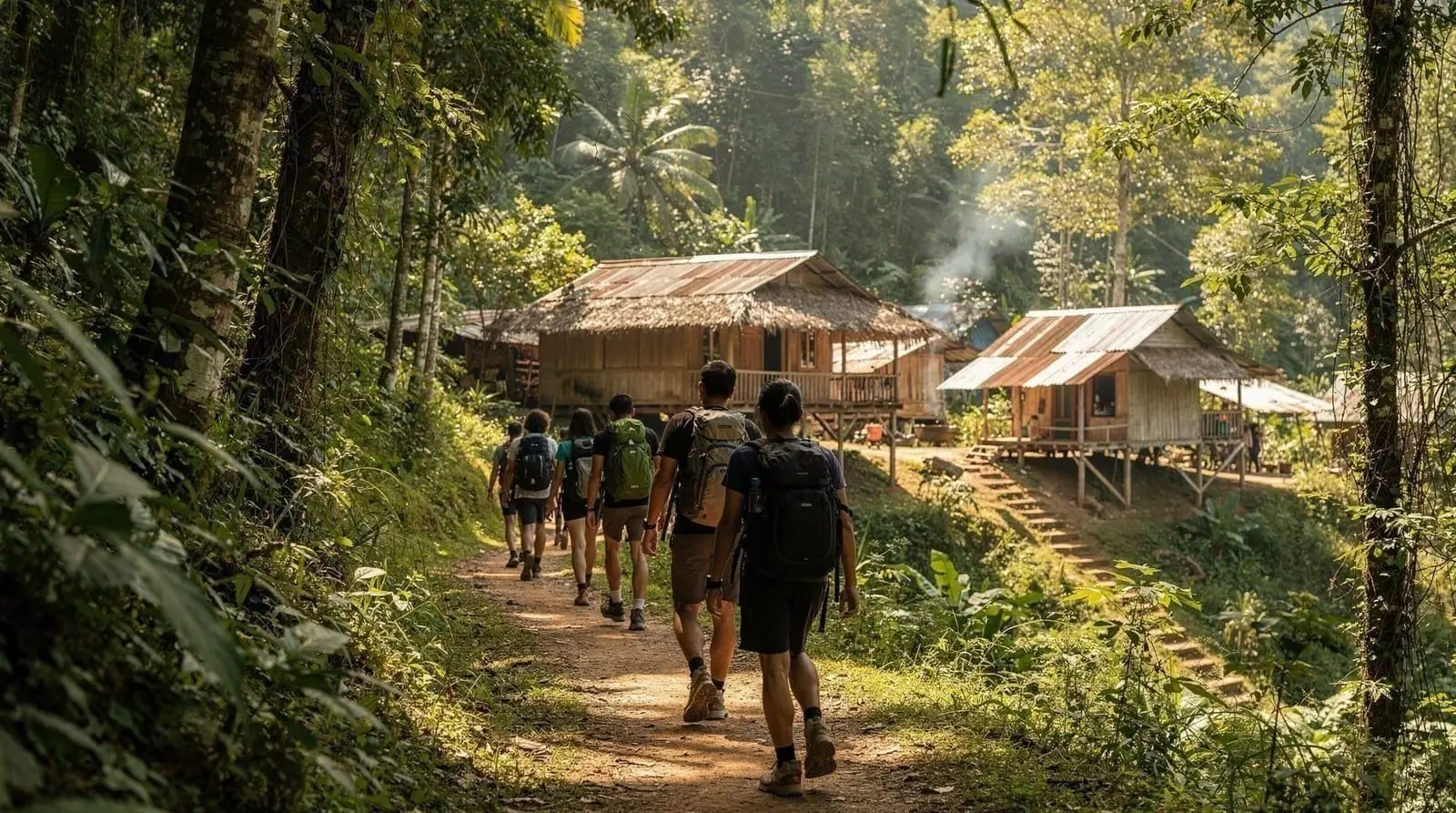
2-Day Hidden Jungle Trek & Local Hill-Tribe Stay — 2 days, roughly 2,400-2,900 THB (67-81 USD). A well-balanced overnight trek through less-visited jungle terrain with a genuine village homestay, meals included, and a moderate pace suited to reasonably fit beginners.
1-Day Trekking Experience to Village & Waterfall — full day, roughly 1,000-1,400 THB (28-39 USD). Operates in the Doi Inthanon foothills, combining a single village visit with a waterfall stop, the easiest entry point for anyone unsure whether trekking suits them.
Karen Tribe & Dual Waterfalls — Private Day Trek — full day, roughly 1,800-2,300 THB (50-64 USD) typically priced per group. A private alternative to the standard group day trek, visiting a Karen community and two waterfalls at your own pace rather than a fixed group schedule.
3-Day Jungle Trek with White Karen Local Guide — 3 days, roughly 3,800-4,400 THB (106-122 USD). The most immersive option compared here, led by a guide from the White Karen community itself, covering more remote terrain and typically two overnight stays across the route.
Off the Map Jungle Coffee Farm Trek, Roast & Brew — full day, roughly 1,300-1,700 THB (36-47 USD). A distinctive niche option that combines jungle walking with a stop at a small-scale hill-tribe coffee farm, where you help roast and brew your own cup, a good pick for coffee-focused travelers who want trekking as a secondary activity.
Full Day 5 Hill Tribes Tour with Guide & Van — full day, roughly 1,400-1,800 THB (39-50 USD). A van-based, multi-village format that visits five different hill-tribe communities in a single day rather than a single sustained walking route — less trekking, more cultural-visit coverage, worth choosing if breadth of village exposure matters more than distance walked.
Doing hill-tribe visits respectfully
Hill-tribe tourism around Chiang Mai has a genuinely mixed reputation, and it’s worth choosing an operator that treats village visits as an ongoing relationship rather than a one-off photo stop. Signs of a responsible operator: guides who are themselves from the community being visited (as with the White Karen guide on the 3-day trek above), homestay fees that go directly to host families rather than a middleman, and an itinerary that explains which specific village and ethnic group you’ll visit rather than a generic “hill tribe village” description. Our hill-tribe visit ethics guide and long-neck Karen village guide go into this in more depth, since the long-neck Karen villages specifically carry additional ethical considerations around their origin as a tourism draw.
Fitness level and terrain
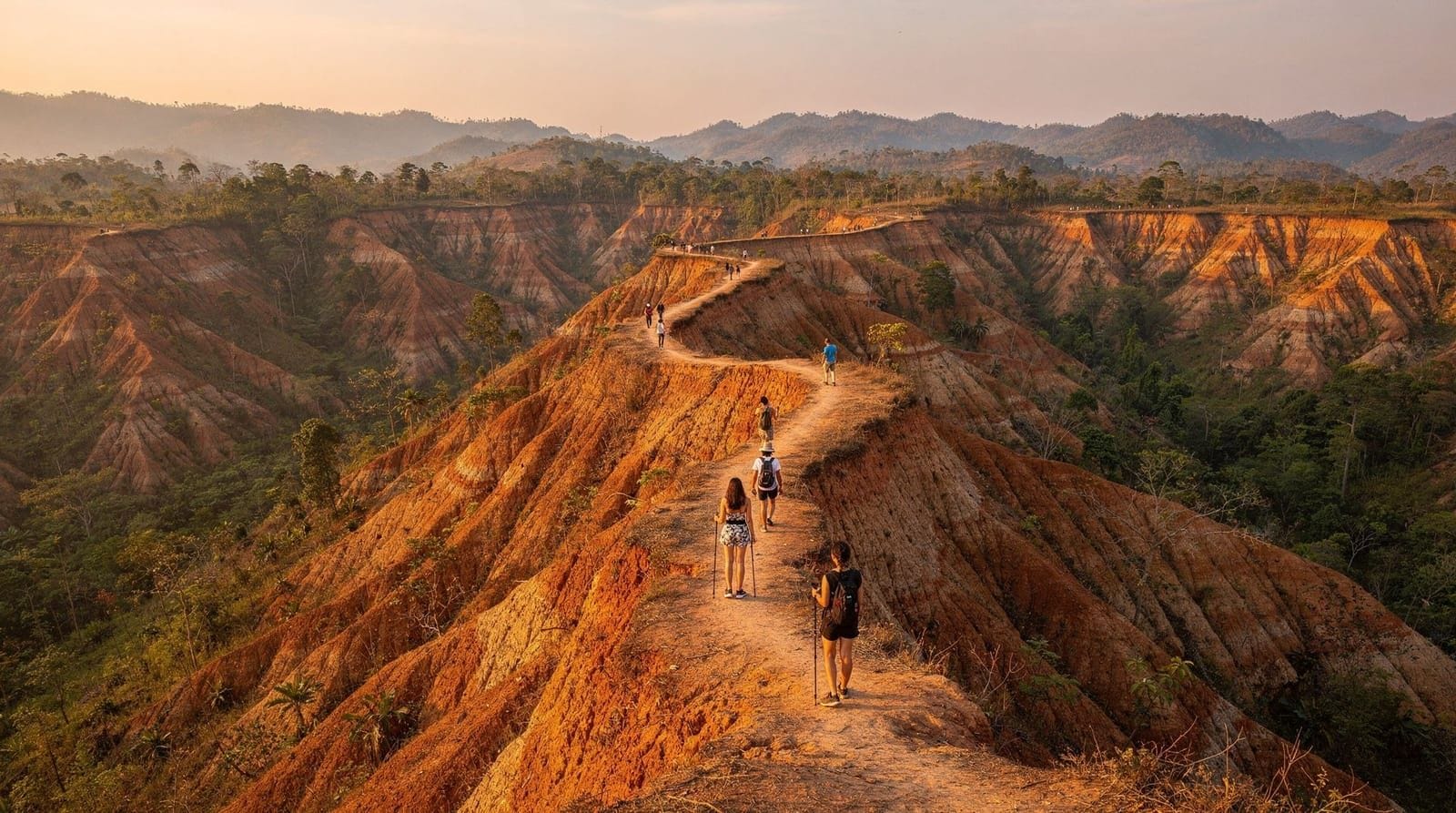
Moderate fitness covers most of these routes: expect 3-6 hours of walking per day on uneven jungle and hillside trails, occasionally steep but rarely requiring technical scrambling or climbing gear. The three-day trek is more demanding cumulatively than in any single stretch, since sustained walking across three consecutive days adds up even at a moderate daily pace. Our best trekking routes guide compares terrain difficulty across Doi Inthanon, Chiang Dao, and Mae Hong Son specifically if you’re weighing routes beyond the five tours above.
Combining trekking with bamboo rafting
Several multi-day treks, including the 2-day option above, build in a bamboo-rafting section on a river along the route as a change of pace from walking, typically a gentle 30-60 minute float rather than white-water rapids. Our bamboo rafting guide covers what to expect from this specifically if it’s a deciding factor between operators.
Where these treks operate
Most one and two-day treks operate in the hills toward Doi Inthanon and the surrounding Karen and Hmong communities, while the longer three-day routes typically push further out toward Chiang Dao or the border regions near Mae Hong Son, where terrain is more remote and village access requires a longer approach.
Booking tips
Book multi-day treks at least 2-3 days ahead, since overnight homestay capacity in any single village is genuinely limited and operators cap group sizes to avoid overwhelming host families. One-day treks generally have more last-minute availability. Our trekking season guide is worth checking before you book, since the rainy season (roughly June-October) makes some trails significantly muddier and occasionally impassable.
A typical day on a multi-day trek
Mornings on a multi-day trek typically start early, around 7-8am, with a pickup from central Chiang Mai and a 1.5-3 hour drive to the trailhead depending on which region the operator uses. Walking days are broken into two main stretches, morning and afternoon, with a break for a packed or village-cooked lunch in between, and the pace is generally set by the slowest walker in the group rather than pushed to a fixed schedule. Arrival at the homestay village happens in the mid-to-late afternoon, leaving time to explore, wash up, and interact with the host family before a communal dinner, often cooked over an open fire using ingredients grown or raised locally. Evenings in villages without reliable electricity mean an early night by necessity, which most trekkers find is part of the appeal rather than a drawback, given how different the pace feels from a typical Chiang Mai day.
Weather, mud season, and when to avoid trekking
The rainy season, roughly June through October, brings the muddiest and most physically demanding trail conditions of the year, with some remote village-access trails becoming genuinely difficult or impassable after heavy rain, particularly on the steeper approaches used by three-day routes. Operators generally still run tours through this period but may adjust routes at short notice based on trail conditions, so it’s worth building some schedule flexibility into a rainy-season booking. The cool season (November-February) offers the most reliable and comfortable trekking conditions, with dry trails and cooler daytime temperatures that make sustained multi-day walking noticeably less exhausting, though the hot season’s dry trails (March-May) are also workable if you don’t mind higher daytime heat on the walking sections themselves.
Frequently asked questions about Chiang Mai trekking tours
Which trekking tour is best for someone who has never trekked before?
The 1-day jungle trekking tour in the Doi Inthanon area is the easiest entry point: a single village and waterfall visit with moderate walking and no overnight gear needed.
How many days should I spend trekking near Chiang Mai?
A single day gives a genuine taste of jungle walking and one village visit. Two days adds an overnight homestay and more remote terrain. Three days or more suits those prioritizing distance and village depth.
How much does a Chiang Mai trekking tour cost?
Roughly 1,000-1,500 THB (about 28-42 USD) for a one-day trek, 2,200-3,000 THB (about 61-83 USD) for two days, and 3,500-4,500 THB (about 97-125 USD) for three days.
Are hill-tribe village visits ethical?
It depends on the operator. Responsible treks work with the same villages long-term, pay hosts fairly, and frame visits as genuine cultural exchange rather than a photo-op stop.
What fitness level do I need for a multi-day trek?
Moderate fitness is sufficient: expect 3-6 hours of walking per day on uneven but rarely technical trails.
Do treks include bamboo rafting or other add-ons?
Many multi-day treks bundle in a bamboo-rafting section as a change of pace from walking; check the specific itinerary, since not every operator includes it.
What should I pack for an overnight trek?
Sturdy closed shoes, a light rain jacket, a headlamp, insect repellent, and minimal overnight kit, since homestays typically provide bedding.
Compare alternative tours
| Tour | Duration | Rating | Price | Highlights | |
|---|---|---|---|---|---|
| Chiang Mai: 1-Day Trekking Experience to Village & Waterfall | Full day | — | — | — | Check |
| Chiang Mai: Karen Tribe & Dual Waterfalls - Private Day Trek | Full day | — | — | — | Check |
| Chiang Mai: 3-Day Jungle Trek with White Karen Local Guide | Multi-day | — | — | — | Check |
| Chiang Mai: Off the Map Jungle Coffee Farm Trek Roast & Brew | — | — | — | — | Check |
| Chiang Mai: Full Day 5 Hill Tribes Tour with Guide & Van | Full day | — | — | — | Check |