Best cooking class tours in Chiang Mai, compared
Chiang Mai: Traditional Thai Cooking Class with Market Tour
Chiang Mai has more cooking schools per capita than almost any other city in Thailand, which is exactly why “just pick one” is harder advice than it sounds. Some center the experience on a wet-market visit, some on an organic farm, and some on a specific teaching family’s home kitchen. This page compares five bookable classes on what’s actually included, so you can choose by format rather than by whichever listing has the most reviews.
Quick answer: the traditional Thai cooking class with a market tour is the best starting point for most visitors — a guided market walk followed by a hands-on class covering 4-6 dishes, in about 5-6 hours including hotel transfer, for roughly 900-1,300 THB (25-36 USD). If you’d rather pick your own herbs from a garden than browse a market, the farm-based options below are the better fit.
What actually varies between Chiang Mai cooking classes
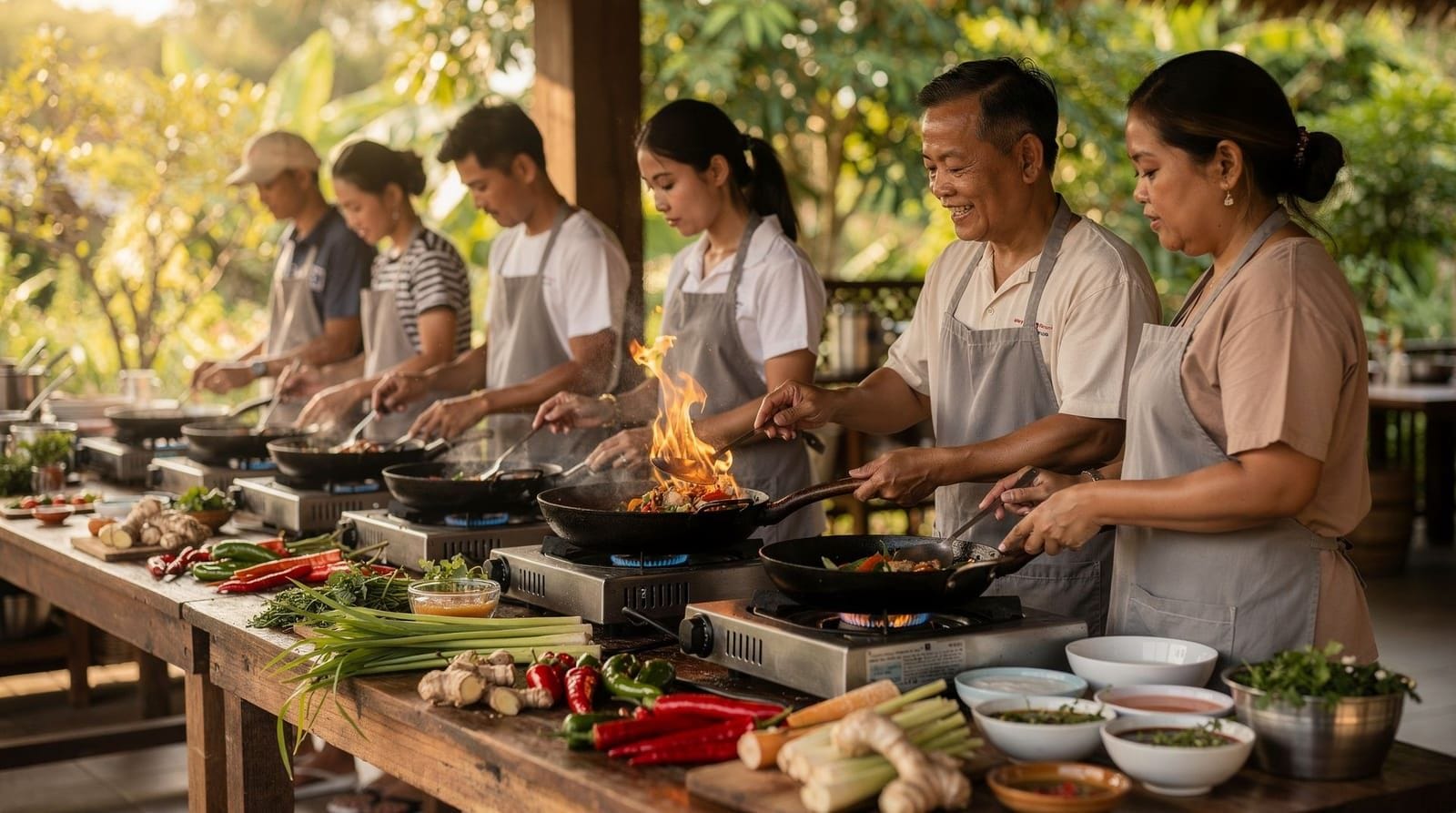
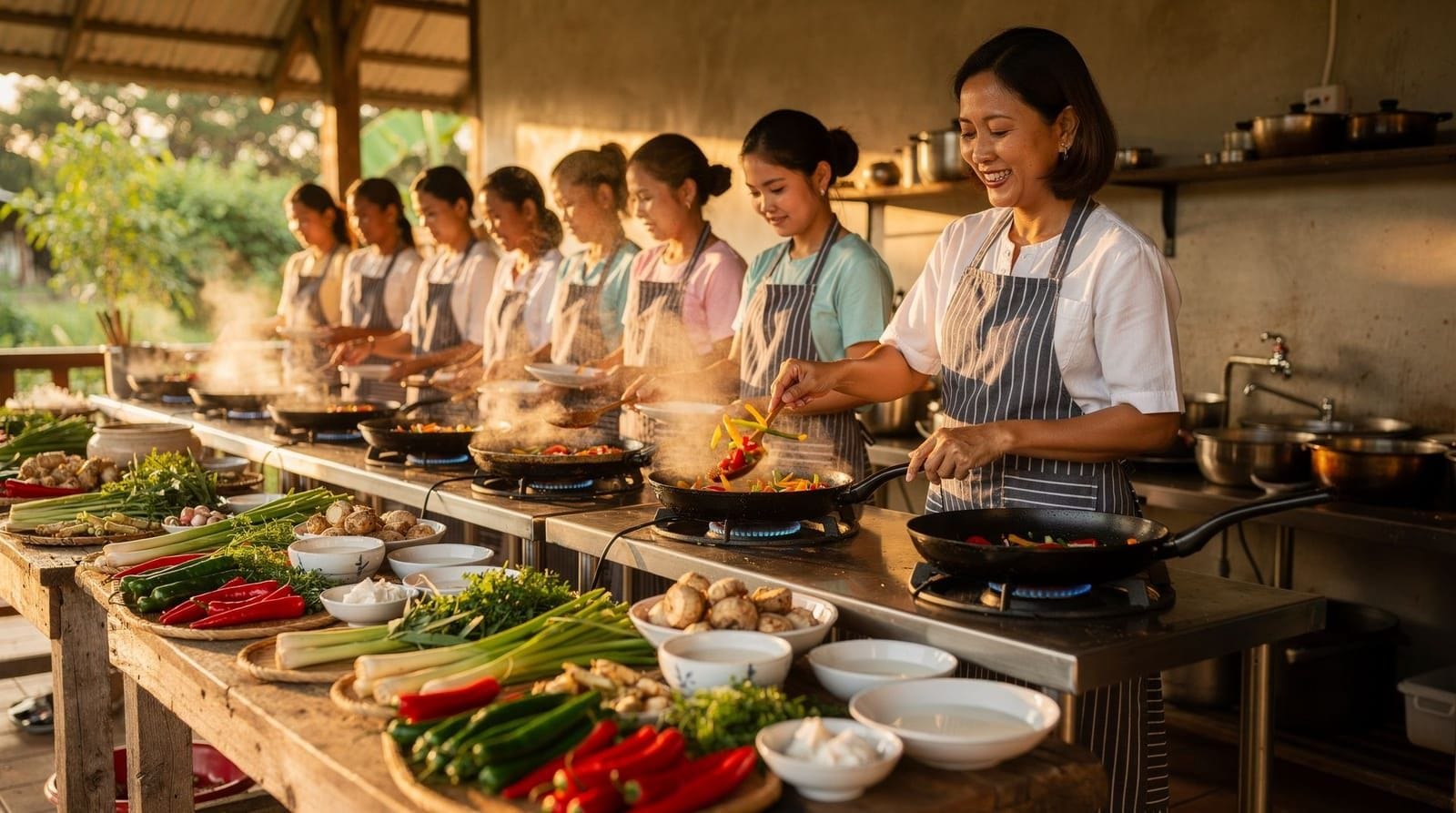
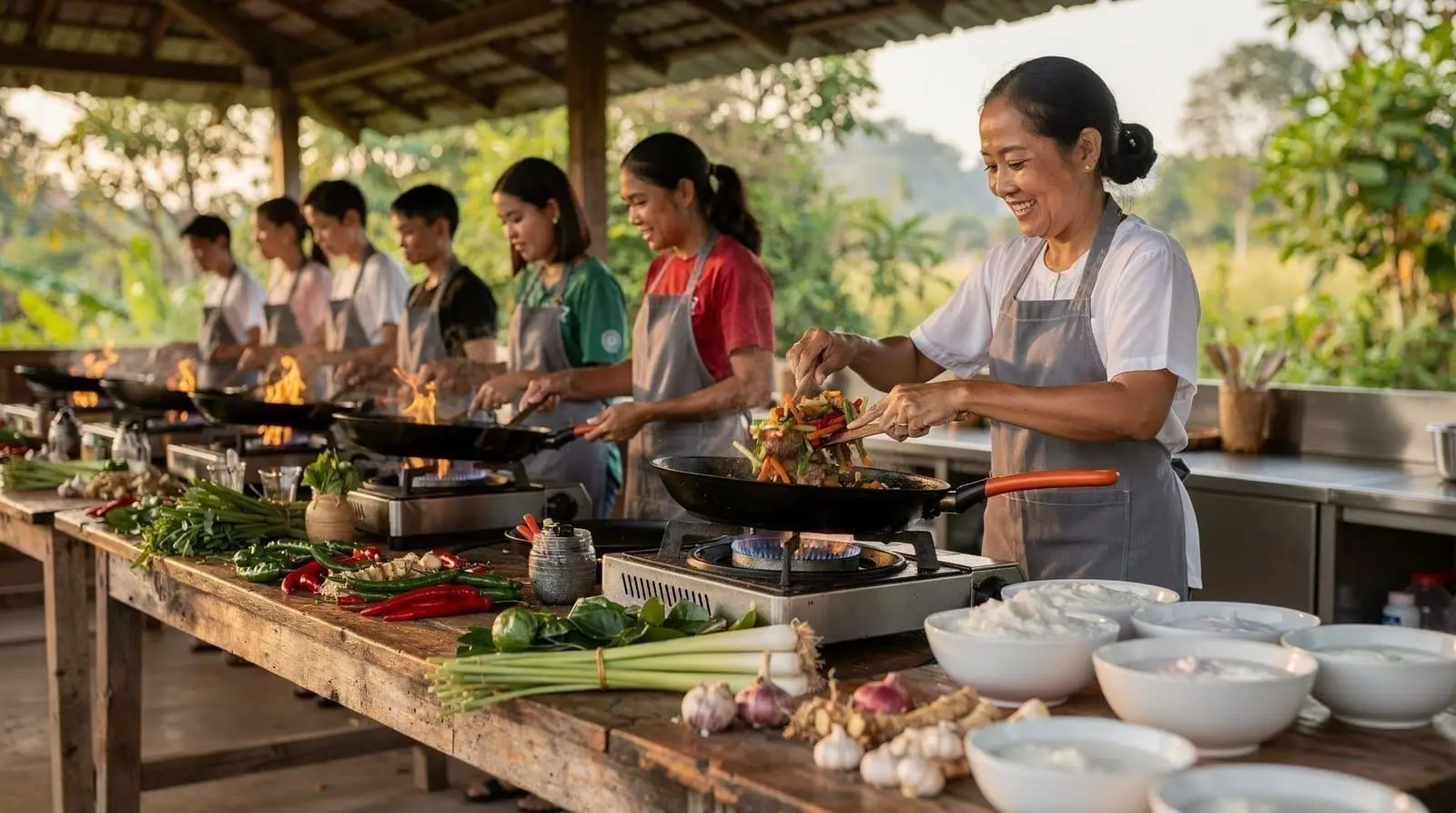
Nearly every class in the city follows the same basic shape: an ingredient-sourcing element (market or farm), a hands-on cooking session at individual stations, and a shared meal of everything you’ve made. What differs, and what’s worth checking before you book, is:
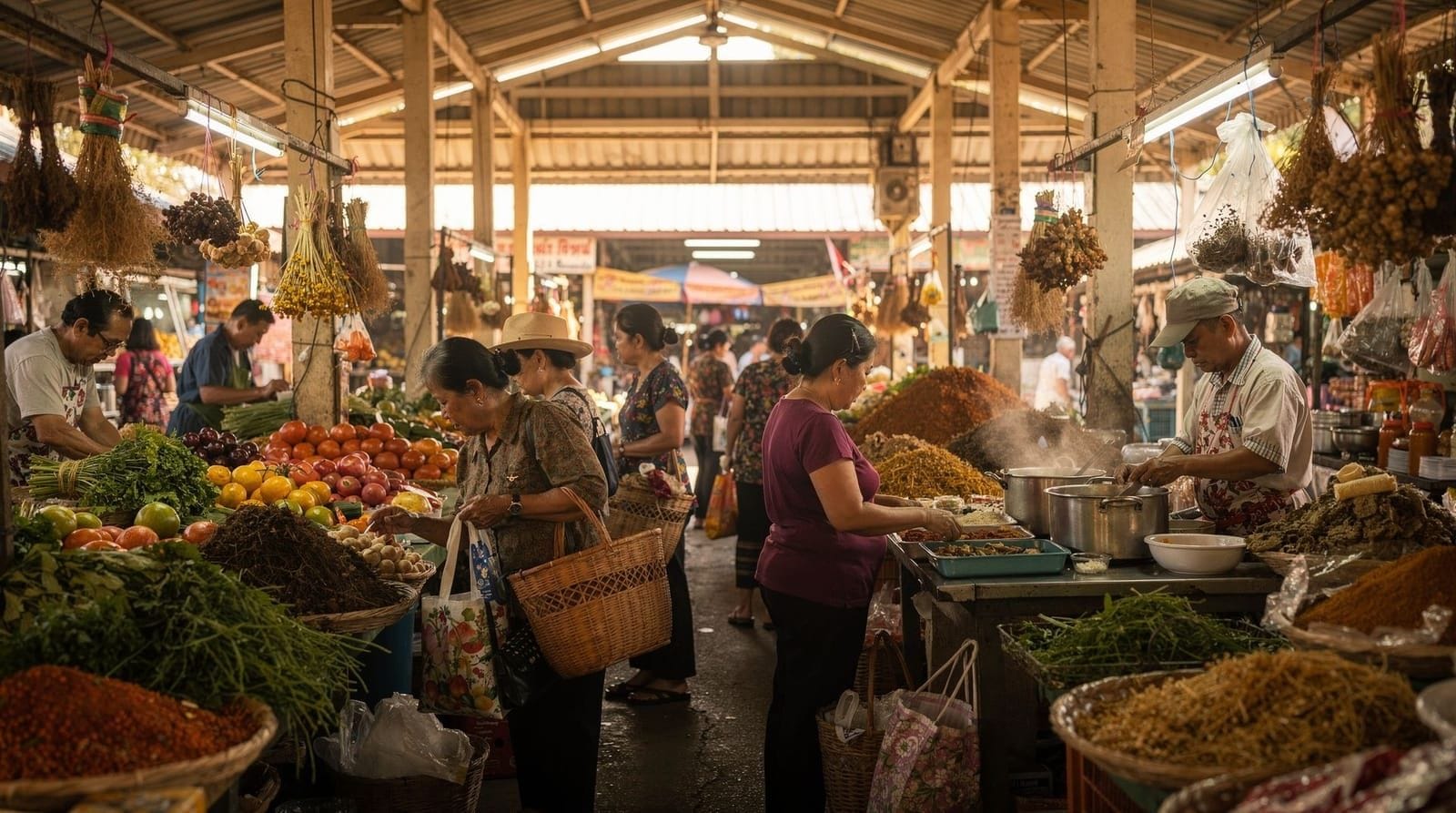
- Market vs farm sourcing. Market classes teach you to identify and select fresh ingredients the way local cooks do; farm classes instead have you walk an organic garden and pick herbs yourself.
- Class size. Some operators cap groups at around 8-10 students per instructor; others run larger group sessions that can feel more like a demonstration than hands-on teaching.
- Dish list and flexibility. A few schools let you choose your own dishes from a longer menu; most set a fixed list of 4-8 dishes per session.
- Half day vs full day. Full-day classes add an extra dish or two and usually build in more time at the market or farm rather than rushing the sourcing portion.
Our cooking class guide covers the full picture of how to choose, including what to expect on the day; this page focuses on comparing five specific bookable options.
The comparison: five cooking class tours
Traditional Thai Cooking Class with Market Tour — half day, roughly 900-1,300 THB (25-36 USD). The most balanced option: an hour or so at a local wet market followed by a hands-on class of 4-6 classic dishes (typically a curry, pad Thai or pad see ew, tom yum soup, spring rolls, and a dessert). Small groups, English-speaking instruction, and a take-home recipe book.
Local Northern Thai Cooking Class at Grandma’s — half day, roughly 1,000-1,400 THB (28-39 USD). This class specializes in Northern Thai (Lanna) dishes specifically — think khao soi, sai oua sausage, and nam prik ong — rather than the more generic pan-Thai menu most schools teach. Worth prioritizing if you want to learn the region’s own cuisine rather than dishes you could just as easily learn in Bangkok or Phuket.
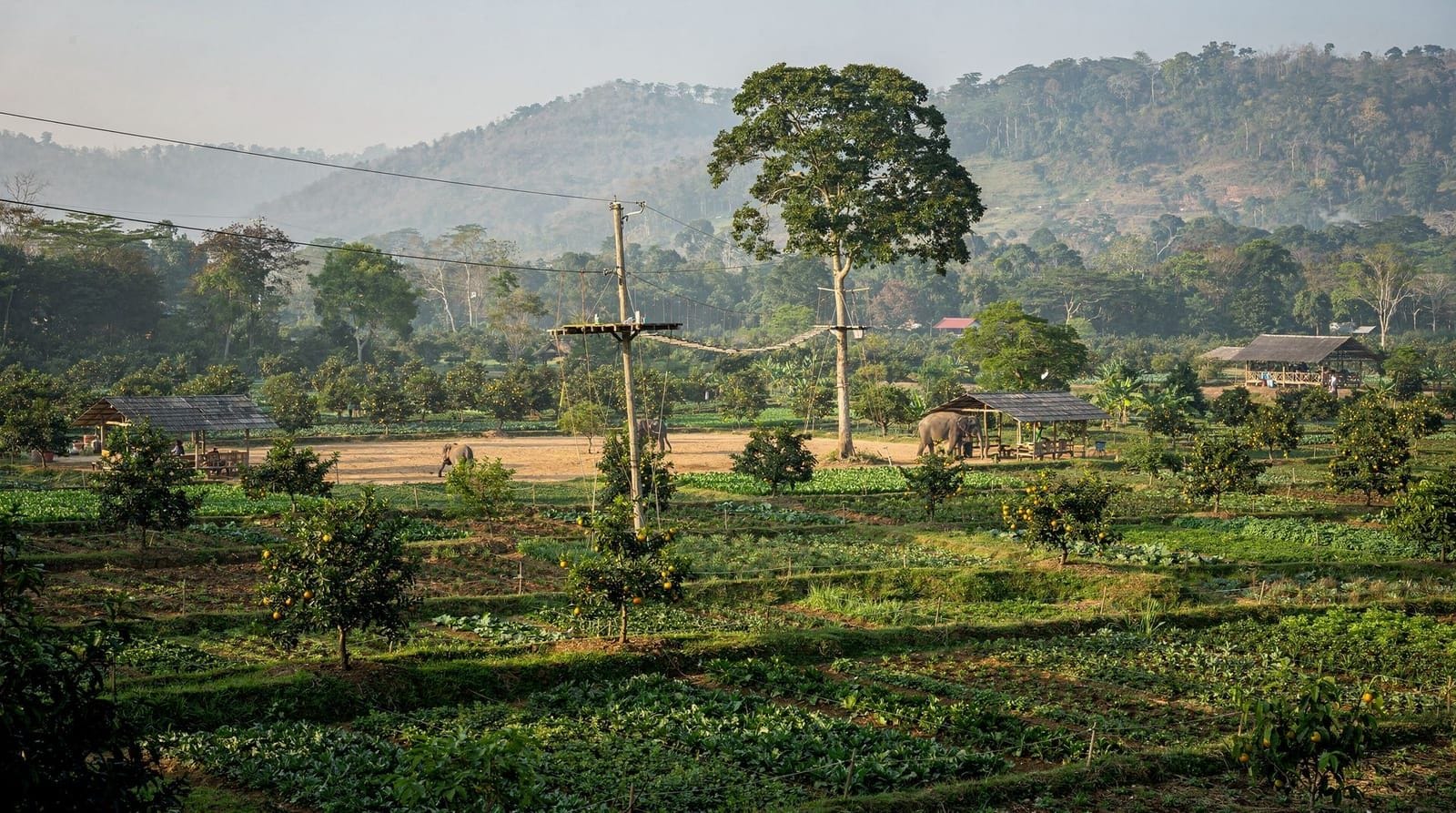
Half-Day Cooking Class at an Organic Farm — half day, roughly 950-1,300 THB (26-36 USD). Swaps the market walk for a stroll through an organic herb and vegetable garden, where you pick what you’ll cook with rather than buying it. A good pick if the market crowds and haggling aren’t part of the experience you’re after.
Full-Day Cooking Class in Organic Farm and Market — full day, roughly 1,700-2,200 THB (47-61 USD). Combines both sourcing formats in one day: a market visit in the morning, a farm stop, and a longer cooking session covering 6-8 dishes. The best choice if you can’t decide between market and farm and have a full day to spend on it.
Asia Scenic Thai Cooking School — half or full day, roughly 1,100-2,000 THB (31-56 USD) depending on format. A long-running, well-reviewed school with its own dedicated teaching farm outside the city center, popular enough that it’s worth booking several days ahead in high season. Runs both market and farm variants depending on which session you book.
Half day vs full day: is the extra time worth it
A half-day class (roughly 4-5 hours including transfer) is enough time to learn 4-6 dishes and get a genuine feel for Thai cooking technique without eating into the rest of your day. A full-day class adds an extra dish or two, more unhurried time at the market or farm, and often a wider choice of recipes, for roughly double the price. Unless you’re specifically building your trip around a food-focused day, most visitors get full value from the half-day format. Our what-to-expect guide walks through the typical timeline hour by hour.
Where these classes actually take place
Several schools run their market-tour sessions starting from central pickup points near the Old City, often routing through Warorot Market for the ingredient-sourcing portion before continuing to a teaching kitchen slightly outside the center. Farm-based classes typically operate further out toward Mae Rim, which adds 20-30 minutes of transfer time each way but puts you in a genuinely rural setting for the garden-picking portion.
Dietary needs and vegetarian options
All five operators compared here accommodate vegetarian requests with advance notice, and several run a fully vegan version of the standard menu on request, substituting mushroom sauce or soy sauce for fish sauce and shrimp paste in dishes that default to using them. It’s worth flagging dietary restrictions at booking rather than on the day, since ingredient shopping for market-based classes happens before the group arrives. Our vegetarian and vegan cooking class guide covers which schools handle this best.
Learning Northern Thai food specifically
If your main goal is learning the region’s own dishes rather than a generic Thai menu, prioritize a class that specifically teaches Northern (Lanna) cuisine — khao soi, sai oua, gaeng hang le, and nam prik ong are dishes you’re less likely to encounter on a standard curriculum built around central Thai classics like green curry and pad Thai. The Lanna cooking class at Grandma’s and Asia Scenic’s Northern-focused sessions both lean into this specifically. Our khao soi learning guide goes deeper on which schools teach the dish most authentically.
Farm-to-table and organic options
For travelers who want to see and understand where ingredients come from before cooking with them, the organic-farm classes are a genuinely different experience from a market walk — you’re picking lemongrass, kaffir lime leaf, and Thai basil straight from the plant rather than buying them bagged. Our farm-to-table cooking class guide covers a few more operators specializing in this format.
Booking tips
Book at least 2-3 days ahead in the November-February high season, since the best-reviewed schools, especially Asia Scenic, cap class sizes and fill up quickly. Confirm whether the listed price includes hotel pickup, since a few operators list a lower base price and add transfer as an optional extra. If you’re choosing between several schools, our best cooking schools compared guide covers a wider set of options beyond the five on this page.
Evening classes vs daytime classes
Most of the five schools compared here run their standard sessions in the morning, roughly 8:30am to 2pm, timed around the wet market’s freshest produce and the cooler part of the day for the market-walking portion. A smaller number of operators also run an afternoon or early-evening session, typically 4pm to 9pm, which skips the market visit (since most stalls close by early afternoon) in favor of pre-sourced ingredients and a dinner-style class. Evening classes suit travelers who’d rather keep mornings free for temples or a sanctuary visit, though you lose the market-browsing element that many people specifically book a cooking class to experience. If the market walk matters to you, confirm the session time before booking, since a few listings default to whichever slot has availability rather than the format you actually want.
What a typical class actually covers, dish by dish
Most half-day classes settle on a similar core menu with some variation in exact substitutions: a curry (green, red, or massaman, sometimes with a choice), a stir-fry (commonly pad Thai, pad see ew, or cashew chicken), a soup (tom yum or tom kha), spring rolls or another appetizer, and a dessert, almost always mango sticky rice or a banana-based sweet. Full-day classes typically add one or two dishes to this list, often a second curry paste made from scratch or a Northern Thai specialty like khao soi if the school teaches regional cuisine specifically. Instructors demonstrate each dish course by course rather than all at once, so you cook and eat in sequence rather than preparing everything before sitting down to a single combined meal — a detail that surprises some first-timers expecting a single big spread at the end.
Frequently asked questions about Chiang Mai cooking class tours
Which Chiang Mai cooking class is best for a first-timer?
The traditional Thai cooking class with a market tour is the strongest all-rounder: a guided market walk followed by a hands-on class covering 4-6 classic dishes, in about 5-6 hours including transfer.
How much does a Chiang Mai cooking class cost?
Roughly 900-1,400 THB (about 25-39 USD) for a half-day class, and 1,600-2,200 THB (about 44-61 USD) for a full-day format that adds a farm visit and more dishes.
Do I need to know how to cook already?
No. Every class compared here is designed for complete beginners, with an instructor demonstrating each step before you repeat it at your own station.
What’s the difference between a market-tour class and a farm-based class?
A market-tour class starts with a walk through a local wet market to learn ingredient selection, then moves to a kitchen. A farm-based class instead has you pick herbs and vegetables from an organic garden before cooking.
Can vegetarians or vegans join these classes?
Yes, all the operators compared here accommodate vegetarian requests with advance notice, and several offer a fully vegan menu on request.
How many dishes do you actually cook?
Typically 4-6 dishes on a half-day class and 6-8 on a full-day class, usually chosen from a set list that includes a curry, a stir-fry, a soup, spring rolls, and a dessert.
Do you eat what you cook, or is there a separate lunch?
You eat everything you cook, course by course, which functions as your lunch or dinner depending on the class time. Portions are generous enough that a separate meal usually isn’t needed that day.