Muay Thai in Chiang Mai: watching a fight versus training
Chiang Mai: Thapae Boxing Stadium Muay Thai Match Ticket
Should I watch a Muay Thai fight or take a training class in Chiang Mai?
Most visitors do both, since they're different experiences: watching a fight night at a stadium like Thapae Boxing Stadium costs roughly 600-1,500 THB (about USD 17-42) for a ticket and gives you the spectacle, crowd, and betting-adjacent atmosphere of a real fight card. A one-off training session or day pass at a tourist-friendly gym runs roughly 300-600 THB (about USD 8-17) and gives you a taste of the actual sport's technique and conditioning. Neither substitutes for the other.
Muay Thai is one of the more approachable ways to spend an evening or a morning in Chiang Mai, whether that means sitting in the crowd at a real stadium fight card or stepping into a ring yourself for the first time. The two experiences are genuinely different — watching is spectacle, atmosphere, and a window into Thai sporting culture, while training is physical, humbling, and a much closer look at how demanding the sport actually is — and this guide covers both honestly, including the parts of the industry (staged undercards, child fighters, tout-inflated prices) worth knowing about before you buy a ticket or book a class.
Quick answer: watch a fight at a real stadium — Thapae Boxing Stadium is the most established option near the Old City — for roughly 600-1,500 THB (about USD 17-42). Try a training session at a tourist-friendly gym for roughly 300-600 THB (about USD 8-17) if you want to feel the sport rather than just watch it. Most visitors who have the time do both across a multi-day stay.
The stadium landscape: what’s actually running
Chiang Mai has several stadiums running regular fight cards aimed at a mixed local and tourist audience, distinct from the handful of larger, more historic stadiums in Bangkok. Thapae Boxing Stadium, close to the eastern edge of the Old City, is the longest-established and most consistently programmed option, typically running cards several nights a week. Kalare Night Bazaar’s stadium, inside the night bazaar complex on Chang Khlan Road, and the Loi Kroh stadium nearby offer similar tourist-oriented fight nights within easy walking distance of central hotels, useful if you’d rather not arrange transport for an evening out. A newer northern stadium and additional smaller venues have opened in recent years as demand from visitors has grown, so it’s worth checking what’s currently running fight nights on your specific travel dates rather than assuming every venue operates on a fixed weekly schedule indefinitely.
Beyond the well-known central stadiums, occasional fight cards run at venues further from the tourist core, sometimes tied to a temple fair or provincial event rather than a fixed commercial stadium schedule. These are less consistently bookable in advance and rarely show up on mainstream ticketing platforms, making them more of an opportunistic find for visitors staying longer in the region than a plannable evening out for a short trip. For most visitors, the established Old City and riverside stadiums remain the more practical, reliably scheduled option.
What a typical fight night actually looks like
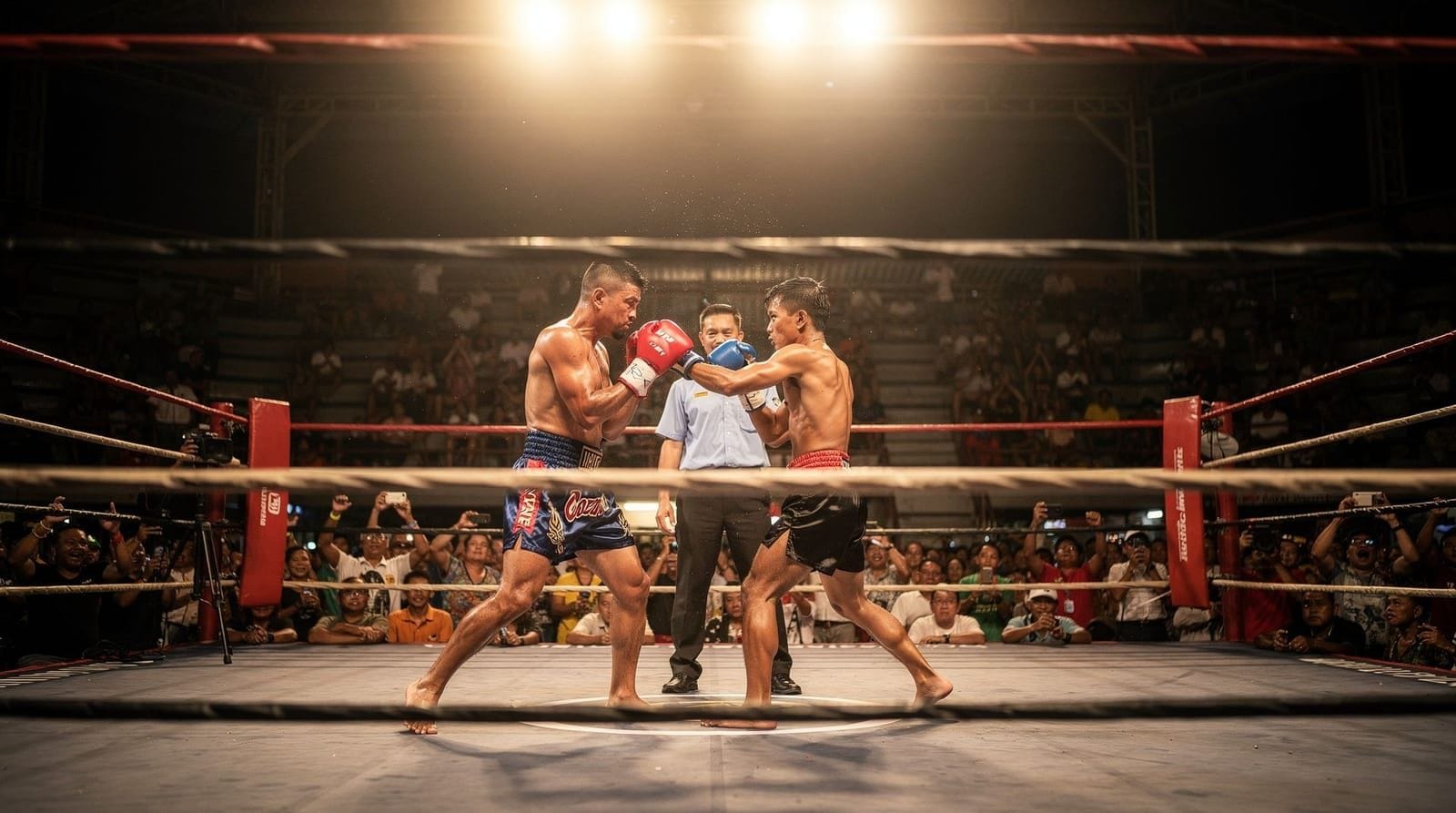
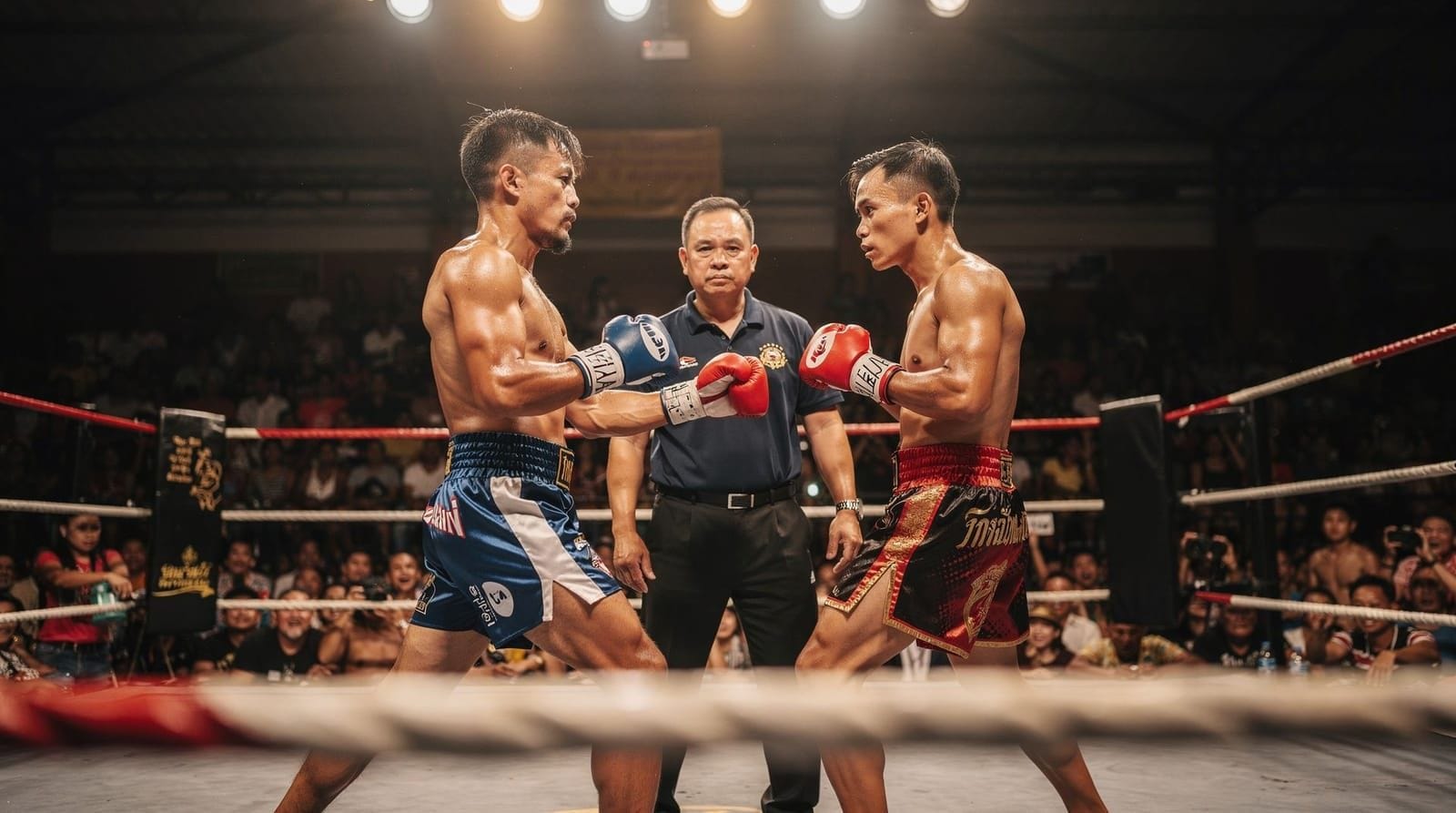
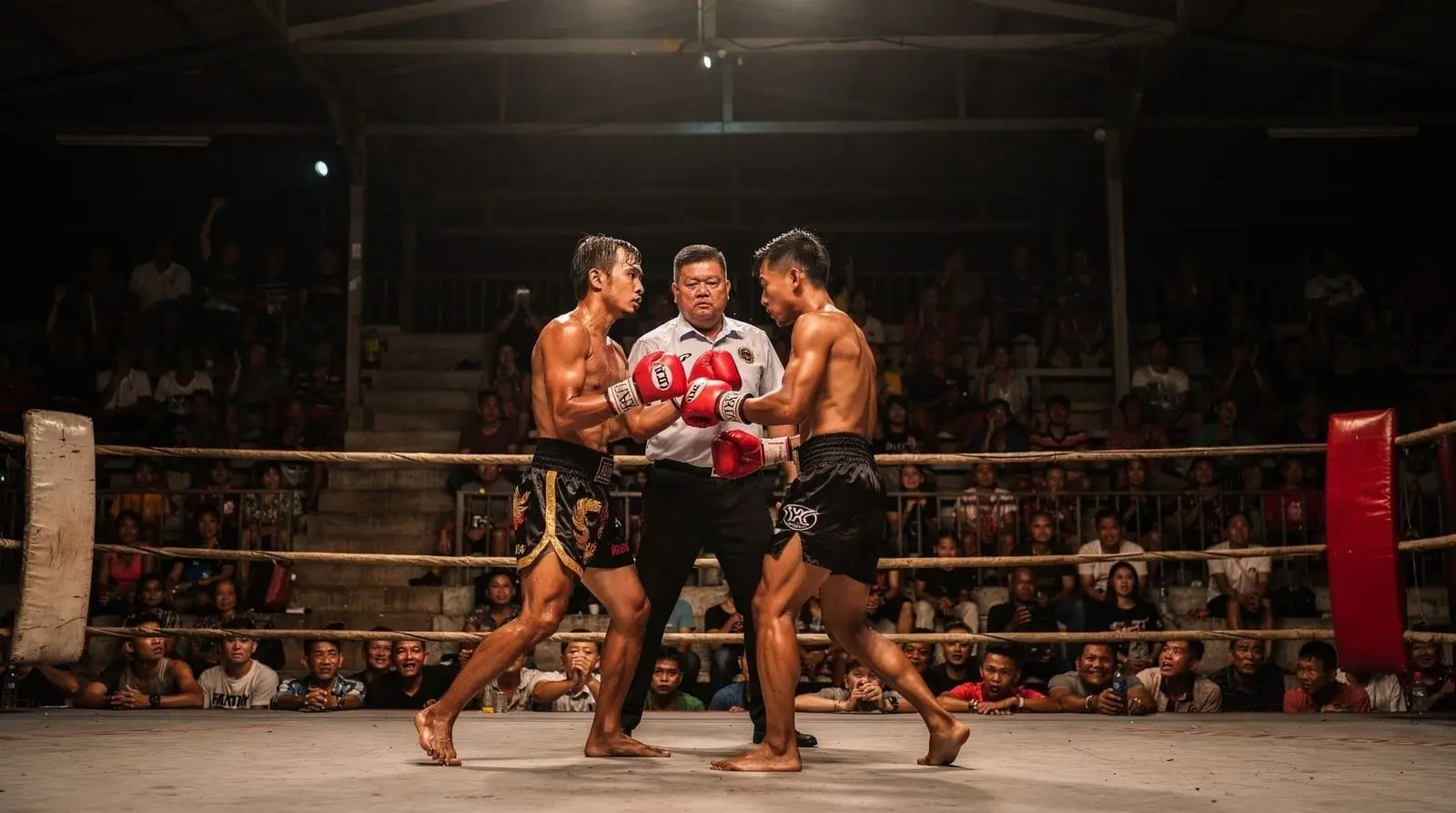
Doors generally open before the first bout, with undercard fights — often lower-experience fighters or exhibition-style matchups — running through the earlier part of the evening while the crowd builds, followed by the main card fights later in the night. Expect live music (a small ensemble playing traditional sarama accompaniment is standard, building tempo as a fight progresses), a wai khru pre-fight ritual where fighters pay respect to their trainers and the sport’s traditions, and an atmosphere that’s noticeably more informal and participatory than a Western sporting event — vendors circulating, some audience betting activity happening around you even if you’re not personally wagering, and a level of crowd noise that rises and falls with the action in the ring.
A typical full card runs somewhere between eight and twelve bouts across an evening lasting two to three hours, with fight length itself varying by the fighters’ experience level — junior or novice bouts often run fewer rounds than a main event between more established fighters. Between bouts, there’s usually a short interval where vendors sell drinks and snacks and the ring crew resets, giving you a natural moment to stretch, use the bathroom, or simply take in the surrounding crowd rather than staying glued to the ring for the entire evening. Seating at most tourist-oriented stadiums is arranged in tiers moving outward and upward from ringside, and even a mid-tier seat gives a perfectly clear view of the action given how compact these venues tend to be compared with larger Bangkok stadiums.
Ticket prices and where inflation creeps in
Genuine stadium ticket prices typically run 600-1,500 THB (about USD 17-42), with the range reflecting seating tier — ringside seats close to the action cost more than rear or standing areas further back. The most common way visitors overpay is through touts working the street near a stadium entrance who quote a price above what the venue itself charges, sometimes bundling in a “VIP” framing that isn’t a formally defined tier at every venue. Buying directly at the stadium box office, or through a listing like Thapae Boxing Stadium’s official match ticket, generally avoids this markup more reliably than negotiating with someone approaching you on the sidewalk.
Betting is a genuine part of the local audience’s experience at a Chiang Mai fight night, with informal wagering happening among Thai attendees seated in specific sections, often accompanied by visibly animated reactions as odds shift during a bout. Visitors are not expected to participate and generally aren’t approached to bet themselves, but it’s worth understanding this as a real, longstanding layer of stadium culture rather than being confused by the shouting and hand signals passing between attendees a few rows over. Ringside seating, while pricier, puts you close enough to appreciate the speed and power of strikes that read as much slower and less impactful from further back or on video.
Is it real, or staged for tourists?
This is a fair question given how tourist-oriented some Chiang Mai stadiums have become, and the honest answer is that it varies by bout rather than by venue as a whole. A typical card mixes genuinely competitive fights, often involving more experienced fighters, with lower-stakes or exhibition-style bouts earlier in the evening that can feel more like a showcase than a real contest. The ring ritual, music, and overall stadium atmosphere are authentic Thai fight culture rather than something invented for visitors — this is genuinely how Muay Thai stadiums operate across the country — but expecting every single bout on a tourist-friendly card to carry the same competitive intensity as a televised championship fight sets unrealistic expectations.
Some Chiang Mai stadiums also program novelty or exhibition-style bouts as part of an evening’s entertainment — occasionally involving foreign amateur fighters, or comedic or theatrical elements woven into an undercard slot — which is worth recognizing for what it is rather than mistaking it for a representative sample of serious competitive Muay Thai. If seeing genuinely high-level competitive fighting is your specific priority rather than a broader entertaining evening out, asking the stadium or ticket seller which bouts on a given night’s card feature more experienced fighters is a reasonable question, and staff are generally willing to point you toward the stronger matchups later in the card.
Kalare and Loi Kroh: convenience over prestige
The stadiums at Kalare Night Bazaar and along Loi Kroh Road trade some of Thapae’s longer track record for sheer convenience, sitting inside or immediately next to the riverside and night bazaar area many visitors are already exploring in the evening. A Kalare Night Bazaar boxing stadium Muay Thai ticket or a Loi Kroh Muay Thai boxing stadium ticket makes sense if you’re already planning an evening around the Anusarn night market area and don’t want to arrange separate transport to a stadium further out. The fight quality and format across these venues is broadly comparable to Thapae; the choice mostly comes down to logistics and whichever schedule lines up with your evening.
Training: from a single session to a fight camp
For visitors who want to feel the sport rather than only watch it, Chiang Mai has a genuinely deep bench of gyms catering to tourists, ranging from a single drop-in class to multi-week fight camps for visitors training seriously ahead of an amateur bout of their own. A basic Muay Thai experience with training session is the standard entry point: a 60-90 minute introductory class covering stance, basic strikes, and pad work with a trainer, requiring no prior experience. Longer packages, from a few days to several weeks, build progressively toward sparring and conditioning at a level closer to how Thai fighters actually train, and several gyms offer week-long or month-long packages for visitors planning to stay in the city for an extended period specifically to train.
Chiang Mai’s gym scene draws visitors ranging from complete first-timers wanting a single memorable session to serious hobbyists returning for multi-week training blocks structured around genuine progression — technique refinement, conditioning volume, and eventually controlled sparring under supervision. Gyms catering primarily to this second group typically run a more structured daily schedule (often two sessions a day, morning and late afternoon, avoiding the hottest midday hours) and expect a level of commitment and etiquette closer to what a Thai fighter in training would follow, including punctuality and consistent attendance across the booked period.
What a beginner session actually feels like
Expect a warm-up that’s more demanding than it initially looks — skipping rope, basic conditioning drills — followed by technique instruction on stance, jabs, crosses, roundhouse kicks, and often elbows and knees depending on the trainer and gym’s specific curriculum for beginners. Pad work with a trainer holding focus mitts or Thai pads is the centerpiece of most introductory sessions, giving you real-time feedback on technique rather than shadow-boxing alone. Most tourist-oriented gyms don’t push complete beginners into sparring during a first session, reserving that for visitors who return for multiple classes or commit to a longer camp.
Class sizes at tourist-friendly gyms vary from small private one-on-one sessions to group classes of a dozen or more, with private sessions costing more but giving a trainer’s undivided attention for technique correction, particularly useful if you’re genuinely new to the sport and want feedback rather than following along in a larger group at whatever pace the class moves. Language isn’t usually a barrier even at group sessions — most trainers working with tourists communicate technique through demonstration and physical correction as much as verbal instruction, and basic English is common enough among trainers at the more established tourist-facing gyms to handle any necessary questions about form or safety.
The ethics of child fighters
One of the more serious ethical questions around Muay Thai in Thailand involves child fighters, some competing professionally from a young age in stadiums and provincial fight circuits across the country. This is a genuine, actively debated issue within Thailand itself — driven by a mix of cultural tradition around introducing children to the sport early and the real income a fighting child can provide a family facing economic pressure — rather than a myth or tourist misunderstanding. Chiang Mai’s more tourist-facing stadiums vary in whether and how prominently child fighters feature on a given card; if this is a concern for you, it’s worth asking directly about a specific fight card’s lineup before buying a ticket, and directing your ticket spending toward venues and cards that don’t feature child bouts if that’s important to your own comfort with what you’re watching.
It’s worth being clear-eyed that this issue reflects broader economic and cultural realities within Thailand rather than something a single tourist’s ticket-buying choice will meaningfully change on its own; the point of raising it here is to make sure you’re informed rather than to suggest a simple individual fix resolves a structural issue. Some advocacy and reform efforts within Thailand have pushed for minimum age requirements and safety protections around child fighters in recent years, with mixed and unevenly enforced results across different provinces and stadium circuits, so the situation continues to evolve rather than being fixed in either direction.
Training safety and choosing a reputable gym
Reputable tourist-facing gyms brief beginners clearly on technique before any contact drilling, provide properly fitted gloves, wraps, and shin guards rather than worn-out shared equipment in poor condition, and pace a first session appropriately rather than pushing an unconditioned visitor into full-intensity sparring. A trainer who ignores basic technique corrections in favor of rushing you toward harder drills, or a gym with visibly worn safety equipment and no apparent first-aid readiness, are reasonable signs to look elsewhere. Asking a gym directly about its approach to injuries and its policy on sparring for first-time visitors before booking is a reasonable, non-awkward question that a legitimate operation should answer without hesitation.
Reviews and recent visitor accounts are genuinely useful here, more so than a gym’s own marketing photos, since they tend to surface specific details about trainer attentiveness, equipment condition, and how a first session was actually paced. A gym that’s been operating consistently for years with a steady stream of recent, detailed visitor feedback is a safer bet than a newer operation with only a handful of reviews or one that relies heavily on dramatic action photography rather than substantive detail about what a session actually involves.
Real costs across the spectrum
A single fight-night ticket runs roughly 600-1,500 THB (about USD 17-42). A one-off training session or day pass at a tourist gym typically runs 300-600 THB (about USD 8-17), often including basic equipment rental. Multi-day packages scale from there, with a week of daily training commonly running in the low thousands of THB and month-long fight camp packages, including accommodation at some gyms, running considerably higher — worth requesting a specific current quote from any gym you’re considering rather than relying on a figure that may be out of date by the time you travel.
Combining a fight night and a training session
Because watching and training deliver such different experiences, most visitors who have more than a couple of days in the city do both rather than choosing one over the other: a training session early in the stay to understand the sport’s technical demands firsthand, followed later by a fight night where that same technique is now recognizable in genuinely skilled fighters performing at a level well beyond a first-timer’s reach. Doing it in this order tends to deepen appreciation for what you’re watching at the stadium, since a beginner who has just thrown their first awkward roundhouse kick has a very different, more informed perspective on a fighter landing the same strike cleanly under real pressure.
Where to go from here
For a deeper look at choosing between a short taster class and a multi-week fight camp, see our Muay Thai training camps guide. For a closer comparison of the specific stadiums and how to pick a fight night that suits your evening, see where to watch Muay Thai fight nights. And if you’re weighing this experience against other tourist-oriented activities in the city more broadly, our honest-planner guide to Chiang Mai tourist traps covers where inflated pricing and overselling show up elsewhere in the city’s visitor economy, a useful frame for approaching any ticket or class booking with reasonable skepticism about the asking price.
Frequently asked questions about Muay Thai in Chiang Mai: watching a fight versus training
Is Muay Thai in Chiang Mai staged or real?
How much does it cost to watch a Muay Thai fight in Chiang Mai?
Can complete beginners take a Muay Thai class in Chiang Mai?
What is the ethical concern around Muay Thai in Thailand?
Do I need to be fit to try a training session?
What should I wear to a Muay Thai class?
Top experiences
Bookable activities with verified prices and instant confirmation on GetYourGuide.