Best evening street-food tours in Chiang Mai, compared
Chiang Mai: Evening Local Street Food Market Tour
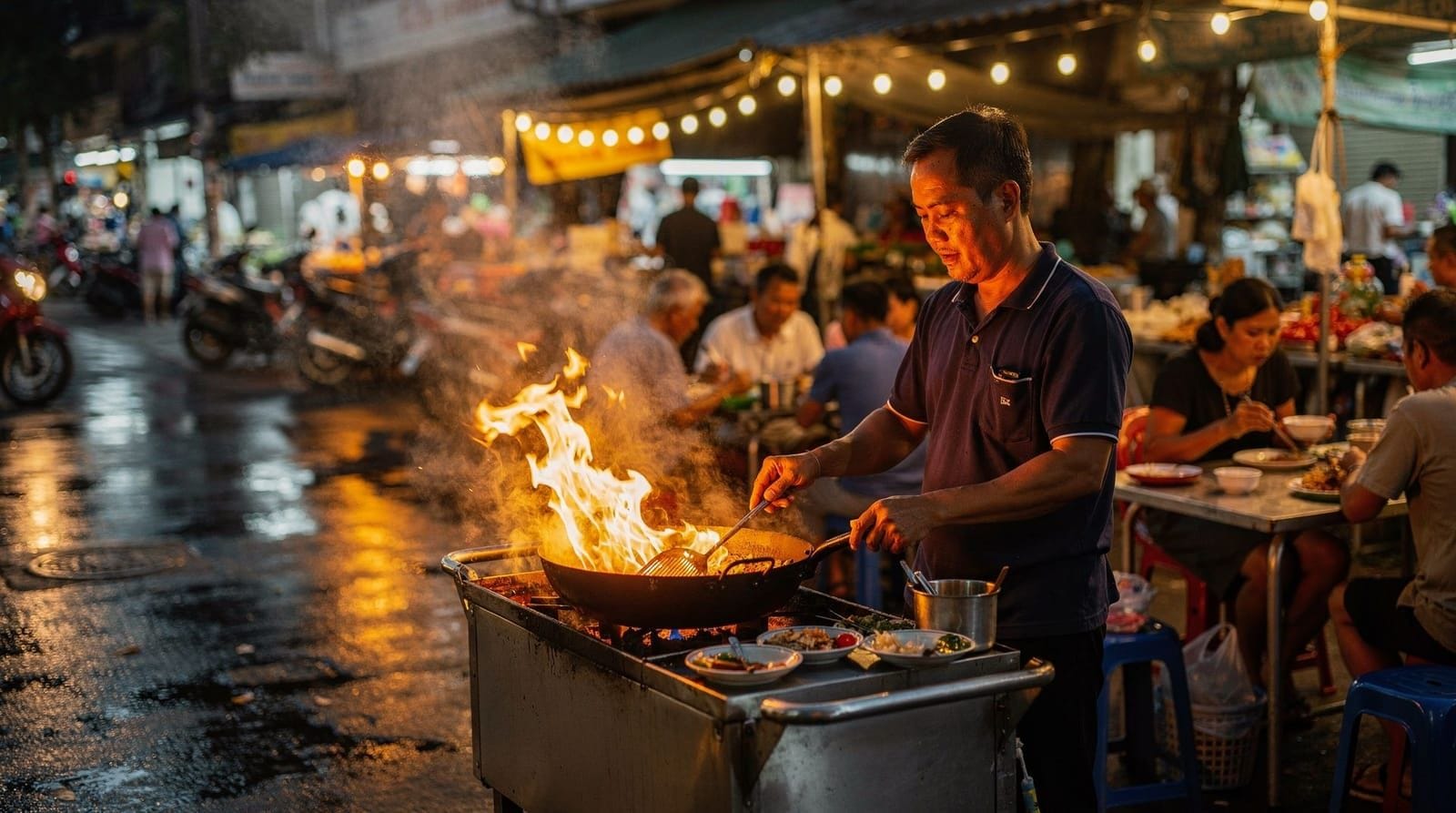
Chiang Mai’s street food scene genuinely rewards a guided introduction, if only because the best stalls aren’t always the busiest-looking ones and a lot of the city’s most distinctive dishes (khao soi, sai oua, nam prik ong) don’t come with English menus at most vendor carts. A night food tour solves both problems at once - a curated route and someone to explain what’s actually on the plate - though the formats differ enough in pace, coverage, and whether temples get bundled in that it’s worth picking deliberately rather than booking the first one that shows up.
Quick answer: an evening local street food market tour is the best all-around pick, typically running 3-3.5 hours with 8-15 tastings across a mix of market stalls and street vendors, priced roughly 900-1,400 THB (about USD 25-39) per person. Tours combining food with a couple of illuminated temple stops are worth considering if you want sightseeing and eating in the same evening rather than as two separate outings.
The standard evening market tour
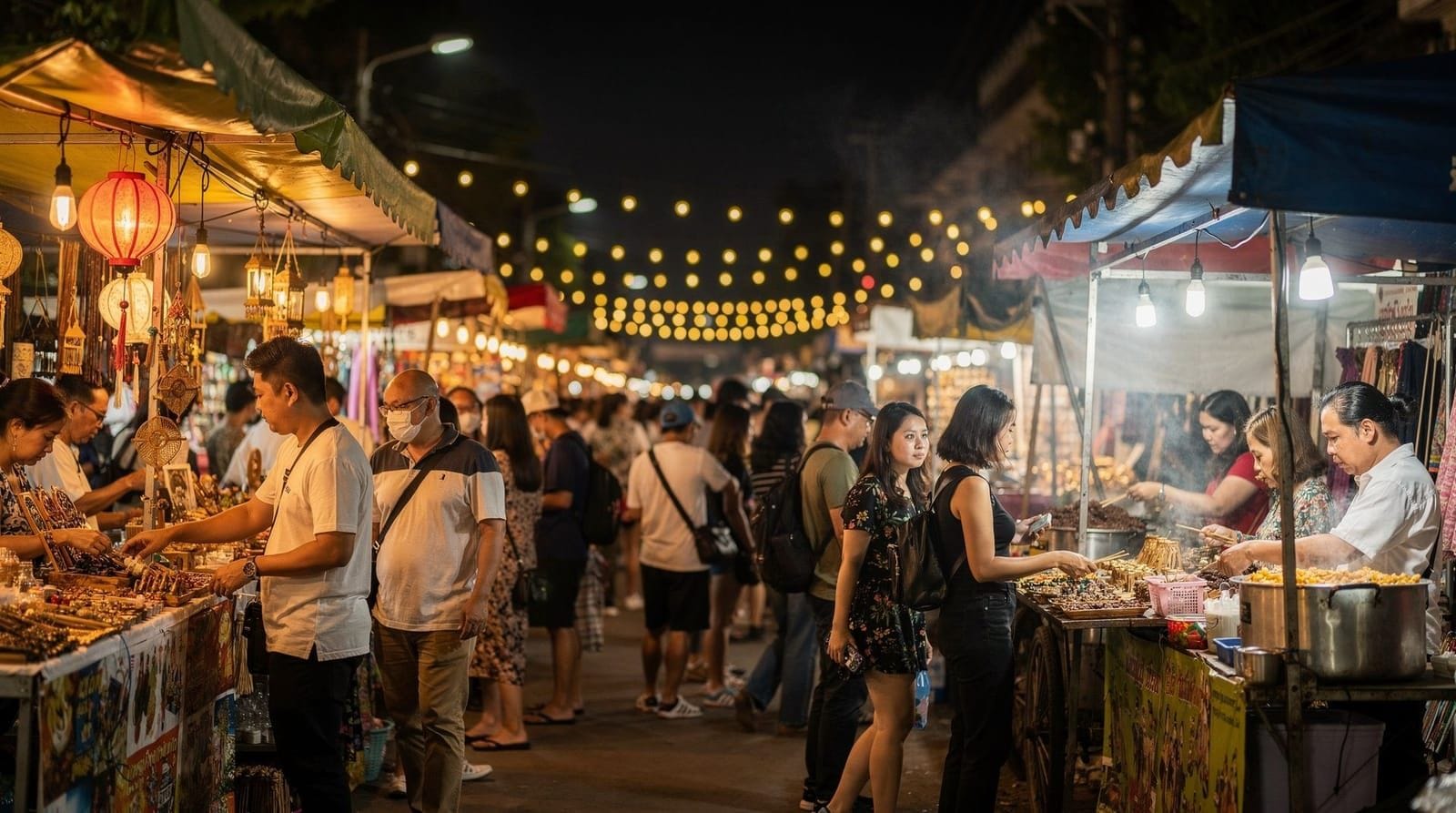
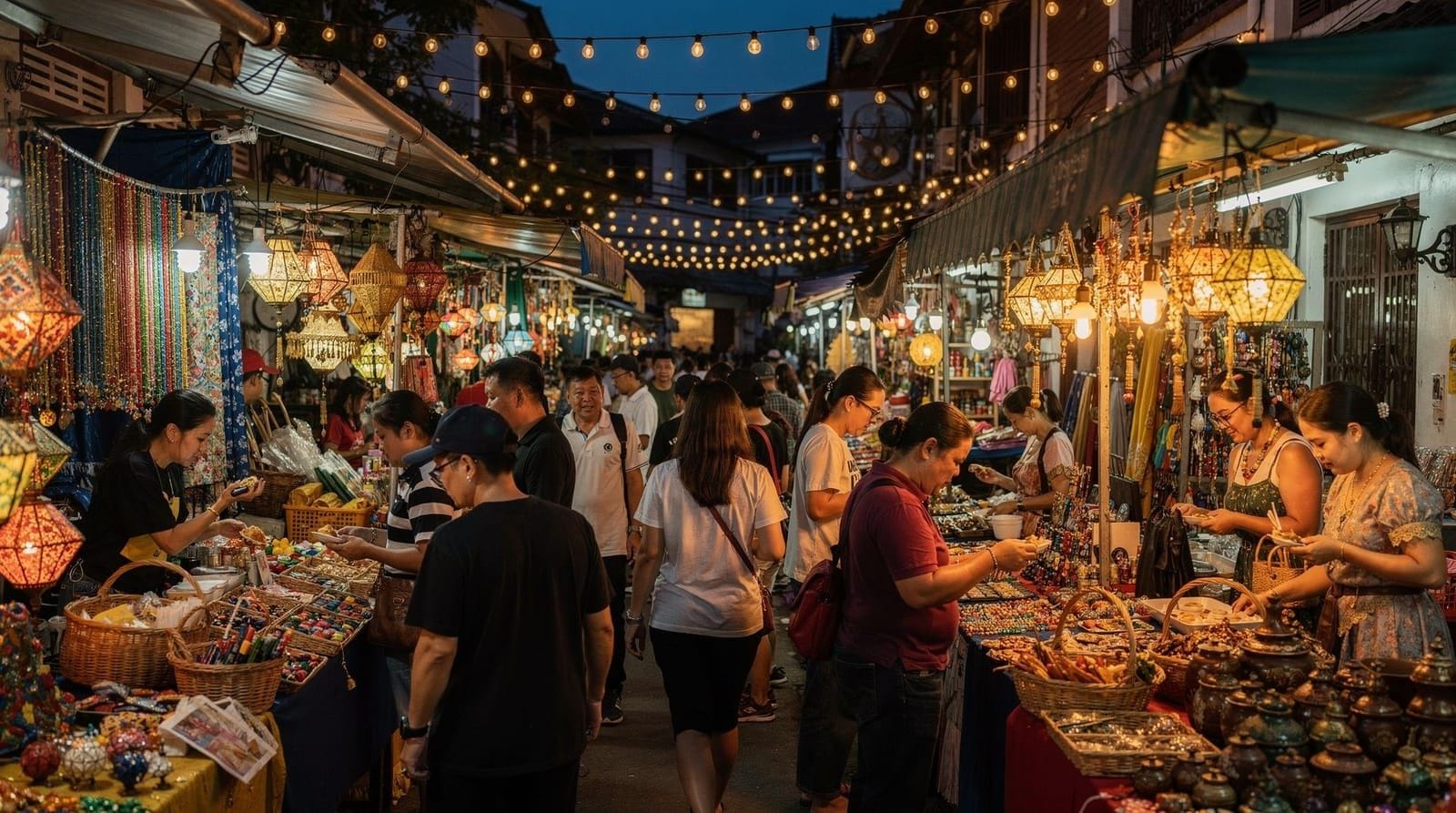
An evening local street food market tour is the clearest default choice, walking through a market area with a guide who selects and explains a running sequence of dishes as the evening goes on. This format typically runs 3-3.5 hours and works well for a first Chiang Mai food tour since it’s built purely around eating and market atmosphere without splitting attention between food and sightseeing stops.
Temples plus street food, by tuk-tuk
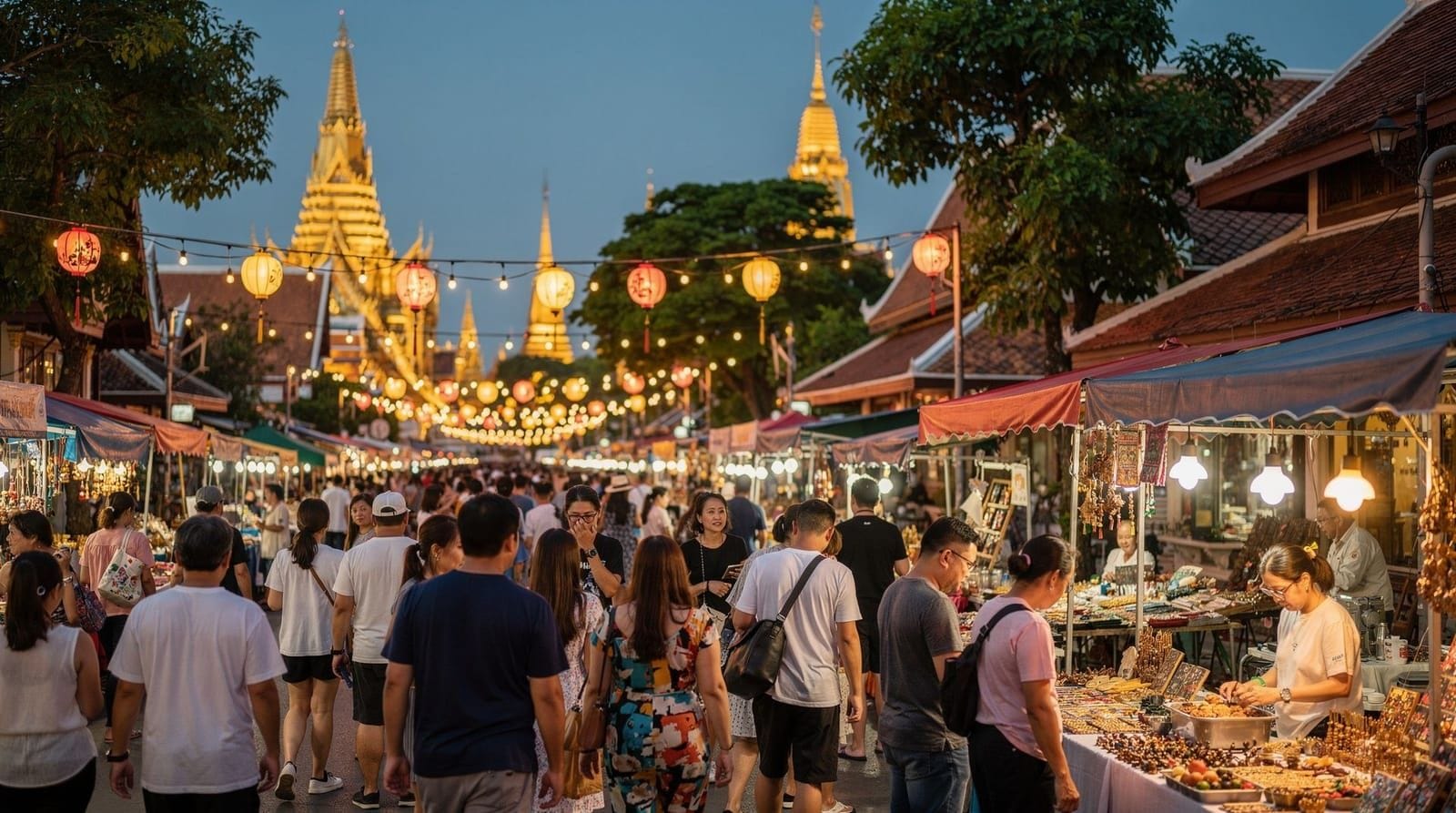
For an evening that mixes sightseeing and eating, a temples and street food night tour by tuk-tuk alternates between illuminated Old City temple stops and food vendor visits, traveling between them by tuk-tuk rather than on foot. This suits travelers with a single evening free who want both experiences covered rather than choosing one over the other, though it necessarily means less total tasting time than a food-only tour of the same length.
A close variant, the tuk-tuk night tour with temples and street food, covers very similar ground - worth comparing the two directly on the specific stop list and tasting count before booking, since both run the same core combined format.
The public night food scene tour
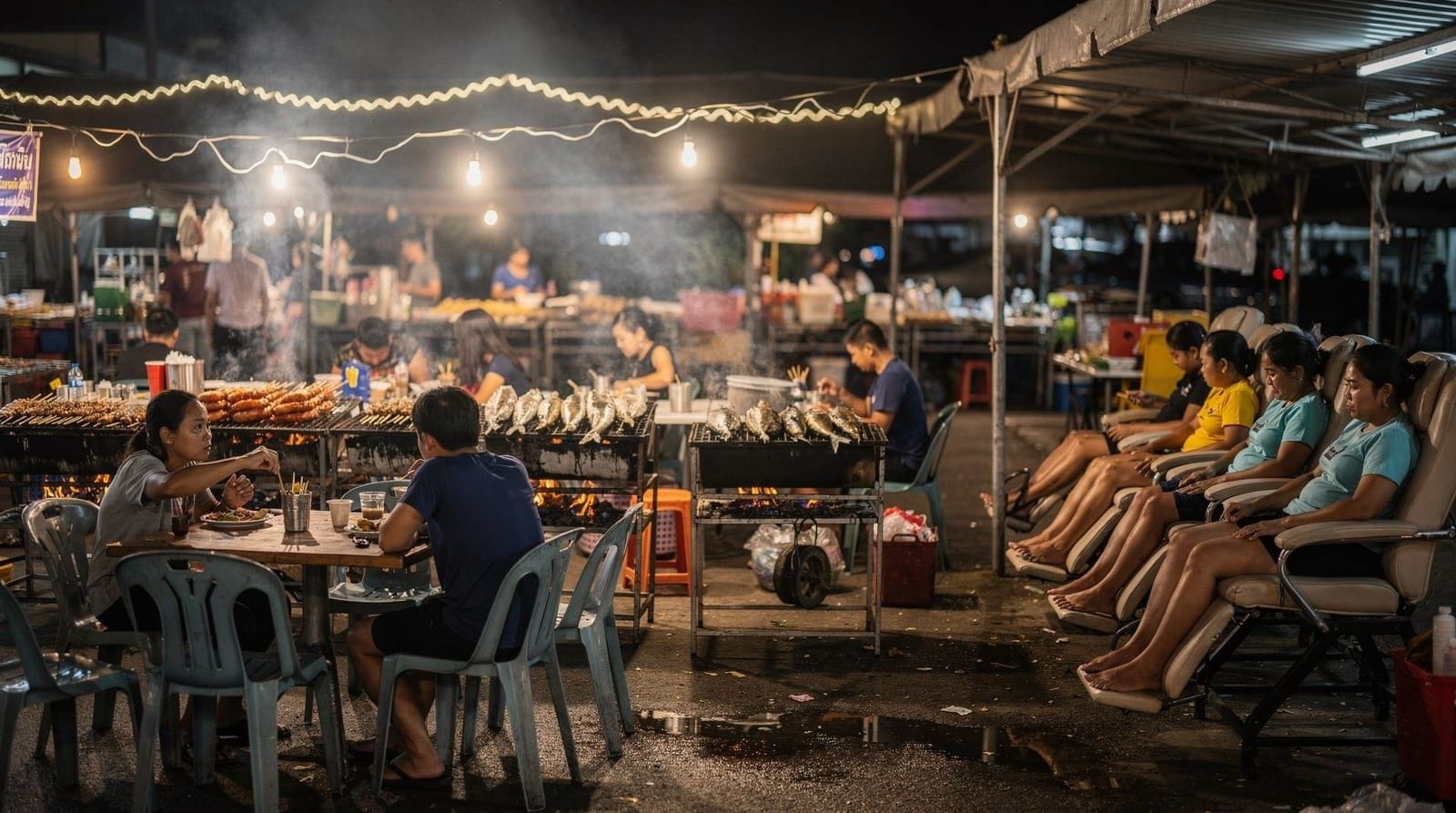
A night food scene tour leans into the broader after-dark food culture beyond a single market, moving between several distinct food areas across an evening to give a wider sense of where locals actually eat rather than concentrating on one location. This works well for a second food-focused evening if you’ve already done a market-centered tour on an earlier night of your trip.
The Michelin Guide angle
For travelers who want their food tour framed around a specific credential rather than just “street food,” a Michelin Guide and street food tour builds its route around vendors that have received Michelin Guide recognition (the Bib Gourmand and similar street-food listings, distinct from starred restaurants), giving a curated shortlist rather than a broader market wander. This suits travelers who want a specific, vetted list of stops over a more exploratory evening.
Walking tours: slower, more compact
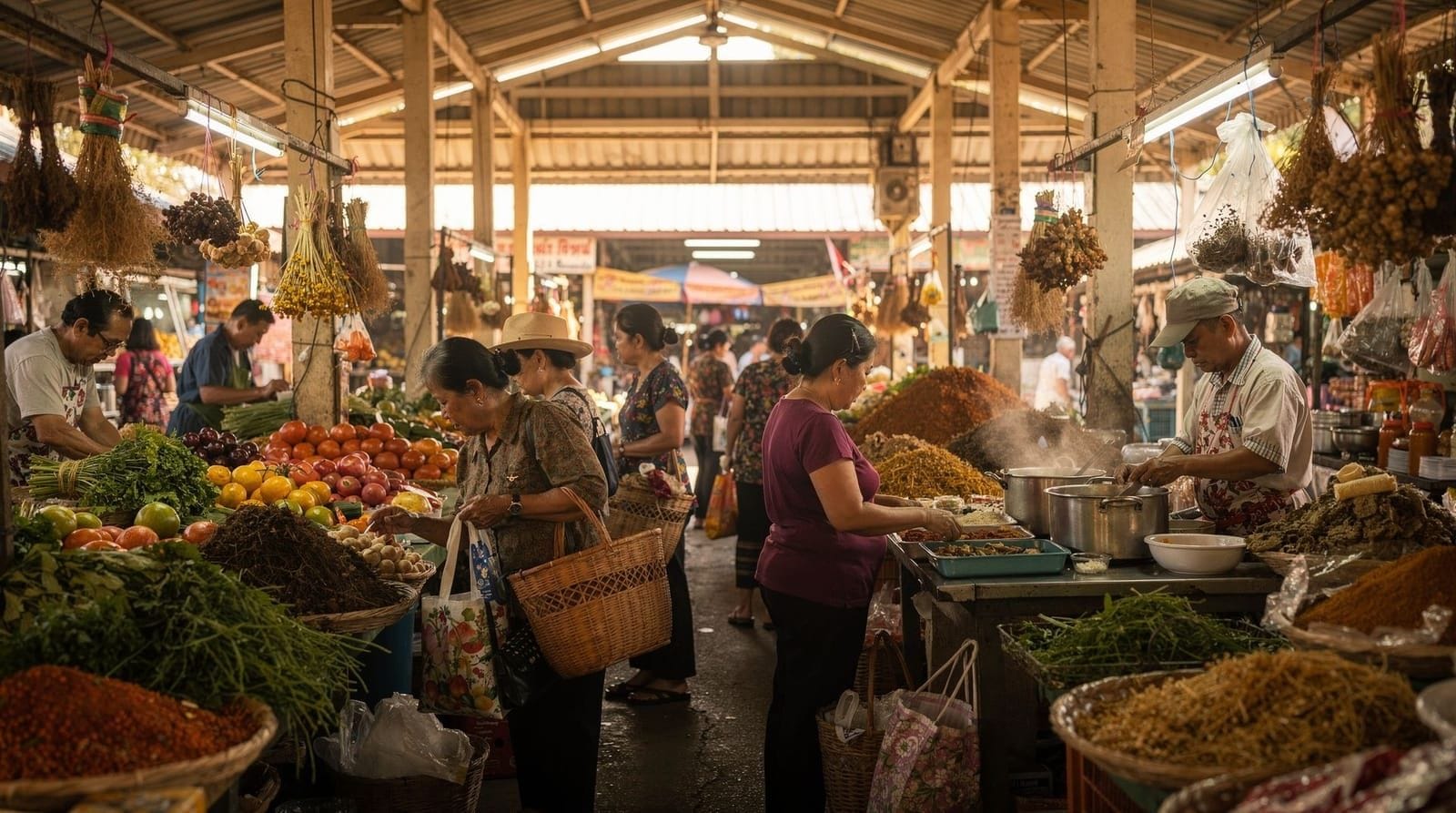
Rather than covering ground by tuk-tuk, a walking-based food and market tour keeps the evening to a single compact area, moving at a slower pace between stops within comfortable walking distance of each other. This suits travelers who’d rather stroll and let dishes settle between tastings than cover multiple separate food districts in one night, and pairs naturally with a market that’s already dense with vendors in a small footprint, like Warorot Market’s day-into-evening food stalls.
How many dishes to actually expect
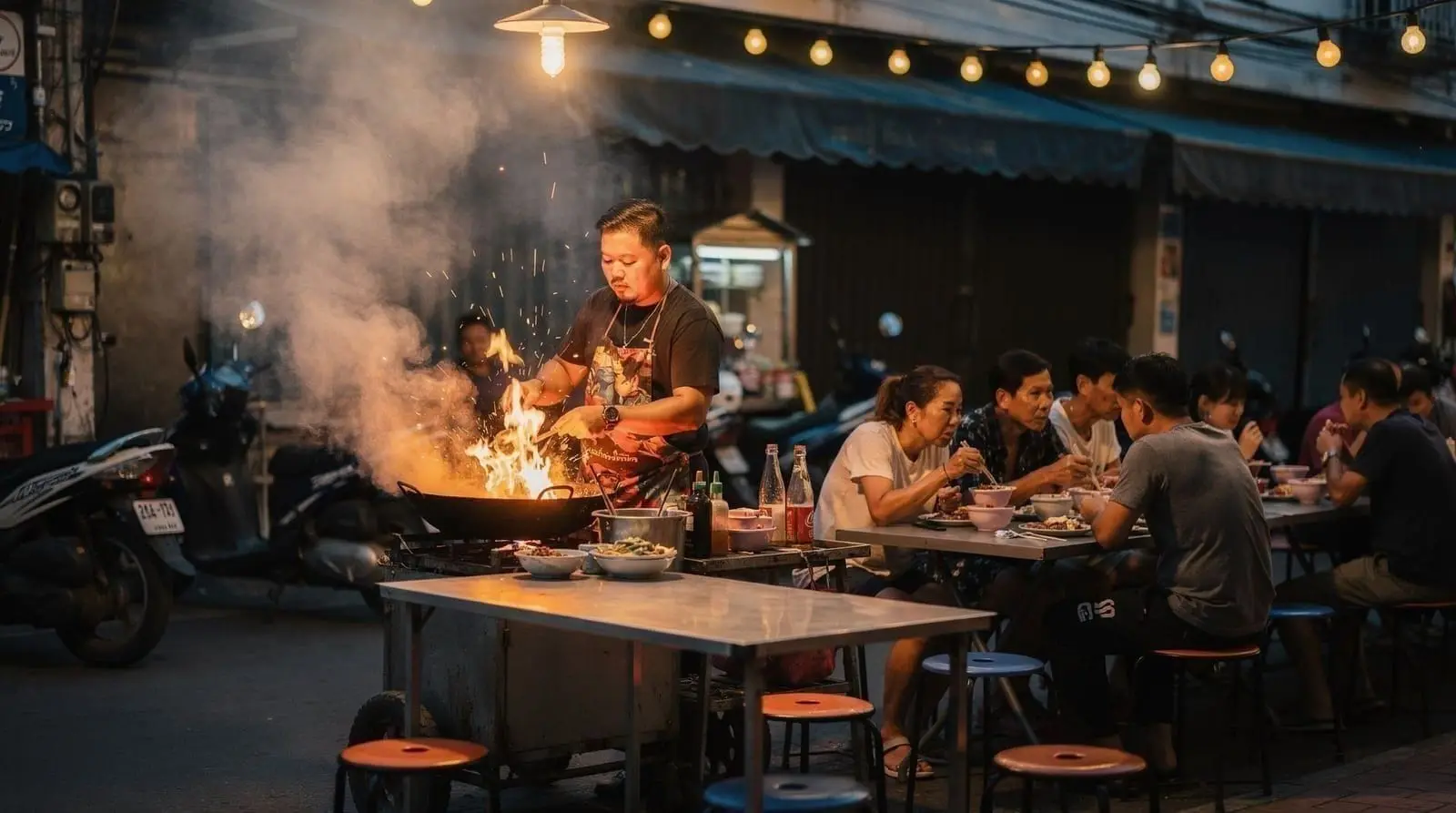
Most evening food tours run somewhere between 8 and 15 tastings across the night, generally smaller portions designed for sampling variety rather than full-size plates of any single dish. A tour marketed around a specific high tasting count (some run 15-20+ small dishes) suits bigger appetites and adventurous eaters; a shorter, more curated tasting list suits travelers who’d rather eat fewer things well than try to sample everything on offer. Check the specific listing’s tasting count against your own appetite before booking, since this varies more between operators than almost any other detail.
Which night markets do these tours actually visit?
Coverage varies by operator, but Night Bazaar’s Chang Khlan Road stalls and the Anusarn Market food court are common stops given their reliable nightly operation (unlike the weekend-only walking streets). Tours running on a Sunday can sometimes incorporate the Sunday Walking Street’s food stalls instead - see our Sunday Walking Street food guide for what that specific market offers that the nightly markets don’t.
Vegetarian, vegan and dietary considerations
Vegetarian requests are usually manageable if flagged at booking, since rice- and vegetable-based Northern Thai dishes are already common, but full vegan accommodation varies more between tours - fish sauce and shrimp paste appear in many dishes by default and aren’t always obvious from the name alone. Confirm directly with the operator rather than assuming a “street food tour” automatically accommodates every dietary restriction.
Tour versus going it alone
A guided tour costs meaningfully more per dish than eating at the same stalls independently (most street food plates run 40-120 THB on their own), but it solves the real problem of knowing which vendors are actually worth trying without local knowledge or Thai-language menus. Our is a food tour worth it guide weighs this trade-off in more depth if you’re deciding between a booked tour and simply wandering a market with a translation app.
Is street food in Chiang Mai safe?
Generally yes - the standard advice of favoring stalls with visible turnover and fresh preparation applies here as anywhere, and a reviewed, established tour has effectively already done that vetting for you by selecting its regular stops. Our street food safety guide covers the specific signals worth watching for if you plan to eat independently beyond a booked tour during the rest of your trip.
What to wear and bring
Comfortable walking shoes (even tuk-tuk-based tours involve stretches on foot within markets), a light layer for the evening once the day’s heat fades, and a genuinely empty stomach - most tours pack in enough tastings that a full dinner beforehand works against you. Cash in small denominations is worth carrying too, in case any stop involves an optional extra purchase not bundled into the tour price.
Tipping and group etiquette
Tipping isn’t strictly required on a booked food tour, but rounding up or adding a small tip (100-200 THB per person for a well-run evening) for a guide who clearly went beyond the minimum - explaining dishes in real depth, adjusting the pace for dietary needs, or fielding a lot of questions - is appreciated and increasingly standard practice. On shared group tours, it’s also worth being mindful of pace: lingering too long at one stall can eat into the group’s overall schedule, so save longer conversations with vendors for a return visit on your own time.
How to pick between similarly priced operators
When two tours look nearly identical on paper - similar duration, similar price, similar market coverage - recent reviews mentioning specific dish names and whether the stated tasting count actually happened are the most useful differentiator, more so than star ratings alone. A tour that lists specific stops and dishes in its description (rather than generic “authentic local food” language) is generally a better sign of a well-run, consistent itinerary than one relying on vague marketing copy.
Frequently asked questions about night food tours in Chiang Mai
What’s the best food tour in Chiang Mai at night?
An evening local street food market tour is the best all-around pick, running 3-3.5 hours with 8-15 tastings, priced roughly 900-1,400 THB per person.
How many dishes do you actually get on a street food tour?
Most run 8-15 tastings, usually smaller portions rather than full plates, designed for sampling variety across the evening.
Do night food tours combine with temple visits?
Yes, several formats bundle illuminated Old City temple stops with the food portion, traveling between them by tuk-tuk.
Is a walking food tour better than a tuk-tuk food tour?
A walking tour covers a compact area at a slower pace. A tuk-tuk tour covers more ground, useful if the itinerary spans separate food areas.
Can vegetarians or vegans do a Chiang Mai street food tour?
Vegetarian requests are usually manageable if flagged when booking. Full vegan accommodation varies more by tour, since fish sauce and shrimp paste appear in many dishes by default.
Are night market food tours different from visiting on your own?
Yes, a guided tour includes curated vendor selection and context, bundled into the price. Visiting independently costs far less per dish but requires guessing which stalls are worth trying.
Is street food in Chiang Mai safe to eat?
Yes, generally - stick to stalls with high turnover and visible fresh preparation, which describes most vendors featured on an established, reviewed food tour.