Chiang Mai in five days
Chiang Mai: White Temple, Blue Temple & Black House Tour
Duration: Full day
Five days is close to the practical ceiling for a first Chiang Mai visit built around day trips rather than an overnight stay elsewhere — it adds a full day in Chiang Rai to the four-day city-plus-Doi-Inthanon structure, covering the region’s two most photographed temples and its strangest museum.
Quick answer: Days one through four follow the 4-day itinerary — Old City temples, Doi Suthep, an ethical elephant sanctuary and cooking class, then Doi Inthanon. Day five is a long day trip to Chiang Rai for the White Temple, Blue Temple, and Black House. It’s genuinely a long day — expect to leave by 7am and return after 7pm — so plan a lighter day six if your trip continues beyond Chiang Mai.
Days 1-4: the city, Doi Suthep, sanctuary, and Doi Inthanon
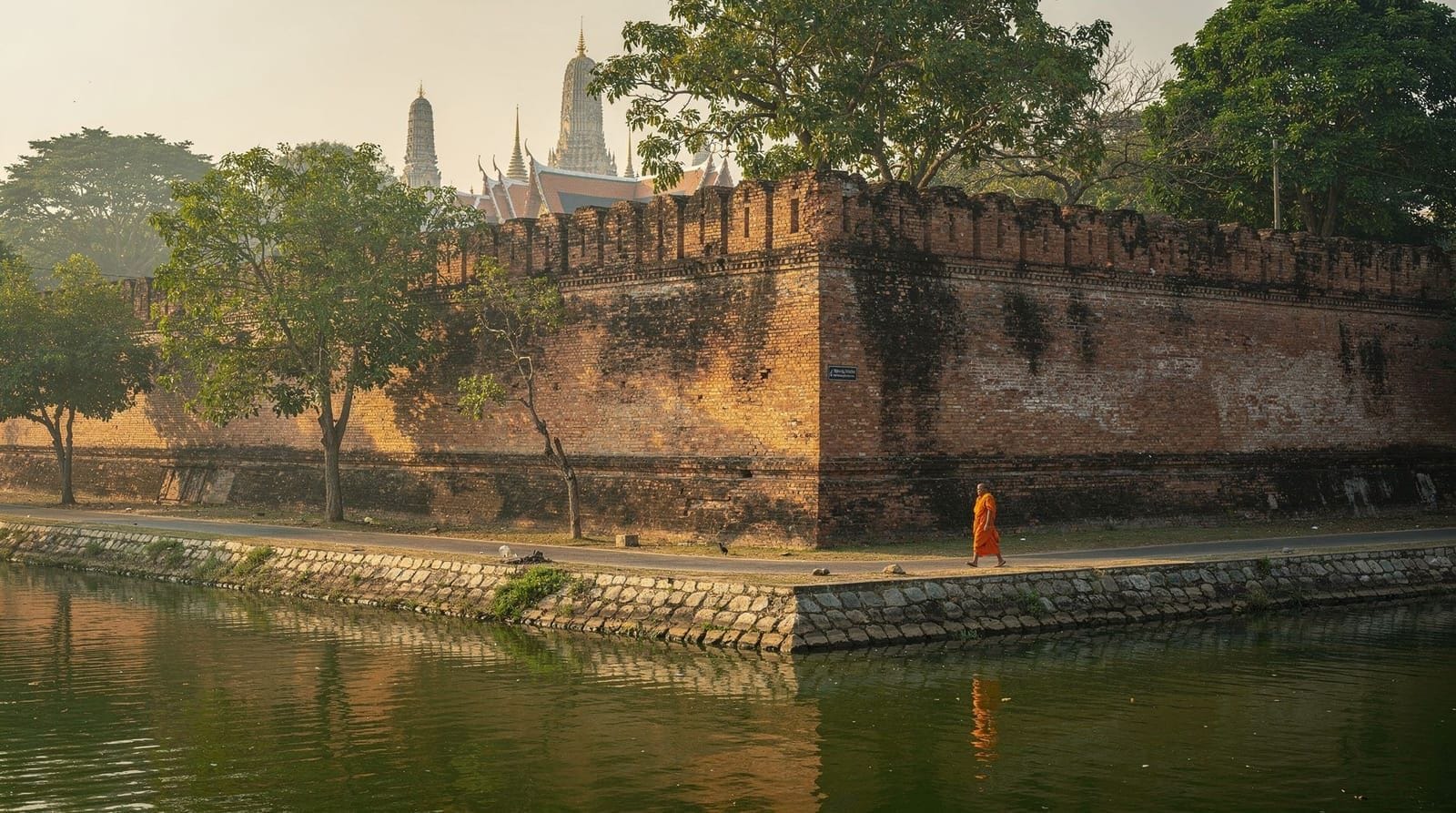
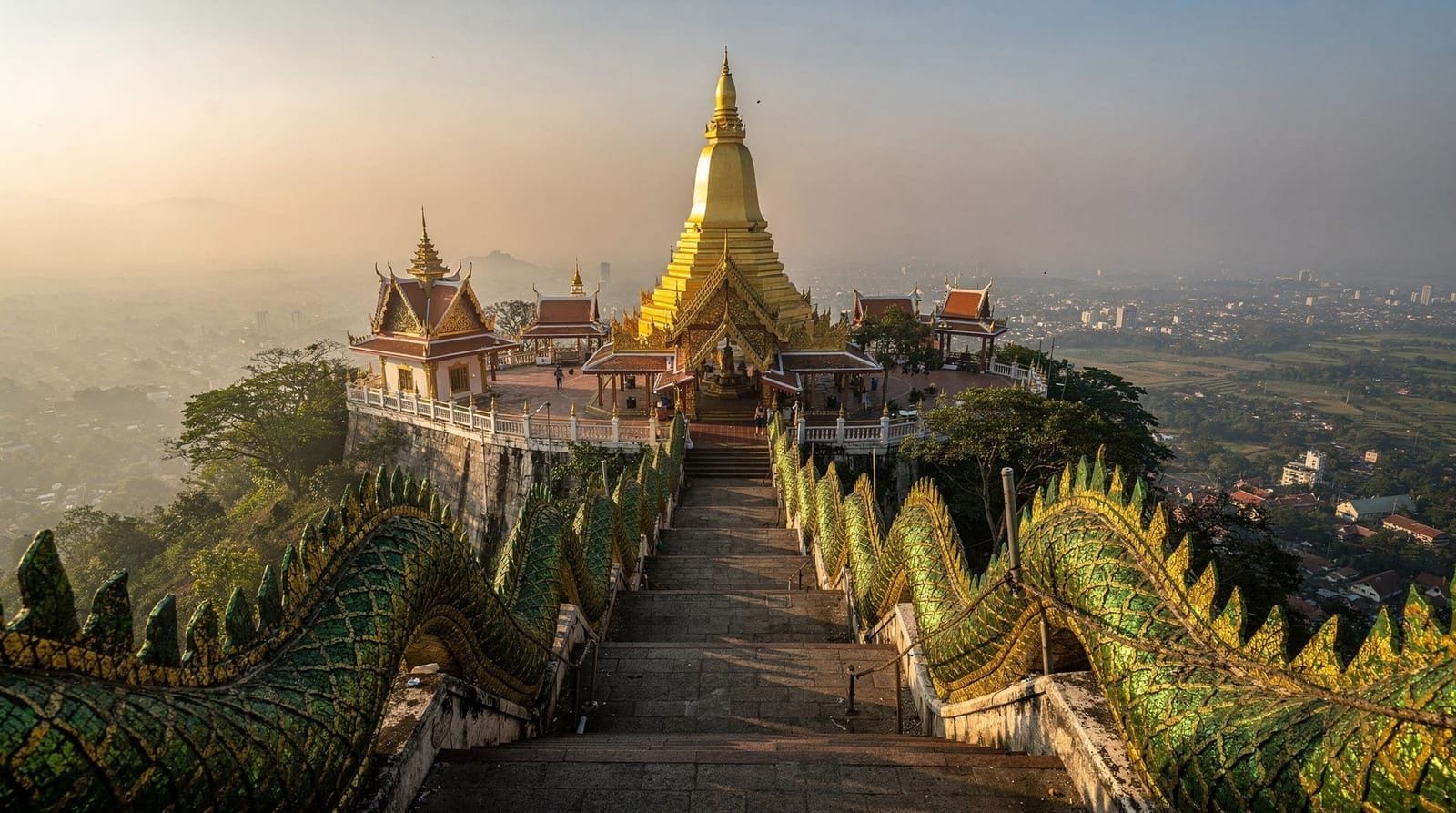
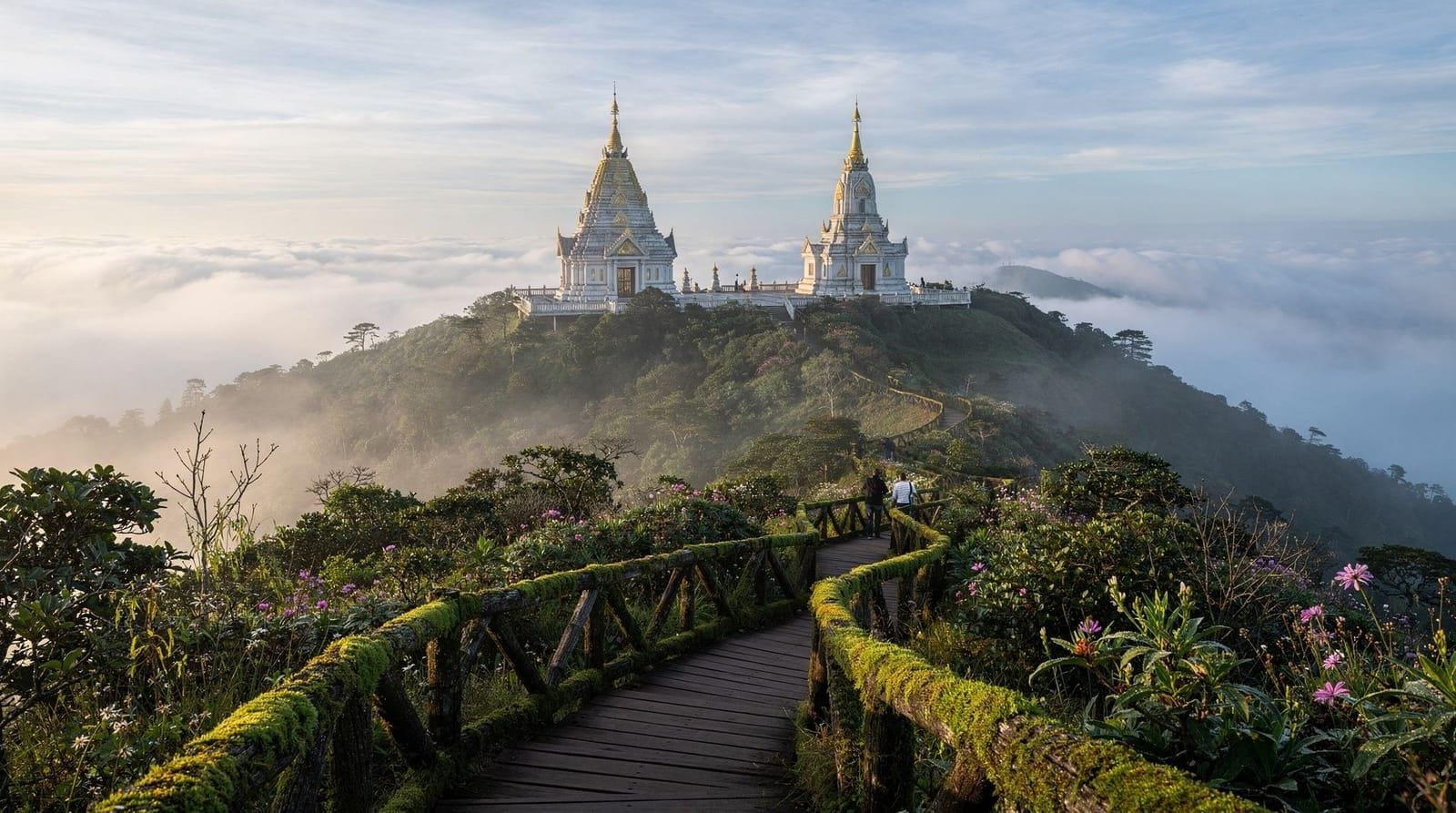
These four days are unchanged from the 4-day itinerary: Old City temples and evening markets on day one, Doi Suthep plus Nimmanhaemin on day two, the ethical elephant sanctuary and a cooking class on day three, and a full-day trip to Doi Inthanon — Thailand’s highest point, with its twin pagodas and cloud-forest trails — on day four. See that itinerary for the hour-by-hour breakdown of those four days.
Day 5: Chiang Rai day trip
Early morning: the drive north
Chiang Rai sits roughly 3 hours north of Chiang Mai by road, which makes this the longest single day in the five-day itinerary — most organized day tours leave by 7-7:30am and don’t return until after 7pm once the drive there and back is factored in alongside three temple stops. If that sounds like too much driving for one day, it’s worth reading about whether Chiang Rai works better as a day trip or an overnight before committing, since some travellers prefer to break the drive with a night in Chiang Rai itself.
A combined Chiang Rai white temple, blue temple, and Black House tour covers the three main stops below in a single organized day with a driver, which is the simplest way to do this as a day trip rather than arranging transport and entry separately.
Late morning: Wat Rong Khun, the White Temple
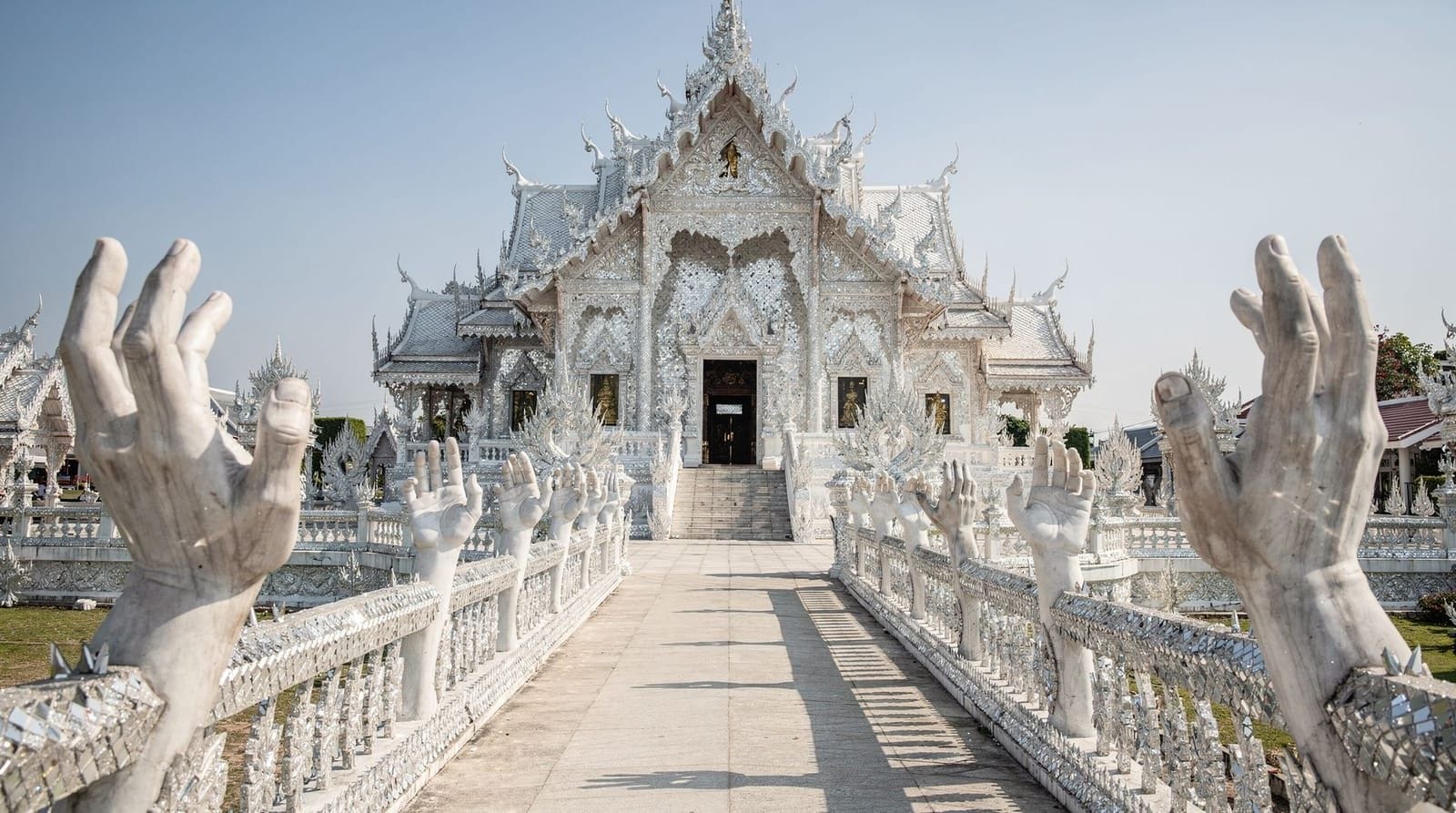
Wat Rong Khun, known to almost everyone as the White Temple, is artist Chalermchai Kositpipat’s still-unfinished contemporary reinterpretation of a Buddhist temple — white stucco embedded with mirrored glass, a bridge over a moat of outstretched hands representing desire, and murals inside the main hall that mix traditional Buddhist imagery with pop-culture references. It draws real crowds by mid-morning, so an early arrival (which the long drive up naturally provides if you leave on time) genuinely helps here too.
Midday: Black House and lunch
Baan Dam, the Black House, is the late artist Thawan Duchanee’s answer to the White Temple — a sprawling complex of dark timber halls filled with animal skulls, skins, and bones arranged as art rather than curiosity, deliberately unsettling by design rather than accident. It’s a genuinely different register from the White Temple’s polished spectacle, and the contrast between the two is part of why most day tours run them back to back. A Chiang Rai highlights in one day tour is a solid alternative if you’d rather have a guide sequence the stops and handle lunch logistics for you.
Afternoon: Wat Rong Suea Ten, the Blue Temple
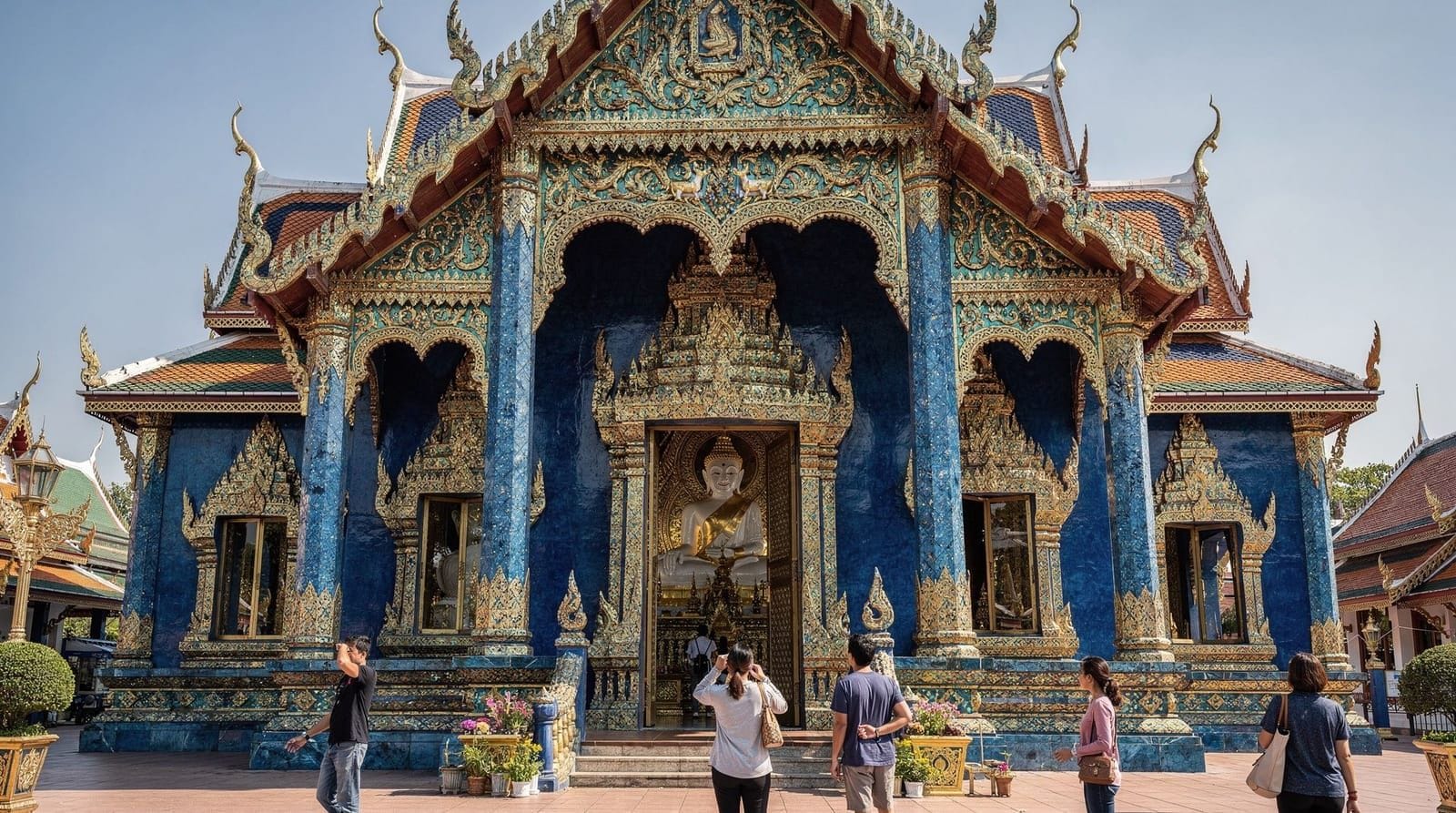
Wat Rong Suea Ten, the Blue Temple, is smaller than the other two stops but distinctive for its deep sapphire-blue exterior and gold accents, built more recently and less crowded than the White Temple despite similarly striking design. It’s a shorter visit — 30-45 minutes is usually enough — and works well as the final stop before the long drive back, since it’s less demanding on time and attention than the two larger sites.
Evening: the drive back
Expect to arrive back in Chiang Mai between 7 and 8pm, depending on traffic and how long each stop ran. This is not a day to plan anything else around — treat the evening as a wind-down rather than scheduling dinner plans or further activities, and consider a light dinner near your hotel rather than venturing back out. Most tour vans include at least one rest stop on the return leg, which is a reasonable moment to pick up water or a snack rather than waiting until you’re back in the city hungry.
Recovering the day after
Because day five is genuinely tiring, if your trip continues beyond these five days, plan a deliberately light day six rather than another packed itinerary — a late breakfast, a slow morning, and nothing scheduled until afternoon at the earliest tends to work well after a day this long. Travellers connecting onward the same week often use day six as their departure or transition day for exactly this reason.
Practical logistics for the Chiang Rai day
A private car, organized tour, or shared minivan are the three realistic ways to do Chiang Rai as a day trip — there’s no practical public transport route that covers all three temple stops within a single day, and self-driving the full round trip on unfamiliar roads adds fatigue on top of an already long day. If you’re not on a fixed tour, confirm your driver’s return time in writing before setting out, since delays at any one stop compound across the day.
Budget breakdown for five days
Days one through four run to roughly 5,000-7,500 THB ($140-210) per person, matching the 4-day itinerary’s total. Day five’s Chiang Rai trip adds another 1,500-2,500 THB ($42-70) per person for a full-day guided tour including transport, temple entry fees, and lunch — a meaningful cost given the driving distance, but reasonable relative to arranging a private car and navigating three separate entry fees independently. Across all five days, budget roughly 6,500-10,000 THB ($182-280) per person, excluding accommodation.
Considering the Golden Triangle as an extension
If Southeast Asian history and geography interest you beyond the three temples, the Golden Triangle — the point where Thailand, Laos, and Myanmar meet along the Mekong River, historically associated with opium production and now home to a small museum on the subject — sits roughly 1.5-2 hours further from Chiang Rai. It doesn’t fit into this itinerary’s single-day format without turning day five into an even longer day, so most travellers who want to add it choose to break the Chiang Rai leg into an overnight stay instead, freeing up a full extra day for the Golden Triangle without extending the return drive on the same day as the temple visits.
What to pack for the Chiang Rai day
Beyond typical daytime essentials, bring a light jacket for the early morning departure and the return leg after dark, since temperatures drop noticeably once the sun sets and you’re several hours into an air-conditioned van. A portable phone charger is worth having given the length of the day and the temptation to photograph all three temples extensively. Comfortable shoes matter for the White Temple in particular, since its grounds involve more walking than the other two stops.
Honest planner notes
Doing Chiang Rai as a day trip from Chiang Mai is genuinely tiring — roughly 6 hours of driving on top of 3 temple visits in a single day — and it’s worth being honest with yourself about whether that trade-off suits your travel style before booking. If you have any flexibility in your schedule, breaking the trip with one night in Chiang Rai turns this into a noticeably more relaxed two-day experience rather than a single exhausting one, and opens up the Golden Triangle as an add-on that doesn’t fit comfortably into a single-day version. That said, as a single day trip, this itinerary hits the three stops most people specifically come to Chiang Rai to see, and the tours mentioned above are built and priced around exactly this compressed format.
How Chiang Rai compares to Chiang Mai’s own temples
Travellers who’ve already spent four days seeing Chiang Mai’s Old City temples and Doi Suthep sometimes wonder whether Chiang Rai’s temples are simply more of the same. They’re genuinely not — Chiang Rai’s three main sites are contemporary artistic statements built within the last few decades by living or recently deceased artists, using traditional temple form to make very different points than the centuries-old Lanna temples in Chiang Mai. The White Temple’s stark, almost surreal visual language and the Black House’s deliberately unsettling collection have more in common with a contemporary art museum than with the devotional atmosphere of Wat Phra Singh or Wat Chedi Luang. Framing the day this way — as a different kind of experience rather than “more temples” — tends to set more accurate expectations for day five.
Photography considerations for the Chiang Rai day
All three main stops photograph exceptionally well, but timing and crowd management matter more here than at most of this itinerary’s other stops, given how popular these three sites are with photographers specifically. The White Temple’s mirrored details catch harsh reflections at midday, so morning light (if your tour arrives early enough) produces noticeably better results. The Black House’s dark timber interiors are dimly lit, so a phone camera may struggle compared to a dedicated camera with better low-light performance — worth knowing if photography is a priority for this particular day.
Frequently asked questions about this itinerary
Is Chiang Rai worth doing as a day trip from Chiang Mai?
Yes, if you specifically want to see the White Temple, Black House, and Blue Temple without an extra overnight stay — but be prepared for a long day of roughly 6 hours of driving.
Should I stay overnight in Chiang Rai instead?
If your schedule allows it, yes — it turns a rushed single day into a more relaxed two-day stretch and opens up the Golden Triangle as a realistic add-on.
How early should I leave Chiang Mai for Chiang Rai?
By 7-7:30am, both to make the most of the day and to reach the White Temple before its mid-morning crowds build.
Can I visit all three Chiang Rai temples independently without a tour?
Yes with a rented car, though most day-trippers use an organized tour or private driver given the driving distance and the value of not navigating unfamiliar roads on a long day.
Which Chiang Rai temple should I prioritize if time runs short?
The White Temple (Wat Rong Khun) is the most significant single stop; the Black House is the strongest second choice for contrast, with the Blue Temple as the shorter, more optional third stop.
Is five days too much for a first Chiang Mai visit?
Not if you enjoy a mix of city time, nature, and day trips — it’s a full but not excessive schedule. Travellers who prefer a slower pace may prefer stretching this same content over six or seven days instead.
What if I don’t want to add Chiang Rai on day five?
The 4-day itinerary covers the same first four days without this addition, ending after the Doi Inthanon day trip.
Top experiences
Bookable activities with verified prices and instant confirmation on GetYourGuide.