Riverside and Night Bazaar neighborhood guide, Chiang Mai
Chiang Mai: Kalare Night Bazaar Boxing Stadium Muay Thai
Is the Night Bazaar area a good place to stay in Chiang Mai?
It suits visitors who want a larger, more predictable hotel scene and easy access to the nightly Chang Khlan market for shopping, food and Muay Thai. It has less independent character than the Old City or Nimman, but it is well-connected and comfortable, particularly for families and visitors prioritising amenities over atmosphere.
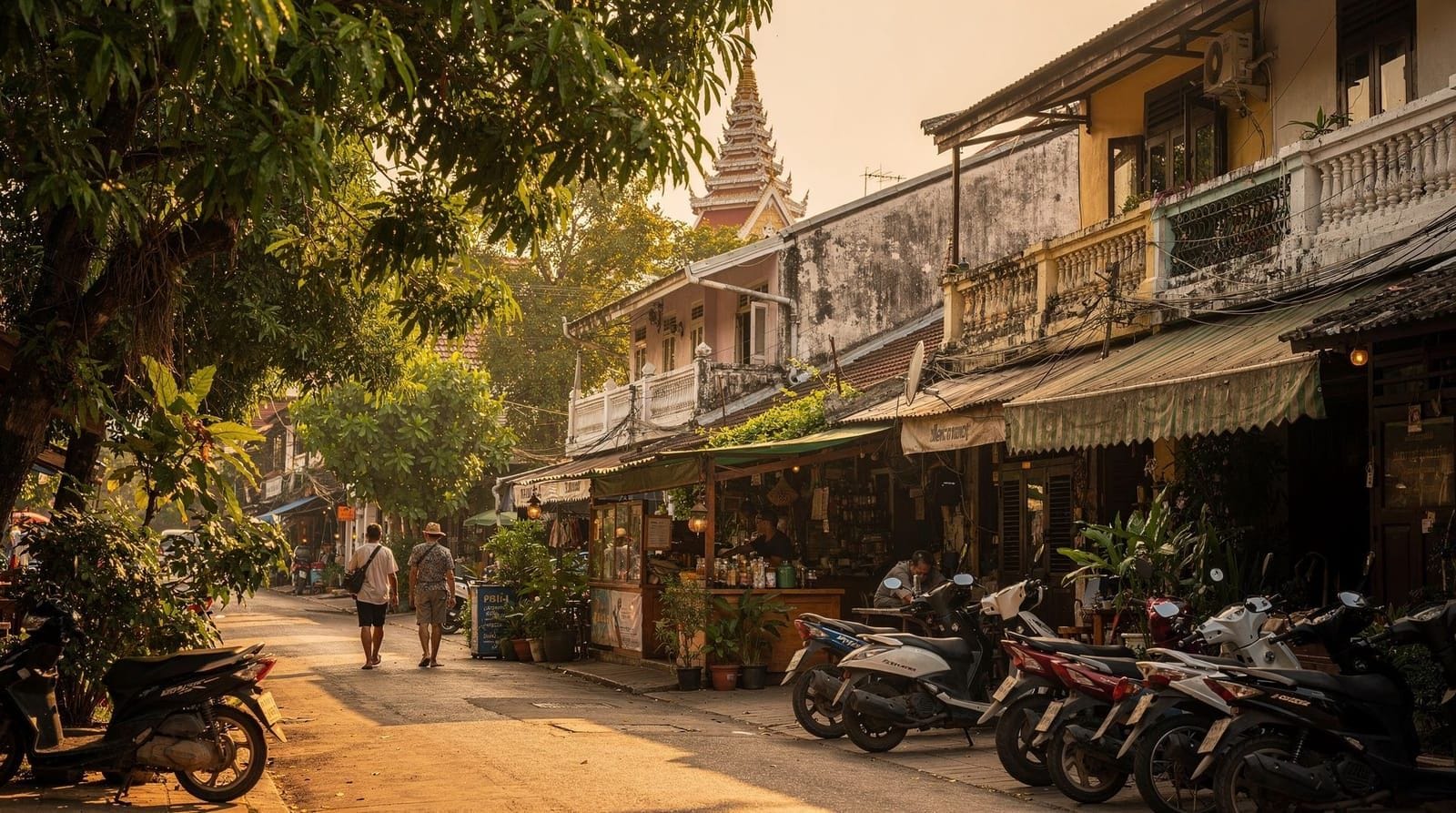
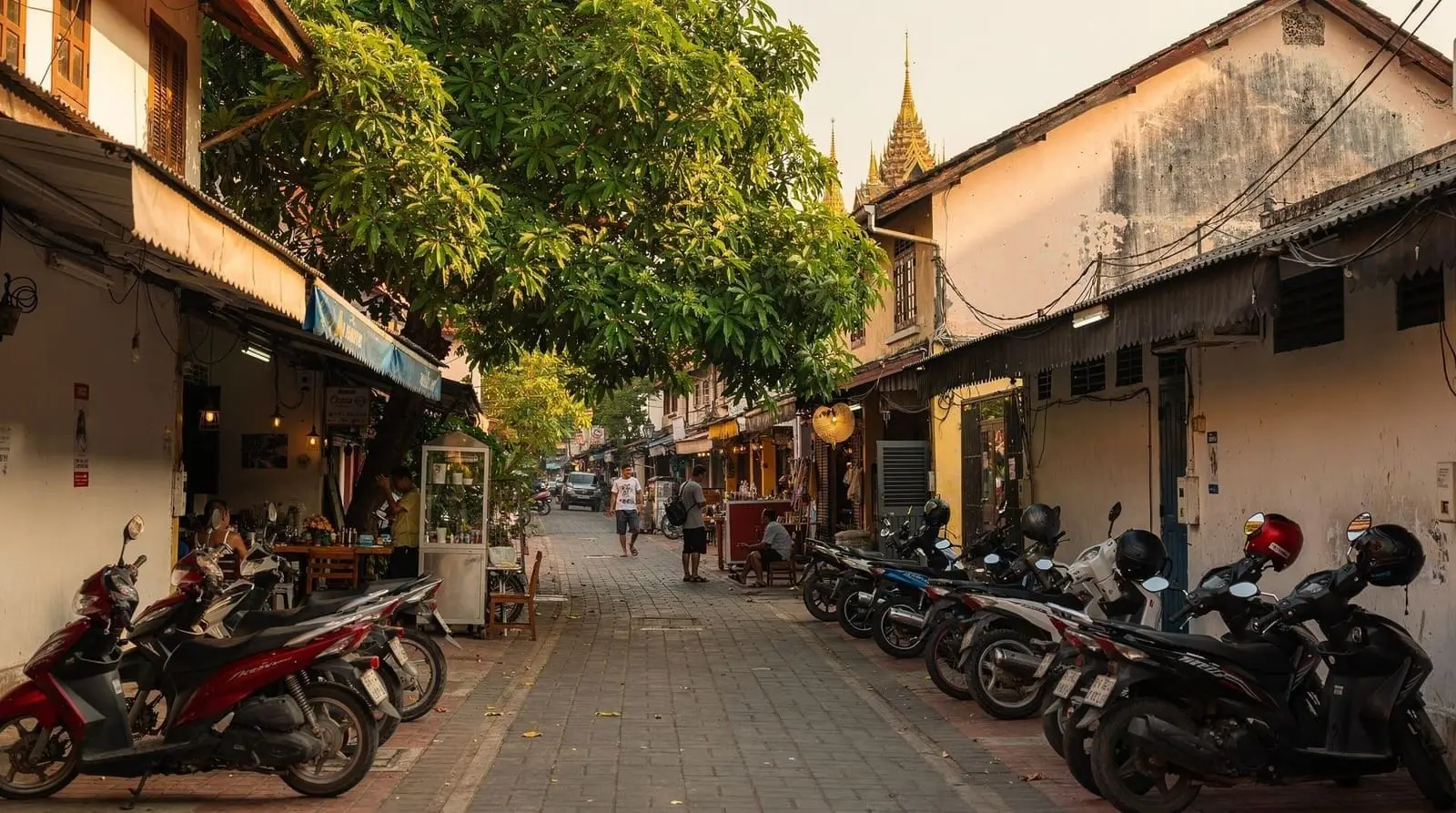
The area east of Chiang Mai’s Old City moat, running from the Ping River across to Chang Khlan Road and the Night Bazaar, is the city’s most hotel-dense and commercially oriented district, and for many visitors it is a practical default rather than a deliberate choice — the area a first search of “Chiang Mai hotels” tends to surface most heavily. That reputation is only partly deserved. The district actually splits into two genuinely different registers: the busy, shopping-driven Chang Khlan and Night Bazaar side, and the calmer, more residential Ping River side around Wat Ket, and knowing the difference matters more than most first-time visitors realise before booking.
This guide covers both halves honestly, including what the nightly market is actually like to shop and eat at, what hotel stock looks like compared with the Old City and Nimman, and which kind of visitor gets genuine value from basing here rather than simply defaulting to it.
Two districts in one: Chang Khlan versus Wat Ket
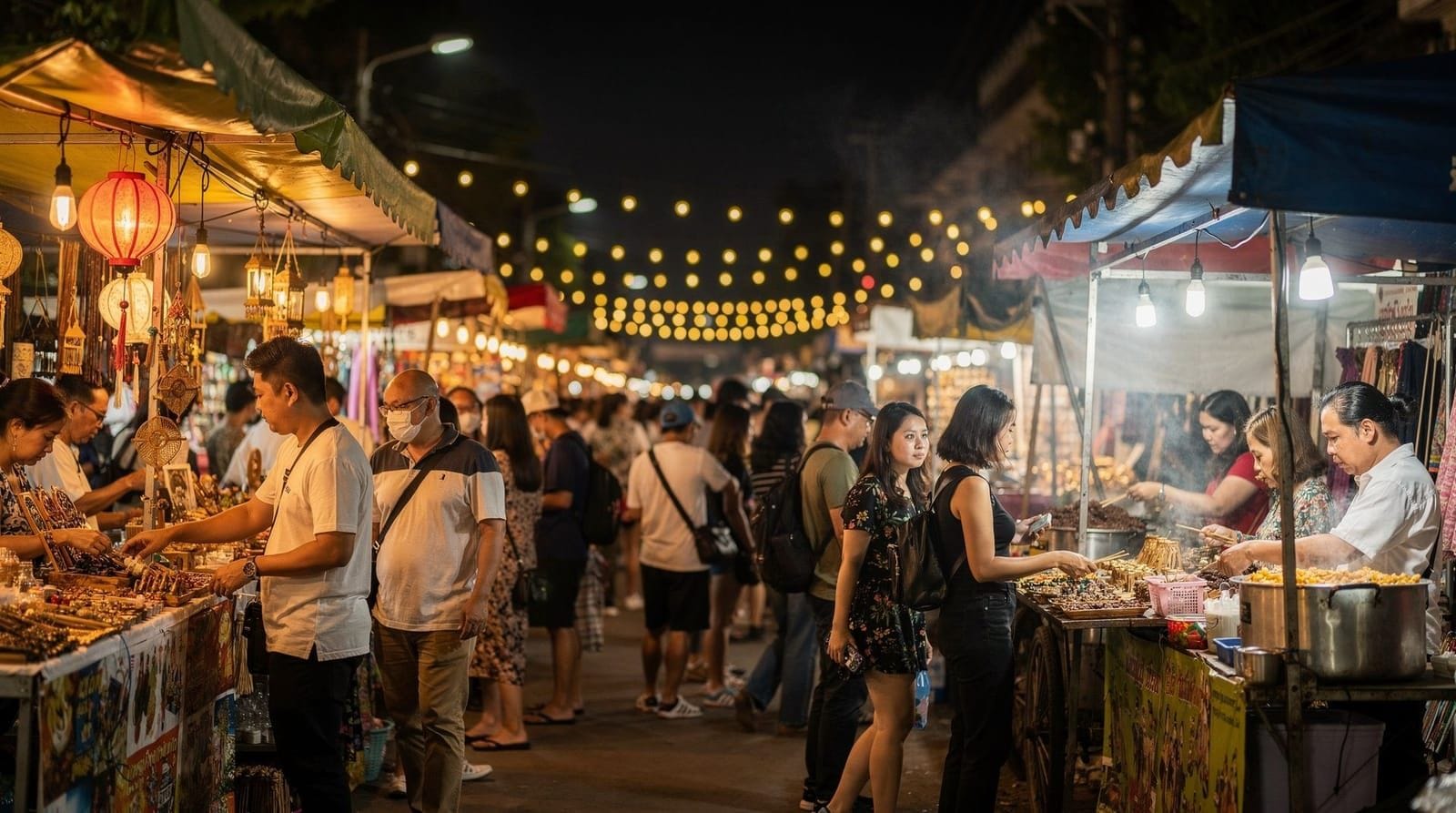
Chang Khlan Road and the Night Bazaar form the busier, more overtly commercial half of this area, running nightly from around 6pm with hundreds of stalls selling clothing, souvenirs, electronics and a dense scattering of food vendors, alongside the fixed indoor market buildings that operate through the day as well. It is genuinely touristy, with pricing and touts to match, and shows the wear of decades as the city’s most reliable evening shopping destination.
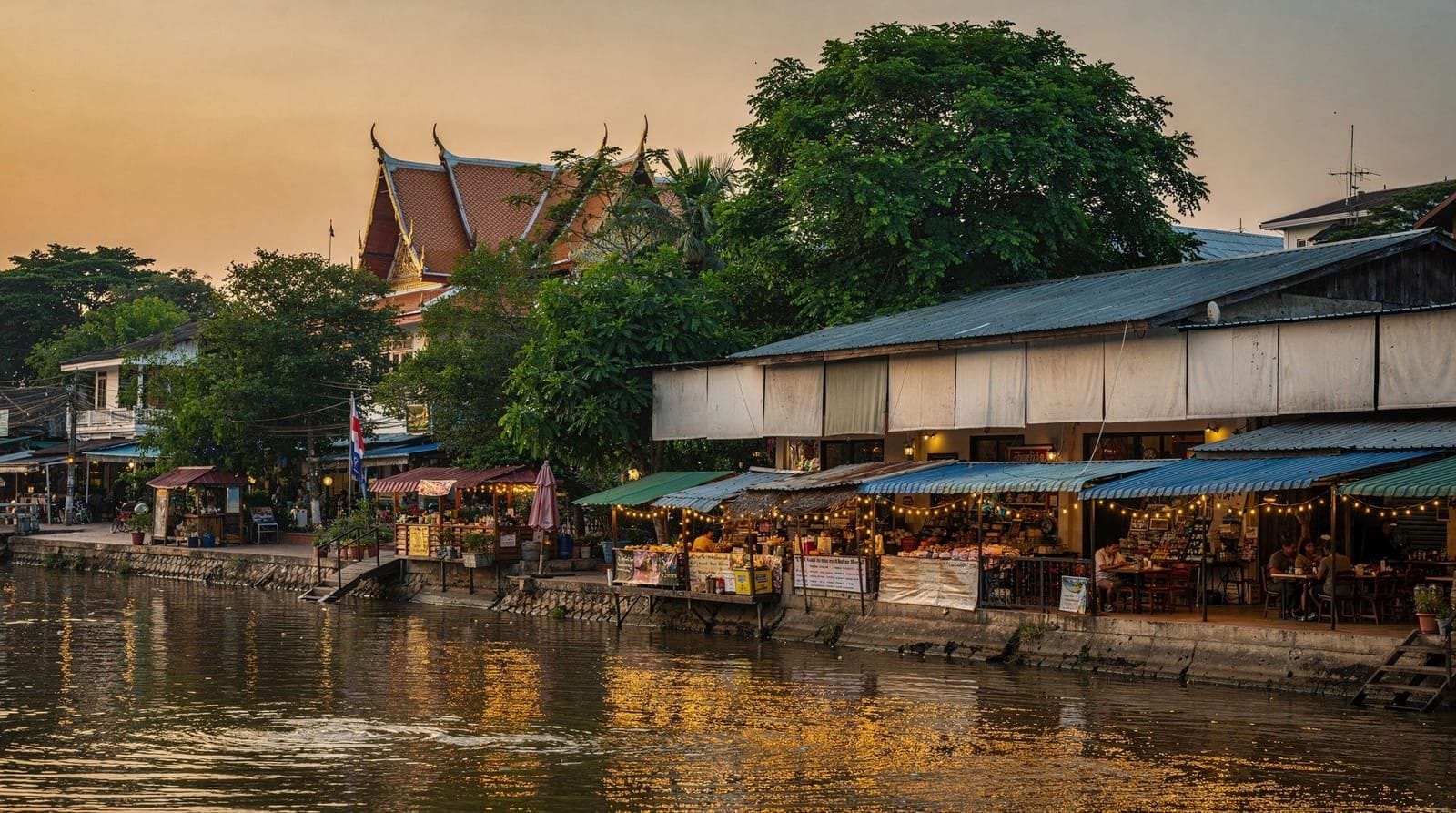
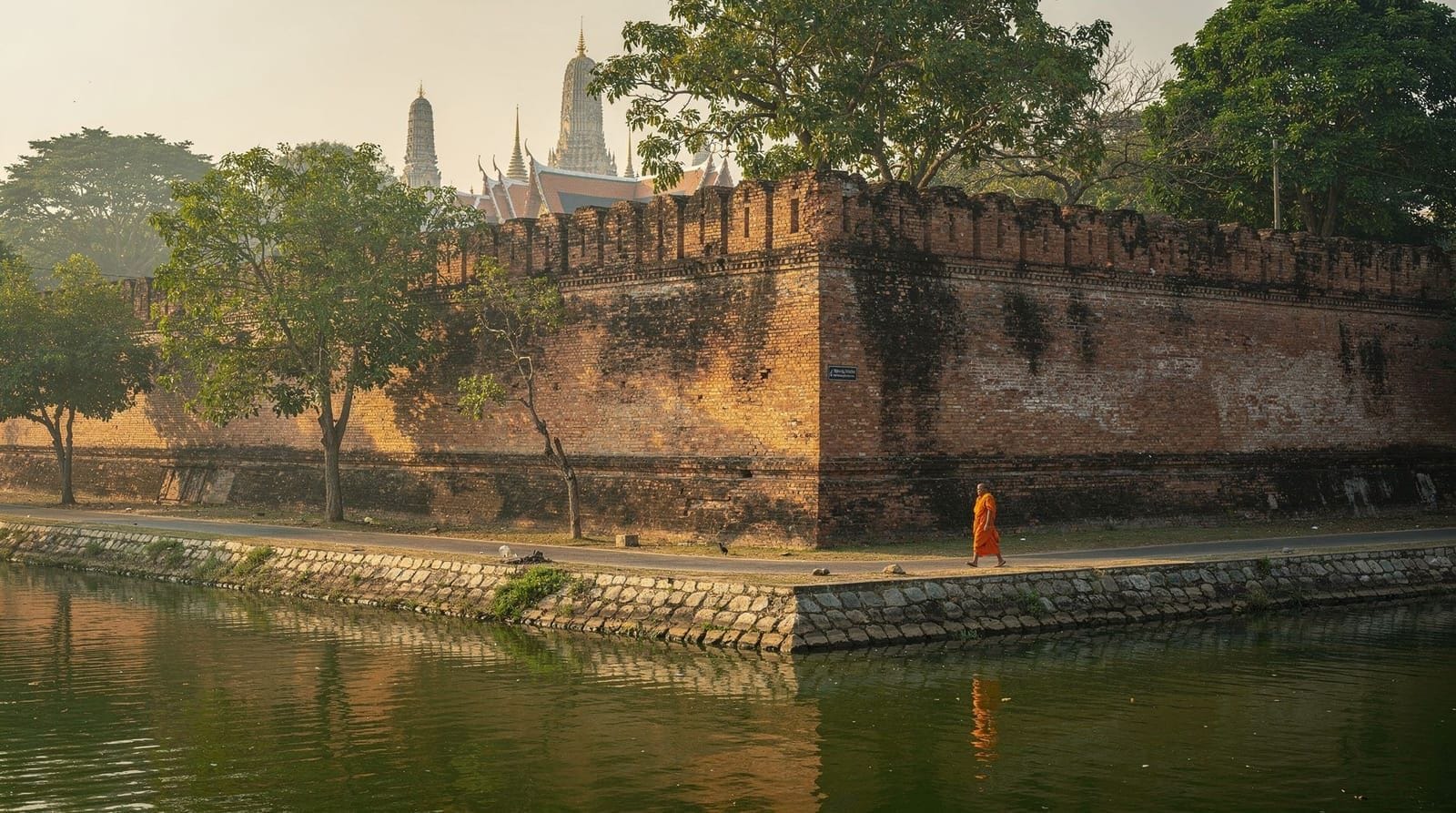
The Ping River side, particularly around Wat Ket, is a different register entirely: a quieter, more residential stretch of riverside restaurants, small galleries and boutique hotels with genuine river views, largely free of the Night Bazaar’s commercial density despite sitting only a short walk or a few minutes’ Grab away. Visitors who book a hotel in this broad district without knowing the difference sometimes end up disappointed with whichever half they didn’t expect, so it is worth deciding deliberately which register actually suits the trip before booking.
Hotels and where to stay
This district holds the city’s highest concentration of larger, amenity-rich hotels, including several international chains with pools, spas and consistent service standards, more than either the Old City or Nimman offer at equivalent price points. Simple mid-range hotel rooms start around 800-1,200 THB (USD 22-33) a night, rising to 2,000-4,000 THB (USD 56-112) for upscale riverside properties with genuine river views, broadly comparable to Old City boutique pricing at similar quality tiers but with a noticeably different, larger-scale hotel style rather than independent guesthouses. Properties directly on Chang Khlan Road sit closest to the market action at the cost of evening noise, while those tucked along the river or slightly further from the main strip trade a few minutes of walking distance for a genuinely calmer stay.
Shopping and the Night Bazaar itself
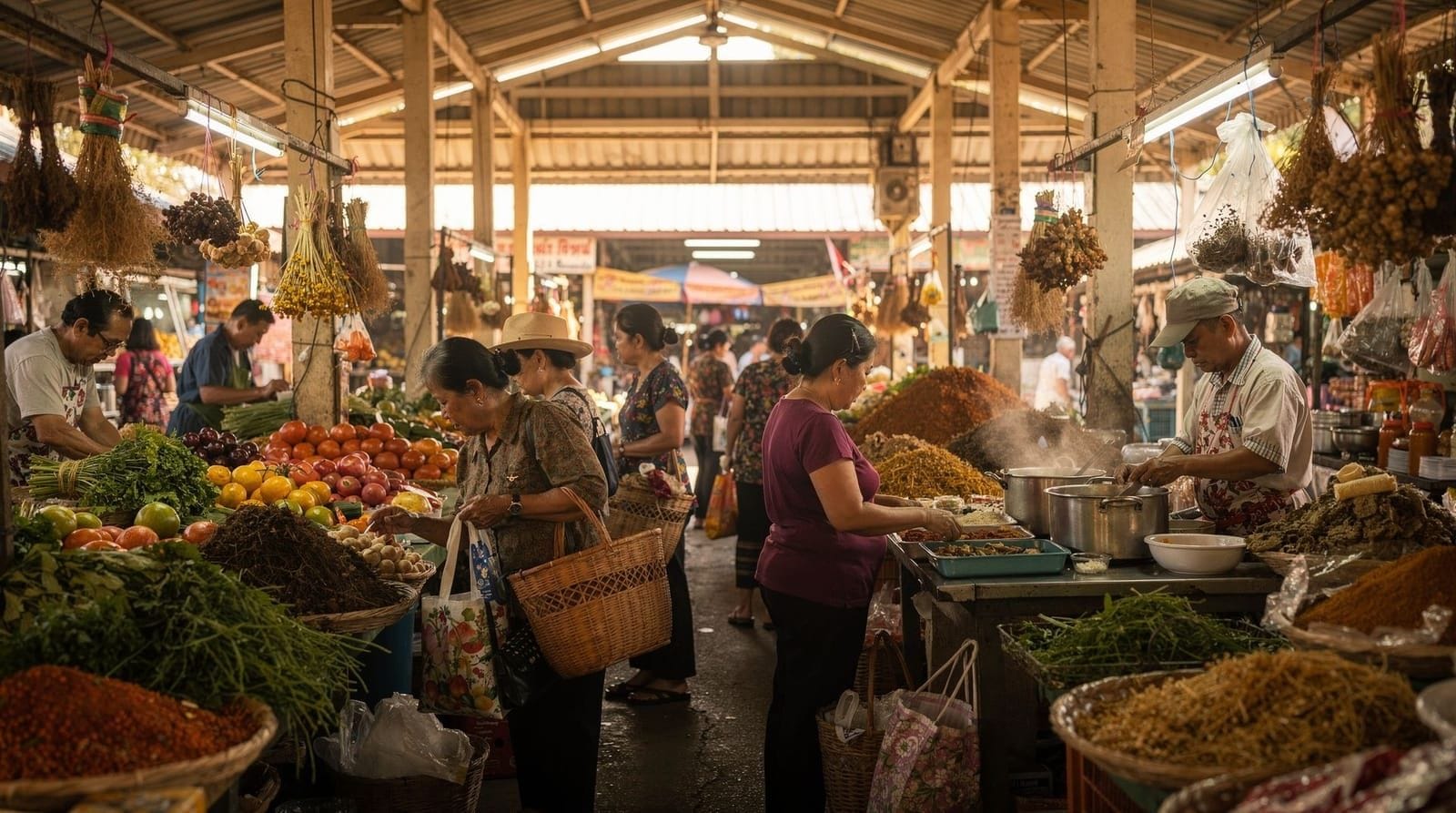
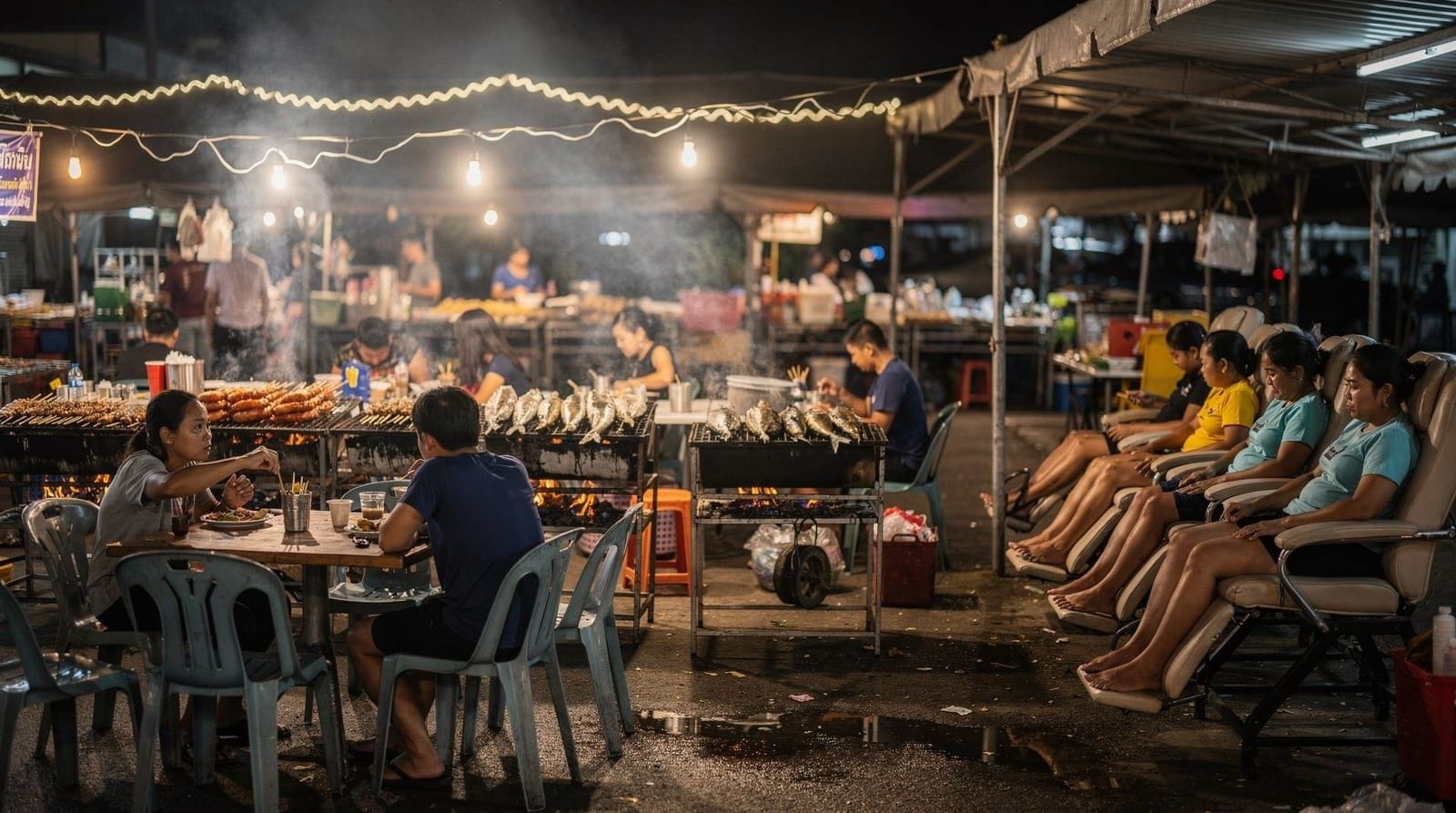
The Night Bazaar’s stalls cover clothing, textiles, woodcarvings, electronics and a large volume of souvenir-grade goods, with bargaining expected and genuinely part of the experience rather than optional. Prices start soft and drop meaningfully with polite negotiation — a starting price of 300 THB for a printed t-shirt commonly settles around 150-200 THB with reasonable haggling. Anusarn Market, a specific cluster within the broader night market area, combines food stalls and casual massage services in a slightly more relaxed, less pushy atmosphere than the main Chang Khlan strip. Warorot Market, the city’s main day market for Thai-Chinese food and household goods, sits a short walk north and offers a genuinely more local alternative for visitors who find the Night Bazaar’s tourist-facing pricing off-putting.
A typical evening in this district
An evening based here tends to start around sunset, when the Chang Khlan stalls begin setting up and the day’s heat starts to ease. A reasonable sequence runs through Anusarn Market first for an early food-stall dinner and an inexpensive foot massage — commonly 150-250 THB (USD 4.20-7) for 30-60 minutes — before moving into the main Night Bazaar stalls for browsing and shopping once the crowds thicken after 7pm. Visitors basing on the quieter Wat Ket side often reverse this, starting with a calmer riverside dinner before crossing over for an hour or two of market browsing, then retreating back across the river away from the peak evening crowds. Either sequence works; the point is that this district rewards treating the evening as the main event, in the same way the Old City’s Sunday Walking Street does, rather than as a brief stop between other activities.
Bargaining and shopping etiquette
Bargaining at the Night Bazaar’s stalls is normal, expected and generally good-natured rather than adversarial, and most vendors build a negotiating margin into their opening price accordingly. A polite, unhurried approach — a smile, a counter-offer roughly 40-50% below the asking price, and a willingness to walk away if the gap doesn’t close — tends to work better than aggressive haggling, which mostly just makes the interaction less pleasant for both sides without materially changing the outcome. Fixed-price shops, increasingly common inside the covered market buildings, are clearly signed as such and not open to negotiation, a useful distinction to notice before attempting to haggle somewhere it isn’t expected. Quality varies considerably across stalls selling similar-looking goods, and it’s worth handling an item before buying, particularly textiles and woodcarvings, since the visual difference between a well-made piece and a poorly finished one is not always obvious at a glance under market lighting.
Food and the Kalare complex
Food options range from casual street stalls scattered throughout the market to the more organised food court inside the Kalare Night Bazaar complex, which also hosts a Muay Thai boxing stadium running regular fight nights. A Muay Thai match at Kalare Night Bazaar’s boxing stadium is one of the more distinctive things to do from a base in this district, combining an evening of market browsing with genuine live sport rather than a staged tourist show. For a broader, more curated introduction to the area’s food scene, an evening local street food and market tour or a guided local food and markets walking tour both cover this district’s eating options with more context than wandering in cold, particularly useful for visitors nervous about street food hygiene or simply wanting recommendations rather than guesswork.
The Ping River side
Away from the market crush, the stretch of the Ping River near Wat Ket offers a genuinely different experience: small art galleries in converted shophouses, riverside restaurants serving both Thai and international food with actual river views, and a noticeably calmer pace than anything on the Chang Khlan side. This is where visitors who want the convenience of this broad district’s location without its commercial intensity should look first, and it pairs well with an evening riverside dinner as a change of pace from a day spent temple-hopping or market-browsing elsewhere in the city.
Massage, wellness and everyday services
This district has one of the city’s densest clusters of casual massage parlours, particularly around Anusarn Market and the side streets off Chang Khlan Road, generally running 200-350 THB (USD 5.50-9.70) for an hour of Thai or foot massage at the more straightforward, tourist-oriented shops. Quality varies, and the busier, more visible storefronts are not necessarily better than quieter side-street options, so it’s worth going on a specific recommendation or a quick look at how busy and well-kept a place seems rather than choosing purely on foot traffic or signage. Beyond massage, the area’s hotel density means it also has good access to everyday services — pharmacies, laundry, currency exchange and SIM card shops — clustered along Chang Khlan Road more heavily than in most other neighbourhoods, a genuine convenience for visitors arriving without having sorted these details in advance.
Seasonal considerations on the river side
The Ping River side of this district is worth a specific seasonal note that doesn’t apply elsewhere in the city: during the peak monsoon months, roughly August and September, the river can rise noticeably after sustained heavy rain, and in unusual years has caused localised flooding on the lowest-lying riverside paths. This is not a reason to avoid the area, since serious flooding is rare and hotels are well accustomed to the seasonal pattern, but it is worth checking recent conditions before booking a riverside property specifically during those months. Outside the heaviest monsoon weeks, the riverside setting is one of the more pleasant spots in the city for an evening walk or dinner, particularly in the cool season from November to February when temperatures make outdoor riverside seating genuinely comfortable rather than merely tolerable.
Safety and common tourist-area issues
Petty theft and overpriced, low-quality goods sold as bargains are the most common real issues in this district, simply because it sees more casual tourist foot traffic than most other neighbourhoods. Standard precautions apply: keep bags zipped and in front in the densest stall areas, agree on tuk-tuk or taxi fares before getting in rather than after, and treat unsolicited approaches offering “special deals” on gems, tailoring or tours with the same healthy scepticism worth applying in any dense tourist market worldwide. None of this makes the district meaningfully more dangerous than the rest of the city, but the concentration of casual tourist traffic here does make it the neighbourhood where these particular low-level annoyances show up most often.
Who this district suits (and who it doesn’t)
This area suits families and visitors prioritising hotel amenities, pool access and a predictable, larger-scale hotel experience over independent guesthouse character. It suits visitors who want nightly rather than weekly market access, and anyone basing a short trip around convenient, well-connected hotel stock without much interest in the atmosphere differences between neighbourhoods. It also suits visitors on business trips or short stopovers who want a hotel with reliable amenities and don’t plan to spend much time exploring beyond a short evening market walk, since the concentration of familiar international chains here makes for a lower-effort booking than the Old City’s more varied, character-driven guesthouse scene.
It suits it less well for visitors chasing the Old City’s historic immersion or Nimman’s café culture, and less well for budget travellers, since hotel pricing here skews toward the mid-range and up rather than the Old City’s wider spread down to genuine budget guesthouse and hostel pricing. Independent travellers who value a distinctive, non-chain atmosphere over amenities and predictability generally find more to like in the Old City, Nimman or even Santitham than in this district’s larger-scale hotel stock.
Comparing this district to the Old City and Nimman
Against the Old City, this district trades walkable temple sightseeing and independent guesthouse character for larger hotels, nightly rather than weekly market access, and generally easier logistics for families and less experienced travellers who prefer a more predictable, internationally familiar hotel experience. Against Nimman, it offers a more classically touristy but genuinely convenient shopping and dining scene against Nimman’s more independent, café-driven, design-conscious atmosphere. Neither comparison makes this district a clearly worse choice, only a different one suited to a specific kind of visitor: those who want dependable amenities, easy nightly shopping and a well-connected base more than a particular neighbourhood atmosphere. The full Chiang Mai neighborhoods guide compares all of the city’s areas side by side for anyone still deciding, and the first-time visitor decision guide breaks the choice down further by traveller type.
Getting to everything else from here
This district sits a 10-15 minute walk or 5-10 minute Grab from Tha Phae Gate and the Old City, making it one of the most convenient bases for visitors wanting easy access to both areas without committing fully to either. Nimman is a slightly longer Grab, typically 15-20 minutes given the distance across the city, and day trips to Doi Suthep or the wider Mae Rim valley both require crossing the city first, a minor but real disadvantage against an Old City or Nimman base for visitors prioritising those destinations heavily.
Songthaews and Grab both operate reliably from this district given its hotel density and the corresponding driver familiarity with the area, and most hotels can arrange airport transfers directly, with the airport itself typically a 15-20 minute ride given the district’s position on the eastern side of the city, somewhat further than a Nimman base but still well within a short, predictable transfer time.
A final honest note
This district’s biggest advantage is dependability rather than distinctiveness — it is the safest, easiest neighbourhood to book blind for a visitor who has never been to Chiang Mai and doesn’t want to research individual guesthouses street by street. That dependability is worth real money to a specific kind of traveller, particularly families and anyone travelling on a tight schedule with little patience for logistics. Visitors who do have the time and inclination to research a bit more, though, will generally find more character and better value in the Old City, Nimman or even Santitham, and this district is best thought of as the reliable, slightly generic option rather than the standout choice for most first-time trips.
Frequently asked questions about the riverside and Night Bazaar area
What is the difference between the riverside and the Night Bazaar area?
They overlap but differ in feel. The Night Bazaar and Chang Khlan side is dense, commercial and shopping-driven; the Ping River side, especially near Wat Ket, is calmer, with boutique hotels, galleries and riverside dining a step removed from the market crowds.
Is the Night Bazaar worth visiting even if I’m not staying nearby?
Yes. It runs nightly rather than weekly like the Old City’s walking streets, making it a reliable option regardless of which day a visitor happens to be in the city, though the Sunday and Saturday walking streets generally offer better value and a more local feel.
Are hotels near the Night Bazaar good for families?
Generally yes. This district has the city’s highest concentration of larger, amenity-rich hotels, including pools and international chains, more than either the Old City or Nimman, making it a practical family base even though it lacks the Old City’s walkable temple sightseeing.
Is the riverside area touristy?
The Chang Khlan and Night Bazaar side is genuinely touristy and shows it in pricing and touts. The Ping River and Wat Ket side, a short walk or ride away, is noticeably calmer and less commercial, and worth knowing about as a quieter alternative within the same broad district.
How far is the Night Bazaar from the Old City?
About a 10-15 minute walk from Tha Phae Gate, or a 5-10 minute Grab ride, making it one of the most convenient neighbourhoods to combine with an Old City stay for visitors who want both areas without committing to either as a sole base.
Is it safe to walk around the Night Bazaar at night?
Yes, by ordinary standards, given how busy and well-lit the main Chang Khlan strip stays into the evening. Standard precautions around belongings in crowds apply, and the quieter side streets and the Ping River side warrant the same normal caution as anywhere else in the city after dark.
Top experiences
Bookable activities with verified prices and instant confirmation on GetYourGuide.